中国美妆出海

Search documents
中国美妆出海新战事:在系统化竞争中谋求长期主义
晚点LatePost· 2025-12-18 11:56
Core Viewpoint - The article emphasizes that the globalization of Chinese beauty brands (C-Beauty) is transitioning from mere product export to a systematic and long-term strategy, focusing on unique brand aesthetics and cultural narratives to compete in the global market [4][19]. Group 1: Market Context - The domestic beauty market in China is entering a phase of stock competition, making overseas expansion a crucial growth path for brands [4]. - The global beauty and personal care market is projected to reach $677.2 billion in 2023 and exceed $799.1 billion by 2030 [4]. - Chinese cosmetic exports are expected to surpass 50 billion yuan in 2024, marking a record high in both quantity and value [4][5]. Group 2: Brand Strategy - The brand Huazhi Xiao exemplifies how a design-driven approach can systematically address challenges in overseas expansion through deep collaboration with platforms like Amazon [5]. - The initial strategy for Chinese beauty brands is to gain acceptance in overseas markets by first validating their products in culturally resonant areas, such as Japan for Huazhi Xiao [6][12]. - Huazhi Xiao's successful entry into the Japanese market involved leveraging local cultural similarities to reduce the cost of aesthetic education [6]. Group 3: Marketing and Sales Channels - The brand utilizes both online and offline channels, where physical stores provide sensory experiences while e-commerce platforms like Amazon offer immediate sales validation and user feedback [8]. - After initial success in Japan, Huazhi Xiao targeted the European and American markets, focusing on social media as a means of organic brand communication rather than traditional advertising [9]. - The brand's sales on Amazon reached nearly $6 million in 2023, with a total visitor count of approximately 7 million, of which 45% are repeat customers [10]. Group 4: Consumer Insights and Product Localization - Huazhi Xiao's strategy includes using Amazon to convert social media engagement into sales, as consumers often seek assurance of brand reliability through established platforms [10]. - The brand has adapted its product offerings based on real-time sales data and consumer preferences observed on Amazon, leading to localized product adjustments for different markets [14][16]. Group 5: Long-term Strategy and Systematic Growth - The experience of Huazhi Xiao reflects a broader trend among Chinese beauty brands moving towards a dual-channel strategy, integrating both independent sites and Amazon to maximize reach and trust [18]. - The article highlights that the role of global e-commerce platforms is evolving from mere transaction channels to strategic partners in brand growth [18]. - The narrative of Chinese beauty brands is shifting from short-term gains to a focus on sustainable brand equity and operational efficiency in the global market [19].



深度 | 花西子入驻 Ulta,为什么是C-beauty出海的标志性事件?
FBeauty未来迹· 2025-12-16 10:08
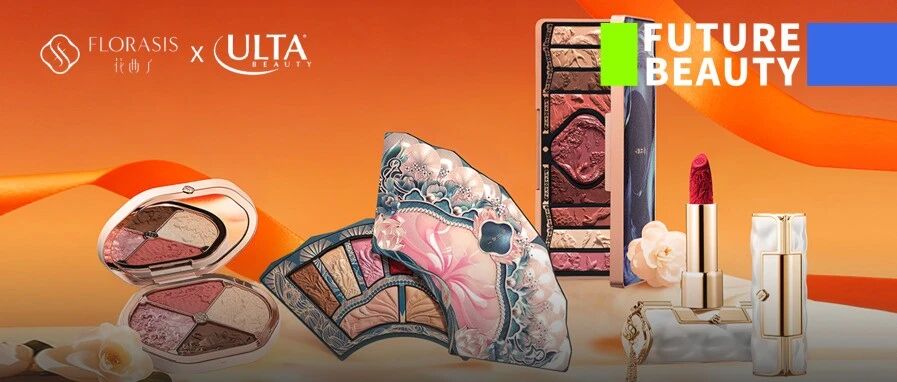
Core Viewpoint - The entry of Chinese beauty brand Florasis into the mainstream U.S. beauty retail system through Ulta Beauty marks a significant shift in the international expansion of Chinese cosmetics, indicating a transition from merely selling products to establishing a sustainable presence in high-quality markets [5][12][23]. Group 1: Florasis' Entry into Ulta Beauty - Florasis officially entered the U.S. market by joining Ulta Beauty's online platform, showcasing a complete product range that includes intricately crafted makeup palettes and modern interpretations of Eastern-inspired lip products [5][6]. - The U.S. market has been historically challenging for Chinese beauty brands due to high competition and strict retail standards, making Florasis' entry through Ulta a notable industry signal [7][9]. - Ulta Beauty, established in 1990, is one of the largest beauty retailers in the U.S., featuring over 600 brands and 25,000 products, which emphasizes the importance of brand stability and consumer engagement for new entrants [9][10]. Group 2: Significance of Florasis' Market Position - Florasis' entry into Ulta Beauty signifies the growing trend of C-beauty (Chinese beauty) in the U.S. market, with the brand being recognized for its Eastern aesthetic [12]. - The inclusion of Chinese brands in mainstream U.S. retail systems reflects a broader evaluation of product performance, regulatory compliance, and brand messaging that resonates with mainstream consumers [12][23]. - Florasis has previously established a presence in Japan and France, indicating a strategic approach to building brand recognition before entering mainstream retail channels [13][17]. Group 3: Evolution of Chinese Beauty Brands - The traditional path for Chinese beauty brands involved relying on cross-border e-commerce and targeting Chinese consumer groups abroad, but this model has limitations in achieving long-term market presence [23][25]. - As competition intensifies in the global beauty market, brands must transition from a transaction-oriented approach to a more structured, sustainable model that emphasizes brand identity and consumer connection [25][26]. - Florasis exemplifies a new model of high-quality international expansion, focusing on long-term brand building and systematic capabilities rather than rapid market penetration [28]. Group 4: Industry Implications - The entry of Florasis into Ulta Beauty reflects a structural change in the Chinese beauty industry's approach to international markets, moving from peripheral participation to core market engagement [23][28]. - This shift indicates that Chinese beauty brands are increasingly being recognized as integral parts of the retail ecosystem rather than supplementary options, which has significant implications for the entire industry [28]. - The evolving landscape suggests that long-term value, systematic capabilities, and a global perspective are becoming essential for success in mature markets [28].
中国美妆,为什么还没有世界级品牌?
3 6 Ke· 2025-09-29 07:49
Core Viewpoint - The article discusses the rising popularity of Chinese beauty products and makeup styles in overseas markets, particularly in Japan, South Korea, and Southeast Asia, as the dominance of Japanese and Korean beauty trends wanes [1][11][18]. Group 1: Chinese Makeup Trends - Chinese-style makeup, particularly "Douyin makeup," has gained significant traction internationally, with a reported 6.5 billion views on TikTok under the Douyin Makeup tag by the end of 2022 [10]. - The trend has led to a cultural exchange where foreign users, such as American beauty influencer Essences Whitaker, actively replicate Chinese makeup styles learned from platforms like Douyin and Xiaohongshu [2][7][10]. Group 2: Market Dynamics - The export value of Chinese beauty products has surged, with a reported 348.61 billion yuan in exports from January to September 2023, marking a 26.6% year-on-year increase [16]. - In 2023, the retail value of Chinese cosmetics reached 414.2 billion yuan, reflecting a 5.1% growth, with Southeast Asia and Japan being key export destinations [16][18]. - Chinese cosmetics are increasingly favored in South Korea, with exports to the country rising approximately 190% in the first eight months of 2023 [16]. Group 3: Competitive Landscape - The article highlights a shift in consumer preferences in South Korea, where consumers are now more inclined towards affordable Chinese beauty products rather than high-end Korean brands, which have seen a decline in sales [13][16]. - Despite the growth, the article notes that Chinese beauty brands still face challenges in achieving global recognition and establishing a strong presence in the high-end market [19][21][22].

2025美妆跨境电商大会:解码中国美妆出海的“新兴市场密码”
Sou Hu Cai Jing· 2025-06-16 12:07
Core Insights - The beauty industry has shifted from the question of whether to go global to how to efficiently expand internationally, with emerging markets becoming critical battlegrounds for Chinese beauty brands [3][4] - The 2025 Cross-Border E-commerce Conference will focus on "Emerging Markets: Full-Chain Breakthrough," gathering key players from regions like Southeast Asia, the Middle East, Latin America, and Russia to share actionable strategies for global expansion [1][4] Emerging Markets - Emerging markets are seen as the "second growth curve" for Chinese beauty brands, with Southeast Asia's population of 670 million and a beauty penetration rate below 20%, indicating significant growth potential [2][3] - The Middle East, particularly Saudi Arabia and the UAE, has a high GDP per capita exceeding $30,000, with beauty consumption prices 2-3 times higher than in China, creating lucrative opportunities [3] - Latin America, especially Brazil and Mexico, benefits from improved cross-border e-commerce infrastructure, presenting a "high growth, low competition" scenario [3] - The market share of Chinese beauty brands in Russia and Central Asia has increased from 5% in 2020 to 18% in 2024, leveraging logistics advantages [3] Challenges in Emerging Markets - High returns in emerging markets come with high barriers, including cultural differences, fragmented local channels, and regulatory compliance challenges [3][4] - Brands often face difficulties due to aesthetic preference mismatches, local market complexities, and hidden barriers like halal certification in the Middle East and ingredient claim restrictions in Latin America [3][4] Conference Structure - The conference will feature specialized sessions focusing on different regions, inviting local platforms, service providers, and brand representatives to share real-world case studies and data [5][6] - Each session will address specific regional challenges and strategies, such as platform advantages in Russia, cultural resonance in the Middle East, localization in Southeast Asia, and brand value evolution in Latin America [7][8][15] Regulatory Compliance - The conference will also include a session on overseas regulations, highlighting the importance of understanding local compliance requirements, such as the EU's CPNP registration and the FDA's efficacy claims standards [17] MCN Collaboration - A dedicated session will focus on connecting brands with MCN (Multi-Channel Network) agencies to enhance local content production and improve traffic acquisition efficiency [18][19] - This collaboration aims to bridge the gap between Chinese supply chain advantages and overseas consumer demands, emphasizing localized storytelling [19] Event Details - The 2025 Cross-Border E-commerce Conference will take place from July 3-5 at the Guangzhou Airport Expo Center, showcasing the global growth of Chinese beauty brands [20]