中式快餐标准化

Search documents
中国最大的中式快餐品牌老乡鸡三次递表港交所 拥有1658家门店
Zhi Tong Cai Jing· 2026-01-08 23:31
Core Viewpoint LXJ International Holdings Limited, known as "Laoxiangji," has submitted a listing application to the Hong Kong Stock Exchange, aiming to capitalize on its position as the largest Chinese fast-food brand with a significant store network across China [1][3]. Company Overview - Laoxiangji is the largest Chinese fast-food brand, holding a 0.9% market share in the Chinese Chinese fast-food industry as of 2024, and ranks eighth in the overall fast-food market with a 0.5% share [3]. - The company operates a "direct + franchise" store network, with 1,658 stores across 61 cities in China as of August 31, 2025, including 925 direct-operated stores and 733 franchise stores [3][4]. - Laoxiangji has served over 206 million customers in the eight months ending August 31, 2025, catering to various dining needs [3]. Achievements - Laoxiangji is one of the first Chinese fast-food companies to implement standardization across its entire value chain, establishing proprietary standardization manuals before opening its first restaurant [4]. - It is the only Chinese fast-food company to have a comprehensive traceability system for its supply chain, enhancing transparency and food safety [4]. - The company leads in average daily sales per store and turnover rate among the top five Chinese fast-food companies, with an average daily sales of RMB 15,100 and a turnover rate of 4.4 in 2024 [4]. Digital Transformation - Laoxiangji began utilizing digital tools in the 2010s and established an internal IT center and a digital growth department in 2016 and 2020, respectively [5]. Financial Performance - The company's revenue for the years ending August 31 for 2022, 2023, 2024, and 2025 was approximately RMB 4.53 billion, RMB 5.65 billion, RMB 6.29 billion, and RMB 4.58 billion, respectively [7]. - The net profit for the same periods was approximately RMB 252 million, RMB 375 million, RMB 409 million, and RMB 371 million [8]. - The gross profit margins for these years were 20.3%, 23.3%, 22.8%, and 24.6%, respectively [10]. Industry Overview - The Chinese fast-food market is divided into three categories: Chinese fast food, Western fast food, and others. Chinese fast food accounted for 60.9% of the fast-food market and 14.5% of the overall dining market in 2024, growing faster than the overall fast-food market [11]. - The market size of Chinese fast food increased from RMB 618.4 billion in 2022 to RMB 753.2 billion in 2023, with a projected growth to RMB 1,205.8 billion by 2029, reflecting a compound annual growth rate of 8.3% from 2024 to 2029 [14].

新股消息 | 中国最大的中式快餐品牌老乡鸡三次递表港交所 拥有1658家门店
智通财经网· 2026-01-08 23:24
Core Viewpoint LXJ International Holdings Limited, known as "Laoxiangji," has submitted a listing application to the Hong Kong Stock Exchange, aiming to expand its presence as the largest Chinese fast-food brand with a significant store network across China [1][3]. Company Overview - Laoxiangji is the largest Chinese fast-food brand with a market share of 0.9% in the Chinese Chinese fast-food industry as of 2024, ranking first in terms of transaction volume [3]. - The company operates a network of 1,658 stores across 61 cities in China, including 925 direct-operated stores and 733 franchised stores, as of August 31, 2025 [1][3]. - Laoxiangji has developed a home-style menu centered around chicken dishes and has been exploring a franchise model since 2020, balancing quality and expansion through a "direct + franchise" store network [3]. Achievements and Innovations - Laoxiangji is one of the first Chinese fast-food companies to implement standardization across its entire value chain, establishing proprietary standardization manuals before opening its first restaurant [3][4]. - The company is the only Chinese fast-food brand to have a comprehensive traceability system, ensuring full control over its supply chain, and published a dish traceability report in 2024 detailing its products and over 300 suppliers [4]. - In 2024, Laoxiangji achieved the highest average daily sales per store at RMB 15,100, surpassing the industry average of RMB 10,800, and had an average table turnover rate of 4.4, higher than the industry average of 3 [4]. Financial Performance - Laoxiangji's revenue for the fiscal years ending August 31 for 2022, 2023, 2024, and 2025 was approximately RMB 4.53 billion, RMB 5.65 billion, RMB 6.29 billion, and RMB 4.58 billion, respectively [6]. - The company's net profit for the same periods was approximately RMB 252 million, RMB 375 million, RMB 409 million, and RMB 371 million [7]. - The gross profit margin for the fiscal years ending August 31 was 20.3%, 23.3%, 22.8%, and 24.6%, respectively [9]. Industry Overview - The Chinese fast-food market is divided into three categories: Chinese fast food, Western fast food, and others, with Chinese fast food accounting for 60.9% of the fast-food market and 14.5% of the overall dining market in 2024 [9][12]. - The market size of Chinese fast food grew from RMB 618.4 billion in 2022 to RMB 753.2 billion in 2023, with a projected compound annual growth rate of 8.3% from 2024 to 2029, reaching RMB 1.2058 trillion by 2029 [12].
广州小店港股上市,遇见小面,如何用一碗面敲开国际资本大门?
Sou Hu Cai Jing· 2025-12-09 09:58
Core Viewpoint - Guangzhou Yujian Xiaomian Restaurant Co., Ltd. has officially listed on the Hong Kong Stock Exchange, becoming the first noodle restaurant to go public, marking a significant milestone for the Chinese dining industry [2][15]. Company Overview - The company issued 97.36 million H-shares at an offering price of HKD 7.04, raising a total of HKD 685 million [4]. - The public offering was oversubscribed by 426 times, with over 60,000 valid applications, indicating strong interest from both local and international investors [4][6]. - Notable cornerstone investors include Hillhouse Capital and Haidilao, which collectively invested USD 22 million, accounting for 25% of the total fundraising [4][6]. Business Performance - Yujian Xiaomian has expanded rapidly from 133 stores in 2022 to 465 stores across 22 cities [8]. - The company’s revenue increased from HKD 418 million to HKD 1.154 billion over three years, nearly doubling [10]. - Adjusted net profit for the first half of the year reached HKD 52.175 million, a 131% increase year-on-year, showcasing strong growth in the restaurant sector [10]. Expansion Strategy - The company plans to open 520 to 610 new stores between 2026 and 2028, focusing on lower-tier cities and international markets [12]. - Investment in the upstream supply chain is crucial, as food costs represent a significant portion of expenses, allowing the company to control quality and costs [12][14]. Industry Context - The listing of Yujian Xiaomian is part of a broader trend in the Hong Kong market, where several Chinese food brands have gone public, indicating a growing interest in the sector [6][15]. - The company’s approach of combining regional flavors with standardized operations serves as a model for other local dining brands aiming for expansion [14][15]. - The successful listing is seen as a milestone for the standardization and capitalization of Chinese fast food, potentially paving the way for more regional brands to enter the market [18][20].
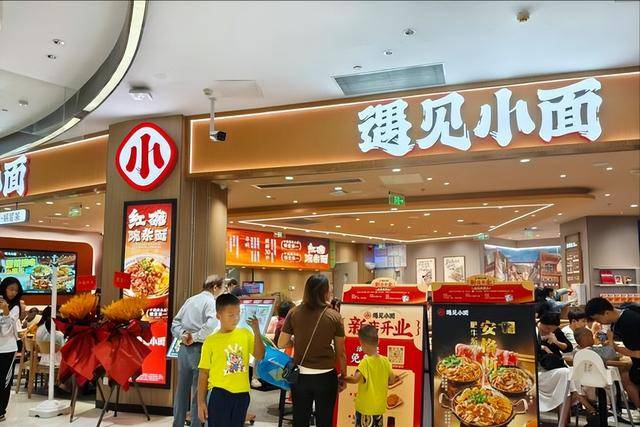
遇见小面上市即破发,高瓴、海底捞亏麻了!
Xin Lang Cai Jing· 2025-12-05 05:45
Core Viewpoint - The IPO of "Yujian Xiaomian," known as the "first stock of Chinese noodle restaurants," faced a disappointing debut on the Hong Kong Stock Exchange, opening significantly lower than its issue price, reflecting investor skepticism about the sustainability of rapid expansion in the restaurant sector [3][9]. Company Overview - Yujian Xiaomian officially listed on the Hong Kong Stock Exchange on December 5, with the stock code "09992.HK" [3][9]. - The company, founded in 2014 and headquartered in Guangzhou, focuses on Chongqing noodles and operates a dual model of direct sales and franchising [11]. IPO Performance - The stock opened at 5 HKD, a drop of nearly 29% from the issue price of 7.04 HKD, and closed at 5.12 HKD, marking a total decline of 27.27% with a market capitalization of 36.39 billion HKD [3][9]. - The IPO raised approximately 617 million HKD, with the Hong Kong public offering being oversubscribed by 425.97 times and the international offering by 4.99 times [10][12]. Financial Performance - Revenue is projected to grow from 418 million CNY in 2022 to 1.154 billion CNY in 2024, representing a compound annual growth rate (CAGR) of 66.2% [6][12]. - The company turned a profit in 2023, with a projected profit of 60.7 million CNY in 2024, and reported a revenue of 703 million CNY in the first half of 2025, a year-on-year increase of 33% [6][12]. Market Position and Strategy - Yujian Xiaomian has established 465 stores across 22 cities and Hong Kong, with plans to open 150 to 230 new stores annually from 2026 to 2028, including an expansion into Singapore [11][12]. - The Chinese fast-food market is nearing 300 billion CNY, with a focus on standardization and digitalization as key drivers for brand expansion [12].


机炒盖码饭,“收割”写字楼打工人
Hu Xiu· 2025-10-16 11:00
Core Insights - The rise of "盖码饭" (Gai Ma Fan) as a popular choice among workers in major cities like Beijing and Shenzhen has transformed it into a leading fast food option, particularly for takeout during lunch hours [1][2][6] Group 1: Market Dynamics - Gai Ma Fan has become a staple in the lunch options for workers, with brands like "霸碗" (Ba Wan) claiming over 1,000 stores nationwide and selling over 70 million servings annually [3][4][6] - The trend of Gai Ma Fan moving into shopping malls, with 60% of Ba Wan's locations in such venues, indicates a shift towards higher traffic and upgraded brand positioning [5][6] - The overall growth of Gai Ma Fan brands has been accelerated by capital investment and franchise expansion, leading to a rapid increase in brand numbers and store counts [6][7] Group 2: Consumer Preferences - Gai Ma Fan caters to the evolving consumer demand for fresh, healthy meals, contrasting with the declining popularity of traditional "盖浇饭" (Gai Jiao Fan) due to rising costs and changing tastes [9][10][11] - The appeal of Gai Ma Fan lies in its ability to provide freshly stir-fried meals without pre-packaged ingredients, which resonates with younger consumers seeking quality and flavor [12][14] - The combination of affordable pricing, generous portions, and customizable meal options makes Gai Ma Fan particularly attractive to workers [17][19] Group 3: Technological Integration - The integration of cooking robots in brands like Ba Wan has allowed for cost reduction and standardization, enabling faster service and consistent quality [24][25][26] - While the use of technology enhances efficiency, it has also led to mixed consumer perceptions regarding the authenticity and flavor of the meals, with some customers expressing concerns about the lack of personal touch [28][30][31] - The challenge for brands is to balance speed with maintaining a sense of warmth and flavor in their offerings, as consumer expectations evolve [32]
新股消息 | 老乡鸡年内第二次递表港交所 在中国58个城市拥有1564家快餐门店
智通财经网· 2025-07-07 23:02
Core Viewpoint - LXJ International Holdings Limited, known as "Laoxiangji," has submitted its second listing application to the Hong Kong Stock Exchange in 2023, with CICC and Haitong International as joint sponsors [1]. Company Overview - Laoxiangji is the largest Chinese fast-food brand, holding a 0.9% market share in the Chinese Chinese fast-food industry and ranking first in terms of transaction volume in 2024. It ranks eighth in the overall fast-food industry with a 0.5% market share [4]. - The company has developed a home-style menu centered around chicken dishes, gaining widespread recognition among customers over 20 years of innovation [4]. - As of April 30, 2025, Laoxiangji operates 1,564 stores across 58 cities in China, including 911 direct-operated stores and 653 franchised stores, covering nine provinces [4]. Business Model and Strategy - The company aims to be a "home kitchen" for customers, providing high-quality Chinese dishes in a convenient and reliable manner. It served over 92 million customers in the four months ending April 30, 2025 [5]. - Laoxiangji emphasizes a standardized operation model, having established proprietary standardization manuals before opening its first restaurant. It is one of the first Chinese fast-food companies to implement a comprehensive traceability system across its supply chain [7]. - The company has adopted a dual model of direct operation and franchising to balance quality and expansion [4]. Financial Performance - Laoxiangji's revenue for the fiscal years ending April 30 was approximately RMB 45.28 billion in 2022, RMB 56.51 billion in 2023, RMB 62.88 billion in 2024, and RMB 21.20 billion in the first four months of 2025. The net profit for the same periods was approximately RMB 2.52 billion, RMB 3.75 billion, RMB 4.09 billion, and RMB 1.74 billion respectively [8]. - The company achieved a daily average sales per store of RMB 15,100 in 2024, significantly higher than the industry average of below RMB 5,000, and a turnover rate of 4.4, exceeding the industry average of 3 [7]. Technological Integration - Laoxiangji is one of the first Chinese fast-food companies to implement digital tools across its entire value chain, establishing an internal IT center and a digital growth department in 2016 and 2020 respectively [8]. - The company has built a data-driven business intelligence system that integrates consumer interaction, product development, and restaurant operations, enhancing overall efficiency and standardization [8].