
盖码饭

Search documents
半年换爆品,捞金500万,“外卖推手”盯上打工人午餐
3 6 Ke· 2026-01-22 09:56
Core Insights - The rise of "盖码饭" (Gai Ma Fan) as a popular lunch choice among office workers in major cities is attributed to its affordability, convenience, and variety, with prices around 20 yuan [1][2] - The business model relies heavily on franchise operations, allowing rapid expansion and profitability through standardized processes and centralized supply chains [1][3] Group 1: Market Dynamics - Gai Ma Fan has become a staple for young professionals and white-collar workers, particularly in densely populated office areas and near universities [2][3] - The competition among Gai Ma Fan vendors has intensified, leading to price wars and a proliferation of similar offerings across various fast-food brands [4][5] - The average monthly profit for successful vendors can reach up to 120,000 yuan, driven by high order volumes during peak times [3][6] Group 2: Operational Insights - Vendors utilize a combination of manual cooking and automated cooking machines to meet high demand, with significant cost savings on equipment and ingredients [2][3] - The supply chain is centralized, with key ingredients like sauces and packaging provided by the franchisor, ensuring consistent quality and taste [2][8] - The operational model allows for quick adaptation to market trends, with frequent updates to menu items to maintain consumer interest [6][9] Group 3: Competitive Landscape - The market is witnessing a shift towards new food trends, such as "江西小炒" (Jiangxi Stir-fry), which offers higher profit margins and caters to similar consumer demographics [7][9] - Major brands like "霸碗" (Ba Wan) are expanding their offerings to include a variety of dishes in response to competitive pressures from both low-cost vendors and tech companies entering the food delivery space [10][11] - The evolution of consumer preferences indicates a growing demand for freshly cooked meals, contrasting with the rising controversy surrounding pre-prepared foods [9][10]
2026年第一个“牛马顶流”,出现了
3 6 Ke· 2026-01-06 09:28
Core Insights - The rise of "Gai Ma Fan" (盖码饭) has marked a significant shift in the fast food landscape, overtaking traditional options like "Zhu Jiao Fan" (猪脚饭) to become a favorite among urban workers in major cities [2][10] - The Gai Ma Fan market is characterized by its appeal to young professionals, with 58.3% of consumers being office workers and 64% aged between 19-35 [2][4] - The efficiency of Gai Ma Fan, with preparation times of just 3-5 minutes, aligns with the fast-paced lifestyle of modern workers, making it a convenient meal option [3][4] Market Dynamics - Gai Ma Fan has seen rapid growth, with leading brand Ba Wan (霸碗) expanding to over 1,100 stores within seven years, competing closely with established brands like Lao Xiang Ji [2][8] - The average price range for Gai Ma Fan is between 16-30 yuan, making it accessible to a wide demographic, particularly among young workers [6][10] - The introduction of automated cooking machines has significantly reduced labor costs and improved service efficiency, allowing brands to scale rapidly [9][10] Consumer Behavior - The primary consumer demographic for Gai Ma Fan consists of young individuals facing job-related pressures, who appreciate the quick and affordable meal option [4][5] - Despite the convenience, there are concerns about the lack of customization in machine-cooked meals, leading to debates about the quality and personal touch of the food [11][15] - The popularity of Gai Ma Fan reflects a broader trend of consumer preference shifting towards quick, affordable meals amidst rising living costs [12][14] Competitive Landscape - The Gai Ma Fan segment is experiencing increased competition, with other brands and food types, such as Guangxi stir-fry, emerging as alternatives [14][15] - The market is witnessing a trend towards standardization, which may dilute brand differentiation and consumer loyalty over time [14][15] - The overall success of Gai Ma Fan will depend on its ability to maintain quality and consumer interest in a rapidly evolving food landscape [15][16]
人均15元,北上广午餐新顶流?
3 6 Ke· 2025-12-03 04:27
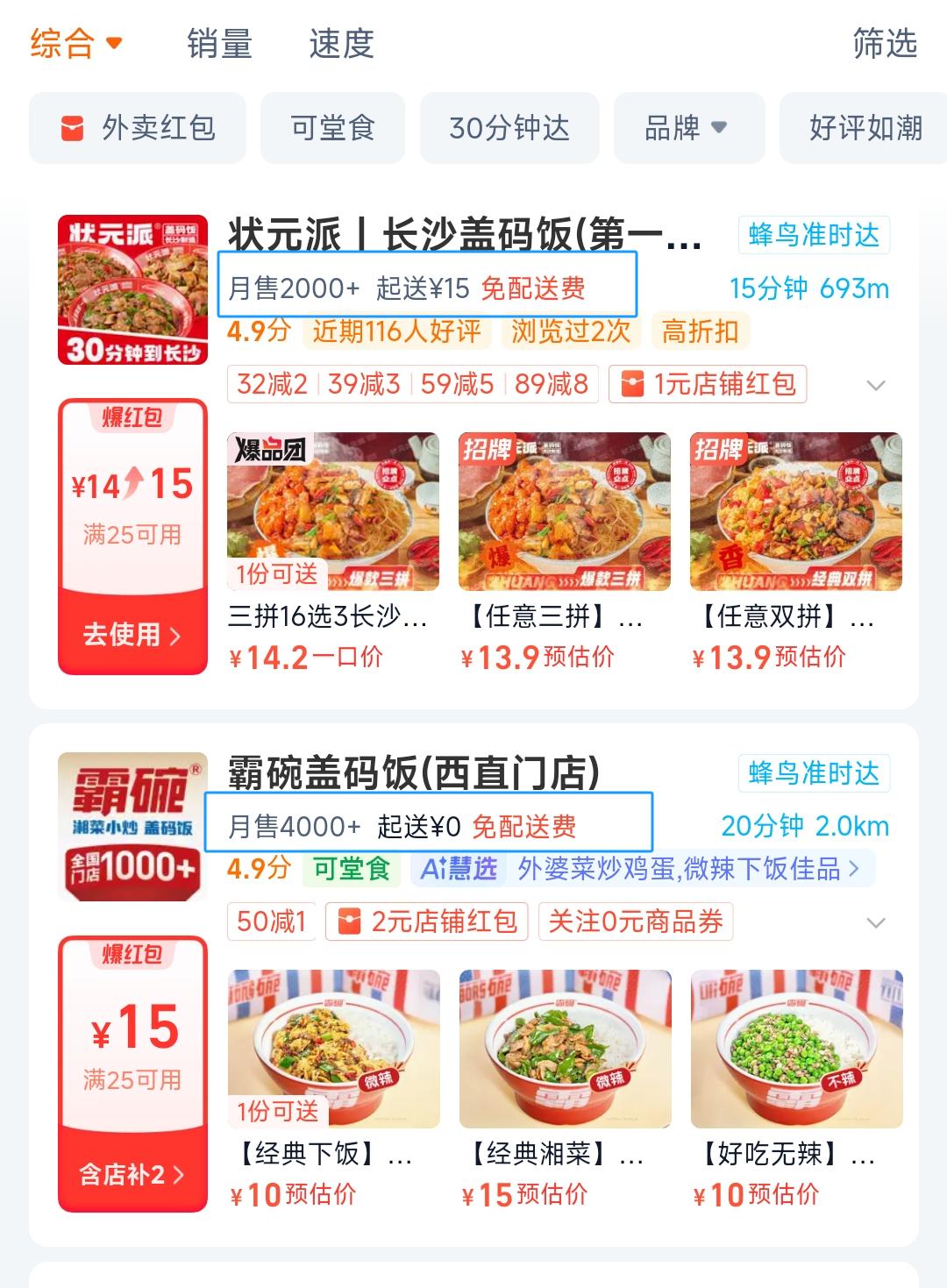
Core Insights - The article discusses the rising popularity of "盖码饭" (Gai Ma Fan), a type of meal that consists of various stir-fried dishes served over rice, primarily featuring spicy Hunan cuisine. It has become a favored choice among urban workers due to its affordability and flavor [2][12][17]. Sales and Market Trends - In specific areas of Beijing, certain Gai Ma Fan brands have achieved impressive sales figures, with "盖码帮" and "状元派" reaching monthly sales of over 2000 units, and "霸碗盖码饭" exceeding 4000 units [2]. - The number of registered Gai Ma Fan-related businesses in China has been increasing rapidly, with 725 new registrations in 2023 and 655 in 2024, indicating a growing market interest [12][21]. Consumer Preferences - Gai Ma Fan is particularly appealing due to its low price point, with average costs around 25 yuan per person in Beijing, and some offerings available for as low as 10 yuan [13][17]. - The trend towards spicy food is significant, with over 6 million people in China identifying as spicy food lovers, which supports the popularity of Gai Ma Fan that features a variety of spicy dishes [15][17]. Competitive Landscape - The article highlights the competitive nature of the restaurant industry, noting that while Gai Ma Fan has gained traction, its low entry barriers mean that many businesses can quickly replicate successful models, leading to potential market saturation [18][20]. - Innovations such as the use of cooking robots in Gai Ma Fan restaurants are being explored to reduce labor costs and improve efficiency, although this approach has its limitations in meeting customer customization needs [18][20]. Future Outlook - Experts suggest that while Gai Ma Fan is likely to remain popular, its long-term success will depend on continuous innovation in menu offerings and maintaining competitive pricing [17][18].

「最强牛马饭」,集体进京
36氪· 2025-11-22 13:35
Core Insights - The article discusses the rise of "盖码饭" (Gai Ma Fan), a type of meal that combines rice with various stir-fried dishes, appealing to busy workers due to its convenience and efficiency [4][6][10]. Group 1: Market Trends - Gai Ma Fan has become a popular choice among office workers, often referred to as the "strongest work meal" due to its quick preparation time of around 10 minutes [6][10]. - The trend of Gai Ma Fan aligns with the increasing demand for standardized and customizable meal options, allowing consumers to choose from various combinations of dishes [10][30]. - The number of Gai Ma Fan restaurants in cities like Beijing has surged, with brands like "霸碗" (Ba Wan) and "盖码帮" (Gai Ma Bang) rapidly expanding their presence [9][10]. Group 2: Consumer Preferences - Consumers appreciate the generous portions and the ability to enjoy a balanced meal with protein, carbohydrates, and vegetables for a reasonable price, typically between 20 to 30 yuan [6][10][22]. - The article highlights the emotional connection consumers have with Gai Ma Fan, with some expressing nostalgia for home-cooked meals, particularly among those from Hunan province [10][30]. - The preference for freshly stir-fried dishes over pre-packaged meals is evident, as consumers prioritize taste and quality in their dining choices [10][29]. Group 3: Competitive Landscape - Different brands have varying pricing strategies, with "霸碗" offering meals at a lower price point (10 to 30 yuan) compared to "盖码帮" (30 to 50 yuan), reflecting their operational models and cost structures [22][24]. - The use of technology, such as cooking robots in some restaurants, is a notable trend, although it raises concerns about customization and the quality of the food compared to traditional cooking methods [24][25]. - The article emphasizes the importance of location and target demographics, with successful Gai Ma Fan restaurants often situated in areas with a high concentration of office workers [20][22].
机炒盖码饭,“收割”写字楼打工人
Hu Xiu· 2025-10-16 11:00
Core Insights - The rise of "盖码饭" (Gai Ma Fan) as a popular choice among workers in major cities like Beijing and Shenzhen has transformed it into a leading fast food option, particularly for takeout during lunch hours [1][2][6] Group 1: Market Dynamics - Gai Ma Fan has become a staple in the lunch options for workers, with brands like "霸碗" (Ba Wan) claiming over 1,000 stores nationwide and selling over 70 million servings annually [3][4][6] - The trend of Gai Ma Fan moving into shopping malls, with 60% of Ba Wan's locations in such venues, indicates a shift towards higher traffic and upgraded brand positioning [5][6] - The overall growth of Gai Ma Fan brands has been accelerated by capital investment and franchise expansion, leading to a rapid increase in brand numbers and store counts [6][7] Group 2: Consumer Preferences - Gai Ma Fan caters to the evolving consumer demand for fresh, healthy meals, contrasting with the declining popularity of traditional "盖浇饭" (Gai Jiao Fan) due to rising costs and changing tastes [9][10][11] - The appeal of Gai Ma Fan lies in its ability to provide freshly stir-fried meals without pre-packaged ingredients, which resonates with younger consumers seeking quality and flavor [12][14] - The combination of affordable pricing, generous portions, and customizable meal options makes Gai Ma Fan particularly attractive to workers [17][19] Group 3: Technological Integration - The integration of cooking robots in brands like Ba Wan has allowed for cost reduction and standardization, enabling faster service and consistent quality [24][25][26] - While the use of technology enhances efficiency, it has also led to mixed consumer perceptions regarding the authenticity and flavor of the meals, with some customers expressing concerns about the lack of personal touch [28][30][31] - The challenge for brands is to balance speed with maintaining a sense of warmth and flavor in their offerings, as consumer expectations evolve [32]