中美经贸脱钩

Search documents
中美经贸上完全脱钩,我们还能继续繁荣吗?美元地位能动摇吗?
Sou Hu Cai Jing· 2025-10-13 10:20
Group 1: Trade Dynamics - The total value of goods imported by the U.S. from China in the first six months of this year was approximately $13.2 billion, while exports to China were about $11.4 billion, showing a significant decline compared to the same period last year [2] - The trade volume between China and the U.S. for the first seven months was $337.2 billion, a year-on-year decrease of 12%, indicating a reduction in trade scale due to escalating tensions [2] - China's exports to the U.S. are projected to drop from nearly $440 billion in 2024 to $177.4 billion in the first five months of this year, reflecting a year-on-year decline of 9.7% [2] Group 2: Economic Impact and Adaptation - Concerns are rising about the potential collapse of foreign trade enterprises in the Yangtze River Delta and Pearl River Delta, which heavily rely on exports to the U.S., particularly in electronics, machinery, and textiles [4] - In response to declining exports, China has shifted focus to emerging markets, with exports to the EU and Southeast Asia increasing significantly, demonstrating the effectiveness of diversifying export destinations [4] - The Chinese government is implementing stimulus policies to boost domestic demand, including infrastructure investments and promotional activities to enhance consumer spending [5] Group 3: Foreign Investment and Supply Chain Adjustments - A survey indicated that only 48% of U.S. companies plan to invest in China this year, down from 80% last year, suggesting a withdrawal of foreign capital [5] - Chinese companies are adapting by adjusting supply chains, sourcing materials from countries like Vietnam and India, or establishing local production facilities [5] - The International Monetary Fund (IMF) anticipates that despite the challenges posed by U.S.-China tensions, China is expected to maintain stable growth, with total trade projected to exceed 6.5 trillion by 2025 [5] Group 4: Currency and Financial Implications - The U.S. dollar's status as a global reserve currency, currently at 62%, is being challenged by high tariffs and potential shifts in trade dynamics [7] - Research indicates that if average tariffs in the U.S. rise to 26%, the dollar's position as a key currency could weaken, leading to a reduction in U.S. Treasury bond purchases by China [7] - The trend of de-dollarization is gaining momentum, with countries exploring alternatives to the dollar for trade, as evidenced by recent contracts being negotiated in euros or renminbi [7][9]

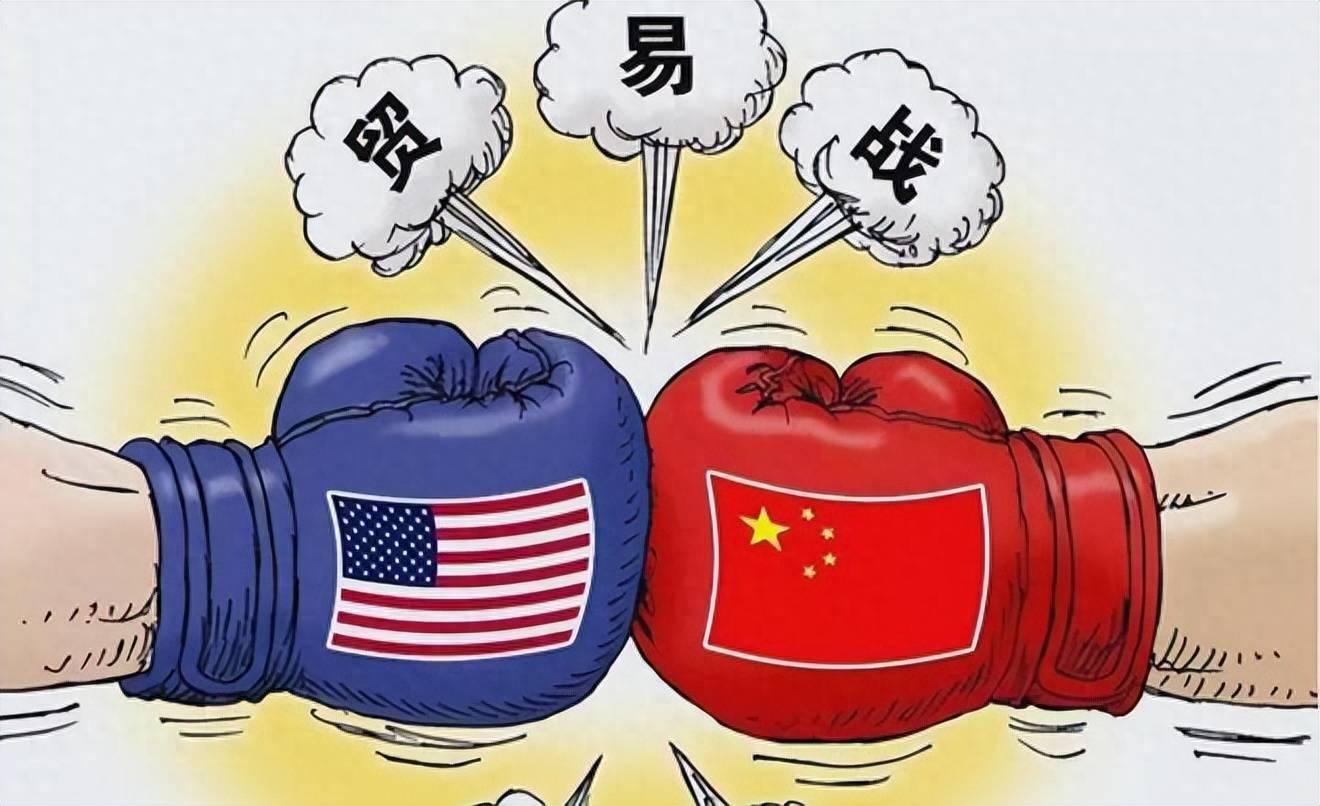
商务部谈中美经贸关系:人为“脱钩”是脱不掉的
券商中国· 2025-07-18 04:09
Core Viewpoint - The China-U.S. economic and trade relationship remains significant despite challenges, with both countries being important economic partners [1]. Summary by Sections - The China-U.S. economic and trade relationship has faced numerous challenges since 2018, primarily due to unilateralism and protectionism from the U.S., which has disrupted normal trade cooperation [1]. - Despite a decrease in the share of trade between the two countries, the overall bilateral trade has remained stable, with projected trade volumes in 2024 reaching $688.3 billion for goods and $155.8 billion for services, representing growth of 18% and 34.7% respectively since 2017 [1]. - The essence of the China-U.S. economic and trade relationship is mutual benefit and win-win cooperation, which is the only correct path forward [2]. - Disagreements and friction are inevitable in China-U.S. economic cooperation, and dialogue and consultation are the best ways to resolve issues [3]. - China’s position is consistent, firmly defending national interests and international fairness and justice [4].

商务部4句话概括近年中美经贸关系!“人为‘脱钩’是脱不掉的”
证券时报· 2025-07-18 03:18
Core Viewpoint - The article emphasizes the resilience and importance of Sino-U.S. economic relations despite ongoing trade tensions and challenges, highlighting that both countries remain significant economic partners. Summary by Sections Overview of Sino-U.S. Economic Relations - The Ministry of Commerce states that since 2018, the U.S. has initiated trade frictions, which have severely impacted normal economic cooperation between China and the U.S. [2] - Despite a decrease in the share of trade between the two countries, the overall bilateral trade remains stable, with projected trade volumes in 2024 reaching $688.3 billion for goods and $155.8 billion for services, representing growth of 18% and 34.7% respectively since 2017 [2] Key Statements on Economic Relations - First Statement: Sino-U.S. economic relations have faced challenges, yet both countries continue to be important economic partners [3] - Second Statement: The essence of Sino-U.S. economic relations is mutual benefit and win-win cooperation, which is the only correct path forward [4] - Third Statement: Disagreements and frictions are inevitable in economic cooperation, and dialogue and consultation are the best ways to resolve issues [5] - Fourth Statement: China’s position is consistent, firmly defending national interests and international fairness and justice [6]

商务部谈中美经贸关系:人为“脱钩”是脱不掉的
news flash· 2025-07-18 02:54
Core Viewpoint - The Ministry of Commerce emphasizes that the economic and trade relationship between China and the United States remains strong despite challenges, and that artificial "decoupling" is not feasible [1] Summary by Relevant Sections Economic Relationship - Since 2018, unilateralism and protectionism from the U.S. have led to increased trade frictions, significantly impacting normal economic cooperation between China and the U.S. [1] - Despite a decrease in the share of bilateral trade in each country's total trade, overall trade between China and the U.S. has remained stable [1] Trade Data - In 2024, the total goods trade between China and the U.S. is projected to reach $688.3 billion, while service trade is expected to be $155.8 billion, representing increases of 18% and 34.7% respectively compared to 2017 [1] - The data indicates a solid economic and public support foundation for China-U.S. economic cooperation [1]
又打折卖房了
猫笔刀· 2025-05-11 14:19
Group 1 - The core point of the article discusses the recent ceasefire between India and Pakistan, highlighting the lack of trust and ongoing minor conflicts despite the official announcement [1] - The article notes that both countries are reluctant to escalate the situation due to their nuclear capabilities, which serves as a deterrent against full-scale war [1] - The military-industrial sector in A-shares is expected to face a downturn as the conflict narrative diminishes, while Eastern military industries may benefit from increased visibility in global markets [2] Group 2 - The article mentions a significant price reduction in a Beijing property developed by Li Ka-shing's company, indicating a broader trend of declining real estate prices in China [3] - The current average price in Beijing has dropped by 26% from its peak in 2023, reflecting a return to levels seen in 2016 [3] - The article discusses the implications of property price fluctuations on the affordability of housing for new entrants in the market, emphasizing the challenges faced by recent buyers [3] Group 3 - The article touches on the ongoing negotiations between the US and China, with no official results announced yet, but suggests that the Chinese side may be more prepared for economic decoupling [4] - It highlights a recent trade agreement between the US and the UK, which involves some tariff reductions but maintains a 10% base tariff [4] - The article reports on the Chinese government's efforts to combat the smuggling of strategic minerals, indicating a focus on regulatory enforcement [5] Group 4 - The article notes a decrease in interest rates, with deposit rates falling below 2% and loan rates returning to below 3% [5] - It mentions a decline in CPI by 0.1% and PPI by 2.7%, indicating ongoing negative inflation trends in the economy [5]