亚伯拉罕协议

Search documents
以媒:索马里兰当局领导人拟“正式访问”以色列
Xin Lang Cai Jing· 2026-01-01 01:17
Group 1 - Israel has officially recognized Somaliland as an independent sovereign state and signed an agreement to establish diplomatic relations on December 26 [1] - Somaliland's leader, Abdirahman Mohamed Abdullahi, is planning an official visit to Israel to sign the Abraham Accords and a series of bilateral agreements [1] - The recognition of Somaliland has faced opposition from Somalia, Egypt, Turkey, the African Union, the Arab League, and most members of the UN Security Council, while the US has defended Israel's actions [1] Group 2 - Somali President Mohamed condemned Israel's recognition of Somaliland as a violation of international law and interference in Somalia's internal affairs [2] - Somaliland agreed to three conditions in exchange for Israel's recognition: accepting Palestinian refugees from Gaza, allowing Israel to establish a military base on the coast of the Gulf of Aden, and joining the Abraham Accords [2]
以色列承认索马里兰,再次搅动红海棋局
第一财经· 2025-12-29 11:45
Core Viewpoint - Israel's recognition of Somaliland as an independent sovereign state and the establishment of diplomatic relations adds complexity to the Red Sea situation, potentially increasing regional instability and geopolitical tensions [3][5]. Geopolitical Context - Somaliland, located in the Horn of Africa, controls a strategic maritime route that connects the Indian Ocean to the Mediterranean, with significant implications for global trade, as 30% of the world's oil tankers pass through this area [3]. - The move by Israel is seen as an attempt to expand its diplomatic reach and integrate Somaliland into the Abraham Accords, which could enhance regional cooperation but also risk exacerbating existing political tensions within Somalia [3][5]. International Reactions - Over 20 countries and international organizations have reiterated their support for Somalia's sovereignty and territorial integrity, condemning Israel's actions as a threat to regional and international security [5]. - The United Nations Security Council is scheduled to hold an emergency meeting regarding Israel's recognition of Somaliland, indicating the international community's concern over the implications of this recognition [5]. Regional Dynamics - Egypt has expressed strong opposition to Israel's recognition, emphasizing its commitment to Somalia's unity and territorial integrity, and has engaged in discussions with other regional foreign ministers to coordinate a response [5]. - The recognition of Somaliland by Israel may disrupt the fragile peace in the region, potentially leading to new geopolitical conflicts as various nations vie for influence [9]. U.S. Position - Following Israel's recognition, U.S. President Trump stated that the U.S. would not recognize Somaliland but would consider the matter further, highlighting the ongoing diplomatic maneuvering surrounding Somaliland's status [7]. - The U.S., along with other nations, has established diplomatic representations in Somaliland, indicating a growing interest in the region despite the complexities involved [9].

以色列承认索马里兰,再次搅动红海棋局
Di Yi Cai Jing· 2025-12-29 10:40
Core Viewpoint - Israel officially recognized Somaliland as an "independent sovereign state" on December 26, 2023, marking a significant shift in the geopolitical landscape of the Red Sea region [1][3]. Geopolitical Implications - Somaliland, located in the Horn of Africa, controls a strategic maritime route that connects the Indian Ocean to the Mediterranean Sea, with 30% of the world's oil tankers passing through this area prior to the Red Sea crisis [1]. - The recognition by Israel is seen as an attempt to strengthen diplomatic ties and expand its influence in the region, particularly by integrating Somaliland into the Abraham Accords [1][5]. - The move has been met with strong opposition from over 20 countries and international organizations, reaffirming support for Somalia's sovereignty and territorial integrity [3][4]. Regional Reactions - Egypt has expressed significant concern, with its foreign minister engaging in discussions with counterparts from Somalia, Turkey, and Djibouti to collectively reject Israel's recognition of Somaliland [3]. - The United Nations Security Council is scheduled to hold an emergency meeting regarding Israel's actions, indicating the international community's heightened attention to the situation [3]. International Dynamics - Following Israel's recognition, there are questions regarding the potential for the United States to follow suit, with President Trump indicating that the U.S. would not recognize Somaliland but would consider the matter further [4]. - Somaliland is intensifying its lobbying efforts in the U.S. to gain recognition, reflecting its strategic importance in the region [4][5]. - Other nations, including Ethiopia, have previously attempted to establish relations with Somaliland, leading to regional tensions and diplomatic challenges [5].
热点问答|以色列为何承认索马里兰
Xin Lang Cai Jing· 2025-12-28 16:22
Group 1: Core Viewpoint - Israel officially recognized Somaliland as an "independent sovereign state" and signed an agreement to establish diplomatic relations, facing strong opposition from multiple countries and international organizations [1] Group 2: Somalia's Response - Somali President Mohamed stated that Israel's recognition of Somaliland violates international law and interferes in Somalia's internal affairs, asserting that Somalia and its people cannot be divided by distant separatist actions [1] - The Somali government firmly rejected Israel's recognition of Somaliland, emphasizing that the region is an inseparable part of the Somali Federal Republic [1] Group 3: Israel's Considerations - Analysts suggest Israel's motivations include gaining a strategic foothold in East Africa, as Somaliland controls key maritime routes, which could enhance Israel's military presence and influence in the Red Sea [2] - Another motivation is to break its diplomatic isolation, as Somaliland expressed willingness to join the "Abraham Accords," aligning with Israel's goal to normalize relations with more Arab countries [2] Group 4: Impact on Regional Situation - The Somali government warned that Israel's actions could severely disrupt regional peace and stability, escalating political and security tensions across the Horn of Africa, Red Sea, and Middle East [3] - There are concerns that Israel's move could challenge the African consensus on maintaining territorial integrity, potentially inciting separatist movements in other regions [3] - The situation may also intensify internal conflicts within Somalia and provoke proxy conflicts, with extremist groups like Al-Shabaab possibly exploiting the situation [3]
沙特王储时隔7年再访美,白宫上演各取所需的外交秀
Qi Lu Wan Bao· 2025-11-21 05:57
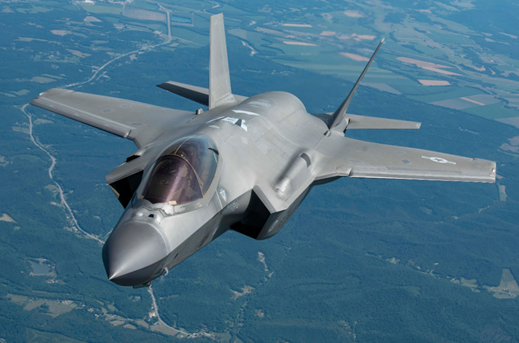
Group 1 - The meeting between President Trump and Saudi Crown Prince Mohammed marks a significant diplomatic engagement, reflecting the ongoing importance of Saudi Arabia in U.S. Middle East strategy [1][2] - The normalization process between Saudi Arabia and Israel has been paused due to the recent Gaza conflict, impacting U.S. efforts to establish a "Middle Eastern NATO" to counter Iran [2][3] - Trump’s strategic intent remains consistent with previous years, but the geopolitical landscape necessitates greater concessions to Saudi Arabia, such as the potential sale of F-35 fighter jets [3][4] Group 2 - The designation of Saudi Arabia as a "major non-NATO ally" simplifies U.S. arms export procedures and enhances the security partnership between the two nations [4] - Saudi Arabia's commitment to increase investments in the U.S. from $600 billion to $1 trillion indicates a significant economic partnership, covering infrastructure, industry, and technology [4][5] - The actual realization of Saudi investments and the sale of F-35 jets may face uncertainties due to potential changes in U.S. administration and domestic opposition to sensitive technology transfers [5]
【财经分析】沙特王储访美之中的交易、承诺与考量
Xin Hua She· 2025-11-19 15:36
Core Points - The meeting between Saudi Crown Prince Mohammed and US President Trump marks a significant diplomatic visit focused on defense cooperation and substantial investments, aiming to enhance bilateral relations [1][2] - The visit also highlights the complexities surrounding Saudi Arabia's potential normalization of relations with Israel, contingent on a clear path for Palestinian statehood [2][3] Group 1: Defense Cooperation - The US and Saudi Arabia signed a Strategic Defense Agreement, with the US agreeing to sell F-35 fighter jets to Saudi Arabia and designating it as a major non-NATO ally [2] - Saudi Arabia plans to purchase approximately 300 US tanks and invest nearly $1 trillion in US infrastructure, technology, and industrial sectors [2][3] Group 2: Investment Commitments - There are uncertainties regarding the execution of Saudi Arabia's commitment to invest $1 trillion in the US, as current low oil prices and significant expenditures on mega-projects may hinder this investment [3] - Analysts suggest that these investment promises may never be fully realized due to various economic pressures [3] Group 3: Strategic Considerations - The US aims to position Saudi Arabia as a key player in its Middle East strategy, encouraging regional partners to take on more security responsibilities while the US focuses on supply chains and critical technologies [4][5] - Saudi Arabia seeks US security guarantees to support its domestic modernization efforts, but there are concerns about the reliability of the US as a security partner, prompting Saudi Arabia to diversify its security collaborations [5]
美沙领导人白宫会晤 讨论防务、投资等合作
Zhong Guo Xin Wen Wang· 2025-11-19 08:21
Core Points - The meeting between US President Trump and Saudi Crown Prince Mohammed bin Salman aims to strengthen US-Saudi bilateral relations, focusing on defense, energy, critical minerals, infrastructure, and advanced technology investments [1] - Trump indicated that an agreement on military sales, specifically the purchase of F-35 fighter jets by Saudi Arabia, is expected to be reached [1] - The discussion included Saudi Arabia's desire to normalize relations with Israel and its intention to be part of the Abraham Accords while seeking a clear path to a two-state solution for the Israeli-Palestinian conflict [1] - The US and Saudi Arabia plan to finalize broader military and security agreements during this visit, with Saudi Arabia expressing interest in increasing its investment commitments to the US [1] Investment Forum - Trump and Mohammed bin Salman are scheduled to attend a US-Saudi investment forum in Washington on November 19 [2]
沙特王储访美与特朗普敲定多项协议,沙特对美投资追加至1万亿美元!重申沙特与以色列建立外交关系的前提是有“明确路径”确保巴勒斯坦建国
Ge Long Hui· 2025-11-19 06:31
Core Points - Saudi Crown Prince Mohammed reaffirmed that establishing diplomatic relations with Israel depends on a "clear path" to Palestinian statehood [1] - The U.S. and Saudi Arabia reached a defense cooperation agreement, with Saudi Arabia set to purchase F-35 stealth fighters similar to those used by Israel [1] - Saudi Arabia plans to increase its investment in the U.S. to $1 trillion and aims to invest approximately $50 billion in the semiconductor sector [1] - An investment summit is scheduled in Washington, where both countries may sign cooperation agreements in various sectors including AI, healthcare, infrastructure, energy, and financial services [1]

美政府欲售沙特F-35战机 以色列要求安全担保
Xin Hua She· 2025-11-18 08:40
Core Points - The U.S. plans to sell F-35 fighter jets to Saudi Arabia, which has been in discussion for months, raising concerns about Israel's military advantage in the region [1][2] - Saudi Arabia may seek to purchase up to 48 F-35 jets, potentially becoming the first country in the Middle East to acquire them, aside from Israel [1] - The U.S. has a long-standing policy to maintain Israel's military superiority over other Middle Eastern countries, complicating the sale to Saudi Arabia [1][2] - Israeli officials have indicated that normalization of relations with Saudi Arabia is a prerequisite for the F-35 sale, and they may seek additional security guarantees from the U.S. [2][3] - The sale could face opposition in the U.S. Congress, which may require assurances that it will not undermine Israel's military position [2] - The normalization talks between Saudi Arabia and Israel have stalled following the recent escalation of the Israel-Palestine conflict [3] - A potential civil nuclear cooperation agreement and significant investments in U.S. AI infrastructure are also on the agenda during the Saudi Crown Prince's visit to the U.S. [3]
美媒爆:以色列不反对美政府向沙特出售F-35战斗机,但要以实现沙以关系正常化为条件
Huan Qiu Wang· 2025-11-16 07:47
Core Points - The article discusses the potential arms deal between the United States and Saudi Arabia, which includes the sale of F-35 stealth fighter jets, contingent on the normalization of relations between Saudi Arabia and Israel [1][3][4] - Israeli officials have indicated that they do not oppose the sale of F-35s to Saudi Arabia, provided it is part of a broader regional security cooperation framework [3] - The upcoming meeting between President Trump and Saudi Crown Prince Mohammed bin Salman is expected to address this issue, although significant differences remain between Saudi Arabia and Israel regarding the Palestinian statehood issue [4] Group 1 - The U.S. is considering a request from Saudi Arabia to purchase up to 48 F-35 fighter jets, which would represent a significant shift in U.S. policy regarding arms sales in the Middle East [4] - Israeli officials have communicated to the Trump administration that any sale of F-35s to Saudi Arabia should be linked to diplomatic progress, particularly concerning the Palestinian statehood roadmap [3] - The geographical proximity of Saudi Arabia to Israel raises concerns for Israeli officials, who may demand restrictions on the deployment of F-35s within Saudi Arabia [3] Group 2 - The normalization of relations between Saudi Arabia and Israel is seen as a critical geopolitical development in the Middle East, with Trump expressing hope for swift progress [4] - Saudi Arabia has maintained its position that a credible and irreversible path to Palestinian statehood must be established before discussing normalization with Israel [4] - The potential arms deal and the normalization of relations could significantly impact the regional balance of power and U.S. commitments to maintaining Israel's military advantage in the region [4]