
交通发展

Search documents
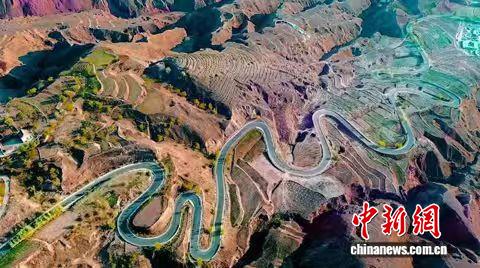
牛肉面以“车道”命名 背后藏着临夏东乡大道通途
Zhong Guo Xin Wen Wang· 2026-02-27 23:32
Core Viewpoint - The rise of "Lane Beef Noodles" in Dongxiang County symbolizes the significant transformation in local transportation infrastructure, reflecting the community's improved access and quality of life over the years [1][2]. Transportation Development - Dongxiang County, located in the northeastern part of the Loess Plateau, has historically faced challenges in transportation, with poor road conditions affecting residents' mobility [2]. - Recent developments include the successful opening of the Anlin First-Class Highway, marking the end of the county's lack of high-grade roads [2]. - The S309 line and the ongoing construction of the Lanhe Railway and Lanyonglin Expressway are set to enhance connectivity, establishing a "traffic artery" for the region [2]. - The county has invested 690 million yuan in the "Four Good Rural Roads" initiative, improving 808 kilometers of roads and implementing safety measures across 497 kilometers [2]. Infrastructure Statistics - By 2025, the total length of roads in Dongxiang County is projected to reach 2,688.8 kilometers, comprising 1,477 roads, with rural roads accounting for 2,288.9 kilometers [3]. - All administrative villages and communities will achieve full coverage of cement and asphalt roads, reflecting the significant progress in local infrastructure [3]. Cultural Significance - The creation of "Lane Beef Noodles" serves as a cultural representation of the community's journey from hardship to progress, with the dish embodying the local spirit and aspirations [3][5]. - The unique naming of the dish, inspired by the road improvements, aims to connect consumers with the region's transformation and the resilience of its people [3]. Economic Impact - The improved transportation network not only facilitates the movement of goods but also enhances the local economy by allowing residents to access broader markets [5]. - Young people are increasingly drawn to learn the craft of making "Lane Beef Noodles," which helps them acquire skills for better livelihoods while sharing the story of Dongxiang's development [5].

外媒关注2026中国春运:运力扩容,服务升级
Xin Lang Cai Jing· 2026-02-23 12:31
Group 1 - The core viewpoint of the article highlights that the Spring Festival travel rush (Chunyun) in China is expected to reach a peak in 2026, with an expanding scale of travel, marking a new chapter in China's transportation development [1] - The article cites data indicating that during the Spring Festival travel period, the railway passenger flow in China remains at a high level, with cumulative travel exceeding hundreds of millions of trips. This increase is attributed to cultural traditions of family reunions during the Spring Festival and the continuous improvement of transportation networks and railway capacity [2] - The railway is emphasized as the most important mode of transportation during the Spring Festival travel period. The China National Railway Group has made systematic optimizations in capacity deployment, train scheduling, and station organization to ensure robust support for high passenger volumes [2] Group 2 - The article notes that to alleviate transportation pressure, thousands of additional trains have been added nationwide, significantly enhancing capacity on key routes [2] - In terms of service quality, this year's Spring Festival travel emphasizes not only maintaining transport capacity but also upgrading service quality. Some stations have increased ticket windows, optimized entry and exit processes, and strengthened on-site guidance [2] - The Spring Festival travel rush has a notable positive impact on the Chinese economy, benefiting industries such as transportation, catering, accommodation, and retail consumption due to the movement of people. The return of citizens carrying gifts also stimulates holiday consumption [2][3]
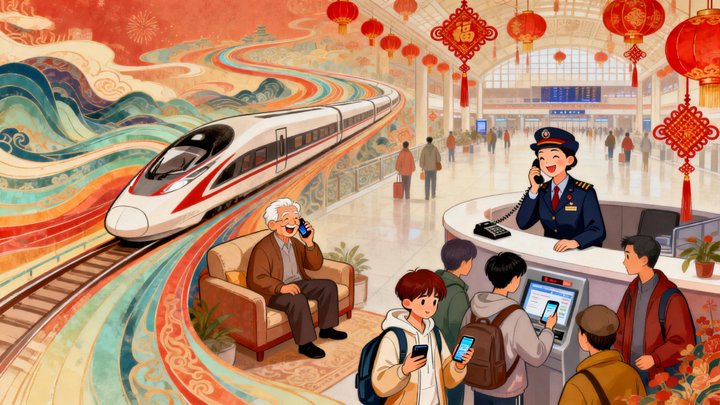
【好评中国】春运之新,暖了归途强了民生
Xin Lang Cai Jing· 2026-02-11 06:24
Core Viewpoint - The 2026 Spring Festival travel season in China is expected to see a record 540 million passengers, showcasing advancements in transportation services and reflecting improvements in people's livelihoods [2][5]. Ticketing Services - Innovations in ticketing services have made purchasing tickets fairer and more convenient, addressing the needs of special groups such as seniors and students [2]. - A dedicated phone booking line for seniors aged 60 and above has been established, and additional discount tickets for 2026 graduates have been introduced [2]. - New policies allow for free ticket refunds within 30 minutes of purchase and up to 4 hours before departure, enhancing customer experience [2]. Capacity Expansion - The railway department has expanded its capacity by introducing 22 new lines and 3,109 kilometers of track, improving the national railway network [3]. - New high-speed rail lines have created efficient travel routes, such as the "one-hour high-speed circle" around certain regions, significantly reducing travel times [3]. - The addition of temporary trains and night services has increased passenger capacity by 5.3% compared to the previous year, facilitating smoother travel during peak times [3]. Service Experience - The focus on enhancing service experience includes initiatives like luggage delivery services and child-friendly amenities on trains, catering to diverse passenger needs [4]. - Technological advancements, such as the deployment of memory robots for customer service, have added a personal touch to the travel experience [4]. - The railway department's emphasis on personalized and intelligent services aims to make the travel experience more enjoyable and comfortable [4]. Multi-Modal Transportation - Collaboration across road, air, and water transport sectors has created a comprehensive transportation network for the Spring Festival [5]. - Initiatives such as free highway access for small vehicles and increased flight frequencies on key routes have improved overall travel efficiency [5]. - The evolution of travel experiences from traditional methods to modern conveniences reflects the progress in China's transportation development and its impact on people's lives [5].
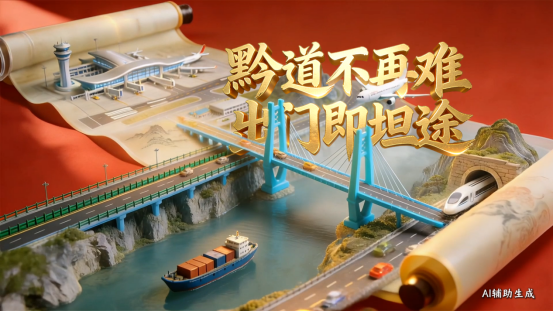
黔道不再难,出门即坦途!
Xin Lang Cai Jing· 2026-01-25 15:08
Core Viewpoint - In 2025, Guizhou province has undergone a significant transformation in its transportation infrastructure, marking a historical shift from being geographically isolated to becoming a well-connected hub with extensive rail, road, air, and water transport networks [1][24]. Transportation Developments - High-speed rail has achieved full coverage across nine administrative centers in Guizhou, with the opening of the Panxing high-speed rail in November 2025, reducing travel time from 3.5 hours to under 2 hours between key cities [3][5]. - The total operational mileage of high-speed rail reached 1,906 kilometers, with a total railway operational mileage of 4,419 kilometers [5]. - Guizhou has established six high-speed rail corridors for interprovincial travel, contributing to a total of 17 railway corridors connecting to other provinces [7]. Road Infrastructure - The total length of highways in Guizhou has reached 9,563 kilometers, with an increase of 1,786 kilometers since the end of the 13th Five-Year Plan, achieving dual highway access for all counties [9]. - The overall road network exceeds 220,000 kilometers, with 45 major land routes out of the province, enhancing connectivity [9]. Bridge Construction - Guizhou has built over 30,000 bridges, with nearly half of the world's top 100 high bridges located in the province, showcasing its engineering capabilities [15]. - The Huajiang Gorge Bridge, completed in September 2025, is recognized as the highest bridge in mountainous regions and features the world's longest main span for a steel truss suspension bridge [11][13]. Aviation Expansion - By December 2025, Guizhou achieved full airport coverage across its cities, with the completion of Dejiang Airport, serving over 5 million residents [15][19]. - The Guizhou Longdongbao Airport has an annual passenger throughput exceeding 20 million, with 321 air routes connecting to 265 cities [19]. Waterway Revival - The revival of the Wujiang River's four-level navigation channel has reestablished a vital waterway, facilitating transport to the Yangtze and Pearl Rivers [20]. - The total length of inland waterways in Guizhou has reached 3,954 kilometers, with modernized facilities enhancing cargo transport efficiency [22]. Overall Impact - In 2025, Guizhou's transportation network achieved a 96.5% completion rate for the national comprehensive transportation framework, fostering a fully integrated transport system [24]. - The advancements in transportation have not only improved accessibility but also stimulated tourism, industrial upgrades, and rural revitalization, transforming Guizhou into a model of connectivity and development [24].
假日里,走近坚守一线的交通建设者
Xin Hua She· 2025-10-04 01:47
Core Viewpoint - The construction industry is actively engaged in various infrastructure projects during the national holidays, showcasing dedication and responsibility among workers [1][2][3][4][5][6]. Group 1: Construction Activities - In Jiangxi, over 1,200 workers from China Railway 25th Bureau are working on the Bai Shi Qiu Bridge, which is crucial for subsequent rail laying [2]. - In Shaanxi, the construction of the Shenwa Railway is progressing with a focus on key projects like the Kuye River Bridge and the Caoduo Mountain Tunnel [2]. - In Guangxi, 415 workers are involved in the Guangxi Linning Expressway project, utilizing various heavy machinery to meet annual construction goals [3]. - In Hubei, hundreds of workers from China Railway 18th Bureau are working around the clock on the Yuefu High-speed Railway's Moon Mountain Bridge [3][4]. - In Jiangsu, the construction of the Nantong-Haitai Yangtze River Tunnel is advancing with a domestic shield machine achieving an average progress of 16 meters per day [5]. - In Guangdong, over 200 workers are tackling challenges in the Hezhang High-speed Railway project, particularly in areas with complex geological conditions [6]. Group 2: Worker Commitment - Workers express pride in contributing to significant infrastructure projects during the holidays, emphasizing the importance of their roles in improving transportation [3][4]. - Project leaders highlight the need for safety and progress, especially during holiday periods, to ensure timely completion of critical infrastructure [2][4][6].
砥砺奋进七十载 天山南北谱华章 | 大漠小城迎交通“蝶变” 乡村振兴搭上“快车道”
Yang Shi Wang· 2025-09-14 01:48
Core Viewpoint - The article highlights the significant transformation in transportation and logistics in the Yutian County of Xinjiang, showcasing the impact of improved infrastructure on local development and connectivity with the outside world [1][10]. Transportation Development - Yutian County has seen the opening of the Wanfang Airport in 2020, the completion of the Hejiao Railway in 2022, and the establishment of a comprehensive highway network, drastically reducing travel time to major cities like Urumqi and Beijing [10][12]. - The travel time from Yutian to Urumqi is now approximately 2 hours, while the journey from Urumqi to Beijing takes about 4 hours, making travel much more accessible for residents [5][10]. Economic Impact - The improved transportation infrastructure has facilitated the export of local agricultural products such as roses, walnuts, and red dates to various markets across the country, enhancing the economic prospects of the region [14][16]. - Cold chain logistics have been established, allowing fresh produce from the desert to reach consumers efficiently, thereby connecting local agricultural bases with national markets [16]. Cultural Significance - The story of Kurban Tulum, who famously traveled to Beijing on a donkey, symbolizes the historical challenges of travel from Yutian, contrasting sharply with the current ease of access [1][5][7]. - The local population now enjoys multiple travel options, reflecting a cultural shift from the past when long journeys required significant preparation and effort [12][14].
