
产业进化

Search documents
每经热评|取消光伏和电池出口退税 有利产业进化和财政资源优化
Sou Hu Cai Jing· 2026-01-12 13:38
Core Viewpoint - The Ministry of Finance and the State Taxation Administration announced adjustments to the export tax rebate policy for photovoltaic and battery products, effective from April 1, 2026, which includes the cancellation of VAT export rebates for these products, indicating a shift towards a mature industry that no longer requires policy support [1][2]. Group 1: Policy Changes - From April 1, 2026, the VAT export rebate for photovoltaic products will be eliminated, and the rebate rate for battery products will be reduced from 9% to 6% until December 31, 2026, after which it will also be canceled [1]. - The previous adjustments included a reduction of the export rebate rate for certain products from 13% to 9% starting December 1, 2024, which included solar cells [1][4]. Group 2: Industry Competitiveness - The reduction and eventual elimination of export tax rebates reflect the enhanced global competitiveness of China's photovoltaic and battery products, which account for approximately 80% of global solar cell production and 70% of lithium battery production [1][2]. - The export tax rebate has historically helped reduce export costs and enhance international competitiveness, but the industry has reached a stage where such support is no longer necessary [2]. Group 3: Market Dynamics - The cancellation of export tax rebates is expected to accelerate market clearing, leading to the elimination of companies that rely heavily on these rebates for profitability, while stronger companies with technological advantages will consolidate market share [3]. - The photovoltaic industry has faced issues of disorderly competition and price declines, with solar module prices dropping over 60% from $0.24 per watt at the beginning of 2023 to $0.09 per watt, resulting in a 33% year-on-year decline in export value for 2024 [2][3]. Group 4: Fiscal Resource Allocation - The policy adjustment aims to redirect fiscal resources towards domestic demand and social welfare, addressing challenges such as insufficient effective demand and overcapacity in certain industries [3][4]. - The cancellation of export rebates for strong industries allows for better allocation of fiscal resources, which can be directed towards consumer subsidies, employment support, and healthcare, thereby enhancing domestic consumption and stabilizing economic expectations [3].
每经热评:取消光伏和电池出口退税 有利产业进化和财政资源优化
Sou Hu Cai Jing· 2026-01-12 09:10
Core Viewpoint - The Ministry of Finance and the State Taxation Administration announced the cancellation of export tax rebates for photovoltaic and battery products, indicating a shift towards a mature industry that no longer requires policy support [1][2]. Group 1: Policy Changes - Starting from April 1, 2026, the export VAT rebate for photovoltaic products will be eliminated, and the rebate rate for battery products will be reduced from 9% to 6% until the end of 2026, after which it will also be canceled [1]. - Prior to this, the export rebate rate for certain products, including photovoltaic and battery products, was reduced from 13% to 9% on December 1, 2024 [1]. Group 2: Industry Competitiveness - The reduction and eventual cancellation of export tax rebates reflect the enhanced global competitiveness of China's photovoltaic and battery products, which account for approximately 80% of global solar cells and 70% of lithium batteries [1][2]. - The industry has reached a stage where the support from export tax rebates is limited due to established technological, scale, and cost advantages [2]. Group 3: Market Dynamics - The cancellation of export tax rebates is expected to accelerate market clearing, leading to the elimination of smaller companies that rely heavily on these rebates for profitability, while larger firms with technological and cost advantages will strengthen their market positions [2]. - The photovoltaic industry has faced severe price declines, with prices dropping from $0.24 per watt at the beginning of 2023 to $0.09 per watt, resulting in a 33% year-on-year decrease in export value for 2024 [2]. Group 4: Fiscal Resource Optimization - The removal of export tax rebates for strong industries allows for better allocation of fiscal resources towards domestic demand and social welfare, addressing challenges such as insufficient effective demand and overcapacity in certain sectors [3]. - The adjustments in export tax rebates are part of a broader strategy to enhance macroeconomic regulation, ensuring that fiscal resources are directed towards areas that require more support, such as consumer subsidies and employment assistance [3].
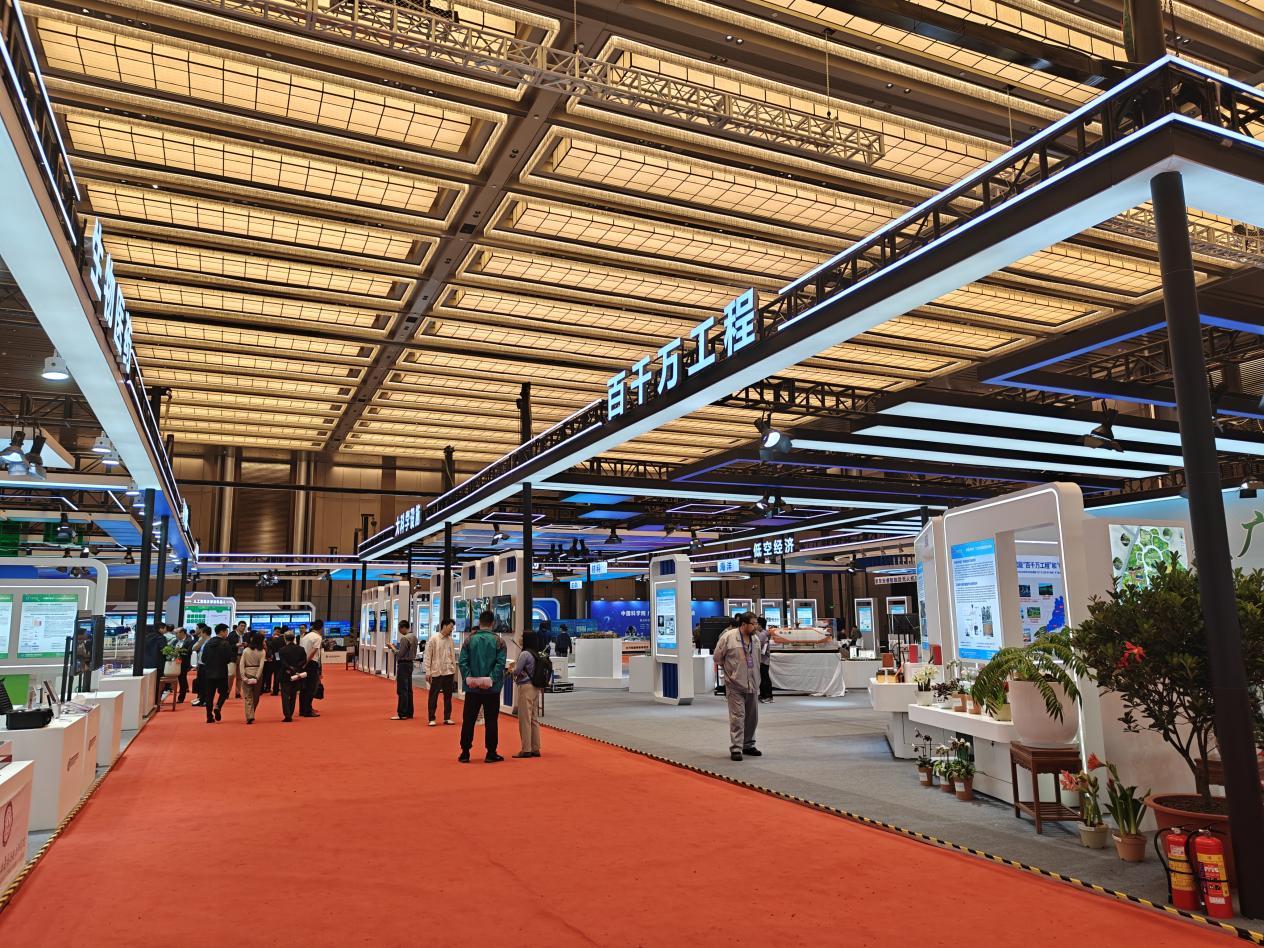
当“科学图纸”遇见“湾区产线”:一场关于未来的“硬核交易”
Feng Huang Wang Cai Jing· 2025-12-08 08:41
Core Insights - The collaboration between cutting-edge scientific research and Guangdong's manufacturing industry represents a significant shift towards defining future industrial capabilities rather than merely producing traditional products [2][10] - The projects listed, such as "low-altitude resource intelligent dynamic monitoring" and "wave energy-driven artificial upwelling marine ranches," are not just products but foundational solutions for a new industrial architecture [2][4] Group 1: Project Overview - The projects include advanced technologies like "digital twin integration devices" and "targeted ecDNA anti-tumor strategies," which are seen as a blueprint for future industries [1][2] - Many projects, such as the neutrino experiment facility and the China Spallation Neutron Source, focus on fundamental scientific research that may not yield immediate profits but are crucial for long-term industrial development [4] Group 2: Manufacturing Capabilities - Guangdong's manufacturing strength lies in its ability to quickly transform designs into products, exemplified by its rapid production capabilities in sectors like smartphones and home appliances [2][6] - The region's unique "translation" and "acceleration" capabilities allow for the swift conversion of scientific concepts into practical engineering and market-ready products [6][7] Group 3: Strategic Alignment - The scientific achievements are closely aligned with Guangdong's strategic future industries, such as low-altitude economy and marine ranching, ensuring that research meets industrial needs [8][10] - The collaboration is characterized by a "dual adaptation," where scientists focus on practical applications of their research while addressing the specific demands of Guangdong's industries [8] Group 4: Future Implications - Guangdong's entrepreneurs are encouraged to rethink traditional cost and efficiency models, exploring the potential of synthetic biology and quantum precision measurement [10] - This partnership signifies a transformative moment in China's industrial evolution, as Guangdong transitions from an executor in the global innovation chain to a definitional leader in industry [10]

拿捏全球70%的假睫毛,山东这座小城是如何靠“造假”撬动百亿美妆市场的?
Hu Xiu· 2025-08-22 07:04
Core Insights - The article highlights the significant role of Pingdu, a county-level city in Shandong, in the global false eyelash market, accounting for 70% of the world's production [1] - It emphasizes the evolution of the industry over 40 years, transitioning from OEM (Original Equipment Manufacturer) to brand development and from imitation to innovation [1] Industry Overview - Pingdu has a resident population of just over 1 million, yet it dominates the false eyelash industry on a global scale [1] - The city has undergone substantial industrial evolution, showcasing a shift in production strategies and market positioning [1]