建材等

Search documents
两会前后的市场节奏和布局
Soochow Securities· 2026-03-01 00:31
Core Insights - The report highlights the significance of the upcoming "Two Sessions" in March 2026, which is expected to influence China's policy direction for the year and the next five years, thereby impacting capital market trends [1] - Historical analysis indicates a "Two Sessions Effect" in A-shares, characterized by pre-session index increases, small-cap outperformance, and excess returns in the TMT sector before and after the sessions [1][2] - The report categorizes years based on total policy expectations, noting that strong expectations lead to significant market impacts, while stable expectations result in structural market trends [2][3] Market Trends - Historically, the A-share index tends to rise in the 20 trading days leading up to the Two Sessions, with an 81% win rate and an average increase of 2.40% [4] - During the sessions, the market experiences uncertainty, leading to a win rate drop to 50%, but post-session, the win rate increases again to 75% with an average increase of 2.44% in the following 20 trading days [4][5] - Small-cap indices, represented by the CSI 2000 and CSI 1000, show significant outperformance before the sessions, with win rates of 80% compared to larger indices [4][5] Sector Performance - The consumer and TMT sectors are expected to perform well, with high win rates and positive returns due to policy announcements and economic targets set during the sessions [4][5] - Specific sectors such as social services, beauty care, and textiles are highlighted for their strong performance before and after the sessions, benefiting from cyclical economic policies [4][5] - The report emphasizes the importance of structural highlights in 2026, particularly in expanding domestic demand and fostering new productive forces, such as commercial aerospace and AI applications [6][7] Policy Focus - The report indicates that the 2026 Two Sessions will focus on structural adjustments rather than aggressive total policy measures, with a notable emphasis on expanding domestic demand and optimizing real estate policies [5][6] - The central government's focus on high-quality development and nurturing new productive forces is expected to shape the market landscape, with significant attention on sectors like commercial aerospace and AI [6][7] Investment Strategy - The report suggests that due to the low probability of exceeding total policy expectations, market movements will be stable, with a focus on price increases and AI-related sectors [8] - Key investment areas include AI and related fields, cyclical sectors like chemicals and construction materials, and emerging industries highlighted in government reports [8]
全球宏观及大类资产配置周报-20260126
Dong Zheng Qi Huo· 2026-01-26 05:44
1. Report's Investment Rating for the Industry | Asset Category | Rating | | --- | --- | | Gold | Oscillation | | US Dollar | Bearish | | US Stocks | Oscillation | | A-Shares | Oscillation | | Treasury Bonds | Oscillation | [28] 2. Core Viewpoints of the Report - Overseas markets face high geopolitical risks, with persistent concerns about the independence of the Federal Reserve and the fiscal sustainability of developed economies. The risk aversion sentiment remains high, and the market is expected to maintain high volatility. The US and Japan's potential joint intervention in the foreign exchange market increases the downward pressure on the US dollar index, while the yen appreciates significantly [5]. - In the domestic market, although most of the economic data in December were below market expectations, the annual economic growth rate reached the 5% target. Policies such as investment and national subsidies at the beginning of the year are taking effect, and some domestic demand - related data have the potential for marginal improvement. The bond market remains under bearish pressure, while the stock market continues its slow - bull pattern but faces regulatory cooling in the short term [5]. 3. Summary by Directory 3.1 Macro Context Tracking - Geopolitical risks continue to ferment, including the sovereignty dispute over Greenland and concerns about the independence of the Federal Reserve. The expansionary fiscal policy expectations in Japan challenge the country's fiscal discipline, leading to a rise in global sovereign bond yields [5]. - In the domestic market, the economic data in December were mostly disappointing, but the full - year economic growth target was achieved. Policies are being implemented, and there is potential for marginal improvement in domestic demand - related data [5]. 3.2 Global Overview of Major Asset Trends 3.2.1 Equity Market - Global stock markets fluctuated and adjusted this week, with mixed performance. In developed countries, the S&P 500 fell 0.35%, the German DAX fell 1.57%, and the Nikkei 225 fell 0.17%, while the South Korean KOSPI rose 3.08%. In emerging markets, the Shanghai Composite Index rose 0.84%, the Hong Kong Hang Seng Index fell 0.36%, and the Brazilian IBOVESPA rose 8.53% [7][8]. - The performance of MSCI indices was differentiated, with emerging markets > frontier markets > global markets > developed markets [8]. 3.2.2 Currency Market - The US dollar index weakened rapidly, depreciating 1.88% to 97.5. The RMB exchange - rate index appreciated slightly, and the RMB against the US dollar continued to appreciate 0.07%. Most emerging - market currencies and developed - market currencies appreciated, such as the Mexican peso (1.44%), the Brazilian real (1.49%), the euro (1.95%), and the yen (1.49%) [9][10]. 3.2.3 Bond Market - The yields of ten - year government bonds in major developed countries rose significantly, mainly due to concerns about Japan's radical fiscal policy. The yield of US Treasury bonds remained unchanged at 4.24%, the yield of UK Treasury bonds rose 7bp, and the yield of Japanese Treasury bonds rose 6bp. In emerging - market countries, the yield of Chinese Treasury bonds fell 1bp to 1.83%, the yield of Indian Treasury bonds fell 1bp, and the yield of Brazilian Treasury bonds fell 12bp [15][16]. 3.2.4 Commodity Market - The global commodity market oscillated and rose this week, with energy and precious - metal prices leading the increase. WTI crude oil rose 3.48%, natural gas rose 17%, COMEX gold rose 8.3%, and silver rose 14.8%. In the domestic commodity market, most commodities rose, with precious metals > non - ferrous metals > energy and chemicals > industrial products > agricultural products > black metals [22][26]. 3.3 Weekly Outlook for Major Assets 3.3.1 Precious Metals - Gold is expected to oscillate. Geopolitical tensions drive funds into precious metals, but after a rapid rise, gold price volatility is expected to increase. It is recommended to wait for a pullback before making long - positions [28][30]. - The speculative net long - positions in Comex gold futures rebounded slightly, the holdings of SPDR Gold ETF increased slightly to 1,086 tons, and the positions of Shanghai gold futures rose to around 360,000 lots. The silver price showed a frothy trend, and attention should be paid to the risk of a market reversal [40]. 3.3.2 Foreign Exchange - The US dollar is bearish. Geopolitical risks are rising, and the process of de - dollarization is accelerating, leading to a short - term weakness in the US dollar [28][41]. 3.3.3 US Stocks - US stocks are expected to oscillate. Geopolitical conflicts still have the risk of fermentation. With the approaching of the January FOMC meeting and the earnings season of technology giants, market sentiment is expected to remain cautious, and the volatility of the US stock market may further increase [28][44]. 3.3.4 A - Shares - A - shares are expected to oscillate. The domestic stock market continues to face a pattern of differentiation. The core contradiction is between the bottom - up bull - market expectations and the top - down regulatory cooling. The regulatory authorities may take more strict and precise measures to limit excessive speculation, and the market may continue to oscillate at a high level [28][58]. 3.3.5 Treasury Bonds - Treasury bonds are expected to oscillate. The bond - market rebound may not be over, but the long - term bearish logic remains unchanged. The net financing of government bonds will decrease next week, and the market news will be calm, but risks such as an unexpected increase in the manufacturing PMI still need to be vigilant [28][61]. 3.4 Global Macroeconomic Data Tracking 3.4.1 Overseas High - Frequency Economic Data - The US economy remains resilient, with the GDPNow model estimating a Q4 growth rate of 5.4% and the red - book retail sales growing 5.5% year - on - year. The employment market also remains stable, with the number of continued unemployment claims falling to 1.849 million and the number of initial claims remaining at 200,000 [77]. - The liquidity in the US banking - system is expected to improve, the credit spread of high - yield corporate bonds is oscillating and falling, and the market's expectation of interest - rate cuts has changed little. The probability of a pause in interest - rate cuts in January has risen to 95.6%, and it is expected that there will be only 1 - 2 interest - rate cuts in 2026, more likely in the second half of the year [84]. - In December, the US CPI increased 2.7% year - on - year as expected, and the core CPI increased 2.6% year - on - year, the lowest level since March 2021 and lower than expected. The PPI rebounded to 3% in November, mainly driven by energy prices, and the core PCE increased 2.8% year - on - year in November, in line with market expectations [87]. 3.4.2 Domestic High - Frequency Economic Data - The real - estate market remains weak, with only a seasonal rebound in second - hand housing transactions. The market is still waiting and seeing, and the follow - up of new policies in Shanghai and Shenzhen is slow [93]. - As of January 23, the R007, DR007, SHIBOR overnight, and SHIBOR 1 - week were 1.54%, 1.49%, 1.40%, and 1.49% respectively, with slight changes from the previous weekend. The average daily trading volume of inter - bank pledged repurchase this week was 8.57 trillion yuan, slightly less than last week, and the overnight trading volume accounted for 90.49%, slightly higher than the previous week [96]. - In December, the economic data showed a pattern of overall weakness, with supply stronger than demand and domestic demand weaker than external demand. The growth rate of industrial added value, exports, and service production increased, while the growth rate of social retail sales, fixed - asset investment, and real - estate investment decreased [97]. - In December, the financial data showed that the private sector, especially the household sector, had a low willingness to borrow actively. However, there were also some positive changes, such as an increase in short - term and medium - long - term loans of the enterprise sector, an increase in the issuance scale of enterprise bonds, and a slight increase in entrusted loans [102]. - In December, the PPI increased - 1.9% year - on - year, and the CPI increased 0.80% year - on - year, both showing a recovery trend. In the future, inflation is expected to continue to rise due to policy support and rising commodity prices [109]. - In December, the year - on - year growth rates of exports and imports exceeded expectations, with exports growing 6.6% and imports growing 5.7%. In the future, exports are expected to maintain their resilience, and imports are expected to recover moderately [115].
从单一标识管理向认证全链条监管转变!我国绿色产品认证新规出台
Xin Hua Wang· 2026-01-04 03:25
Core Viewpoint - The revision of the "Green Product Certification and Labeling Management Measures" signifies a shift in China's green product certification system from a single-label management approach to a comprehensive regulatory framework covering the entire certification process [1] Group 1: Regulatory Changes - The new measures are based on principles of "unified product catalog, unified evaluation standards, unified certification rules, and unified product labeling" [1] - The framework focuses on the entire process of green product certification, establishing a clear classification and management approach [1] - Specific regulations regarding certification implementation, certificate management, labeling usage, and supervisory responsibilities have been detailed [1] Group 2: Certification Statistics - The green product certification catalog currently includes 122 types of products closely related to consumers, such as electronics, furniture, building materials, express packaging, and textiles [1] - Nearly 40,000 effective certification certificates have been issued, involving over 8,000 certified enterprises [1]
福州大学发布《福建省上市公司智力资本信息披露评价报告(2025)》
Zhong Guo Jin Rong Xin Xi Wang· 2025-12-26 12:21
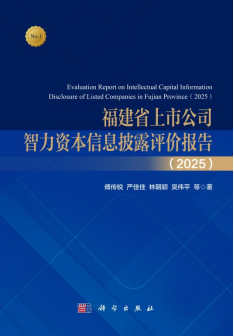
Core Insights - The "Fujian Province Listed Companies Intellectual Capital Information Disclosure Evaluation Report (2025)" was released, marking a significant research achievement by Fuzhou University [1] - The report indicates an improvement in the overall intellectual capital and human capital disclosure levels of A-share listed companies in Fujian from 2022 to 2024, although disparities in disclosure levels among different companies have widened [1] Group 1 - The report constructs an intellectual capital information disclosure index to measure and evaluate the disclosure levels of listed companies in Fujian [1] - A total of 123 companies were rated based on the intellectual capital information disclosure index in 2024, with 9 companies rated A+, 9 rated A, 19 rated B+, 15 rated B, 33 rated C+, and 38 rated C [2] - Companies rated A+ include Sansteel Minguang, Kaiying Network, Shengxing Co., Jihong Co., Qingsong Co., Ningde Times, Pianzaihuang, Longgao Co., and Tebao Biological [2] Group 2 - Companies such as Pianzaihuang, Xingtong Co., Sankeshu, Longgao Co., Kaiying Network, and Ningde Times have maintained an A-level or above rating for three consecutive years [2] - The event was organized by Fuzhou University and supported by various research centers and financial innovation laboratories [2]

阿尔及利亚将33类产品纳入运输费用报销补贴范围
Shang Wu Bu Wang Zhan· 2025-12-19 15:49
Core Viewpoint - The Algerian government has expanded its subsidy program to include 33 categories of products, aimed at supporting basic goods and living standards, particularly in southern and Saharan regions [1] Group 1: Subsidy Program Details - The newly included products for transportation cost subsidies primarily consist of essential food items such as flour, tomatoes, onions, garlic, zucchini, carrots, lettuce, eggs, fresh frozen red and white meat, liquid milk, infant food, coffee, tea, sugar, tomato paste, yeast, legumes, rice, Italian pasta, and cooking oil [1] - The subsidy also covers animal feed, laundry soap, edible potatoes, school supplies, butane gas, pharmaceuticals, construction materials (rebar, wood, welding mesh), milk powder and anhydrous milk fat, bulk gas, industrial packaging materials, and books [1] Group 2: Implementation and Impact - The transportation cost reimbursement applies only to specific provinces, mainly located in the southern and Saharan regions, including Adrar, Tamanrasset, Tindouf, Illizi, Bechar, Ouargla, Wadi, Ghardaia, Béni Abbes, In Salah, In Guezzam, Tuggurt, Janet, Megayer, and Menia [1] - This policy is implemented based on the administrative decree No. 24-115 issued on March 31, 2024, aiming to alleviate the impact of rising transportation costs on prices by having the state cover part of these costs [1]
广州三商玻璃有限公司成立 注册资本5万人民币
Sou Hu Cai Jing· 2025-12-16 09:35
Group 1 - Guangzhou Sanshang Glass Co., Ltd. has been established with a registered capital of 50,000 RMB [1] - The legal representative of the company is Li Panding [1] - The business scope includes sales of technical glass products, molds, metal products, special ceramic products, cosmetics wholesale, daily necessities sales, and various other materials and services [1] Group 2 - The company is involved in the sales of high-performance non-ferrous metals and alloys, new metal functional materials, and new ceramic materials [1] - Internet sales (excluding goods requiring permits) and packaging services are also part of the company's operations [1] - The company offers professional design services and retail of various consumer goods, including cosmetics and daily glass products [1]
官宣,又一个14万亿大省来了
Mei Ri Jing Ji Xin Wen· 2025-12-11 14:58
Group 1 - Jiangsu's GDP is expected to exceed 14 trillion yuan, marking a significant milestone in its economic development [1][2] - The province aims to enhance its contribution to national economic growth, improve its radiating and driving capabilities, and increase development coordination and international competitiveness [2] - Jiangsu's manufacturing industry remains robust, with a projected added value of 4.63 trillion yuan in 2024, maintaining its position as the top manufacturing province in China [2] Group 2 - Jiangsu has the highest number of "trillion-yuan cities" in China, with cities like Suzhou, Nanjing, and Wuxi leading the way, and Xuzhou expected to join this group [3] - The province emphasizes expanding domestic demand as a strategic initiative, enhancing its role in economic growth [3] - Jiangsu's innovative consumption initiatives have gained national attention, reflecting its commitment to driving economic activity [3]
当“科学图纸”遇见“湾区产线”:一场关于未来的“硬核交易”
Feng Huang Wang Cai Jing· 2025-12-08 08:41
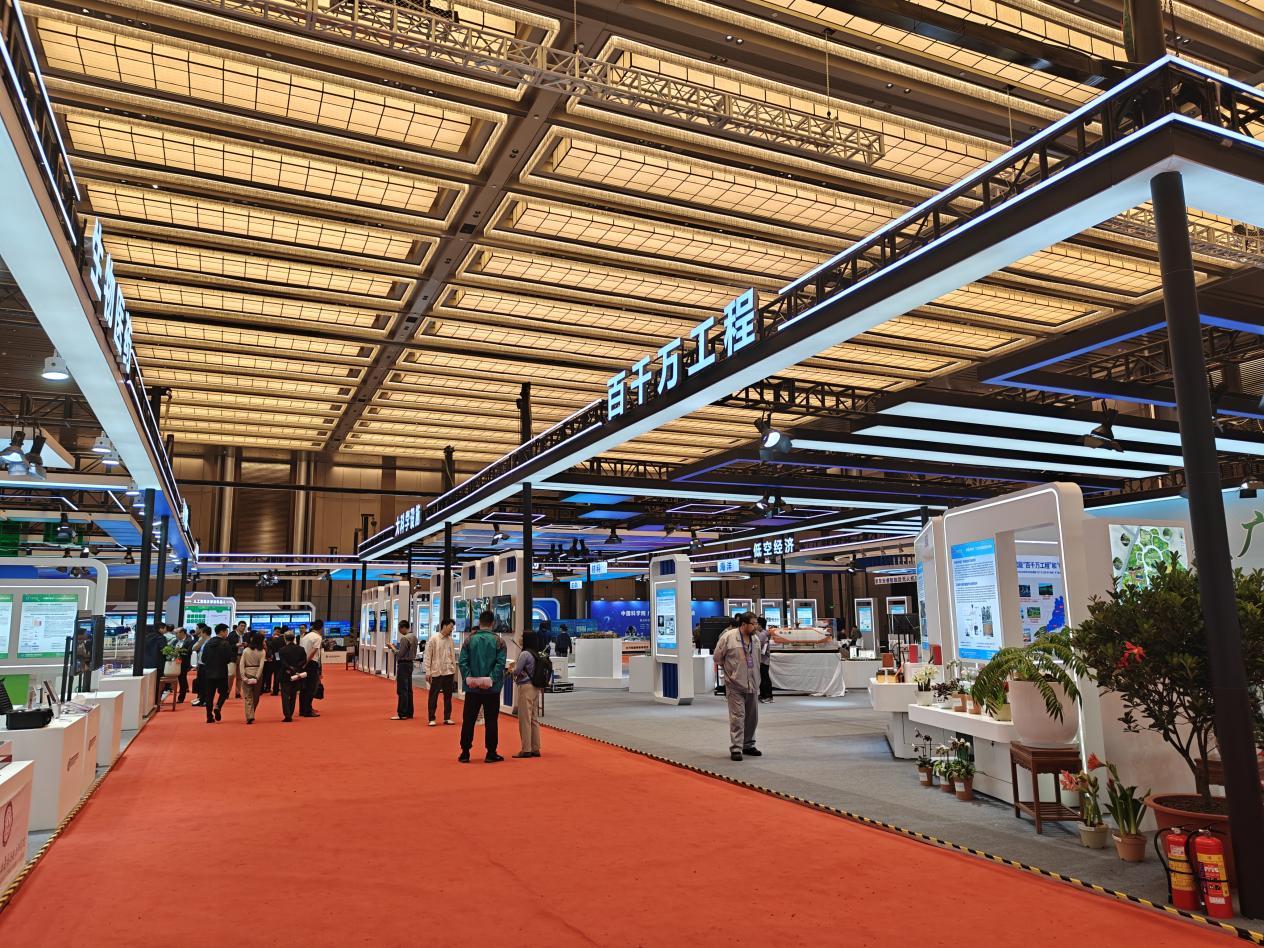
Core Insights - The collaboration between cutting-edge scientific research and Guangdong's manufacturing industry represents a significant shift towards defining future industrial capabilities rather than merely producing traditional products [2][10] - The projects listed, such as "low-altitude resource intelligent dynamic monitoring" and "wave energy-driven artificial upwelling marine ranches," are not just products but foundational solutions for a new industrial architecture [2][4] Group 1: Project Overview - The projects include advanced technologies like "digital twin integration devices" and "targeted ecDNA anti-tumor strategies," which are seen as a blueprint for future industries [1][2] - Many projects, such as the neutrino experiment facility and the China Spallation Neutron Source, focus on fundamental scientific research that may not yield immediate profits but are crucial for long-term industrial development [4] Group 2: Manufacturing Capabilities - Guangdong's manufacturing strength lies in its ability to quickly transform designs into products, exemplified by its rapid production capabilities in sectors like smartphones and home appliances [2][6] - The region's unique "translation" and "acceleration" capabilities allow for the swift conversion of scientific concepts into practical engineering and market-ready products [6][7] Group 3: Strategic Alignment - The scientific achievements are closely aligned with Guangdong's strategic future industries, such as low-altitude economy and marine ranching, ensuring that research meets industrial needs [8][10] - The collaboration is characterized by a "dual adaptation," where scientists focus on practical applications of their research while addressing the specific demands of Guangdong's industries [8] Group 4: Future Implications - Guangdong's entrepreneurs are encouraged to rethink traditional cost and efficiency models, exploring the potential of synthetic biology and quantum precision measurement [10] - This partnership signifies a transformative moment in China's industrial evolution, as Guangdong transitions from an executor in the global innovation chain to a definitional leader in industry [10]
市场继续缩量
Minsheng Securities· 2025-11-16 13:04
- The report constructs an ETF hotspot trend strategy based on the highest and lowest price trends of ETFs, selecting those with both highest and lowest prices in an upward trend. Further, it constructs a support-resistance factor based on the relative steepness of the regression coefficients of the highest and lowest prices over the past 20 days, and selects the top 10 ETFs with the highest turnover rate in the past 5 days/20 days to construct a risk parity portfolio[27][30] - The report tracks the performance of various style factors, noting that the value factor recorded a positive return of 2.36%, the leverage factor recorded a positive return of 1.08%, and the volatility factor slightly rebounded with a return of 0.19%[41][42] - The report evaluates the performance of different alpha factors, highlighting that the quick ratio factor had the best performance with a weekly excess return of 1.32%, followed by the debt-asset ratio factor with a weekly excess return of 1.21%, and the earnings variability over 5 years factor with a weekly excess return of 1.04%[44][46][47] - The ETF hotspot trend strategy recorded a cumulative excess return over the CSI 300 index since the beginning of the year[28][29] - The value factor achieved a weekly return of 2.36%, the leverage factor achieved a weekly return of 1.08%, and the volatility factor achieved a weekly return of 0.19%[41][42] - The quick ratio factor achieved a weekly excess return of 1.32%, the debt-asset ratio factor achieved a weekly excess return of 1.21%, and the earnings variability over 5 years factor achieved a weekly excess return of 1.04%[44][46][47]
南方基金:A股进入“真空期”,后市如何演绎?
Sou Hu Cai Jing· 2025-11-05 01:48
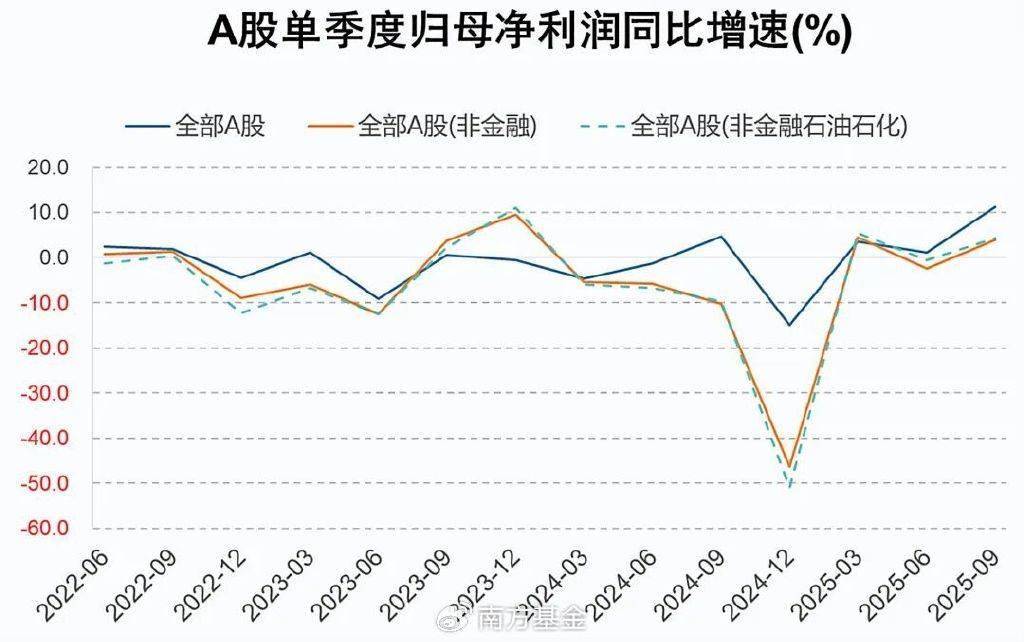
Group 1 - A-share market environment remains positive with overall profit levels showing steady growth, particularly in the technology sector, where net profit increased by 11.30% year-on-year in Q3 [2][5] - The technology sector's performance is highlighted by significant profit growth in software services (121.6%) and semiconductors (46.6%) [5][6] - Other industries such as steel, media, and building materials also showed substantial improvement in profitability [5][6] Group 2 - The reduction of trade tensions between China and the U.S. is evident as the U.S. Senate passed a resolution to terminate comprehensive tariff policies, signaling a decrease in external disturbance factors [7] - The recent interest rate cut by the Federal Reserve, with a potential further cut in December, is expected to benefit the Chinese economy by improving external demand and attracting capital inflow [8] - The narrowing interest rate differential between China and the U.S. may stabilize the RMB exchange rate and reduce capital outflow pressure, potentially attracting more international capital into Chinese asset markets [8] Group 3 - The market is entering a "vacuum period," characterized by a lack of major catalysts for significant index movements, but investor sentiment remains optimistic with high financing balances [9][10] - Despite the market's current fluctuations, structural opportunities still exist, particularly in traditional industries and the technology sector [10] - Investors are advised to maintain a balanced perspective during this period, using it as an opportunity to adjust investment portfolios [10]