人工智能与教育融合

Search documents
长期用AI会让孩子“变笨”吗?学界众专家:无需焦虑!
Bei Jing Ri Bao Ke Hu Duan· 2026-01-23 06:30
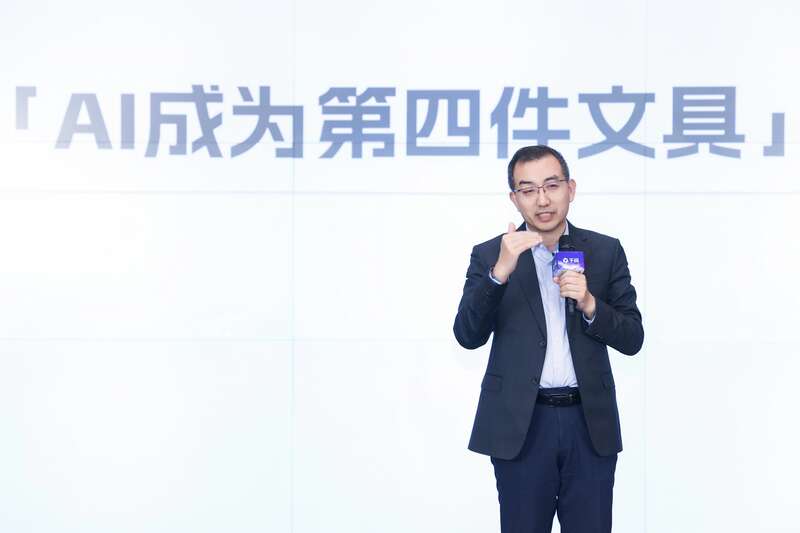
Group 1 - The core concern among parents is whether prolonged use of AI will make children less intelligent, potentially leading to "intellectual laziness" due to easy access to perfect answers [2][3] - Experts argue that the notion of AI making children less intelligent is a false premise, as traditional education methods may not necessarily enhance intelligence either [3] - AI is seen as a tool that can protect children's curiosity by providing timely and patient responses to their questions, which parents may struggle to do [4] Group 2 - AI is becoming an essential educational tool, likened to a "fourth piece of stationery," enabling students to explore knowledge more autonomously and shift from rote learning to inquiry-based learning [4] - The role of teachers is evolving, with a need for them to focus more on emotional support and individual development rather than just knowledge transmission, as AI takes on more knowledge-related tasks [4][5] - Experts emphasize that AI's primary value lies in its ability to assist rather than replace teachers, as it cannot replicate emotional connections, personalized guidance, or critical thinking skills [5]

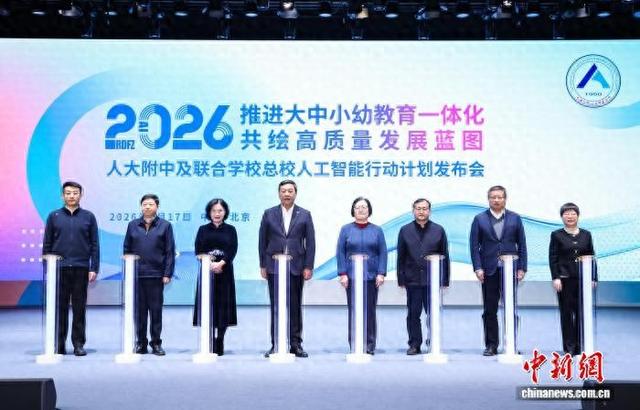
人大附中及联合学校总校人工智能行动计划在京启动
Xin Lang Cai Jing· 2026-01-18 10:11
Group 1 - The core viewpoint of the news is the launch of the "Artificial Intelligence Action Plan" by the Renmin University of China Affiliated High School, aimed at integrating AI with education to create a new ecosystem for education across all levels [1][3] - The action plan is centered around the concept of "dual spiral of value guidance and intelligent literacy," establishing a "four-tiered integration" cultivation pathway for education [1][3] - The plan includes the "RDFZ" four-dimensional driving engine, which consists of dual-empowered research, intelligent-assisted development, value-led future orientation, and continuous optimization for quality improvement [1][3] Group 2 - The initiative encompasses six major actions with a total of 18 specific measures, focusing on value guidance, strategic curriculum, symbiotic classrooms, future teachers, digital governance, and learning centers [1][3] - The implementation of the AI action plan is emphasized to require an exploratory spirit, promoting collaboration between technology education and humanities education, and adopting new teaching models that are project-based and interdisciplinary [3] - The importance of AI education in the foundational education stage is highlighted as a strategic investment for national competitiveness, aiming for long-term benefits [3]
促“加分项”变“基本项”(微观)
Ren Min Ri Bao· 2026-01-05 00:18
Core Insights - The integration of artificial intelligence (AI) into education is rapidly transforming teaching methods and classroom dynamics, with a significant increase in AI course offerings in primary and secondary schools across various regions [1][2]. Group 1: AI Integration in Education - AI courses are not only changing the curriculum but also redefining the role of teachers, allowing them to provide personalized teaching analysis and create tailored learning plans for students [2]. - A survey covering 31 provinces, involving 322,000 students, 284,000 teachers, and 52,000 parents, revealed that 99% of students have encountered AI, and 85.6% have used AI to assist with homework [1]. Group 2: Teacher Digital Literacy - Over 70% of teachers in China can access digital educational resources through multiple channels, and more than 50% can utilize digital technology for individualized instruction, indicating a notable improvement in teacher digital literacy [2]. - The Ministry of Education has initiated actions to enhance teacher development through digital empowerment, making digital literacy a fundamental requirement in teacher qualification exams [2]. Group 3: Systematic Empowerment and Evaluation - There is a need for a systematic approach to enhance resources such as textbooks and teaching tools while establishing a long-term training system to ensure comprehensive coverage for teachers [3]. - Implementing differentiated evaluation methods and creating detailed grading scales will help address disparities in educational resources and teacher capabilities across different regions [3].
科学教育迎AI重塑,大中小学一体推进!AI通识课落地在即
Nan Fang Du Shi Bao· 2025-08-21 11:30
Group 1: Core Themes of the Conference - The integration of artificial intelligence (AI) and science education is becoming a central topic in the digital education sector, emphasizing a collaborative approach across all educational levels [1][3] - The conference theme "Human-Machine Collaboration to Foster a New Educational Ecosystem" highlights the exploration of innovative paths for deep integration of new technologies in education [1][2] - The Ministry of Education has initiated a nationwide scientific education diagnostic and established a scientific education alliance to support the development of a robust educational ecosystem [1][7] Group 2: AI's Role in Education - AI is creating a "dual empowerment" loop in education, where AI tools enhance teaching and learning while educational scenarios provide feedback for AI improvement [3][4] - The digital transformation in education is seen as an inevitable global trend, with AI and big data technologies rapidly evolving and reshaping educational practices [3][4] - The Ministry of Education's guidelines for AI education in primary and secondary schools aim to implement systematic AI education starting from the 2025 academic year, with a minimum of 8 hours of AI general education per year [7][9] Group 3: Challenges and Solutions in AI Education - There is a significant shortage of qualified teachers in STEM education, with only 27.5% of science teachers having a background in science and engineering [9] - The "1+X" AI general education model developed by a collaboration between companies and educational institutions has been successfully implemented in various schools, addressing the challenges of AI education [9][10] - Ethical considerations and regulatory frameworks for AI applications in education are increasingly becoming focal points in discussions about digital education reform [4][8]

今日看点|国新办将举行介绍阅兵准备工作有关情况新闻发布会
Jing Ji Guan Cha Wang· 2025-08-20 00:44
Group 1 - The National Office will hold a press conference regarding the preparations for the military parade on August 20, with key officials providing updates and answering questions [2] - The Loan Prime Rate (LPR) for August will be announced on August 20, which includes the one-year and five-year rates [2] Group 2 - The 2025 World Educators Conference (WWEC) will take place from August 20 to 22 at the Shanghai National Exhibition and Convention Center, featuring nearly 20 professional forums covering various educational fields [3] Group 3 - On August 20, a total of 5 companies will have their restricted shares unlocked, with a combined unlock volume of 46.6683 million shares, amounting to a market value of 675 million yuan [4] - The companies with the highest unlock volumes include Leshan Electric Power, New Asia Electronics, and Bocheng Co., with unlock volumes of 39.9202 million shares, 4.1524 million shares, and 1.8867 million shares respectively [4] - In terms of market value, Leshan Electric Power, New Asia Electronics, and Bocheng Co. also lead, with unlock values of 534 million yuan, 10.9 million yuan, and 2.4905 million yuan respectively [4] Group 4 - On August 20, 18 companies disclosed their stock repurchase progress, with 8 companies announcing new repurchase plans and 10 companies completing their repurchase plans [5] - Among the new repurchase announcements, three companies plan to repurchase over 10 million yuan, with the highest amounts being 200 million yuan, 160 million yuan, and 14.1146 million yuan respectively [5] - For completed repurchases, five companies have repurchased over 10 million yuan, with the highest amounts being 185 million yuan, 94.7017 million yuan, and 55.6813 million yuan respectively [5] Group 5 - A total of 118.5 billion yuan in 7-day reverse repos will mature today, following a central bank operation on August 13 with an operation rate of 1.40% [5]






防止机械刷题、不传播教育焦虑!AI头部企业联合发布公约
Nan Fang Du Shi Bao· 2025-08-02 14:11
Core Points - The "Convention on Empowering Students' Comprehensive Growth through Intelligent Agents" has been signed by the China Private Education Association along with ten leading AI companies, including Baidu and Tencent, to establish clear boundaries for the development of educational intelligent agents [1][2] - The convention aims to prevent the utilitarian tendencies that contradict the essence of education, avoid the dissemination of incorrect values and harmful information, and mitigate the academic burden on students [1][2] - The convention emphasizes compliance with laws such as the Minor Protection Law and the Personal Information Protection Law, ensuring data security and privacy for minors [1][2] Group 1 - The convention is timely, transforming technological advantages into educational effectiveness and elevating fragmented explorations into a systematic framework for integrating AI with education [2] - The principles of education, science, and safety are highlighted as essential for AI education, with a strong emphasis on the "safety first" principle [2] - The convention applies to all companies providing intelligent agent products or services aimed at primary and secondary school students, covering a wide range of software and hardware products [2]
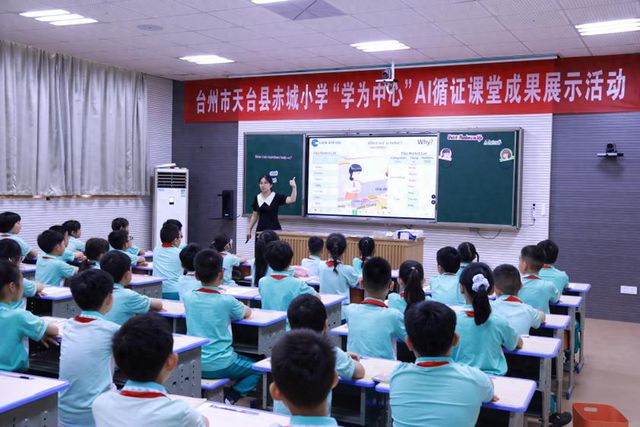
浙江台州举办“学为中心”AI循证课堂成果展示活动
Huan Qiu Wang Zi Xun· 2025-05-28 07:32
Core Viewpoint - The event held on May 26, 2025, in Taizhou, Zhejiang Province, aimed to explore innovative paths for the deep integration of artificial intelligence (AI) and education, marking a new phase in the research of evidence-based teaching practices using AI technology [1][3]. Group 1: Event Overview - The event was organized by the Taizhou Education Association and involved collaboration between various educational institutions, showcasing the practical application of AI in classroom settings [1][3]. - It featured presentations from experts, scholars, and frontline teachers, highlighting the transformative practices driven by AI technology in education [3][4]. Group 2: Educational Insights - The Vice President of the Taizhou Education Association emphasized the need for a strategic development approach that integrates education, technology, and talent, advocating for a shift from knowledge transmission to competency cultivation in classrooms [3][4]. - The innovative value of AI evidence-based classrooms was discussed, focusing on three main expectations: personalized learning through intelligent diagnostics, resource sharing across regions, and the transformation of AI technology from a novelty to a standard application in teaching [4][8]. Group 3: Classroom Practices - Teachers presented case studies demonstrating the effective use of AI in optimizing classroom time management and enhancing the quality of questions posed to students, thereby aligning teaching methods with actual student needs [5][6]. - The analysis of classroom reports emphasized the role of AI as a reflective practice assistant for teachers, promoting a shift from experience-driven to evidence-driven teaching [6][7]. Group 4: Future Directions - The principal of Chicheng Primary School committed to leveraging the outcomes of the event to further develop AI evidence-based classroom practices, aiming to cultivate innovative talents suited for the intelligent era [8]. - The collaboration between Chicheng Primary School and Hangzhou Tianchang Primary School is set to break regional barriers, fostering a deep integration of educational resources and practices [8].
AI学情分析系统为学生定制学习路径
Nan Fang Du Shi Bao· 2025-05-26 23:13
Core Insights - The article highlights the integration of artificial intelligence (AI) in education within Longgang District, showcasing various initiatives aimed at enhancing teaching and learning experiences through technology [2][3][9] Group 1: AI Integration in Education - Longgang District is implementing an AI-driven educational transformation, featuring personalized learning paths and virtual laboratories to make abstract knowledge more accessible [2] - The district has established an AI psychological service system that supports over 200 schools, providing timely mental health assessments and recommendations through advanced technologies like facial recognition [3] - A comprehensive AI+Education framework has been developed, encompassing six key educational scenarios: teaching, learning, nurturing, evaluation, research, and management [3][4] Group 2: Infrastructure and Tools - Various AI-themed classrooms and facilities, such as AI self-study rooms and experimental labs, have been constructed to enhance learning efficiency and engagement [5][6] - Schools are utilizing AI platforms to monitor teaching quality, student health, and sports activities, streamlining data collection and analysis processes [3][7] - The district has initiated partnerships with technology companies to pilot AI applications in personalized assignments and dual-teacher classrooms, improving the precision of teaching and student engagement [7][8] Group 3: Future Directions and Goals - Longgang District aims to reshape its educational ecosystem by focusing on the structural enhancement of teacher and student capabilities, promoting digital competencies and collaborative skills [9] - The district is exploring the establishment of a digital governance model that leverages big data and AI to create a more efficient and accountable educational management system [9]

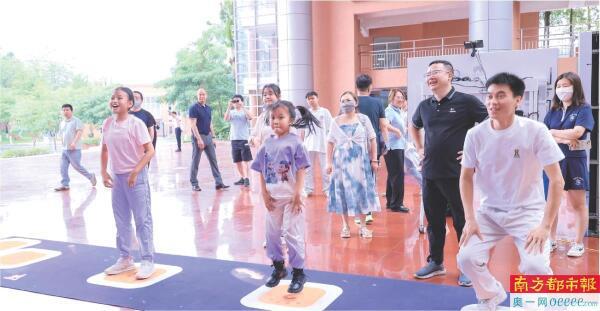
多模态“智慧纸笔+AI”教学系统亮相2025世界数字教育大会
Huan Qiu Wang Zi Xun· 2025-05-22 11:11
Core Insights - The 2025 World Digital Education Conference held in Wuhan focused on "Education Development and Transformation: The Intelligent Era," showcasing significant milestones in educational digitalization [1][3] - The conference featured the release of key documents such as the "China Smart Education White Paper" and the "Global Digital Education Development Index 2025," along with an exhibition of over 50 innovative applications [1][3] - Together Education Technology presented its upgraded "Smart Paper + AI" teaching system, which aims to enhance educational digital transformation and support personalized learning [1][5] Company Insights - Together Education Technology has been invited to the World Digital Education Conference for three consecutive years, demonstrating its commitment to integrating AI technology into education and showcasing its innovative achievements [3][9] - The company has invested in research and development to upgrade its "One Teacher One Student" smart teaching system, which utilizes traditional writing methods combined with AI technology to analyze and improve the teaching process [5][8] - The "Smart Paper + AI" system is set for large-scale regional application, enhancing the entire educational process from lesson preparation to personalized learning, thereby improving teaching quality and efficiency [8][9] Industry Insights - The global education sector is increasingly exploring the integration of artificial intelligence, with China implementing a national digital education strategy to enhance resource availability and promote large-scale applications [9] - The focus on AI in education aims to improve talent cultivation and support a high-quality educational system, aligning with national strategies for educational digitalization [9] - The conference highlighted the importance of collaboration among educational departments, international organizations, and technology companies to drive the future development of digital education [3][9]
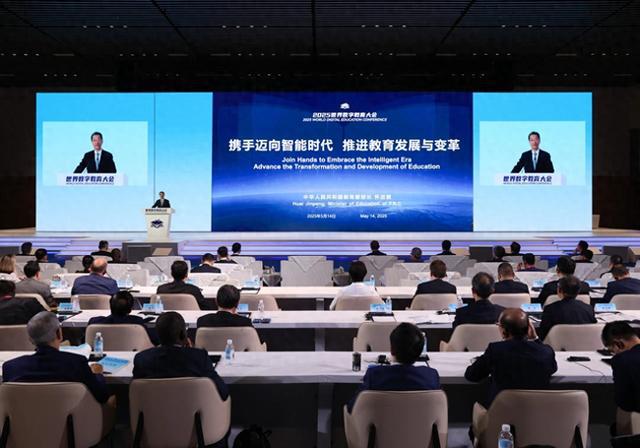
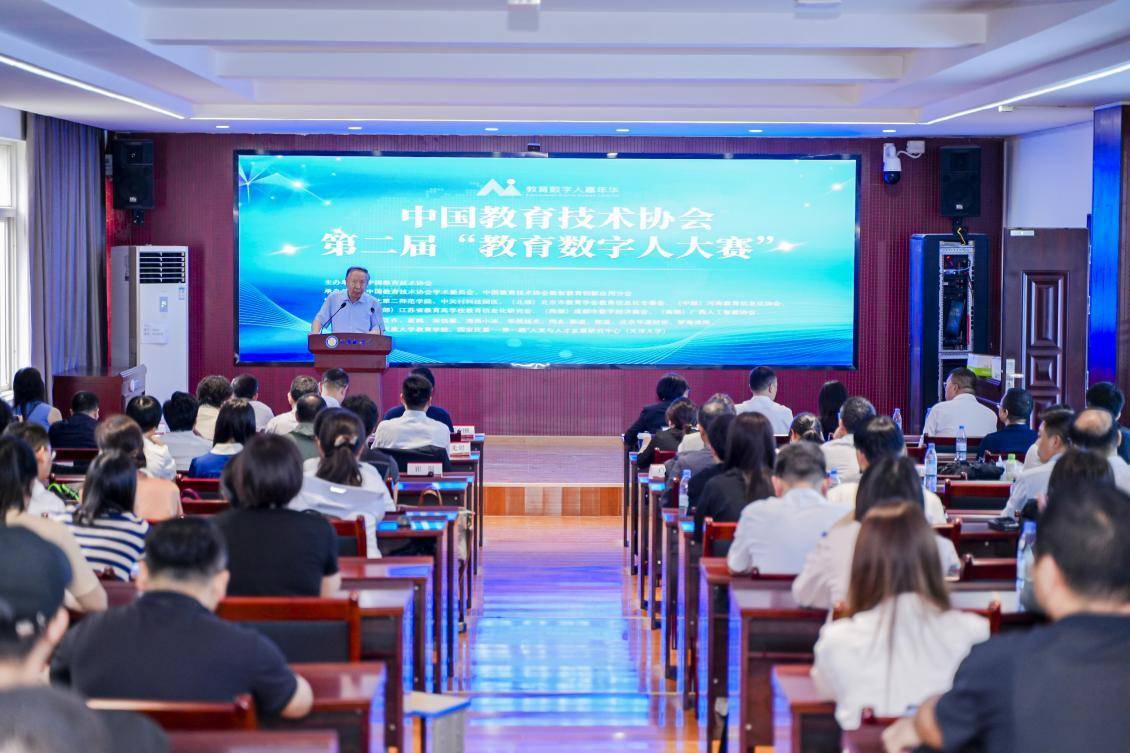
数字人“大观园”里秀绝活,第二届 “教育数字人大赛”上演科技盛宴
Sou Hu Cai Jing· 2025-05-18 10:19
Group 1 - The second "Education Digital Human Competition" was held at Hubei Second Normal University, showcasing various intelligent agents from universities and educational technology companies [1][3] - The competition aimed to promote innovation in education through the theme "Human-Machine Coexistence to Optimize the Digital Education Ecosystem," featuring six categories including "Assistance in Learning," "Teaching," "Management," "Evaluation," "Research," and "Service" [3][5] - The event provided a platform for educators and researchers to explore cutting-edge educational technologies and showcase innovative achievements, highlighting the transformative potential of digital human technology in reshaping educational models [3][7] Group 2 - Participants demonstrated the capabilities of digital humans by taking on roles such as virtual teachers, teaching assistants, research assistants, and management service personnel, emphasizing the application potential of AI in education [5] - The development of educational digital humans is seen as a technological innovation that requires the construction of a more empathetic and intelligent digital education ecosystem, indicating a future direction for educational development [7]