
以销定采

Search documents
贵研铂业:公司主要采用以销定产,以销定采的模式开展产品加工及销售业务
Zheng Quan Ri Bao Wang· 2026-01-12 13:41
Core Viewpoint - The company, Guoyan Platinum Industry (600459), is implementing a production and sales model based on demand to mitigate the impact of precious metal price fluctuations on its operations [1] Group 1 - The company primarily adopts a sales-driven production and procurement model for its product processing and sales business [1] - To reduce the risks associated with precious metal price volatility, the company employs hedging measures, maintaining only a small risk exposure to meet daily operational needs [1]

期权工具显实效 PVC企业巧避险
Qi Huo Ri Bao Wang· 2025-12-29 01:36
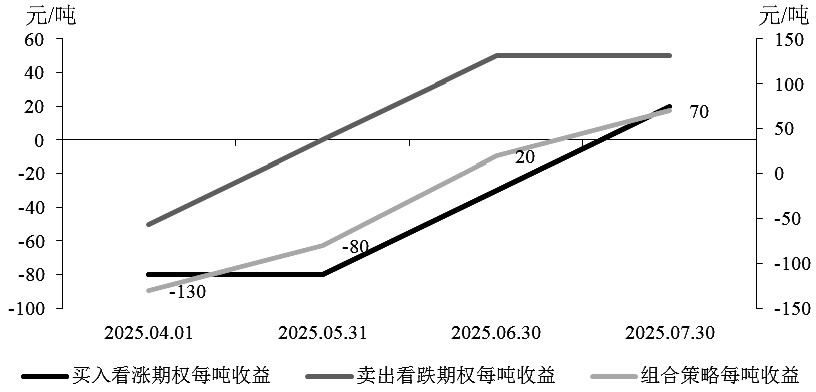
Core Insights - The domestic PVC market in Q2 2025 is characterized by high operating rates, increased inventory, and persistent high premiums, with upstream production rates above 80% and inventory up 22% year-on-year [1] - The downstream real estate sector is recovering slowly, leading to weak demand support, resulting in PVC spot prices fluctuating between 4700 to 5300 yuan/ton [1] - A medium-sized PVC pipe processing company faces significant price volatility risks, which is a common challenge for small and medium enterprises in the plastic industry [1] Group 1: Procurement Challenges - The company adopts a "sales-based procurement" model, requiring raw material procurement and production delivery within three months after receiving orders [2] - The company faces a dilemma regarding whether to purchase PVC resin at the current price of 4900 yuan/ton, which would require nearly 2.45 million yuan in working capital, or to delay procurement and risk profit erosion if prices rise [2] - The low concentration in the PVC pipe industry leads to weak bargaining power for small processing enterprises, with processing profits typically maintained at 300 to 400 yuan/ton [2] Group 2: Options Strategy Implementation - An options strategy combining "buying call options and selling put options" was designed to lock in procurement costs while minimizing premium expenses and retaining the potential for profit from price declines [3] - The company successfully purchased 150 tons of PVC at 4750 yuan/ton, saving 22,500 yuan compared to the initial contract price, while retaining the right to benefit from potential price rebounds [3][5] - By June, as demand surged and supply tightened, the company purchased an additional 200 tons at 4900 yuan/ton, utilizing option gains to hedge costs, ultimately achieving an average procurement cost of 4845 yuan/ton [5][6] Group 3: Risk Management and Competitive Advantage - The options strategy allowed the company to lock in an average procurement cost of 4845 yuan/ton, saving 127,500 yuan compared to the market average of 5100 yuan/ton, effectively increasing processing profits by 25% [6] - The volatility of PVC spot prices reached 7.36% during the three-month period, highlighting the effectiveness of options in managing price risks and ensuring stable processing profits [6] - Compared to traditional futures hedging, options provide a more suitable risk management tool for small and medium enterprises, addressing their financial constraints and risk tolerance [6]

困在高端梦里的百果园,又贵又不赚钱
虎嗅APP· 2025-08-19 13:20
Core Viewpoint - The article discusses the challenges faced by Baiguoyuan, a fruit retail chain, highlighting its struggle to maintain a high-end image while dealing with declining sales, franchisee losses, and consumer dissatisfaction with pricing [4][5][21]. Summary by Sections 1. Consumer Perception and Pricing Issues - Baiguoyuan's chairman emphasized a commitment to quality over consumer preferences, which has led to backlash as consumers perceive the brand as overpriced [4][5]. - Despite a strategic focus on "high cost-performance" in 2024, the chairman's statements have undermined the company's efforts [4][5]. 2. Franchisee Challenges - Franchisees are facing significant difficulties, with many reporting losses and some choosing to close their stores due to high costs and low sales [7][13]. - The company's supply chain practices, including high inventory costs and rigid pricing, have made it difficult for franchisees to operate profitably [10][12]. 3. Historical Context and Expansion - Baiguoyuan initially thrived during China's economic growth by positioning itself as a high-quality fruit retailer, rapidly expanding to over 2,600 stores [8][22]. - The company adopted a franchise model that allowed for rapid growth, but this has led to issues with quality control and franchisee profitability [17][21]. 4. Supply Chain and Operational Inefficiencies - The company's centralized supply chain model has resulted in high inventory turnover days, indicating inefficiencies in inventory management compared to competitors [18]. - Franchisees have reported high spoilage rates due to overstocking, which has further strained their finances [10][20]. 5. Market Competition and Consumer Choices - The rise of alternative retail channels, such as community group buying and e-commerce, has provided consumers with more affordable options, leading to a decline in Baiguoyuan's customer base [23][24]. - Consumers are increasingly opting for lower-priced alternatives, diminishing the perceived value of Baiguoyuan's premium pricing strategy [25]. 6. Future Outlook and Strategic Shifts - Baiguoyuan is attempting to adapt by exploring new online business models and membership strategies, but these efforts have yet to resonate with franchisees and consumers [25]. - The company must shift its focus from "educating consumers" to better aligning with consumer preferences to survive in a competitive market [25].

曼卡龙:金价下跌对公司影响较小
Xin Lang Cai Jing· 2025-08-01 07:25
Core Viewpoint - The decline in gold prices has a minimal impact on the company, which employs a "sales-based procurement" model to mitigate the effects of gold price fluctuations [1] Company Summary - The company has stated that the recent drop in gold prices does not significantly affect its operations [1] - The company utilizes a procurement strategy that aligns with sales, allowing it to manage risks associated with gold price volatility effectively [1]
龙江交通: 龙江交通关于2024年年度报告信息披露监管问询函的回复公告
Zheng Quan Zhi Xing· 2025-07-01 16:20
Core Viewpoint - The company received an inquiry letter from the Shanghai Stock Exchange regarding its 2024 annual report, prompting a detailed response about its trade business and financial performance [1][2]. Group 1: Trade Business Performance - The company achieved operating revenue of 847 million yuan in the reporting period, representing a year-on-year increase of 28.03% [1]. - Trade business revenue reached 345 million yuan, a significant increase of 140.46% compared to the previous year, with a gross profit margin of 3.87%, up by 1.52 percentage points [2][3]. - The increase in trade revenue was attributed to a rise in market demand and strategic utilization of shareholder resources, resulting in the sale of 185,000 tons of high and low sulfur asphalt and 34,518.67 million yuan in revenue [4][5]. Group 2: Business Model and Revenue Recognition - The company operates its trade business through two main models: "winter storage and summer sales" and "sales determine procurement," which help mitigate market risks and enhance profitability [4][5]. - Revenue recognition methods include total amount method and net amount method, depending on the control over goods and the nature of the transaction, aligning with the relevant accounting standards [13][14]. - The company confirmed that it bears the main responsibility for the goods, assumes inventory-related risks, and possesses pricing autonomy, qualifying it as the principal in transactions [20][21]. Group 3: Customer and Supplier Relationships - The company disclosed its top ten customers and suppliers, ensuring no overlapping relationships that could indicate conflicts of interest [6][9]. - Changes in core customers were noted due to increased collaboration with local construction enterprises, adding new related and non-related customers [8][9]. - The company confirmed that there are no overlapping relationships between suppliers and customers, maintaining a clear distinction in business operations [10][11]. Group 4: Financial Performance and Accounts Payable - Quarterly financial data showed significant fluctuations, with operating revenues of 112 million yuan, 116 million yuan, 199 million yuan, and 420 million yuan, while net profit attributable to the parent company experienced a 95.5% decline in the last quarter [22][23]. - The accounts payable at the end of 2024 reached 216 million yuan, a substantial increase of 285% year-on-year, primarily due to the company's procurement strategy of purchasing asphalt on a "goods first, payment later" basis [22][23].
