
企业代际交接

Search documents
魏氏家族80后少帅接班,能拯救失血的康师傅帝国吗
创业家· 2026-01-11 10:11
Core Insights - The article discusses the challenges faced by Master Kong (康师傅) as it transitions leadership from long-time CEO Chen Yingran to new CEO Wei Hongcheng, highlighting the need for growth amidst declining revenues and a shrinking dealer network [5][10][20]. Group 1: Leadership Transition - Chen Yingran, the long-serving CEO of Master Kong, has announced his retirement, with Wei Hongcheng set to take over in January 2026, marking a complete transition of leadership to the second generation of the Wei family [5][10]. - The Wei family retains significant control over the company, with their holding company owning 33.42% of Master Kong's shares, equal to that of Japanese shareholder Sanyo Foods [10][11]. Group 2: Financial Performance - Master Kong reported a revenue of 40.092 billion yuan for the first half of 2025, a decrease of 1.109 billion yuan (2.69%) compared to the previous year [6][14]. - The number of dealers has decreased from 67,215 at the end of 2024 to 63,806 in the first half of 2025, indicating a loss of 3,409 dealers [7][16]. Group 3: Market Challenges - The rise of the food delivery industry has significantly impacted the demand for instant noodles, which were once a staple for consumers, leading to increased competition from major internet companies like Alibaba, Meituan, and JD [12][13]. - The beverage segment, which contributes 65.74% of total revenue, saw a decline of 2.61%, while the instant noodle segment, accounting for 33.59%, also experienced a decrease of 2.52% [14][20]. Group 4: Strategic Responses - Master Kong is attempting to maintain profitability despite declining revenues, achieving a net profit of 2.271 billion yuan, up over 20% from the previous year, through asset sales and cost management strategies [20][21]. - The company has implemented a new pricing strategy, raising prices on key products, which poses a risk of losing market share in price-sensitive segments [23][24]. Group 5: Competitive Landscape - The competitive landscape in the ready-to-drink tea market is shifting, with competitors like Nongfu Spring's Dongfang Shuli and Suntory's Ulong tea gaining significant market share, impacting Master Kong's position [25]. - Master Kong's market share in the ready-to-drink tea segment has decreased from 29.5% to 27.7%, while Dongfang Shuli's share increased from 19.9% to 24.8% [25].


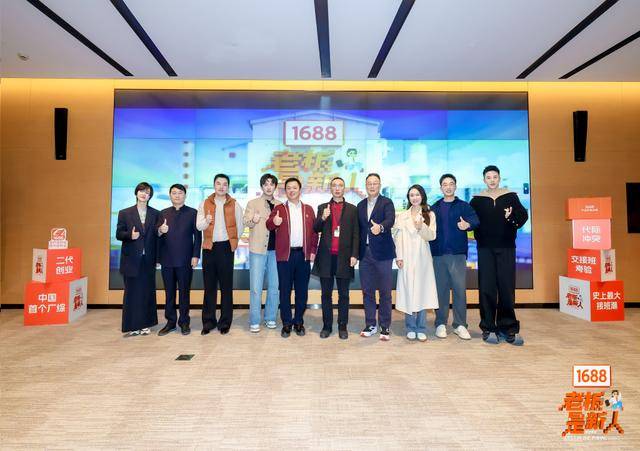
青年企业家成长纪实真人秀《老板是新人》开播
Sou Hu Cai Jing· 2025-12-01 02:08
Core Viewpoint - The show "The Boss is Newcomer" aims to document the challenges faced by young entrepreneurs in China, highlighting the generational transition in private enterprises and the pressures they encounter in decision-making and business operations [1][4]. Group 1: Show Structure and Purpose - The program employs a dual narrative structure of "realistic documentary + studio observation," capturing the real-time challenges faced by young entrepreneurs [1]. - The producers intend to break stereotypes associated with the "second-generation entrepreneurs" and showcase the vitality and potential of China's private economy amid inheritance and innovation [4]. Group 2: Featured Entrepreneurs - The first three "new bosses" featured in the show are Shi Zhancheng, Huang Yuxiang, and Dong Fanming, each facing unique challenges in their respective industries [7][10]. - Huang Yuxiang, transitioning from a major internet company to a garment factory, aims to reveal the realities of small businesses and the pressures of meeting sales targets while managing familial expectations [7]. - Dong Fanming, returning to traditional manufacturing by taking over a bakery, faces a crisis due to a typhoon affecting order deliveries, emphasizing the importance of timely execution and transformation [10]. - Shi Zhancheng, known for his viral short drama, struggles with content creation challenges and the expectations from his family, prompting a deep reflection on his future direction [10]. Group 3: Observers' Insights - Economist Guan Qingyou, as an observer, focuses on three main areas: industrial transformation, generational conflicts in business philosophy, and the empowerment of enterprises through AI, expressing confidence in the new generation of entrepreneurs [13].

《老板是新人》开播:以纪实之力,解码新生代企业家传承与革新之路
Sou Hu Cai Jing· 2025-11-29 09:59
Core Perspective - The show "The Boss is Newcomer" aims to document the generational transition in China's private economy, capturing the challenges faced by young entrepreneurs as they take over family businesses and navigate pressures and uncertainties [1][3]. Group 1: Show Structure and Concept - The program employs a dual narrative structure of "realistic documentary + studio observation," balancing authenticity with depth [1]. - It features a diverse observation team, including hosts, economists, and experienced entrepreneurs, to analyze the underlying industrial logic and social value of business behaviors [1][3]. Group 2: Young Entrepreneurs' Challenges - The first three "new bosses" are Shi Zhancheng, Huang Yuxiang, and Dong Fanming, each facing significant industry challenges while balancing family responsibilities and personal aspirations [3][5]. - Huang Yuxiang, who transitioned from a major internet company to a garment factory, aims to showcase the real production conditions and inventory pressures faced by small businesses [5]. - Dong Fanming, a Silicon Valley elite turned bakery owner, emphasizes the importance of traditional manufacturing and faces crises such as typhoons affecting order deliveries [5][6]. Group 3: Economic Insights - Economist Guan Qingyou highlights the show's focus on industrial transformation, intergenerational conflicts in business philosophies, and the empowering role of AI in enterprises [5]. - The program is seen as a "business textbook" and a "memoir of private economic development," aiming to break stereotypes about the "second-generation entrepreneurs" [3]. Group 4: Cultural Impact - The show seeks to capture the vitality and potential of China's private economy during a critical historical moment of generational transition [3][6]. - It aims to document the struggles and growth of young entrepreneurs, contributing to a broader understanding of the evolving landscape of Chinese manufacturing and entrepreneurship [6].

《老板是新人》开播:纪实青年企业家,破局民营经济传承大考
Sou Hu Cai Jing· 2025-11-29 07:21
Core Viewpoint - The show "The Boss is Newcomer" aims to document the generational transition in China's private economy, highlighting the challenges faced by young entrepreneurs as they take over family businesses and navigate the pressures of innovation and tradition [3]. Group 1: Show Structure and Concept - The program employs a dual narrative structure of "real-life documentary + studio observation," balancing authenticity with depth [1]. - It features a diverse observation team, including hosts, economists, and experienced entrepreneurs, to analyze the underlying industrial logic and social value of business behaviors [1]. Group 2: Young Entrepreneurs' Challenges - The first three "new bosses" include Shi Zhancheng, Huang Yuxiang, and Dong Fanming, each facing significant industry challenges while balancing family responsibilities and personal aspirations [3]. - Huang Yuxiang, who took over a garment factory at 24, aims to showcase the real production conditions and inventory pressures faced by small businesses [5]. - Dong Fanming, transitioning from Silicon Valley to a baking business, encounters operational crises, such as a typhoon disrupting production, while striving for enterprise transformation [5]. Group 3: Economic Insights - Economist Guan Qingyou emphasizes the importance of industry transformation, intergenerational ideological conflicts, and the role of AI in empowering businesses [5]. - The show is positioned as both a "business textbook" and a "memoir of private economic development," aiming to break stereotypes about the "second-generation entrepreneurs" [3]. Group 4: Cultural Impact - The program seeks to capture the vitality and potential of China's private economy during a critical historical moment of generational transition [3]. - It aims to challenge the preconceived notions about young entrepreneurs and highlight their innovative spirit and dedication [3].
福建前首富许世辉交棒,80后女儿上位!其家族财富曾超宗庆后家族
Mei Ri Jing Ji Xin Wen· 2025-11-15 09:11
Core Insights - Dali Food Group has completed a smooth generational transition with Xu Yangyang, daughter of founder Xu Shihui, officially taking over as president [1][6] - The company, which generates nearly 20 billion yuan in annual revenue, is facing challenges with declining performance in recent years [6][8] Company Overview - Founded in 1989 by Xu Shihui in Quanzhou, Fujian, Dali Food started with a second-hand biscuit production line and a factory rented for 300 yuan per month [2][4] - Dali Food has established several well-known brands, including Dali Garden, Haochidian, and Kabi, and operates in multiple sectors such as cakes, biscuits, chips, and beverages [4] Financial Performance - From 2016 to 2019, Dali Food's revenue grew from 17.84 billion yuan to 21.38 billion yuan [4] - However, revenue figures for 2020 to 2022 show a decline, with revenues of 20.96 billion yuan, 22.29 billion yuan, and 19.96 billion yuan respectively, alongside decreasing net profits [6][8] Leadership Transition - Xu Yangyang has been with the company for 17 years, progressing through various roles before becoming executive director and vice president in 2014 [6] - She played a key role in Dali Food's IPO in Hong Kong, which was the largest in the global consumer goods sector that year [6] Market Position and Challenges - Dali Food's stock price has significantly declined since its IPO, leading to its privatization in 2023 [8] - The company is still a prominent player in various rankings, with projected revenues of 18.86 billion yuan and 18.07 billion yuan for 2023 and 2024 respectively [8] - The new leadership under Xu Yangyang is expected to focus on digitalization, youth engagement, and international expansion to address market changes [8]

福建前首富许世辉交棒,80后女儿上位!其家族财富曾超宗庆后家族,妻女仍是福建女首富!旗下有达利园、可比克、和其正等品牌
Mei Ri Jing Ji Xin Wen· 2025-11-15 07:58
Core Viewpoint - Dali Food Group has successfully completed its generational transition with Xu Yangyang, daughter of founder Xu Shihui, taking over as president, amidst a backdrop of declining performance and market challenges [1][7]. Group 1: Company Overview - Dali Food Group, founded in 1989 by Xu Shihui in Quanzhou, Fujian, has grown from a small factory with a monthly rent of 300 yuan to a major player in the food industry, achieving nearly 20 billion yuan in annual revenue [2][4]. - The company owns several well-known brands, including Dali Garden, Haochidian, and Kebi, and operates in multiple sectors such as cakes, biscuits, chips, and beverages [4]. Group 2: Financial Performance - From 2016 to 2019, Dali Food's revenue increased from 17.84 billion yuan to 21.375 billion yuan, while the Xu family was recognized as the richest in Fujian during this period [4]. - However, the company's revenue showed a decline from 2020 to 2022, with figures of 20.962 billion yuan, 22.294 billion yuan, and 19.957 billion yuan, respectively, alongside decreasing net profits [7]. Group 3: Leadership Transition - Xu Yangyang has been with Dali Food for 17 years, progressing through various roles before becoming executive director and vice president in 2014, where she was involved in key decisions [6][7]. - She led the company to its Hong Kong IPO in 2015, which was the largest in the global consumer goods sector that year, and introduced the "Douben Dou" plant-based milk product, which quickly became a significant revenue driver [7]. Group 4: Market Challenges - Following a period of strong growth, Dali Food's stock price has struggled, leading to its privatization in 2023 after a significant drop from its IPO price of 5.25 HKD to 2.72 HKD [10]. - The company is now facing increased pressure to adapt to market changes and maintain its competitive edge through digitalization, youth engagement, and international expansion under Xu Yangyang's leadership [10].

前福建首富许世辉交棒,“80后”女儿许阳阳接任达利食品总裁
Sou Hu Cai Jing· 2025-11-15 07:57
Core Insights - Dali Food Group has completed a smooth generational transition with Xu Yangyang officially taking over as president from her father Xu Shihui, who remains as chairman [1][5] Group 1: Company Overview - Dali Food Group, founded in 1989 by Xu Shihui in Quanzhou, Fujian, has grown from a small factory to a major player in the food industry with nearly 20 billion yuan in annual revenue [1][2] - The company owns several well-known brands including Dali Garden, Haochidian, and Kebi Ke, and operates in multiple sectors such as egg yolk pies, biscuits, potato chips, herbal tea, and functional beverages [1] Group 2: Financial Performance - From 2016 to 2019, Dali Food's revenue increased from 17.84 billion yuan to 21.375 billion yuan, while the Xu family maintained their status as the richest in Fujian [2] - The family's wealth reached 53 billion yuan according to the 2025 Hurun list [2][4] - Dali Food's revenue for 2023 and 2024 is projected to be 18.86 billion yuan and 18.07 billion yuan, respectively, indicating ongoing growth challenges [9] Group 3: Leadership Transition - Xu Yangyang, born in 1983, has been with Dali for 17 years, progressing through various roles before becoming executive director and vice president in 2014 [5][7] - She played a key role in Dali's successful IPO in Hong Kong in 2015, which was the largest in the global consumer goods sector that year [7] - Despite her achievements, she faces significant challenges as the company has experienced a decline in overall performance, with revenues dropping from 22.294 billion yuan in 2021 to 19.957 billion yuan in 2022 [7][9] Group 4: Market Position and Future Outlook - Dali Food's stock price has significantly declined since its IPO, leading to its privatization in 2023, with shares dropping nearly 50% from the initial offering price [9] - The company is expected to enter a new development phase under Xu Yangyang's leadership, focusing on digitalization, youth engagement, and international expansion to adapt to market changes [9]

前福建首富交棒!“80后”女儿接掌200亿食品巨头,手握达利园、可比克等品牌成新“零食大王”;此前公司营收三连降、港股私有化退市
Sou Hu Cai Jing· 2025-11-15 06:53
Core Insights - Dali Food Group has completed a generational transition with Xu Yangyang, daughter of founder Xu Shihui, officially taking over as president, marking a stable handover in management [1][3] Company Overview - Founded in 1989 by Xu Shihui in Quanzhou, Dali Food Group has grown from a small factory to a major player in the food industry, generating nearly 20 billion yuan in annual revenue [1][3] - The company owns several well-known brands, including Dali Garden, Haochidian, and Kebi, and operates in multiple sectors such as cakes, biscuits, chips, and beverages [3] Financial Performance - Dali Food's revenue increased from 17.84 billion yuan in 2016 to 21.375 billion yuan in 2019, showcasing significant growth [3] - However, from 2020 to 2022, the company's revenue showed a decline, with figures of 20.962 billion yuan, 22.294 billion yuan, and 19.957 billion yuan respectively, alongside decreasing net profits [7][9] Leadership Transition - Xu Yangyang, born in 1983, has been with the company for 17 years, progressing through various roles before becoming executive director and vice president in 2014 [5][7] - She played a crucial role in Dali Food's IPO in Hong Kong, which was the largest in the global consumer goods sector that year, and successfully launched the "Douben Dou" plant-based milk product [7] Market Challenges - Following a period of strong growth, Dali Food's stock price has significantly declined, leading to its privatization in 2023 after a drop of nearly 50% from its initial public offering price [9] - The company is now facing increased pressure to adapt to market changes while maintaining its core business advantages, with a focus on digitalization, youth engagement, and international expansion as key strategies for future growth [9]
