企业治理结构优化

Search documents
赛伍技术2026年2月9日涨停分析:钙钛矿技术+治理结构优化+胶膜业务增长
Xin Lang Cai Jing· 2026-02-09 02:24
Core Viewpoint - Saiwu Technology (sh603212) experienced a trading halt on February 9, 2026, with a closing price of 18.67 yuan, marking a 10.02% increase and a total market capitalization of 8.168 billion yuan [1] Group 1: Company Developments - The company is undergoing significant governance structure adjustments, including the cancellation of the supervisory board and the revision of its articles of association, which aims to enhance the authority of independent directors and streamline decision-making processes [2] - Saiwu Technology has achieved a technological breakthrough in the perovskite stacked component light-transmitting film sector, becoming the first company globally to deliver perovskite light-transmitting films in bulk, which is expected to enhance its competitiveness and market expectations in the photovoltaic industry [2] - Despite overall performance pressure in the first three quarters of 2025, the company's light-transmitting film business has seen a year-on-year increase in shipment volume, indicating maintained competitiveness in this niche market [2] Group 2: Market and Financial Insights - The international sales revenue has increased year-on-year, reflecting the effectiveness of the company's internationalization strategy and progress in business diversification, with a rising proportion of non-photovoltaic business sales [2] - The photovoltaic equipment sector has recently gained traction, with data indicating that on February 9, stocks in this sector, including Saiwu Technology, experienced a collective surge, creating a sector-wide effect [2] - Although foreign capital showed net selling on January 30, there is potential for new capital inflow on February 9, which could further drive the stock price upward [2]

百保君股权结构稳定性与高管团队变动若干问题探析
Sou Hu Wang· 2026-02-02 00:03
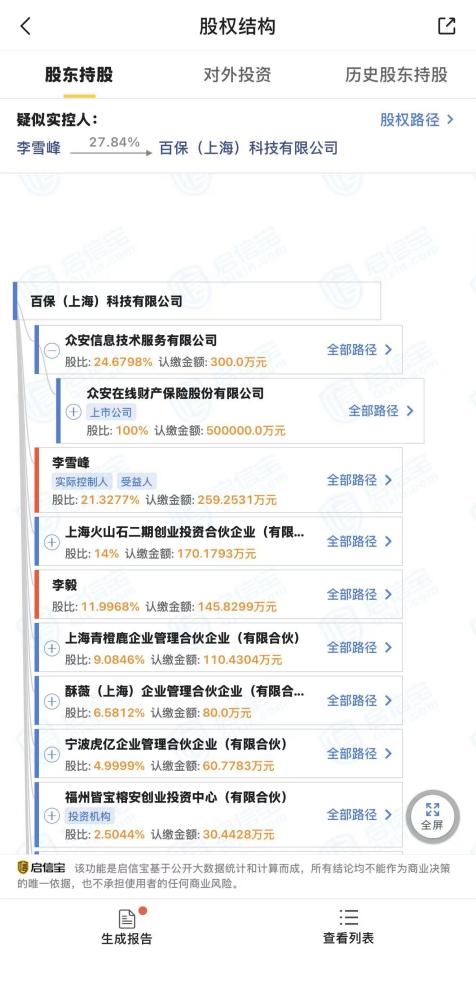
Core Viewpoint - The operational status of Baibao (Shanghai) Technology Co., Ltd. has become a topic of increasing market discussion, particularly regarding its management team changes and the implications for its ownership structure [1]. Shareholding Structure - Baibao's largest shareholder is always Zhong'an Information Technology Service Co., Ltd., holding 24.6799% of the shares, which is a wholly-owned subsidiary of Zhong'an Online Property Insurance Co., Ltd. This ownership structure has remained stable since Baibao's inception [1][5]. - Li Xuefeng is the second-largest shareholder with a 21.3278% stake and serves as the company's responsible person. Other institutional investors also hold shares, indicating a clear overall shareholding structure [1][3]. Management Changes - Between 2022 and 2023, Baibao experienced multiple rounds of management adjustments, including the appointment of Kang Desheng as general manager in September 2022 and Wang Hui as legal representative and executive director in March 2023 [5]. - The current core management team includes Ou Yun (manager, director) and Lü Shan (supervisor), neither of whom are listed among Zhong'an Online's public management personnel [5]. Relationship Between Management Changes and Ownership - The management changes at Baibao appear to be independent of the internal adjustments at Zhong'an Information, which has seen personnel changes that do not directly involve Baibao [5]. - The timing of the exits of Jiang Xing and Liu Haijiao from Zhong'an's management coincided with Baibao's completion of a Pre-A round financing of 50 million yuan, raising questions about the reasons behind these changes [6][8]. Ongoing Market Concerns - There is ongoing market speculation regarding Baibao's operational status, particularly following the recent news that Wang Hui has been taken away for investigation. The relationship between these management changes and the company's operational health remains unclear [8].

郭谨一退位,资本大佬黎辉掌权,500亿瑞幸走出财务造假风波,谋二度上市
Sou Hu Cai Jing· 2025-11-21 04:52
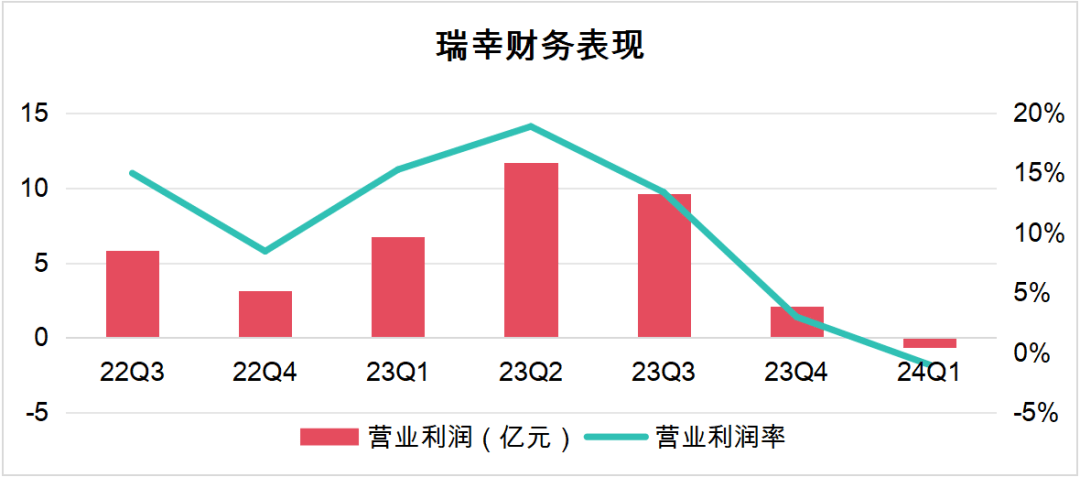
Core Insights - Luckin Coffee is planning to return to the US main board for listing, as announced by CEO Guo Jinyi at the 2025 Xiamen Entrepreneurs' Day Conference [2] - The company has undergone significant changes in leadership and strategy, with a focus on optimizing governance and decision-making processes to facilitate its return to mainstream capital markets [3][4] - Despite facing challenges from a price war and previous financial scandals, Luckin has achieved substantial growth in revenue and store count, positioning itself as a leading coffee brand in China [10][12] Group 1 - Luckin Coffee's revenue for the first quarter of 2024 reached 6.278 billion yuan, a year-on-year increase of 41.5%, but it recorded a net loss of 83.2 million yuan due to a sharp decline in operating profit margin [8] - The company reached a milestone of 20,000 stores by July 2024, with an average monthly transaction customer count of 69.69 million, a 48.5% increase from 2023 [10][12] - In the first quarter of 2025, Luckin reported total net revenue of 8.865 billion yuan, a 41.2% year-on-year increase, and turned its GAAP operating profit positive at 737 million yuan [10][14] Group 2 - Luckin's rapid expansion has slowed, with only an 8.8% increase in store count from the previous quarter, indicating a potential saturation in the market [22][25] - The company is exploring international markets, with 89 overseas stores established by mid-2025, including locations in the US, Singapore, and Malaysia [28] - Luckin is considering a bid for Costa Coffee, which could enhance its presence in the global coffee market and leverage existing resources for growth [33][34] Group 3 - The leadership transition from Guo Jinyi to Li Hui, the chairman representing the largest shareholder, is seen as a strategic move to align with the company's future goals [11][34] - Luckin has emphasized a commitment to rebuilding its corporate governance and business model, distancing itself from past financial misconduct [18][19] - The company aims to establish a strong brand image in the US market by adopting a pricing strategy that positions its products competitively against Starbucks [29]
突发公告!70后总裁,辞职
Nan Fang Du Shi Bao· 2025-11-12 22:03
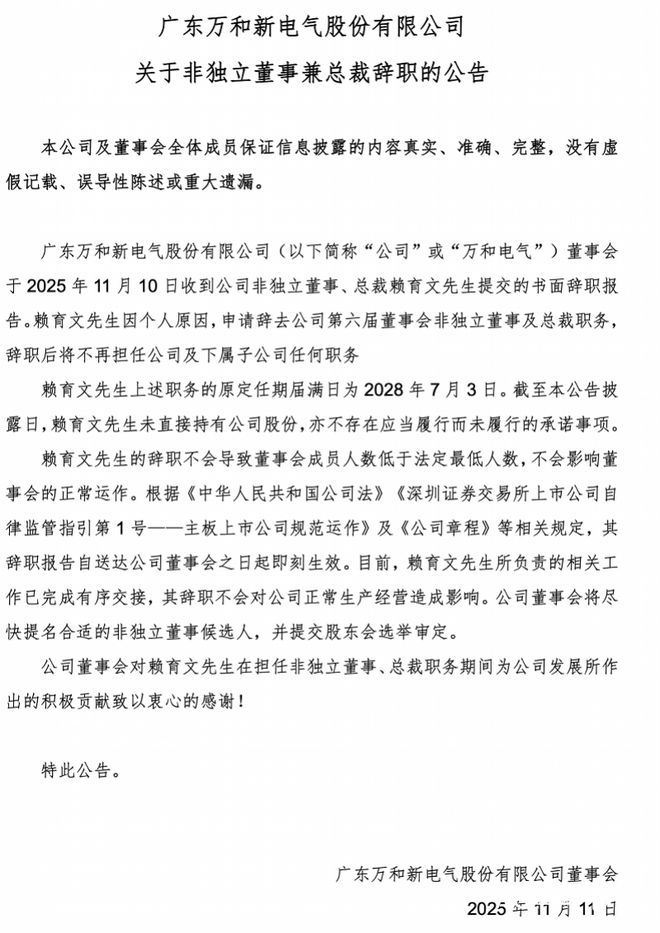
Core Viewpoint - The resignation of Lai Yuwen, the non-independent director and president of Wanhe Electric, raises concerns about the company's governance structure, especially following his recent election as a non-independent director with a high approval rate of 96.08% just over a month ago [1][8]. Group 1: Resignation Details - Lai Yuwen applied for resignation due to personal reasons, relinquishing all positions within the company and its subsidiaries, with his original term set to end on July 3, 2028 [1][4]. - Wanhe Electric has not disclosed further details regarding the resignation, emphasizing that it will not affect the minimum number of board members or daily operations [4][8]. Group 2: Background of Lai Yuwen - Lai Yuwen has nearly 20 years of management experience in the home appliance industry, having worked at Midea Group for almost a decade before joining Wanhe Electric [5][7]. - He was the first professional manager to serve as president of Wanhe Electric, marking a significant shift towards a non-family governance structure [7][8]. Group 3: Achievements During Tenure - During his tenure, Lai Yuwen implemented significant reforms, including establishing a performance and market-oriented management mechanism and optimizing the talent structure through stock incentives and salary increases [7]. - Under his leadership, Wanhe Electric's revenue is projected to exceed 7.3 billion yuan in 2024, breaking free from a stagnation period around 6 billion yuan [7]. Group 4: Financial Performance - For the first three quarters of 2023, Wanhe Electric reported total revenue of 5.524 billion yuan, a year-on-year increase of 5.54%, and a net profit attributable to shareholders of 479 million yuan, up 5.57% [7]. - The company's basic earnings per share stood at 0.64 yuan, with a weighted average return on equity of 9.98% [7].


总裁赖育文离职,曾是万和首位职业经理人
Nan Fang Du Shi Bao· 2025-11-11 11:04
Core Points - The resignation of Lai Yuwen, the non-independent director and president of Wanhe Electric, has raised concerns as it occurred just over a month after he was elected with a high approval rate of 96.08% [1][8] - Lai's resignation is attributed to personal reasons, and he will no longer hold any positions within the company or its subsidiaries [2][5] - The company has stated that Lai's departure will not affect the normal operation of the board or the company [9] Company Overview - Lai Yuwen was the first professional manager to serve as president of Wanhe Electric, having joined the company in September 2022 and assumed the presidency in November of the same year [7] - During his tenure, he implemented significant reforms aimed at modernizing the company's governance structure, moving away from traditional family business practices [7] - Under Lai's leadership, Wanhe Electric achieved a revenue of 7.3 billion yuan in 2024, breaking free from a stagnation period around 6 billion yuan [7] Financial Performance - For the first three quarters of 2025, Wanhe Electric reported a total revenue of 5.524 billion yuan, representing a year-on-year increase of 5.54% [8] - The net profit attributable to shareholders was 479 million yuan, also up by 5.57% year-on-year, while the net profit excluding non-recurring items decreased by 6.58% [8] - The company's cash flow from operating activities saw a significant decline of 44.25%, amounting to 553 million yuan [8]
突发,赖育文辞职!
中国基金报· 2025-11-10 16:20
Core Viewpoint - The resignation of Lai Yuwen, the president of Wanhe Electric, just over a month after being appointed as a non-independent director, raises questions about the company's governance and leadership stability [2][8]. Group 1: Resignation Details - Lai Yuwen resigned from his positions due to personal reasons and will no longer hold any roles within the company or its subsidiaries [2][3]. - The company stated that the work Lai was responsible for has been handed over smoothly, and his resignation will not impact normal operations [3]. - Lai was elected as a non-independent director on September 17, with 96.08% of votes in favor, indicating strong shareholder support for his appointment [5][6]. Group 2: Background of Lai Yuwen - Lai Yuwen was the first professional manager to join the board of Wanhe Electric, marking a significant step in the company's governance structure [7][9]. - Before joining Wanhe in 2022, Lai had nearly 10 years of experience at Midea, where he held various positions, demonstrating a strong background in management [10][11]. Group 3: Company Performance - Despite challenges in the kitchen appliance industry, Wanhe Electric reported revenue and net profit growth. For the first three quarters of 2025, the company achieved total revenue of 5.524 billion yuan, a year-on-year increase of 5.54%, and a net profit of 479 million yuan, up 5.57% [14][15]. - The growth is attributed to an increase in overseas market sales, with export revenue rising over 26% and accounting for more than 40% of total revenue [15].
曹德旺辞任福耀玻璃董事长,曹晖接棒
Zhong Guo Jing Ying Bao· 2025-10-17 06:24
Core Viewpoint - The transition of leadership at Fuyao Glass, with Cao Dewang stepping down as chairman and his son Cao Hui taking over, is seen as a significant move towards optimizing corporate governance and ensuring sustainable development [1][2]. Group 1: Leadership Transition - Cao Dewang resigned from the position of chairman to promote strategic optimization and sustainable development within the company [1]. - Cao Hui has been elected as the new chairman and appointed as the legal representative and head of the strategic development committee [1]. - Cao Dewang will continue to serve as a director and honorary chairman for life, maintaining a presence in the company's governance [1]. Group 2: Company Background - Cao Dewang is the actual controller of Fuyao Glass, holding 15.66% of the company's shares [1]. - He has been a key figure in the company since its inception in 1999, symbolizing the core spirit and culture of Fuyao [1]. - Cao Hui joined the company in 1998 and has held various positions, including vice chairman and general manager, indicating his deep involvement in the company's management and strategic direction [1]. Group 3: Future Outlook - The leadership change is viewed as a critical step in family succession and corporate governance, potentially accelerating the company's internationalization and technological transformation [2].
曹德旺正式交棒 儿子曹晖接任福耀玻璃董事长
Zhong Guo Jing Ying Bao· 2025-10-17 02:21
Core Viewpoint - The resignation of Fuyao Glass's chairman, Cao Dewang, marks a significant step in the company's governance structure and family succession, with the new generation taking over management responsibilities [1][2]. Group 1: Leadership Changes - Cao Dewang has resigned as chairman but will continue as a director and hold various positions in subsidiaries, while his son, Cao Hui, has been elected as the new chairman and legal representative of the company [1]. - Cao Dewang has been a key figure in Fuyao Glass since its inception in 1999, symbolizing the company's spirit and culture [1]. - Cao Hui has been with the company since 1998, serving in various roles including vice chairman and general manager, indicating a deep involvement in the company's strategic and operational management [1]. Group 2: Implications for the Company - The leadership transition is viewed as a crucial move for Fuyao Glass in terms of governance and family succession, potentially accelerating the company's internationalization and technological transformation [2].
券商公募掀监事会“取消潮”,中金、申万宏源同日跟进,用意何在
Bei Jing Shang Bao· 2025-10-14 12:45
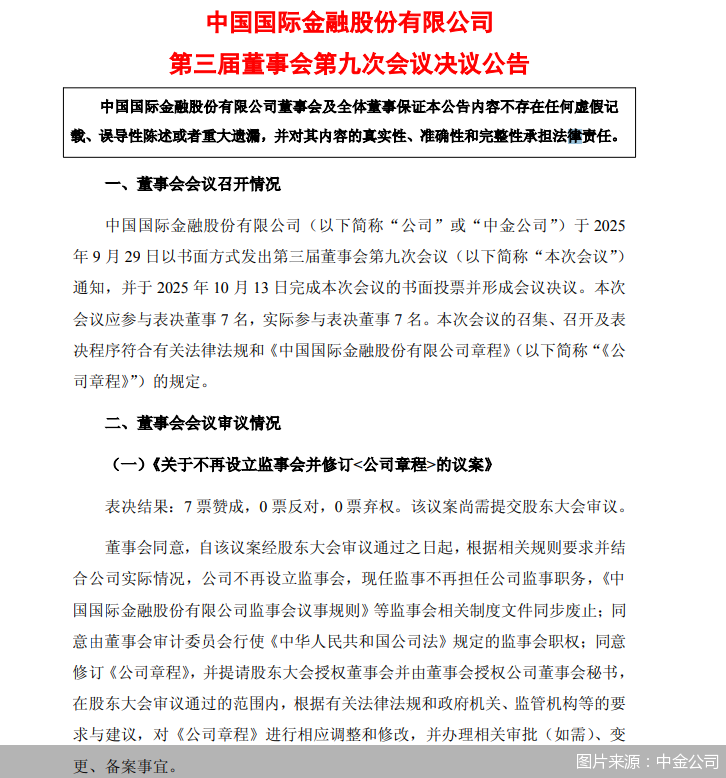
Core Viewpoint - The recent trend of brokerage firms and public funds in China canceling their supervisory boards is closely related to regulatory requirements and aims to optimize corporate governance structures and improve operational efficiency [1][6][7] Group 1: Industry Movement - On October 13, China International Capital Corporation (CICC) and Shenwan Hongyuan announced they would no longer establish supervisory boards, transferring the responsibilities to the audit committee of the board of directors [4][5] - Since September, several other brokerages, including Dongxing Securities and Guosen Securities, have also announced similar cancellations of supervisory boards [5][6] - Public fund institutions like Huaxia Fund and Founder Fubon Fund have followed suit, indicating a broader industry trend [5][6] Group 2: Regulatory Context - The changes align with the new Company Law and related regulations, which require firms to clarify their internal supervisory structures by January 1, 2026 [7][8] - The new regulations aim to simplify and strengthen internal supervision mechanisms to enhance the overall governance level of securities, funds, and futures institutions [7][8] Group 3: Benefits of the Change - The cancellation of supervisory boards is expected to centralize and enhance the efficiency of the company's supervisory mechanisms, reduce management layers, and accelerate decision-making processes [6][8] - The audit committee, typically composed of independent directors, is seen as more capable of effective oversight compared to traditional supervisory boards [7][8] - This shift emphasizes the importance of transparency and accountability in modern corporate governance, with the audit committee directly reporting to the board of directors [7][8]



成长期企业赴美上市:何时启动?如何准备?
Sou Hu Cai Jing· 2025-09-03 06:12
Core Viewpoint - For many growing companies, going public in the U.S. is not only a crucial way to raise funds for expansion but also a key step to enhance international influence and optimize governance structure [1] Group 1: When to Initiate? - Companies should decisively decide to initiate the U.S. listing process when internal and external conditions are relatively mature [2] - A clear business model and sustainable growth in the main business are essential, with healthy financial data maintained over several years [2] - Achieving a certain revenue scale (e.g., tens of millions of dollars), with stable or rising key indicators like gross margin and net margin, is important [2] - Companies should be among the leaders in their niche market, possessing core technologies, intellectual property, or differentiated competitive advantages [2] - Products or services must be market-validated, supported by metrics such as user base, repurchase rate, and market share [2] - A well-structured financial system and internal control mechanisms must be in place to meet SEC and exchange audit requirements [2] - Clear equity structure and resolution of any significant disputes related to historical financing and shareholder relationships are necessary [2] Group 2: External Considerations - Companies should also consider external variables such as industry cycles, policy environment, and international market sentiment when deciding the timing for the listing [3] Group 3: Preparation Steps - Once the decision to go public is made, companies must undertake systematic and professional preparation, focusing on several core areas [5] - Review historical operational compliance, including key risk points like taxation, foreign exchange, cross-border data, and intellectual property [5] - If a VIE structure is involved, it should be established early, ensuring compliance with domestic and international legal and financial processes [5] - Financial statements must be converted and adjusted according to U.S. GAAP [5] - Engage a qualified accounting firm to conduct audits, ensuring reports are accurate, complete, and comparable [5] - Highlight the company's core selling points, emphasizing high growth potential, technological barriers, and market size [5] - Prepare the prospectus (F-1/S-1 documents) to systematically disclose business, risks, financials, and management information [5] - Select experienced listing advisory institutions, including sponsors, underwriters, U.S. lawyers, domestic lawyers, and auditing firms [5] - The underwriting and legal teams should be familiar with the listing process for Chinese concept stocks and recent regulatory dynamics [5]