
供应危机

Search documents
美以:伊冲突进展持续,供应紧支撑能化表现偏强
Tian Fu Qi Huo· 2026-03-16 13:19
美以-伊冲突进展持续, 供应紧支撑能化表现偏强 行情综述: 美以-伊冲突进入第三周冲突仍未有改善迹象,霍尔木兹海峡继 续关闭每天仅有零星船只通航,中东各个减产下海湾国家的石油产量 已经减少至少 1000 万桶/天,相当于全球原油供应量的约 9%。短期 持续的供应危机对原油盘面依旧是强支撑。化工品由于原料供应受限, 国内与海外装置出现大面积降负,自身供应问题开始凸显叠加成本支 撑同样易涨难跌。目前博弈核心依然是美以-伊冲突进展,冲突并未 波及伊朗能源设施表面特朗普政府依然蛇鼠两端不愿意扩大冲突规 模,但后续加码代价极大,止损退出也有不小代价,关注特朗普后续 抉择。 (一)原油: 数据来源:天富期货研询部、文华财经 (二)苯乙烯: 逻辑:上周亚洲石油苯降负明显,国内纯苯开工两周也从 79%降 至 74%的历史同比低位,苯乙烯开工同样一周下滑 2.3%至 71.79%偏 低未,同时苯乙烯出口未出高位,港口转向去库。供应收缩预期开始 兑现下纯苯苯乙烯得到短期偏强支撑,持续性关注冲突进展。 日度技术面追踪:苯乙烯小时级别短期上涨结构,今日冲高回落 日内震荡,下方短期支撑 9000 一线。策略上小时周期暂观望。 数据来源 ...
“铜博士”起飞!供应危机带来超级行情 伦铜创历史新高
Zhi Tong Cai Jing· 2025-12-01 08:24
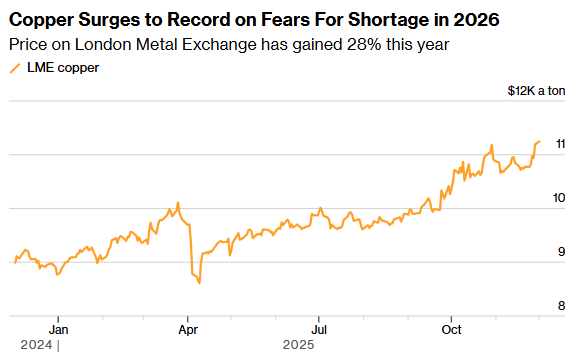
Core Viewpoint - The copper market is experiencing significant price increases due to supply shortages, geopolitical tensions, and structural demand driven by energy transition and AI data centers [1][11][12]. Supply Dynamics - Supply disruptions from major mines, such as the Grasberg mine in Indonesia and the Cobre Panama mine in Chile, are leading to a tightening of global copper supply [4][5]. - Predictions indicate that global mine supply growth will be minimal, with estimates for 2026 being only +1.4%, significantly lower than earlier forecasts [4]. - The current supply situation is exacerbated by a mismatch in global copper inventories, as traders rush to ship copper to the U.S. in anticipation of potential tariffs [4][8]. Price Movements - LME copper prices reached a historic high of $11,294.5 per ton, with a 0.9% increase, while Comex futures rose by 1.6% [1]. - The weakening U.S. dollar is contributing to higher copper prices, as it lowers costs for foreign buyers and encourages investment in hard assets like copper [10][11]. Demand Factors - The demand for copper is being driven by the growth of electric vehicles, renewable energy investments, and the expansion of data centers, which are all critical for decarbonization efforts [11][12]. - The AI boom is expected to significantly increase copper demand, with projections indicating that data centers will require an additional 47,500 tons of copper by 2026 [15]. Market Outlook - Analysts predict a clear deficit in the copper market, with expected supply gaps of approximately 330,000 tons by 2026, driven by ongoing supply constraints and increasing demand [16]. - UBS has revised its supply gap forecasts for 2025 and 2026, indicating a significant increase in expected shortages compared to previous estimates [16].

AH股高开,创业板涨0.26%,白银、有色金属领涨,影视板块活跃
Hua Er Jie Jian Wen· 2025-12-01 02:12
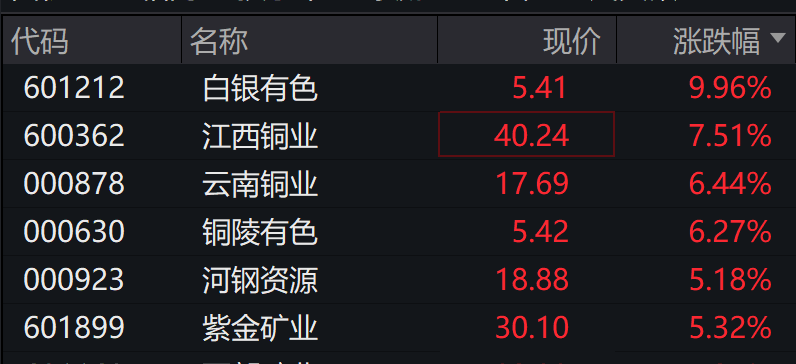
Market Overview - A-shares opened higher with the Shanghai Composite Index up 0.14% and the ChiNext Index up 0.26%, led by the non-ferrous metals and military sectors, while e-commerce stocks weakened [1] - Hong Kong stocks also opened higher, with the Hang Seng Index rising 0.34% and the Hang Seng Tech Index up 0.21%, notable gainers included New World Development up over 6% and China Metallurgical Group up over 5% [1][5] Commodity Performance - Most commodities opened higher, with silver rising 6.98%, the shipping index (European line) up 3.67%, and international copper up 2.39% [1] - The precious metals sector saw significant gains, with silver stocks hitting the daily limit, including Hunan Silver and Jiangxi Copper, both up over 6% [1] Bond Market - The bond market opened mostly lower, with the 30-year main contract down 0.01%, while the 5-year contract saw a slight increase of 0.01% [1][2] Stock Index Performance - The Shanghai Composite Index opened at 3894.21 points, up 0.14%, while the Shenzhen Component Index opened at 13038.16 points, up 0.42% [4] - The ChiNext Index opened at 3060.56 points, up 0.26%, and the CSI 300 opened at 4539.19 points, up 0.28% [4] Notable Stock Movements - Silver-related stocks showed strong performance, with Silver Holdings up 9.96% and Jiangxi Copper up 7.51% [2] - In the Hong Kong market, Meituan fell over 2% following its earnings report, while NetEase rose 1.3% and Alibaba increased nearly 1% [5]






【期货热点追踪】丁二烯(BR)橡胶期货七连阳!是贸易利好还是供应暗藏危机?空头还有机会反扑吗?
news flash· 2025-05-14 09:57
Core Insights - The article discusses the recent performance of butadiene rubber (BR) futures, which have seen a seven-day consecutive increase, raising questions about whether this trend is driven by trade benefits or underlying supply issues [1] - It also explores the potential for bearish positions to rebound in the current market environment [1] Group 1: Market Performance - Butadiene rubber futures have experienced a seven-day rally, indicating strong market momentum [1] - The increase in futures prices may suggest favorable trading conditions, but there are concerns about hidden supply risks that could impact future performance [1] Group 2: Supply and Demand Dynamics - The article raises the question of whether the current bullish trend is sustainable given potential supply constraints [1] - It highlights the need for market participants to consider both trade benefits and supply challenges when evaluating future price movements [1] Group 3: Market Sentiment - There is speculation about the possibility of a counter-offensive from bearish traders, indicating a potential shift in market sentiment [1] - The article suggests that the market may be at a crossroads, with both bullish and bearish forces at play [1]