
保费收入

Search documents
25Q4保险公司资金运用有何变化?
Hua Yuan Zheng Quan· 2026-02-24 14:13
Group 1: Report Industry Investment Rating - No information provided on the report industry investment rating Group 2: Report's Core Viewpoints - As of Q4 2025, the total balance of insurance companies' fund utilization reached 38.48 trillion yuan, a 2.71% increase from Q3 2025. The balance of life insurance companies was 34.66 trillion yuan, and that of property insurance companies was 2.42 trillion yuan, with respective increases of 2.77% and 1.18% from Q3 2025 [2] - As of Q4 2025, the bond investment balance of insurance funds increased by 17.43% year - on - year, with a lower increase in Q4 2025 compared to Q4 2024. Other investments such as bank deposits, stocks, and securities investment funds increased more year - on - year in Q4 2025 [2] - As of Q4 2025, the stock investment balance of insurance funds increased significantly, mainly driven by the strong stock market performance in Q3. In Q4 2025, the growth rate slowed down due to the weak performance of the CSI 300 index [2] - In Q4 2025, the cumulative year - on - year growth rate of insurance companies' premium income declined. For life insurance companies, it was due to the reduced attractiveness of savings - type products and increased sales difficulty; for property insurance companies, it was because of the "reporting and pricing consistency" regulations [2] - The proportion of stock investment in property insurance companies increased slightly quarter - on - quarter, and the proportion of bond investment in life insurance companies increased slightly quarter - on - quarter [2] - The driving force for insurance funds' bond investment weakened, with the year - on - year growth rate dropping to 17.43% in Q4 2025 [2][3] - As of Q4 2025, insurance institutions mainly invested in interest - rate bonds, followed by financial bonds and medium - term notes [3] Group 3: Summary by Related Content Insurance Companies' Fund Utilization Balance - As of Q4 2025, the total balance of insurance companies' fund utilization was 38.48 trillion yuan, a 2.71% increase from Q3 2025. Life insurance companies' balance was 34.66 trillion yuan (up 2.77% from Q3 2025), and property insurance companies' was 2.42 trillion yuan (up 1.18% from Q3 2025) [2] Asset Allocation - As of Q4 2025, bank deposits, bonds, stocks, securities investment funds, and long - term equity investments in life and property insurance companies accounted for 8.19%, 50.43%, 10.07%, 5.31%, and 7.64% respectively in the total fund utilization balance [2] - In life insurance companies, the bond investment proportion increased by 0.10 pct to 51.11% from Q3 2025, the stock investment proportion remained unchanged, the securities investment fund proportion decreased by 0.13 pct to 5.14%, and the long - term equity investment proportion decreased by 0.22 pct to 7.77% [2] - In property insurance companies, the bond investment proportion remained unchanged from Q3 2025, the stock investment proportion increased by 0.65 pct to 9.39%, the securities investment fund proportion decreased by 0.47 pct to 7.76%, and the long - term equity investment proportion decreased by 0.38 pct to 5.78% [2] Bond Investment - As of Q4 2025, the bond investment balance of insurance funds was 18.70 trillion yuan, a 17.43% year - on - year increase. The Q4 2025 single - quarter increase was 0.52 trillion yuan, less than the 0.90 trillion yuan in Q4 2024 [2] - The driving force for bond investment weakened. The quarterly year - on - year growth rate of insurance bond investment balance increased from 18.24% in Q2 2023 to 26.27% in Q2 2025, but dropped to 20.95% in Q3 2025 and further to 17.43% in Q4 2025 [2][3] - As of Q4 2025, insurance institutions' bond investment was mainly in interest - rate bonds (75.73% by托管 volume), followed by financial bonds (10.24%) and medium - term notes (5.55%) [3] Stock Investment - As of Q4 2025, the stock investment balance of insurance funds was 3.73 trillion yuan, a 53.81% increase from the end of 2024. The Q3 2025 single - quarter increase was 5525 billion yuan, with an 18% increase, in line with the 17.9% increase of the CSI 300 index. In Q4 2025, the quarter - on - quarter growth rate dropped to 3.13% [2] Premium Income - In 2025, the year - on - year growth rate of insurance companies' premium income reached a high of 9.63% in August and then declined monthly, dropping to 7.43% in December [2]
再探超长债供需
CAITONG SECURITIES· 2026-01-28 07:01
1. Report Industry Investment Rating The provided content does not mention the industry investment rating. 2. Core Viewpoints of the Report - Since Q4 last year, there have been strong concerns about the supply of ultra - long bonds in the market. In January this year, the issuance scale of ultra - long government bonds increased significantly year - on - year, with the increment mainly from new special bonds, indicating a decent demand for capital for major project construction at the beginning of the year. The central bank's relatively active liquidity injection and banks' increased purchases at the ultra - long end have alleviated market concerns to some extent [3]. - From the perspective of achieving the annual economic target, the annual fiscal increment may exceed market expectations, and fiscal policies may be supplemented in the second half of the year. It is estimated that the net financing of government bonds in 2026 will be 15.1 trillion yuan, and the issuance of ultra - long government bonds will be 7.12 trillion yuan, a year - on - year increase of 0.7 trillion yuan. For Q1, the issuance of ultra - long government bonds is expected to be 2.24 trillion yuan, a year - on - year increase of 416.7 billion yuan, with certain supply pressure in February and March [3]. - Insurance is likely to have a good start, with an expected annual premium growth of 6.6% and the growth rate of the balance of funds utilization remaining at around 15%. It is estimated that in 2026, the proportion of ultra - long bonds allocated by insurance in the annual issuance of ultra - long bonds will drop to about 31%, and the proportion in its own bond investment will remain basically flat at about 71%, corresponding to an investment scale of about 2.2 trillion yuan, basically the same as in 2025 [3]. - It is estimated that the investment scale of commercial banks in ultra - long bonds in 2026 will be about 4.82 trillion yuan, accounting for about 67.7% of the annual issuance of ultra - long bonds, a year - on - year increase of 0.66 trillion yuan [3]. - For trading institutions, based on a neutral judgment of the interest rate trend, the investment scale of funds and securities firms in ultra - long bonds may be higher than that in 2025 but lower than that in 2024, totaling about 10 billion yuan [3]. - The 30 - 10 - year term spread in 2025 mainly widened due to the contraction of trading desks' demand for ultra - long bonds and frictions in the trading process, rather than being mainly determined by primary supply [3]. 3. Summary According to the Directory 3.1 How is the supply of ultra - long government bonds this year calculated according to the upper limit? - It is estimated that the net financing of government bonds in 2026 will be 15.1 trillion yuan, including 7.143 trillion yuan for treasury bonds and 7.938 trillion yuan for local bonds. In terms of issuance, the issuance of general treasury bonds will be 14.1377 trillion yuan, special treasury bonds 2 trillion yuan, new general bonds 80 billion yuan, new special bonds 550 billion yuan, special refinancing bonds 200 billion yuan, and ordinary refinancing bonds 325.8 billion yuan [7]. - The issuance of ultra - long government bonds in 2026 is expected to be 7.12 trillion yuan, a year - on - year increase of 0.7 trillion yuan. Among them, the issuance of ultra - long treasury bonds will be 1.74 trillion yuan, a year - on - year increase of 225 billion yuan, and the issuance of ultra - long local bonds will be 5.38 trillion yuan, a year - on - year increase of 475 billion yuan [8]. - For Q1, the issuance of ultra - long government bonds is expected to be 2.24 trillion yuan, a year - on - year increase of 416.7 billion yuan. The issuance of ultra - long treasury bonds in Q1 is usually low because special treasury bonds need to be approved by the Two Sessions and are expected to start issuing at the end of April. The planned issuance of local bonds in Q1 is about 2.38 trillion yuan, with a relatively high refinancing ratio, and the issuance of replacement bonds is expected to be in the front, making room for new bonds for construction projects later. The issuance progress of new special bonds is expected to be faster than last year [9][10]. 3.2 How is the demand for ultra - long bonds? 3.2.1 Insurance - In 2025, the premium income of insurance companies from January to November was 5.76 trillion yuan, a year - on - year increase of 7.56%. Property insurance increased by 2.48% year - on - year, with auto insurance as the main source of income, accounting for over 52% and highly correlated with the growth rate of vehicle ownership. Personal insurance increased by 9.2% year - on - year, with life insurance accounting for about 77% and growing by 11.47%, mainly driven by the popularity of savings - type insurance products [12][13]. - In 2026, the probability of a "good start" for premium income is high. Favorable factors include high - interest fixed - deposit maturities, the correlation between the stock market's good start in January and premium income growth, and a low base in 2025. Unfavorable factors include pressure on traditional life insurance and the over - consumption of demand due to previous "panic - buying" promotions. It is expected that the annual premium income will achieve stable growth, with property insurance growing by about 2% and personal insurance by about 8%, and the overall insurance premium income increasing by about 6.6% [14][15]. - At the end of Q3 2025, the balance of insurance funds utilization was 37.46 trillion yuan, a year - on - year increase of 16.5%. In 2026, it is expected that the year - on - year growth rate of the balance of insurance funds utilization will decline slightly to 15%. The proportion of bank deposits is expected to drop to 7%, the proportion of stock investment to rise to 11.5%, the proportion of fund investment to rise to 6%, the proportion of long - term equity investment to be stable at 8%, and the proportion of other investments to drop to 16%. The proportion of bonds will remain stable at 51.5%, with a net increment of about 3.1 trillion yuan [20][21]. - From 2022 - 2025, the net purchases of ultra - long bonds by insurance institutions in the secondary market were 0.48, 0.73, 1.71, and 2.28 trillion yuan respectively, accounting for 13.62%, 20.7%, 31.3%, and 35.5% of the annual issuance of ultra - long bonds, and 48%, 41%, 67%, and 72% of the annual bond investment respectively. In 2026, it is expected that the proportion of ultra - long bonds in the annual issuance of ultra - long bonds will drop from 35.5% in 2025 to about 31%, and the proportion in its own bond investment will drop slightly from 72% in 2025 to 71%, corresponding to an investment scale of about 2.2 trillion yuan [25][26]. 3.2.2 Banks - In 2025, the proportion of banks' bond allocation increased significantly. The government bond custody volume of commercial banks was 63.85 trillion yuan, accounting for 67.17% of the outstanding government bonds. The incremental custody of government bonds by commercial banks in 2025 was 10.8 trillion yuan, accounting for 78% of the net financing of government bonds in 2025 [29]. - It is estimated that in 2026, the passive allocation scale of commercial banks for government bonds will be 10.56 trillion yuan, and the scale of bond purchases will be 17.56 trillion yuan. The scale of ultra - long bonds that commercial banks need to undertake may be 4.48 trillion yuan. It is also expected that the excess allocation scale of commercial banks for ultra - long bonds in 2026 will increase slightly to 0.34 trillion yuan compared with last year. Overall, the scale of commercial banks' allocation of ultra - long bonds in 2026 is estimated to be about 4.82 trillion yuan [30][32]. - After the implementation of the redemption new rules at the beginning of this year, part of the banks' entrusted - out investment has been transferred back to self - operated allocation. The probability of using this part of the funds to increase the allocation of ultra - long bonds is not high due to certain indicator pressures [33]. 3.2.3 Trading Institutions - In 2025, securities firms mainly increased their allocation of treasury bonds, reduced their allocation of local bonds, and shortened the duration of government bonds. The investment scale of securities firms in ultra - long bonds decreased by 1.493 billion yuan. In 2026, it is expected that the investment scale of securities firms in ultra - long bonds will be basically the same as in 2025 [40][41]. - At the end of 2025, non - monetary funds held 12.51 trillion yuan in bond investments. In 2025, funds only net - bought 5.82 billion yuan of ultra - long interest - rate bonds. In 2026, due to the implementation of the fund sales new rules and concerns about the cancellation of tax exemption, the liability side of bond - type funds is unstable. It is expected that the investment scale of funds in ultra - long bonds will be higher than that in 2025 but lower than that in 2024, about 10 billion yuan [41][42]. 3.3 Does the 30 - 10 - year term spread depend on primary supply? - The widening of the 30y - 10y treasury bond spread in 2025 mainly occurred in the second half of the year, mainly due to the significant improvement in the stock market sentiment, the fund sales new rules, and the interest - rate adjustment, which led to the selling of ultra - long bonds by trading - like desks. If primary supply were the decisive factor, the spread should have widened in Q2 2025 [45]. - The widening of the 30y - 10y local bond spread also shows that primary supply is not the main influencing factor, as the power of allocation desks is sufficient to hedge the selling pressure [45]. - For the secondary interest - rate trend, the willingness of trading desks to increase holdings and short - term frictions seem to be more crucial [48].
香港保监局:2025年前三季度毛保费总额达6370亿港元
Jin Rong Jie· 2026-01-26 02:57
Group 1 - The core point of the article highlights that the Hong Kong insurance industry reported a total gross premium of HKD 637 billion for the first three quarters of 2025, representing an annual increase of approximately 33% [1] Group 2 - For long-term business (excluding retirement plans), the new policy premium reached HKD 264.5 billion, marking a year-on-year increase of 55.9%, with non-linked individual business contributing HKD 251.5 billion, up 55.2%, and linked individual business contributing HKD 12.7 billion, up about 76% [1] - The total premium income for long-term effective business in the first three quarters of 2025 was HKD 554.1 billion, reflecting a year-on-year increase of 36.6% [1] Group 3 - In terms of general business, the gross premium and net premium for the first three quarters increased by approximately 10.5% and 8.3% to HKD 82.9 billion and HKD 56 billion, respectively [1] - The overall operating profit was HKD 10.1 billion, representing a year-on-year increase of about 51%, with underwriting profit accounting for HKD 3.5 billion, up 63% [1]
保险业前11月保费收入5.76万亿元
Jin Rong Jie· 2025-12-30 01:48
Group 1 - The core viewpoint of the article highlights the performance of the insurance industry in China, showing a positive growth trend in premium income and total assets for the first eleven months of the year [1] Group 2 - The original insurance premium income for the insurance industry reached 5.76 trillion yuan, representing a year-on-year growth of 7.56% [1] - The life insurance sector generated original premium income of 4.15 trillion yuan, with a year-on-year increase of 9.06% [1] - The property insurance companies reported original premium income of 1.72 trillion yuan, reflecting a year-on-year growth of 3.88% [1] - As of the end of November, the net assets of the insurance industry totaled 3.68 trillion yuan, while total assets amounted to 40.64 trillion yuan [1] - Life insurance companies accounted for total assets of 35.75 trillion yuan, whereas property insurance companies had total assets of 3.15 trillion yuan [1]
中国太保(02601) - 保费收入公告
2025-12-16 09:47
(於中華人民共和國註冊成立的股份有限公司) 香港交易及結算所有限公司及香港聯合交易所有限公司對本公告的內 容 概 不 負 責,對 其 準 確 性 或 完 整 性 亦 不 發 表 任 何 聲 明,並 明 確 表 示,概 不對因本公告全部或任何部分內容而產生或因倚賴該等內容而引致的 任 何 損 失 承 擔 任 何 責 任。 中國太平洋保險(集團)股份有限公司 CHINA PACIFIC INSURANCE (GROUP) CO., LTD. 承董事會命 中 國 太 平 洋 保 險(集 團)股 份 有 限 公 司 傅 帆 董事長 (股份代號:02601) 保費收入公告 於2025年1月1日 至2025年11月30日 期 間,中 國 太 平 洋 保 險(集 團)股 份 有 限 公 司(「本公司」)子 公 司 中 國 太 平 洋 人 壽 保 險 股 份 有 限 公 司 累 計 原 保 險保費收入為人民幣2,503.22億 元,同 比 增 長9.4%,本 公 司 子 公 司 中 國 太 平洋財產保險股份有限公司累計原保險保費收入為人民幣1,876.82億 元, 同比增長0.3%。 上 述 累 計 原 保 險 保 費 收 ...
中国人寿(02628)截至11月末总保费超过7000亿元
智通财经网· 2025-12-09 08:43
Core Viewpoint - China Life Insurance (02628) announced that by November 30, 2025, the company's total premium income is expected to exceed RMB 700 billion [1] Group 1 - The company projects a significant growth in total premium income, indicating a strong performance in the insurance sector [1]

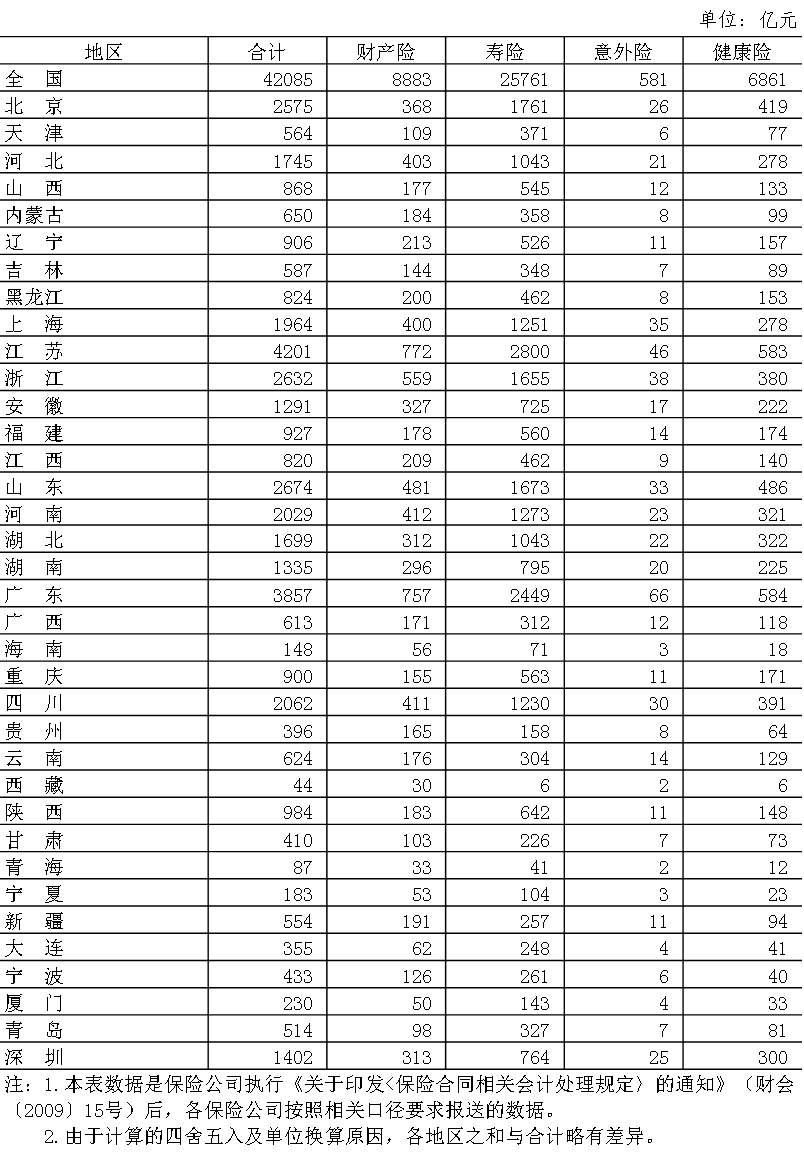
7月全国保费收入TOP5省份揭晓!江苏夺冠,广东山东紧随其后(附完整榜单)-保险-金融界
Jin Rong Jie· 2025-09-05 07:26
Group 1 - The core viewpoint is that the national original insurance premium income reached 42,085 billion yuan in July 2025 [1] Group 2 - The top five regions in terms of original insurance premium income are Jiangsu, Guangdong, Shandong, Zhejiang, and Beijing [2] - Additionally, Sichuan and Henan also exceeded 2,000 billion yuan in original insurance premium income [2]

保险服务收入增长现分化险企适应新准则尚需时间
Zheng Quan Shi Bao· 2025-04-20 18:28
Core Insights - The growth in premium income does not necessarily lead to an increase in insurance service income, as revealed in the 2024 annual reports of listed insurance companies [1][4]. Group 1: Insurance Service Income Trends - In 2024, the insurance service income showed divergence among listed insurance companies, with property insurance companies experiencing growth while life insurance companies saw declines [2][4]. - Among the three major property insurance companies, all reported increases in insurance service income: China Pacific Insurance at 191.4 billion yuan (up 8.1%), Ping An Property at 328.1 billion yuan (up 4.7%), and China Re at 485.2 billion yuan (up 6.1%) [2]. - Conversely, four out of five listed life insurance companies reported declines in insurance service income, with China Life down 2%, Ping An Life down 0.1%, China Taiping down 2.3%, and Xinhua Insurance down 0.5%. However, China Re Life reported a significant increase of 23% [2][3]. Group 2: Impact of New Accounting Standards - The implementation of the new insurance contract standards has changed how insurance income is reported, shifting from premium income to insurance service income, which is recognized based on the progress of service delivery rather than upon receipt of premiums [4][5]. - The difference in accounting treatment means that while premium income can be recognized immediately, insurance service income is recognized over the service period, leading to potential discrepancies between the two metrics [4][5]. - The insurance industry is still transitioning to the new standards, and there is a lack of understanding and focus on the insurance service income metric among industry participants [5][6]. Group 3: Future Outlook - As the industry adapts to the new standards, the importance of insurance service income is expected to increase, particularly for life insurance companies that are moving towards high-quality development and should focus on value premiums rather than just scale [6][7]. - The complexity of the insurance service income metric, which involves various assumptions and calculations, has contributed to its lower visibility compared to traditional premium income [5][6].

