债券投资

Search documents
【中泰研究丨晨会聚焦】固收吕品:信用债类 ETF 资金流入居前-20260331
ZHONGTAI SECURITIES· 2026-03-31 12:49
Core Insights - The report highlights significant inflows into credit bond ETFs, with a total net inflow of 229.02 billion yuan in the past week as of March 27, 2026 [3] - Among the different types of ETFs, credit ETFs saw the highest inflow of 200.94 billion yuan, while interest rate ETFs and convertible bond ETFs had inflows of 32.66 billion yuan and outflows of 4.58 billion yuan respectively [3] - The report indicates that since 2025, cumulative net inflows for interest rate, credit, and convertible bond ETFs have reached 5742.51 billion yuan, with credit ETFs alone accounting for 4903.59 billion yuan [3] Fund Flows - As of March 27, 2026, the inflows into specific credit ETFs included 43.49 billion yuan for short-term financing bonds, 0.45 billion yuan for corporate bonds, and 28.29 billion yuan for urban investment bonds [3] - The report notes that the net inflow for science and technology innovation bonds reached 123.27 billion yuan, indicating strong investor interest in this segment [3] Performance Metrics - The report details the performance of various bond ETFs, with the 30-year government bond ETF showing a weekly increase of 0.54%, while the 10-year local government bond ETF rose by 0.15% [3] - Credit bond ETFs and science and technology innovation bond ETFs had median unit net values of 1.0191 and 1.0066 respectively, with weekly increases of 0.07% and 0.06% [4] - The report also provides duration tracking for credit ETFs, with short-term financing bond ETFs having a duration of 0.31 years, corporate bond ETFs at 2.02 years, and urban investment bond ETFs at 2.11 years [4]

2026年3月托管月报:供给压力或上升,需求端面临考验-20260331
Ping An Securities· 2026-03-31 05:29
1. Report Industry Investment Rating No information provided in the report regarding the industry investment rating. 2. Core Viewpoints of the Report - In February 2026, bond supply decreased year - on - year, mainly dragged down by inter - bank certificates of deposit. The year - on - year decline in the supply of inter - bank certificates of deposit and interest - rate bonds in February 2026 was 739.6 billion yuan and 515.2 billion yuan respectively. The combined year - on - year decline in the new custody volume of inter - bank certificates of deposit and financial bonds in February 2026 was 890.4 billion yuan, possibly due to the delayed approval of bank bond issuance quotas. The new custody volume of corporate credit bonds decreased by 69.4 billion yuan year - on - year, mainly due to the decline in urban investment bonds [4][9][19]. - In February 2026, most institutions increased their bond allocations less, except for securities firms. Commercial banks (after considering the central bank's outright reverse repurchase) increased their bond holdings 886.8 billion yuan less year - on - year; asset management accounts (i.e., non - legal person products) increased their bond holdings 240.4 billion yuan less year - on - year, insurance companies increased their bond holdings 183.8 billion yuan less year - on - year, and securities firms increased their bond holdings 42.7 billion yuan more year - on - year [4][22]. - In March 2026, the supply of government bonds decreased by nearly 500 billion yuan year - on - year, possibly due to the decrease in the pressure of stabilizing economic growth. The supply of government bonds in April 2026 may increase slightly year - on - year. The supply of inter - bank certificates of deposit and bank financial bonds continued to decline in March 2026. If the quotas for inter - bank certificates of deposit and bank financial bonds are approved at the end of March or early April, their supply may increase in April [4][40][45]. - In March 2026, the net bond - buying scale of banks in the secondary market increased year - on - year, which was related to the low base last year and the weakening of credit demand in March this year. The net bond - buying scale of insurance companies in the secondary market decreased year - on - year, possibly because insurance companies increased the proportion of equity and other assets. The net bond - buying scale of asset management accounts decreased slightly year - on - year, possibly because the new scale of bank wealth management continued to decline [4][50][51]. 3. Summary by Relevant Catalogs 3.1 Bond Supply in February 2026 - **Overall Situation**: In February 2026, the bond custody balance was 196.39 trillion yuan, with a year - on - year growth rate of 10.42%, a decrease of 0.98 percentage points from the previous month. The new custody scale in February was 1060.4 billion yuan, a year - on - year decrease of 1439.1 billion yuan [4][6]. - **By Bond Type**: Inter - bank certificates of deposit were the main bond type with a year - on - year decline in supply in February. The supply of inter - bank certificates of deposit and interest - rate bonds decreased by 739.6 billion yuan and 515.2 billion yuan respectively year - on - year. Considering January and February together, the new custody volume of national bonds and local bonds this year was roughly the same year - on - year, but the new custody volume of policy - based financial bonds decreased significantly. The combined year - on - year decline in the new custody volume of inter - bank certificates of deposit and financial bonds in February 2026 was 890.4 billion yuan, possibly due to the delayed approval of bank bond issuance quotas. The new custody volume of corporate credit bonds decreased by 69.4 billion yuan year - on - year, mainly due to the decline in urban investment bonds [4][9][19]. 3.2 Bond Allocation by Institutions in February 2026 - **Overall Situation**: Most institutions increased their bond allocations less in February 2026, except for securities firms. Commercial banks (after considering the central bank's outright reverse repurchase) increased their bond holdings 886.8 billion yuan less year - on - year; asset management accounts increased their bond holdings 240.4 billion yuan less year - on - year, insurance companies increased their bond holdings 183.8 billion yuan less year - on - year, and securities firms increased their bond holdings 42.7 billion yuan more year - on - year [22]. - **Banks**: The bond - allocation intensity of banks decreased in February 2026. The scale of banks' increased holdings of government bonds/government bond net supply was 84.9%, significantly higher than the average of 77.9% in the past 12 months, but the bond - allocation intensity in February decreased compared with January, possibly related to the year - on - year decrease in the deposit - loan difference [28]. - **Insurance Companies**: The new bond investment scale of insurance companies decreased year - on - year in February 2026. Structurally, insurance companies mainly increased their allocations of local bonds less. After excluding supply disturbances, the bond - allocation intensity of insurance companies also weakened in February. The scale of insurance companies' increased holdings of government bonds/new government bond custody was about 0.6%, a decrease from January and significantly lower than the average of 9.2% in the past 12 months [29]. - **Asset Management Accounts**: The new scale of wealth management and the supply of inter - bank certificates of deposit both decreased significantly year - on - year in February 2026, leading to a year - on - year decrease in the bond - holding increase of asset management accounts. The new scale of wealth management in February 2026 was - 1.11 trillion yuan, lower than the same period from 2023 to 2025. The contraction of the supply of inter - bank certificates of deposit in February 2026 may also be an important reason for the decline in the bond - allocation intensity of asset management accounts [33]. - **Foreign Capital and Securities Firms**: Foreign capital decreased its bond holdings by 98.2 billion yuan year - on - year, mainly reducing its holdings of inter - bank certificates of deposit. The significant year - on - year decrease in the supply of inter - bank certificates of deposit in February 2026 may have limited the bond - allocation ability of foreign capital. Securities firms increased their bond holdings by 42.8 billion yuan year - on - year, mainly increasing their holdings of local bonds, possibly because the spread between local bonds and national bonds narrowed in February [38]. 3.3 Outlook for Bond Supply and Market Conditions - **Government Bonds**: In March 2026, the supply of government bonds decreased by nearly 500 billion yuan year - on - year, possibly due to the decrease in the pressure of stabilizing economic growth. The supply of government bonds in April 2026 may increase slightly year - on - year. The issuance of new local bonds in April 2026 is expected to increase year - on - year, but the issuance of refinancing bonds after deducting repayments may decrease. After combining various varieties, the supply of local bonds in April may increase slightly year - on - year [40]. - **Inter - bank Certificates of Deposit and Bank Financial Bonds**: The supply of inter - bank certificates of deposit and bank financial bonds continued to decline in March 2026. If the quotas for inter - bank certificates of deposit and bank financial bonds are approved at the end of March or early April, their supply may increase in April [45]. - **Banks, Insurance Companies, and Asset Management Accounts**: In March 2026, the net bond - buying scale of banks in the secondary market increased year - on - year, which was related to the low base last year and the weakening of credit demand in March this year. The net bond - buying scale of insurance companies in the secondary market decreased year - on - year, possibly because insurance companies increased the proportion of equity and other assets. The net bond - buying scale of asset management accounts decreased slightly year - on - year, possibly because the new scale of bank wealth management continued to decline [50][51].

——债券周报20260322:一季度末,机构行为开始起变化-20260322
Huachuang Securities· 2026-03-22 11:25
1. Report Industry Investment Rating No relevant content provided. 2. Core Viewpoints of the Report - In late Q1, institutional behavior in the bond market has changed. The allocation disk has strong buying power, while funds and wealth management products are relatively weak. The "fixed - income +" products are facing significant redemption pressure, and the bond market strategy focuses on short - term 3 - 5y term spread compression and long - term opportunities after over - decline [1][3][4]. 3. Summary by Directory 3.1 First Quarter: Characteristics of Bond Buying by Various Institutions 3.1.1 Overall Bond Buying by Institutions in Q1: Strong Allocation Disk, Weak Funds and Wealth Management - **Allocation Disk**: Large banks significantly increased net purchases of government bonds over 5y. Small and medium - sized banks increased net purchases of 30y government bonds and 20y local bonds. Insurance companies, driven by dividend - paying insurance, included 3 - 5y Tier 2 and perpetual bonds in their top five holdings [13]. - **Trading Disk**: Securities firms' net purchases were in line with seasonality, with a significant reduction in duration, more allocation to 1y interest rates and Tier 2 and perpetual bonds, and reduction of ultra - long bonds. Funds still focused on credit coupons, increasing the proportion of 1 - 5y credit and Tier 2 and perpetual bonds [13]. - **Bank Wealth Management**: In Q1, due to the priority of "deposit rush" tasks in the banking system, the scale growth of bank wealth management was weak, and the net purchases of direct investment and entrusted investment in the secondary market both increased less. In terms of structure, direct investment shortened the term, and entrusted investment increased the exploration of spreads in policy - financial bonds [14]. 3.1.2 By Institution: Insurance Enters the Allocation Window at the End of the Quarter, and Wealth Management Will Follow in Q2 - **Banks**: They have a strong demand for long - term bonds. At the end of the quarter, the pressure to realize profits is not large, and there is still a need for bond allocation in the future [18]. - **Insurance**: The "good start" funds entered the allocation window in March, and the bond - allocation progress is slower than last year, with potential for further allocation. Attention should be paid to the spread compression opportunities of ultra - long local bonds in Q2 [23]. - **Funds**: From the end of Q1 to Q2, there is usually a seasonal recovery in bond - buying power. In Q2, it is conducive to the spread compression of policy - financial bonds [25][28]. - **Wealth Management**: It is expected to see scale growth and a peak season for bond allocation in Q2. Attention can be paid to the spread compression opportunities of Tier 2 and perpetual bonds [29]. - **Securities Firms**: They continue to short - sell 30y government bonds and start to buy 50y government bonds [30]. 3.2 "Fixed - Income +" Redemption: How Big Is the Pressure? 3.2.1 Recent "Fixed - Income +" Redemption: Greater Pressure than in November 2025 and January 2026, Close to the Russia - Ukraine Conflict Period - In March, the equity market declined, and the Shanghai Composite Index fell below 4000 points, leading to a significant increase in the redemption pressure of "fixed - income +" funds. The redemption pressure is stronger than in the previous two rounds and is close to that during the Russia - Ukraine conflict [34][41]. 3.2.2 When Will the Redemption Ease? Pay Attention to the Policy - making Layer's Expectations for Market Stability and the Use of Tools - The central bank recently held a party committee meeting, showing an earlier demand to maintain the stable operation of the stock market. Looking back at the situation after the Russia - Ukraine conflict in 2022, relevant meetings and policies helped stabilize the market. The central bank has innovated a series of financial policies to support the stable operation of the capital market. In the future, attention should be paid to the changes in the "claims on other financial corporations" item [43][44][47]. 3.3 Bond Market Strategy: Focus on 3 - 5y Term Spread Compression in the Short - Term and Seize Opportunities after Over - Decline in the Long - Term 3.3.1 This Week: α Spread Compression for Bonds within 5y - This week, the short - term bonds performed well. The certificate of deposit (CD) yield dropped close to 1.5%, driving the α spread compression of bonds within 5y [48]. 3.3.2 Short - Term: Limited Downward Space for 1y Bonds, Potential for Continuous Compression of 3 - 5y Spreads - The space for 1y short - term leverage to capture interest rate spreads has been extremely compressed, and the focus of bond selection may shift to 3 - 5y bonds. CDs may fluctuate at a low level of 1.5 - 1.55% in the short term, and attention should be paid to the marginal changes in funds at the end of the quarter [51][56]. 3.3.3 Long - Term: 10y Government Bonds to Fluctuate between 1.8% - 1.85%, 30y Government Bonds' Sentiment to Stabilize, Pay Attention to Over - Decline Recovery - **10y Government Bonds**: It is expected to fluctuate in a narrow range of 1.8% - 1.85%. It is recommended to hold existing assets and gradually increase positions for incremental funds if the yield continues to rise. - **30y Government Bonds**: The core fluctuation range of the 30 - 10y active bond spread may be 40 - 50bp. Traders can pay attention to trading opportunities when the spread widens to over 50bp, and allocators can gradually enter the market when the 30y government bond yield rises above 2.3%. Attention can also be paid to the spread - mining value of 4 - 5y China Development Bank bonds, 10y China Development Bank bonds, and 20y local bonds [57][60][61]. 3.4 Interest - Rate Bond Market Review: CDs Hit a New Low, and the Yield Curve Steepened - **Funding**: The central bank's open - market operations (OMO) had a net injection, and the funding situation was balanced and loose [76]. - **Primary Issuance**: The net financing of government bonds and local bonds increased, while that of policy - financial bonds and inter - bank CDs decreased [80]. - **Benchmark Changes**: The term spreads of government bonds and China Development Bank bonds both widened [86].
通胀回升利率一定上行吗?
Western Securities· 2026-03-15 10:30
1. Report Industry Investment Rating No information provided in the content. 2. Core Views of the Report - Inflation rising does not necessarily lead to an upward - moving interest rate center. Since the 21st century, there have been 6 obvious inflation - rising periods in China, which can be divided into demand - pull inflation, cost - push inflation, and structural inflation. Demand - type inflation often drives the interest rate center up significantly, while cost - type and structural inflation do not necessarily do so [1][9]. - Inflation rising does not necessarily result in tightened monetary policy. The fundamental reasons for the upward - moving interest rate center are the recovery of the fundamentals and tightened monetary policy. During demand - pull inflation, the central bank often stops easing or tightens monetary policy, driving up interest rates. In 2019 and 2021, mainly cost - push inflation occurred, and the monetary policy focused on maintaining economic growth and might be further relaxed, leading to a decline in interest rates [1][10]. - After the bond market adjustment, the allocation value has increased, and allocation investors are actively participating. With the decline in broad - spectrum interest rates, the liability costs of banks and insurance institutions have decreased, and bank liabilities are more stable than expected. As a result, allocation funds are sufficient [2][14]. - The cost - performance of bonds has increased. It is difficult for the 10Y Treasury bond interest rate to break through the previous high and may maintain a volatile trend. It is advisable to moderately participate in long - term bonds during the adjustment. With the continuous relaxation of the capital market, the short - end has higher certainty, and attention should be paid to the opportunities of spread reduction [2][18]. 3. Summaries According to Relevant Catalogs 3.1 Review Summary and Bond Market Outlook - This week, inflation shocks and inter - bank news alternately disturbed the bond market, causing intensified fluctuations. The long - end performed weaker than the short - end. The yields of 10Y and 30Y Treasury bonds rose by 3bp and 9bp respectively [8]. - The current inflation recovery is mainly driven by the cost side. However, the 2026 government work report clearly states "continue to implement a moderately loose monetary policy", so the probability of tightened monetary policy is low [10]. 3.2 Bond Market Quotation Review 3.2.1 Capital Situation: The central bank had a net withdrawal, and capital interest rates rose - This week, the central bank's open - market operations had a net withdrawal of 251.1 billion yuan. From March 9th to 13th, R001 and DR001 rose by 0.3bp and 0.2bp respectively compared with March 6th. The 3M certificate of deposit (CD) issuance rate fluctuated within a range, and the FR007 - 1Y swap rate first rose and then fell. As of March 13th, the 3M national - share bank draft discount price was 1.48%, up 10bp from March 6th [26][28]. 3.2.2 Secondary Market Trends: Fluctuations intensified - This week, the yield fluctuations intensified, and the long - end performed weaker than the short - end. Except for the 1 - year, the Treasury bond interest rates of other key tenors rose. Except for the 10Y - 7Y, the term spreads of other key tenors widened. As of March 13th, the yields of 10Y and 30Y Treasury bonds rose by 3bp and 9bp respectively compared with March 6th [32]. 3.2.3 Bond Market Sentiment: The 30Y - 10Y Treasury bond spread widened significantly - As of March 13th, the weekly turnover rate of 30Y Treasury bonds rebounded to 40%, the 50Y - 30Y Treasury bond spread widened by 1bp compared with March 6th, and the 30Y - 10Y Treasury bond spread widened by 5.2bp to 55bp, reaching a new high this year. The inter - bank leverage ratio dropped to 107.5%, and the exchange leverage ratio slightly dropped to 121.9%. The median duration of medium - and long - term pure - bond funds decreased by 0.01 years to 2.55 years, and the divergence degree slightly decreased. The implied tax rate of 10 - year China Development Bank bonds narrowed [40]. 3.2.4 Bond Supply: This week, the CD issuance rate dropped to 1.55%, and the government bond issuance scale will increase next week - This week, the net financing of interest - rate bonds increased. From March 9th to 13th, the net financing of interest - rate bonds was 255.2 billion yuan. Treasury bonds and policy - financial bonds turned to net financing, while the net financing of local government bonds decreased. Next week, the government bond issuance scale will increase, and the local government bond issuance scale is expected to reach 342.2 billion yuan, an increase of 206.7 billion yuan compared with this week [49][53]. 3.3 Economic Data: Freight rate indices and industrial production continued to improve marginally - In February, inflation readings exceeded expectations. The CPI同比 was 1.3%, the core CPI同比 was 1.8%, and the PPI同比 was - 0.9%. From January to February, foreign trade growth returned to double - digits. In February, the total national import and export volume was 508.78 billion US dollars, with a year - on - year increase of 27.7%. The total import and export volume from January to February was 1.09954 trillion US dollars, with a year - on - year increase of 21.0% [56]. - In February, social financing growth remained stable, and the year - on - year growth rate of M1 rebounded. Since March, freight rate indices and industrial production have continued to improve marginally. In terms of real estate, the transaction area of commercial housing in 30 cities and the land transaction area in 100 cities declined month - on - month. In terms of consumption, movie consumption continued to weaken, while subway travel was stronger than the Spring Festival seasonality. In terms of exports, port cargo throughput decreased month - on - month, while container throughput increased month - on - month. Industrial production continued to improve marginally [59]. 3.4 Overseas Bond Markets: US GDP data was significantly revised down, and Chinese bonds outperformed US and European bonds - US GDP data was significantly revised down. The annualized quarter - on - quarter growth rate of the US real GDP in the fourth quarter of 2025 was revised down from the initial value of 1.4% to 0.7%. The market's expectation of the Fed's interest - rate cuts has cooled. US and European bonds fell, and the emerging - market bond market generally declined [64][66]. 3.5 Major Asset Classes: Crude oil prices continued to rise, and the US dollar index exceeded 100 - This week, the CSI 300 index rose slightly, the Nanhua Crude Oil Index rose significantly by 17%, and the US dollar index rose and exceeded 100 again. Shanghai copper and gold both fell slightly. The performance of major asset classes this week was: crude oil > rebar > US dollar > CSI 300 > live pigs > Chinese bonds > convertible bonds > CSI 1000 > Chinese - funded US dollar bonds > Shanghai gold > Shanghai copper [69]. 3.6 Bond Market Calendar - From March 16th to 20th, there will be liquidity injections and expirations, government bond supplies, and the release of fundamental data. There are also many important domestic and international events to watch, such as central - bank interest - rate decisions and economic data releases in different countries [74].
量化日报:量化日报超长单日输出概率有所下降
CAITONG SECURITIES· 2026-03-13 04:25
Investment Rating - The report maintains a bullish outlook on the 10-year treasury, 2-year treasury, CSI Dividend Total Return Index, Wind Micro Index, COMEX Gold, and IPE Brent Oil [1][5] - The report indicates an adjustment for the STAR 50 Index [2][5] - The report suggests a fluctuating outlook for the 30-year treasury, 3-year AAA medium-short bonds, Wind All A Index, Hang Seng Technology Index, and CSI 2000 Index [2][5] Core Insights - The original signal for the 30-year treasury is 51.36% with a 5-day moving average (MA5) of 57.04%, indicating a fluctuating outlook [2][5] - The original signal for the 3-year AAA medium-short bonds is 86.23% with an MA5 of 56.88%, also indicating a fluctuating outlook [2][5] - The original signal for the 10-year treasury is 43.90% with an MA5 of 32.36%, supporting a bullish outlook [2][5] - The original signal for the 2-year treasury is 10.55% with an MA5 of 13.88%, indicating a bullish outlook [2][5] - The original signal for the Wind All A Index is 70.48% with an MA5 of 57.59%, suggesting a fluctuating outlook [2][5] - The original signal for the CSI Dividend Total Return Index is 26.14% with an MA5 of 20.17%, supporting a bullish outlook [2][5] - The original signal for the Hang Seng Technology Index is 43.13% with an MA5 of 59.74%, indicating a shift from adjustment to a fluctuating outlook [2][5] - The original signal for the STAR 50 Index is 80.92% with an MA5 of 64.28%, indicating an adjustment [2][5] - The original signal for the Wind Micro Index is 16.56% with an MA5 of 30.15%, indicating a shift from fluctuating to a bullish outlook [2][5] - The original signal for the CSI 2000 Index is 86.75% with an MA5 of 53.01%, suggesting a fluctuating outlook [2][5] - The original signal for COMEX Gold is 13.41% with an MA5 of 10.19%, supporting a bullish outlook [2][5] - The original signal for IPE Brent Oil is 51.71% with an MA5 of 30.28%, indicating a bullish outlook [2][5]
债市观点及组合策略推荐:债市还有什么投资机会-20260309
Guolian Minsheng Securities· 2026-03-09 03:28
Group 1 - The report indicates that short-term interest rates are continuously declining, leading to a reduced arbitrage space, with current deposit rates around 1.55% being at a historically low spread compared to DR001 [8][12][41] - It is expected that the momentum for further decline in short-term rates will gradually weaken, although there is a possibility of a reserve requirement ratio cut due to a loose monetary policy stance [12][41] - Long-term interest rates are likely to experience low volatility due to risk aversion and concerns about domestic demand recovery, with the 10-year government bond yield projected to fluctuate between 1.75% and 1.85% [12][41][42] Group 2 - The report suggests that there are still attractive trading positions in the bond market, particularly in 10-year government bonds, 30-year active government bonds, and 50-year government bonds, which are expected to perform well if there is no significant adjustment pressure in the bond market [13][42] - Six strategies for bond selection are proposed, including focusing on high-frequency trading opportunities and considering long-end government bonds with good liquidity and value [17][42] - The report emphasizes the importance of monitoring the issuance of special government bonds and central bank support, as there may be significant relative downward opportunities for ultra-long bonds [13][42] Group 3 - The bond market has seen a downward trend in yields, with short-term products performing well due to maintained liquidity and expectations of a reserve requirement ratio cut [20][38] - The report highlights that the yield curve has steepened, with the yield spread between 10-year and 1-year government bonds increasing by 4 basis points to around 50 basis points [38] - The valuation of bonds is considered not expensive compared to other asset classes, with the current bond yield relative to the stock market indicating that bonds are not overvalued [31][38]
This Advisor Added $3.33 Million to a Bond Position to Balance Nvidia and Apple Holdings
Yahoo Finance· 2026-02-27 20:19
Core Insights - Larson Financial Group LLC disclosed an increase in its holdings of JPMorgan Active Bond ETF (JBND) by 61,408 shares, valued at approximately $3.33 million based on average pricing for the fourth quarter of 2025 [2][7] Group 1: Transaction Details - The additional shares purchased by Larson Financial Group represent an 11% increase in their stake in JBND during the fourth quarter [9] - The quarter-end value of Larson's stake in JBND increased by $3.27 million, reflecting both the share addition and price movement [2] Group 2: ETF Overview - JBND has net assets of $6.09 billion and a dividend yield of 4.41% as of February 6, 2026 [4][7] - The price of JBND as of market close on February 5, 2026, was $54.14, which is a 7.2% increase over the past year [7] Group 3: Investment Strategy - The fund aims to outperform the Bloomberg U.S. Aggregate Bond Index over a three to five-year cycle through active management of a diversified bond portfolio, allocating at least 80% of its assets to bonds [8] - JBND is structured as an actively managed ETF, allowing managers to shift between various bond types based on market conditions [10] Group 4: Implications for Investors - The increase in JBND holdings indicates a strategic shift towards balance in Larson's portfolio, which has been heavily weighted towards growth stocks [9] - Adding JBND provides steady income and downside protection, particularly beneficial when growth investments face volatility [9]
25Q4保险公司资金运用有何变化?
Hua Yuan Zheng Quan· 2026-02-24 14:13
Group 1: Report Industry Investment Rating - No information provided on the report industry investment rating Group 2: Report's Core Viewpoints - As of Q4 2025, the total balance of insurance companies' fund utilization reached 38.48 trillion yuan, a 2.71% increase from Q3 2025. The balance of life insurance companies was 34.66 trillion yuan, and that of property insurance companies was 2.42 trillion yuan, with respective increases of 2.77% and 1.18% from Q3 2025 [2] - As of Q4 2025, the bond investment balance of insurance funds increased by 17.43% year - on - year, with a lower increase in Q4 2025 compared to Q4 2024. Other investments such as bank deposits, stocks, and securities investment funds increased more year - on - year in Q4 2025 [2] - As of Q4 2025, the stock investment balance of insurance funds increased significantly, mainly driven by the strong stock market performance in Q3. In Q4 2025, the growth rate slowed down due to the weak performance of the CSI 300 index [2] - In Q4 2025, the cumulative year - on - year growth rate of insurance companies' premium income declined. For life insurance companies, it was due to the reduced attractiveness of savings - type products and increased sales difficulty; for property insurance companies, it was because of the "reporting and pricing consistency" regulations [2] - The proportion of stock investment in property insurance companies increased slightly quarter - on - quarter, and the proportion of bond investment in life insurance companies increased slightly quarter - on - quarter [2] - The driving force for insurance funds' bond investment weakened, with the year - on - year growth rate dropping to 17.43% in Q4 2025 [2][3] - As of Q4 2025, insurance institutions mainly invested in interest - rate bonds, followed by financial bonds and medium - term notes [3] Group 3: Summary by Related Content Insurance Companies' Fund Utilization Balance - As of Q4 2025, the total balance of insurance companies' fund utilization was 38.48 trillion yuan, a 2.71% increase from Q3 2025. Life insurance companies' balance was 34.66 trillion yuan (up 2.77% from Q3 2025), and property insurance companies' was 2.42 trillion yuan (up 1.18% from Q3 2025) [2] Asset Allocation - As of Q4 2025, bank deposits, bonds, stocks, securities investment funds, and long - term equity investments in life and property insurance companies accounted for 8.19%, 50.43%, 10.07%, 5.31%, and 7.64% respectively in the total fund utilization balance [2] - In life insurance companies, the bond investment proportion increased by 0.10 pct to 51.11% from Q3 2025, the stock investment proportion remained unchanged, the securities investment fund proportion decreased by 0.13 pct to 5.14%, and the long - term equity investment proportion decreased by 0.22 pct to 7.77% [2] - In property insurance companies, the bond investment proportion remained unchanged from Q3 2025, the stock investment proportion increased by 0.65 pct to 9.39%, the securities investment fund proportion decreased by 0.47 pct to 7.76%, and the long - term equity investment proportion decreased by 0.38 pct to 5.78% [2] Bond Investment - As of Q4 2025, the bond investment balance of insurance funds was 18.70 trillion yuan, a 17.43% year - on - year increase. The Q4 2025 single - quarter increase was 0.52 trillion yuan, less than the 0.90 trillion yuan in Q4 2024 [2] - The driving force for bond investment weakened. The quarterly year - on - year growth rate of insurance bond investment balance increased from 18.24% in Q2 2023 to 26.27% in Q2 2025, but dropped to 20.95% in Q3 2025 and further to 17.43% in Q4 2025 [2][3] - As of Q4 2025, insurance institutions' bond investment was mainly in interest - rate bonds (75.73% by托管 volume), followed by financial bonds (10.24%) and medium - term notes (5.55%) [3] Stock Investment - As of Q4 2025, the stock investment balance of insurance funds was 3.73 trillion yuan, a 53.81% increase from the end of 2024. The Q3 2025 single - quarter increase was 5525 billion yuan, with an 18% increase, in line with the 17.9% increase of the CSI 300 index. In Q4 2025, the quarter - on - quarter growth rate dropped to 3.13% [2] Premium Income - In 2025, the year - on - year growth rate of insurance companies' premium income reached a high of 9.63% in August and then declined monthly, dropping to 7.43% in December [2]
华商基金陈杰:外需好于内需格局下的债券投资应对之道
Zhong Guo Jing Ji Wang· 2026-02-13 02:01
Core Viewpoint - The core issue in the bond market is finding certainty amid policy and risk fluctuations, as discussed by Chen Jie, the fund manager of Huashang Hongyue Pure Bond Fund and Huashang Hongfeng Pure Bond Fund [1][2]. Economic Overview - In Q4 2025, the domestic economy is running smoothly overall, with structural differentiation, showing stronger external demand compared to internal demand. Exports supported the economy with a cumulative year-on-year growth rate of 5.4% from January to November 2025 [1]. - Consumer growth is slowing, with the retail sales growth rate of social consumer goods at 1.3% in November 2025, down 1.6 percentage points from the previous value [1]. - Investment is under significant pressure, with a cumulative year-on-year decline in fixed asset investment of -2.6% from January to November 2025 [1]. - Price levels are low, with November's CPI down 0.1% month-on-month and up 0.7% year-on-year, while PPI increased by 0.1% month-on-month but decreased by 2.2% year-on-year [1]. Bond Market Analysis - In Q4 2025, the bond market experienced fluctuations due to multiple factors. In October, bond market sentiment improved as trade frictions persisted and the central bank resumed bond purchases, leading to a decline in the 10-year government bond yield to around 1.8% [2]. - In November, the central bank's bond purchases were slightly below market expectations, causing the 10-year government bond yield to stabilize around 1.8%. However, as credit risks in real estate companies emerged, the yield rose to 1.84% [2]. - In December, the Central Economic Work Conference raised expectations for fiscal expansion, but concerns about supply pressure and redemption disturbances led to a peak in the 10-year government bond yield at around 1.86%. The 30-year government bond yield reached approximately 2.28%, indicating a widening yield curve [2]. Investment Strategy - Chen Jie adopts a conservative credit strategy, primarily investing in interest rate bonds. The portfolio duration is maintained at a slightly higher than market-neutral position, with opportunities for tactical trading based on domestic fundamentals and policy conditions [2].
招商证券:当前资金面、基本面形势相对有利债券资产,是债券投资机会相对较好
Sou Hu Cai Jing· 2026-02-10 05:32
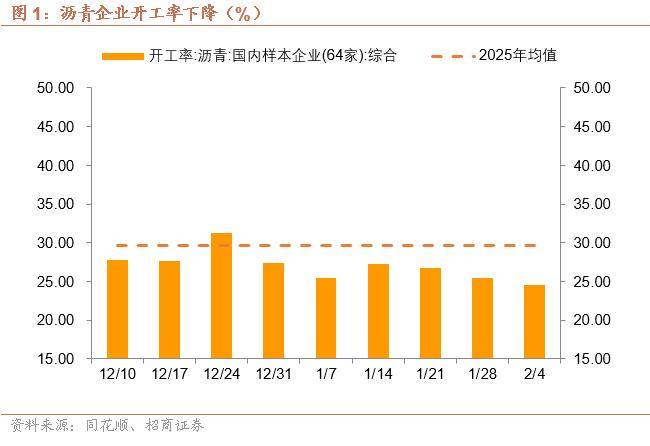
Group 1: Bond Market Outlook - The current funding and fundamental conditions are favorable for bond assets, presenting a relatively good investment opportunity [1] - Year-to-date, the 10-year government bond yield has decreased from approximately 1.9% to around 1.8%, while the 30-year yield has fallen from 2.3% to about 2.25% [1] - The investment value of bond assets is marginally recovering in the first quarter, marking a rare window of opportunity for the year [1] Group 2: Economic Indicators - The funding environment remains loose, with government bond issuance expected to rise, and financial support for fiscal bond issuance keeping funding rates low [1] - The overnight rate DR001 has dropped below 1.3%, and DR007 has decreased to around 1.45%, indicating a significant narrowing of the policy interest rate spread [1] - Short-term fundamentals are likely to remain weak, with last year's fixed asset investment growth showing negative growth for the first time, and significant declines in real estate and manufacturing investment [1] Group 3: Industry Operating Rates - The asphalt sample enterprise operating rate was 24.5%, down 1.0 percentage points week-on-week, with a year-on-year growth of 10.9% [3] - The national electric furnace operating rate was 52.56%, down 8.98 percentage points week-on-week, with a year-on-year growth of 86.3% [5] - The operating rate of major steel enterprises' blast furnaces was 73.7%, down 0.1 percentage points week-on-week, with a year-on-year decline of 2.4% [8] Group 4: Production and Capacity Utilization - The steel mill capacity utilization rate was 86.33%, up 0.42 percentage points week-on-week, with a year-on-year decline of 0.6% [30] - The average daily crude steel production of key enterprises was 1.935 million tons in late January, down 44,000 tons from mid-January, with a year-on-year decline of 8.3% [54] - The average daily cement production was 8.118 million tons, down 654,000 tons week-on-week, but up 36.5% year-on-year [71] Group 5: Real Estate Market - The transaction area of commercial housing in 30 cities was 1.395 million square meters, down 42,300 square meters week-on-week, but up 242.2% year-on-year [131] - The land transaction area was 12.0525 million square meters, up 4.4562 million square meters week-on-week [134] - The land transaction premium rate was 3.12%, down 0.45 percentage points week-on-week [135] Group 6: Logistics and Transportation - The subway passenger volume was 419.951 million trips, up 5.1195 million trips week-on-week, with a year-on-year increase of 44.8% [142] - The domestic civil aviation flight execution was 100,919 flights, up 6.7% week-on-week, but down 1.5% year-on-year [146] - The port cargo throughput was 281.597 million tons, up 9.27% week-on-week [151]