信任成本

Search documents
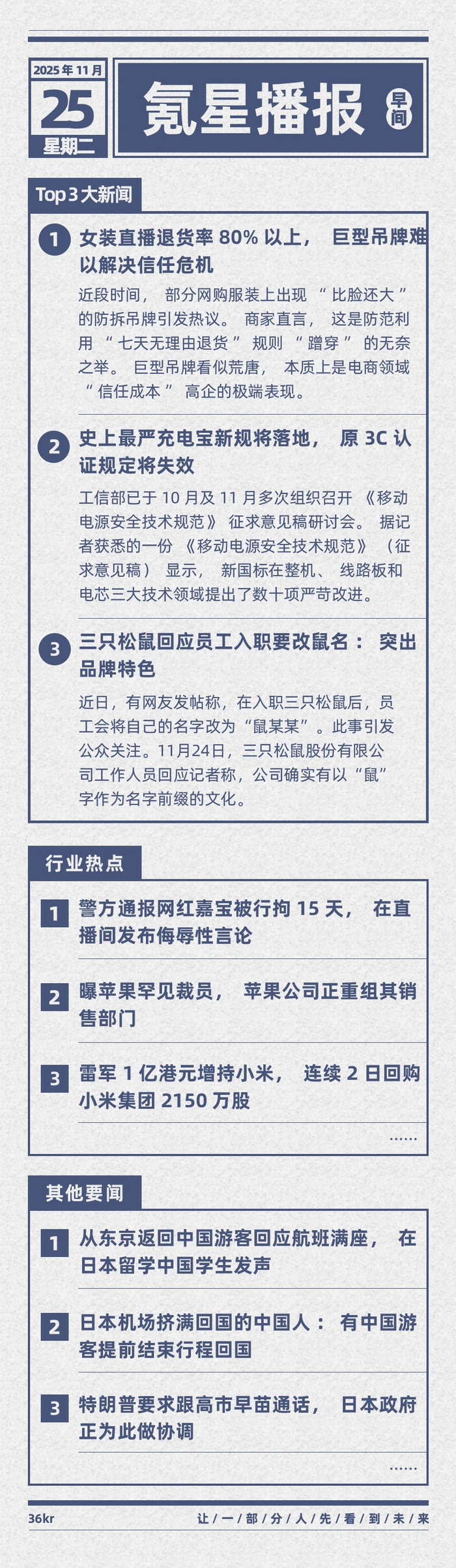
女装直播退货率超80%,三只松鼠回应员工改鼠名,神舟二十二号即将发射
3 6 Ke· 2025-11-25 04:53
Group 1 - The return rate for women's clothing live-streaming exceeds 80%, highlighting a significant trust crisis in the e-commerce sector due to high "trust costs" [3][4] - The strictest regulations for power banks will be implemented, rendering previous 3C certification standards obsolete, with new national standards proposing numerous stringent improvements in three technical areas: complete units, circuit boards, and battery cells [3][4] - Three squirrels company confirmed that employees are encouraged to change their names to include "Mouse" as a prefix, emphasizing brand culture [3] Group 2 - Apple is reportedly undergoing rare layoffs as it restructures its sales department, indicating potential shifts in its operational strategy [4] - Lei Jun increased his stake in Xiaomi by 100 million Hong Kong dollars, continuing to repurchase 21.5 million shares over two consecutive days, reflecting confidence in the company's future [4]


锐评|解决信任危机不能光靠“巨型吊牌”
Sou Hu Cai Jing· 2025-11-24 20:12
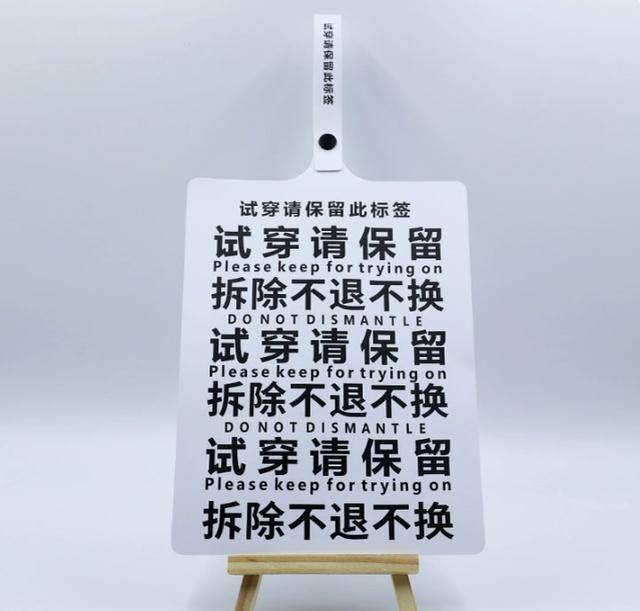
Core Viewpoint - The emergence of oversized anti-tampering tags in online clothing shopping reflects the high "trust cost" in the e-commerce sector, driven by rampant "wear and return" practices that burden retailers [2][3]. Group 1: Industry Challenges - The fashion industry is facing significant pressures from high inventory and rapid turnover, exacerbated by the increasing prevalence of "wear and return" incidents [2]. - Public data indicates that the return rate for women's clothing in e-commerce is as high as 50% to 60%, with live-streaming returns exceeding 80% [2]. Group 2: Consumer Behavior - Reports highlight that some consumers purchase clothing for one-time events, such as weddings or trips, and return them after use, contributing to increased operational costs for retailers [2]. - Student groups have been known to collectively purchase clothing for events and exploit platform rules for returns, often returning items that are wrinkled, stained, or visibly worn [2]. Group 3: Retailer Responses - Retailers are resorting to physical measures like oversized tags to deter opportunistic consumers who intend to "rent" clothing for free, as traditional methods of counteraction are ineffective under current platform rules [2][3]. - The oversized tags, while seemingly absurd, serve to protect the integrity of the consumption ecosystem by making it more difficult for dishonest consumers to exploit return policies [3]. Group 4: Future Considerations - There is a need for the establishment of more reasonable return policies and a transparent credit system to prevent exacerbating competition and "involution" in the market [3][4]. - A sustainable trading ecosystem requires collaboration between retailers and consumers, emphasizing the importance of mutual trust rather than reliance on physical deterrents [4].
街边几乎没人的茶叶店,到底怎么赚钱?
Sou Hu Cai Jing· 2025-07-25 01:48
Core Viewpoint - The tea industry faces significant challenges related to trust and information asymmetry, which impacts consumer purchasing decisions and brand loyalty [16][17][24]. Group 1: Industry Dynamics - The tea industry is characterized by a long supply chain, where costs accumulate at each stage, leading to high retail prices [9][13]. - Consumers often perceive tea prices as exorbitant due to the layered pricing structure from tea farmers to retailers [8][15]. - The lack of clear differentiation among tea brands creates confusion for consumers, making it difficult for them to choose [16][21]. Group 2: Trust and Consumer Behavior - Trust is a critical factor in the tea business, with consumers often relying on personal relationships rather than brand reputation [24][26]. - The tea shop owner serves as a "trust anchor," providing a sense of reliability and familiarity that encourages repeat business [24][25]. - The tea industry suffers from high "trust costs," where consumers are hesitant to purchase due to perceived risks associated with quality and authenticity [17][50]. Group 3: Product Offering and Strategy - The introduction of "Xiao Dong Tea - Zhu Lan Flower Tea" aims to address trust issues by providing transparency about sourcing and production methods [37][41]. - The product emphasizes quality and traditional methods, appealing to consumers seeking authenticity [41][42]. - The pricing strategy of 98 yuan aims to eliminate unnecessary costs associated with trust and relationships, making it more accessible to consumers [52][53].