服装电商

Search documents
蘑菇街未披露重大事件,投资者需关注财报及退市风险
Jing Ji Guan Cha Wang· 2026-02-13 22:45
Core Viewpoint - Mogu Inc. (MOGU.US) has not disclosed any significant future events as of February 14, 2026, and investors should focus on its financial performance and upcoming earnings reports to assess its operational status [1]. Financial Performance - The latest financial report shows Mogu's revenue at $19.57 million, with a net loss of $8.67 million and earnings per share at -$0.99. Future earnings reports, particularly for Q4 2025 and the full year, will be critical for evaluating the company's performance [1]. Stock Performance - Mogu's stock has historically exhibited high volatility and low trading volume. For instance, on January 6, 2026, the stock price fluctuated by 6.96% with a trading volume of only 2,066 shares. On January 7, 2026, the trading volume further decreased to $2,661, resulting in a turnover rate of just 0.03%. This low liquidity may amplify price fluctuations, necessitating ongoing monitoring of market trading dynamics [2]. Industry Policy and Environment - The apparel e-commerce sector is facing pressure from comprehensive platform competition and transformation challenges. Vertical e-commerce platforms like Mogu must adapt to changes such as live-streaming sales. Significant policy adjustments or shifts in the competitive landscape could impact Mogu's business outlook [3]. Future Development - Mogu previously faced delisting risks due to its stock price being below $1 for an extended period and managed to raise its stock price through a reverse stock split in 2022. Currently, the stock price hovers around $2 (as of January 2026), but if it falls below compliance standards again, it may trigger regulatory actions from the exchange [4].

服装电商高退货率居高不下 淘宝 微盟推出“AI试衣”能否有“疗效”?
Sou Hu Cai Jing· 2026-01-29 02:19
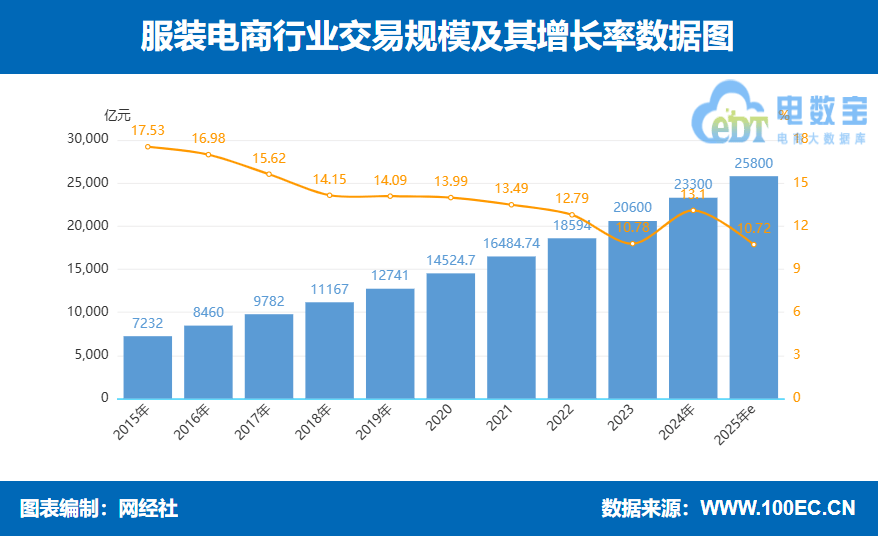
Group 1 - The core issue in the fashion e-commerce sector is the high return rate, which has evolved into a systemic problem, with some sellers reporting significant losses due to malicious returns [1][4][12] - The average return rate for women's clothing has surged from 30% in 2019 to between 65% and 80% [2] - During major sales events like Double 11, return rates can reach as high as 80-90% for live-streamed e-commerce, with some merchants experiencing daily return rates exceeding 300% [4][6] Group 2 - Weimob has launched an "AI fitting" solution aimed at e-commerce retailers, which utilizes AI technology to provide a more immersive and personalized online fitting experience, potentially reducing return rates and improving conversion efficiency [1][7][10] - Taobao has also introduced its own AI fitting feature, focusing on enhancing consumer experience and integrating it into its broader AI strategy, which includes various AI shopping assistant applications [8][10] - Both Weimob and Taobao are addressing the same issue but with different approaches: Weimob targets merchants with tools to enhance customer experience, while Taobao focuses on optimizing consumer-side interactions [10] Group 3 - The implementation of AI fitting technology faces several technical challenges, including accurately recognizing clothing styles, materials, and how they drape on the body, as well as generating realistic fitting images [11] - While AI fitting has the potential to reduce returns by providing a more accurate representation of how clothing fits, it cannot address issues related to malicious returns or misuse of return policies [12][13] - The overall effectiveness of AI fitting in reducing return rates will depend on a combination of technology, policy improvements, and consumer education [13] Group 4 - The fashion e-commerce market is projected to reach approximately 25.8 trillion yuan by 2025, indicating significant growth potential despite the challenges posed by high return rates [2][14] - The industry is witnessing a shift towards digital solutions, with AI tools becoming increasingly important for enhancing transaction efficiency and accuracy [12][29] - The integration of AI in e-commerce is seen as a critical factor for the future success of the industry, necessitating collaboration among technology, regulations, and consumer behavior [13][29]

用A4纸吊牌、上密码锁”,当退货衣服沾着血迹和异味,商家开始出奇招防“蹭穿退货
Xin Jing Bao· 2026-01-15 00:09
Core Viewpoint - The rise of "wear and return" practices among consumers is causing significant financial losses for e-commerce merchants, as they face challenges in managing returns of damaged or used items under the current return policies [1][3][16]. Group 1: Impact on Merchants - Merchants report that up to 30% of their annual revenue is lost due to returns of damaged items, which are often unsellable [7][8]. - Many merchants have begun implementing measures such as large tags and password locks on items to deter "wear and return" behavior, but these efforts have had limited success [13][14]. - The average order value for merchants is around 200 yuan, with approximately 300 returned items annually affecting resale potential, leading to losses of about 60,000 yuan per year [7][8]. Group 2: Challenges in Return Policies - Merchants face difficulties in rejecting returns of damaged items due to stringent platform rules that favor consumers, making it hard to provide sufficient evidence for claims [8][9]. - The process for merchants to appeal return decisions is cumbersome, often requiring expensive quality reports that exceed the value of the returned items [8][12]. - Many merchants have experienced receiving items with severe odors or stains, which complicates the resale process and leads to further financial losses [6][9]. Group 3: Consumer Behavior and Platform Response - Consumers are increasingly exploiting the "7-day no-reason return" policy, treating it as a trial period for clothing, which undermines the original intent of the policy [16][17]. - Some platforms have introduced features to help merchants filter out high-return customers, but the effectiveness of these measures remains questionable [14][15]. - Legal experts suggest that platforms need to refine their return policies to create a fairer environment for merchants while ensuring consumer rights are protected [16][17].

恶意退货、“买真退假” 网购乱象怎么管?
Xin Lang Cai Jing· 2026-01-12 00:26
Core Viewpoint - The rise of malicious returns in e-commerce, particularly in the clothing sector, is causing significant challenges for merchants, leading to increased operational costs and potential losses [2][6][11] Group 1: Malicious Returns Impact on Merchants - Merchants are facing difficulties with malicious returns, where items are returned after being worn or damaged, leading to financial losses [3][6] - A case study highlighted a merchant who experienced a high return rate, with items returned after being used for performances, resulting in unsellable goods [3][4] - The operational costs associated with returns, including logistics and handling, are increasing, which could lead to price hikes for consumers or threaten the viability of small businesses [6][11] Group 2: Legal and Regulatory Framework - Current laws, including the Civil Code and the upcoming Consumer Rights Protection Law, emphasize the principle of good faith, aiming to prevent the abuse of return policies by consumers [8][14] - Legal experts suggest that consumers who exploit return policies for profit may face legal consequences, including compensation for damages [8][14] - There is a call for improved regulatory measures to balance consumer rights with merchant protections, potentially through a consumer credit system to identify repeat offenders [13][14] Group 3: Merchant Strategies to Combat Returns - Merchants are adopting strategies such as using oversized tags to deter consumers from trying on items and returning them, although this may affect customer experience [10][12] - The effectiveness of these measures is still under evaluation, as they may lead to reduced sales and increased costs for merchants [12][13] - Experts recommend that merchants document the condition of items before shipping to strengthen their position in disputes over returns [9][14]
每周质量报告丨上防盗扣、挂大吊牌 谁在透支网购的信任?
Xin Lang Cai Jing· 2026-01-11 11:00
Core Viewpoint - The rise of online shopping has led to increased use of large tags and anti-theft devices on clothing, reflecting merchants' concerns over high return rates and potential losses from returned items that cannot be resold [1][8]. Group 1: Merchant Experiences - Merchants like Zhou Yuanxia and Wang Meng have adopted large tags and anti-theft devices to prevent returns of worn or damaged clothing, which is particularly problematic for items like Hanfu and Tang suits that have higher return rates [4][6]. - Wang Meng noted that while the use of large tags increases costs and reduces sales, it effectively mitigates losses from returns [6]. - E-commerce operators like Yan Qinqin have shifted focus from promoting products to managing returns, facing challenges with customers attempting to return items beyond the allowed return period [10][12]. Group 2: Consumer Impact - Consumers have expressed frustration with large tags that obstruct the view of clothing details, impacting their shopping experience and leading to potential returns due to sizing issues [17][19]. - Many consumers believe that only a small number of individuals engage in malicious return practices, suggesting that the majority are honest buyers affected by the stringent return policies [19][20]. Group 3: Industry Challenges - The overall return rate for women's clothing online hovers around 50% to 60%, with some sectors like live-streaming e-commerce exceeding 80%, leading to increased operational costs for merchants [28][30]. - The costs associated with returns, including logistics and product damage, can significantly erode profit margins, making it crucial for merchants to manage return policies effectively [30][32]. - Experts suggest that e-commerce platforms need to enhance their ability to identify and manage return behaviors to protect both consumer rights and merchant interests [32][34]. Group 4: Solutions and Recommendations - Experts recommend that platforms utilize big data to create a credit evaluation system that can help identify trustworthy consumers and flag suspicious return behaviors [34][36]. - There is a call for technological solutions to improve the tracking of consumer behavior and establish a credit rating system for return actions, which could help maintain trust in the market [36].

买家“蹭穿”背后的平台困局
Xin Lang Cai Jing· 2026-01-02 17:26
Core Viewpoint - The recent controversy surrounding "malicious returns" in online shopping highlights the ongoing conflict between consumer rights and merchant protections, indicating a need for improved e-commerce platform regulations [1][2][3] Group 1: High Return Rates - Merchants are facing high return rates, with some clothing items experiencing return rates as high as 80-90% due to policies like "seven-day no-reason returns" and "shipping insurance" [3][4] - A merchant reported receiving a returned down jacket that had been worn and damaged, sparking significant public outrage [2][3] - The introduction of "shipping insurance" has led to an increase in return rates, as it lowers the barriers for consumers to return items [3][4] Group 2: Merchant Responses - To combat high return rates, some merchants have implemented measures such as oversized tags and locks on clothing to deter "try-and-return" behavior [5][6] - Statistics show that the use of oversized tags has reduced the rate of malicious returns from 42% to 18% [6] - Merchants are advised to document the return process and communicate clearly with customers to mitigate disputes [7] Group 3: E-commerce Platform Regulations - E-commerce platforms are being urged to refine their return policies to balance the interests of consumers and merchants, as current rules may favor consumers excessively [8] - Alibaba's 1688 platform announced plans to eliminate "refund only" options, shifting the burden of proof for product quality disputes to the platform based on seller credibility [8] - The current environment has led to a perception that many merchants are unreliable, while some consumers exploit return policies for personal gain [8]


张勇:服装电商20年大浪淘沙,我还在|我们的四分之一世纪
经济观察报· 2026-01-01 07:08
Core Viewpoint - The article highlights the journey of Zhang Yong and his company, Xiaohan Pavilion, from humble beginnings in e-commerce to becoming a significant player in the fashion industry, emphasizing the importance of perseverance, adaptability, and customer focus in achieving success [2][3][20]. Company Development - Zhang Yong started Xiaohan Pavilion in a small room in Baoshan, Shanghai, using basic resources to sell clothes online, which has now grown to achieve annual sales of several billion yuan and employs over 800 people [2][3]. - The company is preparing for its anniversary celebration and moving to a new headquarters, reflecting its growth and commitment to providing a good working environment for employees [4]. Early Challenges - In the early days, Zhang faced significant challenges, including limited resources and the need to learn various skills, such as photography and customer service, to run the business effectively [6][7]. - The first order came from a customer in Hubei, marking the beginning of a journey filled with learning and adaptation [8]. Key Milestones - A major turning point occurred during the 2013 Double Eleven shopping festival, where Xiaohan Pavilion achieved over ten million yuan in sales in a single day, leading to a doubling of sales the following year [9]. - The company faced cash flow challenges due to rapid growth, prompting Zhang to negotiate with suppliers for better terms [9]. Supply Chain and Logistics - Zhang recognized the importance of a robust supply chain after experiencing a stock shortage, leading to the establishment of an office in Shenzhen to access better resources [9]. - The decision to use high-quality logistics services, such as SF Express, despite higher costs, resulted in improved customer satisfaction and reduced return rates [12]. Management Philosophy - Zhang's management style is characterized by a cautious yet determined approach, focusing on product quality and customer experience rather than aggressive expansion [10][20]. - The company has adopted a specialized approach to product development, allowing for faster innovation and a higher volume of new product launches [14][15]. Market Adaptation - Despite the rise of live-streaming e-commerce, Xiaohan Pavilion did not fully embrace this trend initially, focusing instead on maintaining product quality and customer relationships [19]. - The company is now expanding its presence on platforms like Douyin while continuing to strengthen its core business on Taobao [19][20]. Future Plans - Looking ahead, Xiaohan Pavilion plans to diversify its product lines by introducing men's and children's clothing, building on its established supply chain [20].

张勇:服装电商20年大浪淘沙,我还在|我们的四分之一世纪
Jing Ji Guan Cha Wang· 2026-01-01 03:02
Core Insights - The article highlights the journey of the company Xiaohan Pavilion, founded by Zhang Yong, which has evolved from a small-scale operation to a significant player in the e-commerce fashion industry over the past 20 years [2][3][4]. Company Growth and Development - Xiaohan Pavilion started in a small room in Shanghai, with Zhang Yong managing all aspects of the business, including product photography and customer service [4][5]. - The company has grown to achieve annual sales of several billion yuan and employs over 800 people [3][4]. - Zhang Yong's cautious approach and focus on quality have allowed the company to thrive, even during challenging market conditions [8][14]. Strategic Decisions and Innovations - The company emphasized the importance of supply chain management, leading to the establishment of an office in Shenzhen to access better quality and pricing for products [7][10]. - Zhang Yong's decision to use high-quality packaging and reliable logistics has resulted in a 15% decrease in return rates and a 20% increase in customer satisfaction [9][10]. - The company has maintained a focus on product quality and customer experience, which has been a key factor in its longevity and success [14][15]. Market Position and Challenges - Despite the rise of live-streaming e-commerce, Xiaohan Pavilion has been cautious in its approach, choosing to focus on product quality rather than rapidly shifting strategies [13][14]. - The company has recognized the need to adapt to changing market dynamics, including exploring new product lines such as men's and children's clothing [15]. Leadership and Management Style - Zhang Yong's management style is characterized by a blend of caution and a willingness to challenge industry norms, leading to innovative practices within the company [10][11]. - The division of responsibilities between Zhang Yong and his wife, who manages product details, has contributed to the company's operational efficiency [12].

巨型吊牌成电商“防退货”标配
Xin Lang Cai Jing· 2025-12-19 18:23
Core Viewpoint - The rise of oversized tags in the fashion e-commerce sector is a response to the increasing abuse of the "seven-day no-reason return" policy, particularly in the clothing industry, where practices like "wear and return" and "photo return" have become prevalent [3][5][7] Group 1: Oversized Tags as a Business Necessity - During the "Double 12" shopping festival, oversized tags saw a surge in sales, with one product labeled "custom oversized tag to prevent malicious returns" selling over 176,000 units, and another customizable tag exceeding 5 million units sold [4] - The design of oversized tags is tailored to meet the defensive needs of clothing merchants, featuring flexible specifications and durable materials, with common sizes being 200mm x 150mm [4] - The price of oversized tags is approximately 3 yuan per piece, with bulk orders reducing the unit price, and many suppliers offer additional services to lower procurement costs [4] Group 2: Malicious Returns Driving Defensive Upgrades - The popularity of oversized tags is linked to the growing issue of malicious returns in the clothing sector, where consumers exploit return policies by wearing items for a short period before returning them [5][6] - Merchants report significant financial losses due to malicious returns, with one seller indicating that half of the 100 returned items in a month were worn before being sent back [5][6] - To combat this, merchants have implemented various strategies, including placing oversized tags in hard-to-hide locations on garments and using tamper-proof fasteners to distinguish between legitimate try-ons and malicious wear [6][7] Group 3: Consumer and Merchant Perspectives - The introduction of oversized tags has sparked a debate among consumers and merchants, with supporters arguing that they help reduce the risk of receiving used items, while critics claim they hinder the shopping experience and may infringe on consumer rights [7] - Some consumers believe that the oversized tags are a necessary measure to ensure the quality of new clothing, while others feel that they are an unreasonable restriction on the right to return items [7] - The controversy surrounding oversized tags highlights the challenges within the e-commerce industry, where the need to protect merchants from losses must be balanced against maintaining a positive shopping experience for consumers [7]

互联网5G电商市场《服装鞋帽平台》运营招商,正在火热招募中.
Sou Hu Cai Jing· 2025-12-19 03:55
Core Viewpoint - The rapid growth of e-commerce presents unprecedented opportunities for the apparel industry, making effective operational recruitment a critical challenge for many companies in this sector [1]. Group 1: Market Status and Challenges - The apparel e-commerce platform market has become increasingly diversified and personalized, with a surge in competition [3]. - Attracting high-quality merchants is a key factor determining the growth speed and scale of apparel and footwear platforms [3]. - The importance of operational recruitment as a bridge between merchants and platforms is emphasized by the platform owner, Mr. Wei [3]. Group 2: Recruitment Strategies - **Platform Positioning and Brand Building**: A successful apparel platform must have a clear positioning and target audience, which influences the quality and style of attracted merchants. Strong brand building enhances merchants' sense of belonging and trust [7]. - **Incentives and Support**: Platforms should offer various incentives for new merchants, such as commission reductions and advertising support, to lower operational costs and enhance competitiveness. Comprehensive support in technology and logistics is also essential [7]. - **Precise Marketing and Promotion**: Utilizing data analysis to understand merchant needs and target customer characteristics allows for the development of precise marketing strategies, boosting both merchant sales and overall platform performance [7]. - **Management and Training**: Regular management and training for merchants are crucial for maintaining order and quality on the platform. Training and communication activities help merchants improve their operational capabilities [7]. Group 3: Implementation of Recruitment Strategies - **Online and Offline Recruitment Activities**: In addition to conventional online channels, hosting offline recruitment events and showcasing model stores can provide potential merchants with a direct understanding of the platform's advantages [9]. - **Establishing a Recruitment Team**: A specialized recruitment team should be formed to communicate and negotiate with potential merchants, equipped with industry experience and professional knowledge to accurately address merchant needs and platform advantages [9]. - **Enhancing Customer Service**: Providing high-quality customer service is key to attracting and retaining merchants. A robust customer service system should be established to promptly address merchant issues and needs, increasing satisfaction and loyalty [9]. Group 4: Conclusion - Operational recruitment is a vital component of the development of apparel and footwear platforms. By clarifying platform positioning, offering incentives, implementing precise marketing, and ensuring effective management and training, platforms can attract quality merchants and drive rapid growth. Continuous innovation and optimization of recruitment strategies are necessary to adapt to the evolving market environment [12].