
信息传播

Search documents
四川:发展“短剧+电商”新模式 最高200万元激励
Xin Lang Cai Jing· 2026-02-25 06:37
Core Viewpoint - The Sichuan Provincial Government has issued implementation opinions to further promote innovation and breakthroughs in the service industry, focusing on the development of digital advertising and information dissemination services through major platforms and leading influencers [1] Group 1: Development Strategies - The opinions emphasize leveraging major traffic platforms and top influencers to cultivate leading enterprises in digital advertising and information dissemination services, as well as new business entities that engage in "buy global, sell global" [1] - There is a push to accelerate the development of social e-commerce advertising, immersive scene advertising, intelligent marketing algorithms, and cross-platform integrated communication [1] Group 2: Incentives and Support - The initiative includes guidance for the construction of "content + traffic + business" micro-short drama platforms and the development of a new model combining "short dramas + e-commerce" [1] - Eligible advertising, information, and e-commerce enterprises may receive incentives of up to 2 million yuan [1]
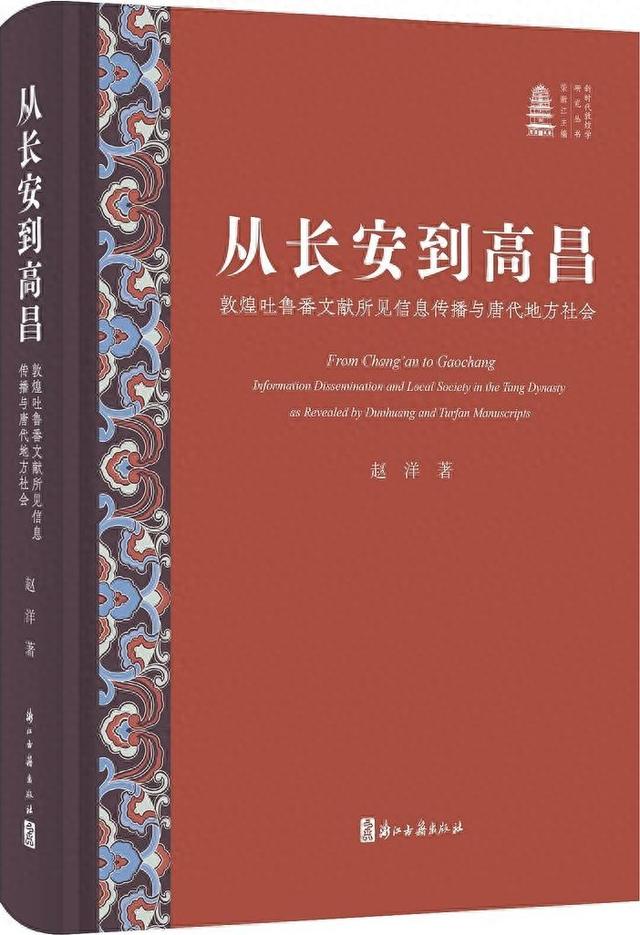
专访赵洋|长安的风吹到敦煌吐鲁番:唐帝国的信息流动与地方社会
Xin Lang Cai Jing· 2026-02-22 02:32
Core Viewpoint - The "New Era Dunhuang Studies Research Series" aims to reflect contemporary scholars' latest research achievements in Dunhuang studies, emphasizing interdisciplinary approaches and international dialogue in academia [1]. Group 1: Publication Details - The first volume of the series will be published by Zhejiang Ancient Books Publishing House in 2025, featuring five works that cover various aspects of Dunhuang and Turfan studies [1]. - The series includes titles such as "The Historical Background of Buddhist Art and Cave Art," "The Beliefs and Practices in Medieval China Seen in Dunhuang and Turfan Literature," and "The Economic and Silk Road Context of the Turfan Oasis in the 5th to 7th Centuries" [1]. Group 2: Author Insights - Zhao Yang, the author of "From Chang'an to Gaochang," examines the information dissemination from the central government to local areas during the Tang Dynasty, using Dunhuang and Turfan materials [2]. - The book presents a unique social structure of the Dunhuang and Turfan regions, highlighting the interaction between state power and local governance [2]. Group 3: Information Transmission System - The official information transmission system in the Tang Dynasty relied on a network of postal stations, with a significant number of stations established across the empire [6]. - The efficiency of this system is illustrated by historical examples, such as the timely communication of military victories despite geographical distances [6]. Group 4: Historical Context and Challenges - The information transmission system evolved dynamically, particularly after the An Lushan Rebellion, which disrupted the established communication channels between the central government and local regions [7]. - The complexities of the regional situation in the northwest, including conflicts and the lack of effective communication systems, contributed to delays and inaccuracies in information dissemination [8]. Group 5: Cultural and Religious Influence - The Dunhuang and Turfan regions exhibit a rich tapestry of cultural and religious influences, with Buddhism, Daoism, and other faiths coexisting and impacting local society [20]. - The transmission of religious texts was significantly supported by state efforts, which facilitated the preservation and dissemination of Buddhist and Daoist literature in these areas [36]. Group 6: Research Methodology - The study of regional social history is gaining traction in medieval history research, with a focus on the unique characteristics of local societies like Dunhuang and Turfan [17]. - The application of regional social history methodologies allows for a more nuanced understanding of local governance and societal structures during the Tang Dynasty [18].

从“信息传播”到“关系管理”:国际传播范式转型的理论逻辑与中国实践
Xin Lang Cai Jing· 2026-02-09 07:58
Core Insights - The article discusses the evolution of international communication from a focus on information dissemination to relationship management, emphasizing the importance of trust and understanding in global interactions [1][5][10] Group 1: Evolution of International Communication - International communication has transitioned from being primarily about "international propaganda" to encompassing a broader understanding of information flow across borders, including the role of non-state actors [2] - Historically, international communication emerged as a strategic tool during World War II, characterized by state-led, one-way information output aimed at ideological influence [3][4] - The traditional paradigm of international communication, centered on information transfer, is increasingly seen as limited due to the complexities of globalization and the rise of diverse communication channels [4][6] Group 2: Relationship Management in International Communication - The "relationship turn" in international relations theory emphasizes the importance of ongoing interactions and the generation of trust between actors, marking a significant shift in how international communication is understood [5][6] - This new paradigm suggests that relationships are not merely outcomes of interactions but are fundamental to the existence of the actors involved, reshaping the dynamics of international relations [5][6] - The focus on relationship management in public diplomacy highlights the need for stable, trust-based connections rather than mere information persuasion, especially in addressing global challenges [6][7] Group 3: Implications for China's International Communication - China's approach to international communication reflects a shift towards relationship-building, integrating communication into broader diplomatic and economic interactions [9][10] - The emphasis on tailored communication strategies that resonate with diverse audiences aims to enhance the effectiveness and relatability of China's international narrative [9][10] - The transformation from information dissemination to relationship management aligns with the global trend of recognizing the importance of relational dynamics in international interactions [10][11]
企业公关为何频频翻车?
Ren Min Ri Bao· 2025-09-30 11:07
Core Insights - The article discusses the increasing frequency of public relations (PR) failures among brands, highlighting how well-intentioned marketing efforts can backfire and damage brand reputation [1][4] - It emphasizes the need for brands to adapt their communication strategies in the evolving media landscape, where consumer expectations and engagement have significantly changed [2][3] Group 1: Changes in Communication Dynamics - The narrative power has shifted, with consumers now actively participating in the discourse rather than being passive recipients of brand messages [1][2] - Brands that fail to engage with consumer feedback and continue to adopt a one-sided communication approach risk becoming increasingly isolated and criticized [1][3] Group 2: Evolving Consumer Expectations - Consumer demands have evolved from merely valuing product utility to also prioritizing emotional value and brand attitude [2][3] - Brands that overlook the importance of emotional connection and fail to acknowledge consumer sentiments may lose customer loyalty [2][3] Group 3: Blurred Lines in Target Audience - The distinction between targeted and mass communication has become less clear, leading to potential misinterpretations of brand messages when they reach broader audiences [2][3] - Internal communications intended for specific audiences can inadvertently be perceived as confrontational by the general public, necessitating careful messaging [2][3] Group 4: Management Mindset and Response - Some PR failures stem from a defensive mindset among brand leaders who may dismiss criticism as malicious rather than constructive [3][4] - Companies must develop modern PR strategies that prioritize listening to consumer feedback and addressing genuine concerns while distinguishing between valid criticism and malicious attacks [3][4] Group 5: Learning from Failures - Brands should learn from PR missteps and strive for more equitable communication with consumers, moving away from unilateral messaging [4][5] - Emphasizing sincerity and trust-building is essential for brands to navigate complex public perceptions and maintain a positive relationship with consumers [6]
中国上市公司协会理事刘翠兰:出海要善用媒体力量 讲好中国品牌故事
Feng Huang Wang Cai Jing· 2025-09-23 08:17
Core Insights - The "Phoenix Bay Area Finance Forum 2025" held in Guangzhou focused on the theme "New Pattern, New Path" and gathered global elites from politics, business, and academia to explore development opportunities amidst changing circumstances [1] Compliance and Governance - Liu Cuilan, a director of the China Listed Companies Association, emphasized that compliance is essential for Chinese companies transitioning to global players, highlighting the need to navigate varying regulations in governance, foreign investment, ESG, data security, intellectual property, and supply chain management [3] - Companies must strengthen their governance and compliance awareness to avoid rapid but unstable expansion in international markets [3] Innovation as a Competitive Edge - Innovation is identified as a critical strength for companies to establish themselves globally, particularly in the face of technological competition and barriers [3] - Companies are encouraged to leverage both domestic and international markets and resources, increase R&D investment, and enhance their independent innovation capabilities [3] Cultural Integration and Local Engagement - Liu Cuilan suggested that companies should respect local cultures and customs, support local supply chains, and engage in community service to transition from being perceived as outsiders to becoming integral members of the local community [4] - The goal of "coexistence" serves as a bonding agent for companies integrating into local markets [4] Importance of Information Dissemination - There is a significant information dissemination gap for Chinese companies operating abroad, often leading to misinterpretation of their corporate image [4] - Companies should proactively set agendas and utilize international narrative languages to effectively communicate their stories and values, enhancing brand affinity and credibility [4] - Emphasizing both technological innovation and cultural empathy is crucial for accurately portraying Chinese brands in the global market [4]
