
企业公关

Search documents
不必臧否追觅俞浩
Xin Lang Cai Jing· 2026-02-09 04:05
Core Viewpoint - The article discusses the mixed perceptions of Yu Hao, the CEO of the company, emphasizing that while his achievements are commendable, they should not be overstated or misinterpreted as surpassing other major players in the industry. Group 1: Company Achievements - The company has achieved over 50% market share in the overseas vacuum cleaner market and has distributed over 1 billion yuan to employees, including gold bonuses for each employee [1][4] - The revenue of the company may be higher than competitors like Ecovacs and Roborock, but the difference is not as significant as portrayed [1][4] Group 2: Public Perception and Marketing - There is a debate on whether to encourage Yu Hao's boldness and spirit, as it is seen as rare today, but caution is advised against misleading external perceptions of the company's financial status [1][2] - Yu Hao's ambitious statements about the company's future, including plans for 200,000 employees and a market value of 100 trillion yuan in 20 years, could benefit employees and society if even a fraction of these goals are achieved [2][6] Group 3: Communication Strategy - The company’s public relations strategy currently emphasizes dialogue but lacks strong narrative elements that would compel consumers to purchase its products [3][7] - A recommendation is made for Yu Hao to study successful marketing strategies used by figures like Elon Musk to effectively communicate the company's vision and product stories [3][7]
西贝回应人民日报文章:“西贝贾国龙一定对照反思,学习,改进。”
Xin Lang Cai Jing· 2026-01-20 11:33
Core Viewpoint - The article emphasizes the importance of sincerity in public relations during a crisis, highlighting that the response from Xibei's CEO, Jia Guolong, was inadequate and did not effectively address the company's challenges [1] Group 1: Company Response - Xibei officially acknowledged the commentary from People's Daily, stating that Jia Guolong would reflect, learn, and improve [1] - The company's social media response included a humorous update, adding exclamation marks to emphasize their commitment to improvement [1] Group 2: Crisis Analysis - The commentary criticized Jia Guolong's response to criticism regarding Xibei's reliance on pre-prepared dishes, suggesting that his approach was more defensive than constructive [1] - The article pointed out that the core issue was not the criticism itself but the lack of sincerity in the company's communication with consumers [1] Group 3: Lessons for Entrepreneurs - The commentary serves as a reminder for entrepreneurs in the internet age to prioritize transparency and honesty in their communications [1] - It stresses that while one may not be skilled in public relations, understanding consumer sentiment is crucial for maintaining a positive brand image [1]


西贝回应:贾国龙一定对照反思,学习,改进
Xin Lang Cai Jing· 2026-01-19 15:08
Core Viewpoint - The article discusses the recent crisis faced by XIBEI, highlighting the importance of transparency and consumer understanding in public relations, particularly in response to criticism regarding the use of pre-prepared dishes [3]. Group 1: Company Response - XIBEI's official Weibo account shared a commentary from the People's Daily, indicating that the company's founder, Jia Guolong, should reflect, learn, and improve in light of the criticism [1]. - The commentary emphasizes that while Jia Guolong claims to not understand public relations, the real issue lies in the company's lack of sincerity towards consumers [3]. Group 2: Industry Commentary - The People's Daily article critiques the online discourse surrounding XIBEI, suggesting that the criticism from influential figures like Luo Yonghao should be analyzed more deeply, as it has escalated beyond mere online disputes [3]. - It stresses the need for a rational and objective approach to corporate criticism, warning against malicious intent in public discussions, and calls for all parties involved to contribute to a healthier online environment [3].

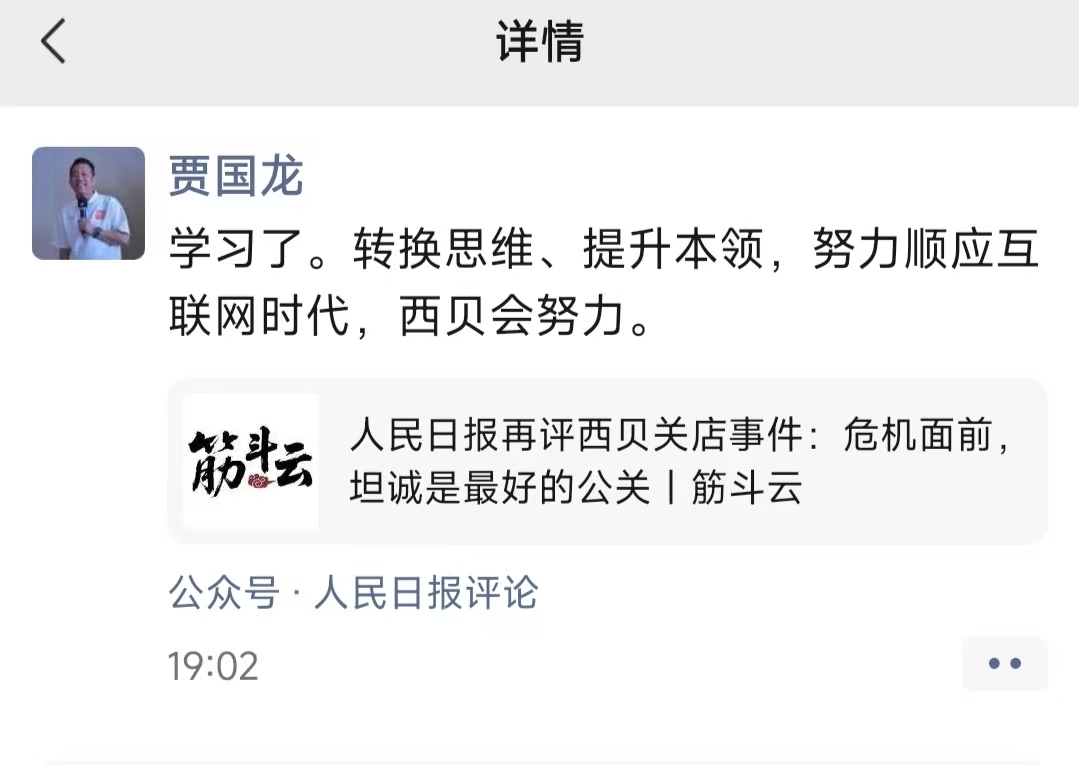
人民日报再评西贝关店事件,贾国龙:转换思维,努力顺应互联网时代
Feng Huang Wang Cai Jing· 2026-01-19 12:44
Group 1 - The core viewpoint of the article emphasizes that sincerity is the best public relations strategy for companies facing crises, as illustrated by the Xibei store closure incident, where the issue was not just the pre-made dishes but the lack of honesty from the company [1] - Xibei's founder, Jia Guolong, acknowledged his shortcomings in public relations and expressed a commitment to change his mindset and improve his skills to adapt to the internet [1] - Xibei's official Weibo account responded to the situation by stating that Jia Guolong would reflect, learn, and improve, indicating a willingness to engage with public feedback [3]
贾作真时真亦假
Ge Long Hui· 2026-01-18 22:30
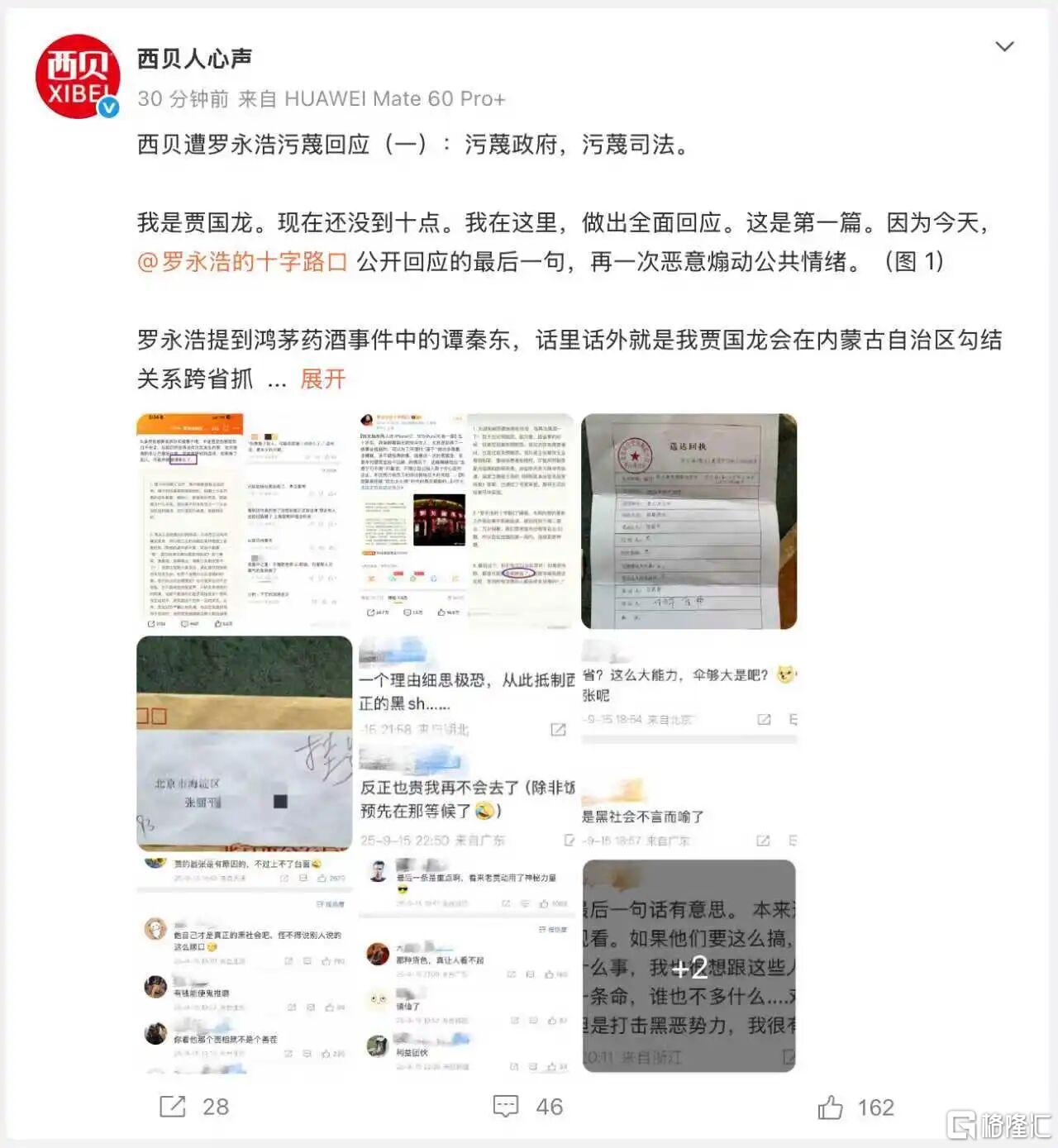
Core Viewpoint - The ongoing public dispute between the founder of Xibei, Jia Guolong, and internet celebrity Luo Yonghao has escalated, impacting Xibei's business operations and public perception significantly [5][6][9]. Group 1: Background of the Dispute - The conflict began when Luo Yonghao criticized Xibei for allegedly using pre-prepared dishes, which led to a strong backlash from Jia Guolong, who threatened legal action against Luo [5][6]. - Following Luo's comments, media scrutiny increased, revealing various operational issues at Xibei, including the use of frozen vegetables and unlicensed staff [5][6]. - Xibei's customer traffic plummeted after the public dispute, prompting Jia to issue an apology and adjust pricing strategies, with price reductions ranging from 20% to 40% [5][6]. Group 2: Current Situation and Reactions - Despite the apology, Jia Guolong's combative stance has persisted, as he continues to publicly defend Xibei against accusations, emphasizing that their dishes do not meet the definition of pre-prepared food [7][9]. - The company has faced significant operational challenges, including the closure of 102 stores, which accounts for 30% of its total locations, and the layoff of approximately 4,000 employees [7][9]. - Jia's emotional responses and insistence on fighting back against public criticism highlight a struggle between personal pride and the need for effective corporate management [8][9].
西贝的公关已经开始笑了
半佛仙人· 2026-01-16 16:18
Core Viewpoint - The article discusses the public relations (PR) challenges faced by Xibei, emphasizing that the issues are not solely due to the PR team's capabilities but rather stem from the actions and mindset of the company's leadership [2][30]. Group 1: PR Challenges - Xibei's PR team has been criticized over the past six months, but the author argues that their approach is actually quite professional and they have identified the root of the problems [2][30]. - The departure of the PR vice president and the current state of the company's leadership indicate that the PR issues are exacerbated by the boss's actions, which overshadow the team's efforts [5][30]. - The article suggests that even with advanced strategies and knowledge, the PR team is often powerless against the decisions made by the leadership [10][14]. Group 2: Reality of PR Work - The role of PR is often misunderstood; it is not about controlling narratives but rather about navigating a challenging environment where PR professionals are seen as subservient to the company's leadership [14][22]. - Many PR professionals feel their existence is tied to improving the company, which can lead to frustration and depression, as they are ultimately just employees [23][24]. - The article highlights that despite the absurdity of the situation, the PR team at Xibei has demonstrated resilience and professionalism, which could be a valuable experience for future job opportunities [31][32].

西贝贾国龙再发声:当时谁帮西贝说话就被挂出来攻击,于东来跟我完全不认识
Xin Lang Cai Jing· 2026-01-15 13:29
Core Viewpoint - The chairman of Xibei, Jia Guolong, acknowledges the company's plan for "large-scale store closures" while defending Huashan against online attacks, questioning the bias against domestic brands compared to foreign ones [1][4]. Group 1: Company Background and Operations - Xibei has been collaborating with Huayi Huayi for ten years, focusing on brand building and business consulting [6]. - The company emphasizes customer service, offering refunds for any dissatisfaction, and claims to prioritize food quality and safety, asserting it ranks among the industry's leaders [6]. Group 2: Online Attacks and Public Relations - Jia Guolong expresses frustration over the online harassment faced by Xibei, stating that those who supported the company were also targeted, including notable figures like Yu Donglai and Yu Minhong [1][4]. - He criticizes the notion that domestic entrepreneurs are labeled as "local bosses" while foreign counterparts are favored, highlighting a perceived bias in public perception [1][6]. Group 3: Call for Regulatory Action - Jia questions the lack of regulatory oversight regarding online harassment and the impact on the business environment, urging for measures to stabilize enterprises and market expectations [3][7]. - He reaffirms the commitment to continue working with Huayi Huayi, describing Huashan as a loyal and principled individual [7].
西贝贾国龙再发声:说我傻我认,说西贝“预制菜,贵,恶心”,我不认!
Xin Lang Cai Jing· 2026-01-15 13:24
Core Viewpoint - The chairman of Xibei, Jia Guolong, acknowledges the company's plan for "large-scale store closures" while defending the brand against negative public sentiment regarding its pre-made dishes, emphasizing the importance of authenticity and sincerity in their operations [1][3]. Group 1: Company Operations and Public Relations - Xibei has been training its employees with the principles of "real, sincere, and genuine" for decades, which Jia believes is the best form of public relations [1][4]. - The company has faced online harassment and negative publicity, which Jia attributes to a lack of understanding of public relations rather than issues with the food quality or service [2][4]. - Xibei has a policy of refunding customers if they are not satisfied, indicating a strong commitment to customer service [4]. Group 2: Collaboration and Industry Context - Xibei has collaborated with the consulting firm Hua Yu Hua for ten years, focusing on brand building and operational consulting [4]. - The firm has worked with numerous well-known companies, raising questions about the perception of entrepreneurs in the industry and the challenges faced by private enterprises in managing public relations [2][4]. - Jia expresses concern over the negative impact of online bullying on business leaders who support Xibei, highlighting the need for regulatory oversight to improve the business environment [2][4].
主播说丨小米开年冰火两重天:汽车销量冲上41万,股价舆论却齐翻车
Xin Lang Cai Jing· 2026-01-08 11:59
Core Insights - Xiaomi's automotive division experienced a tumultuous start to 2026, with CEO Lei Jun announcing the sale of 410,000 vehicles last year and achieving a quarterly profit of 700 million [1] - Despite these achievements, the company's stock price fell, leading to a market capitalization drop below 1 trillion, primarily due to a controversial marketing decision that angered core fans [1] Group 1: Company Performance - Xiaomi sold 410,000 vehicles last year, marking a significant milestone for the automotive division [1] - The company reported its first quarterly profit of 700 million, indicating a positive financial trend [1] Group 2: Market Reaction - Following a controversial marketing campaign targeting a critic of Xiaomi, the company's stock price declined, resulting in a market cap drop below 1 trillion [1] - The backlash from fans led to a swift response from Xiaomi, including an apology, the dismissal of the involved employee, and the withholding of bonuses for two executives [1] Group 3: Internal Challenges - The incident highlighted Xiaomi's underlying anxiety in managing public perception and negative press, suggesting that the company may be struggling to maintain its brand image amidst increasing competition [1] - The need for a more solid approach to brand management was emphasized, indicating that reliance on fan support alone may not be sufficient for the company's success [1]

小米业务版图扩张,舆情场空前复杂!公关一号变动
Xin Lang Cai Jing· 2025-11-24 06:23
Core Viewpoint - The recent personnel changes at Xiaomi, particularly the transfer of Wang Hua to the Wuhan headquarters and the appointment of Xu Jieyun as the new head of the public relations department, signal a potential shift in the company's external communication strategy amidst its expanding business landscape [2][3][5]. Group 1: Personnel Changes - Wang Hua has officially announced his transfer to Xiaomi's Wuhan headquarters, where he will serve as the General Manager of the Comprehensive Management Department [3]. - Xu Jieyun has been appointed as the new General Manager of the Public Relations Department while continuing his role as the Deputy General Manager of the Strategic Marketing Department [3][5]. - The changes come after a series of speculations regarding Wang Hua's position, indicating a long-anticipated shift in Xiaomi's leadership [2]. Group 2: Public Relations Strategy - Wang Hua's career trajectory has been closely tied to the development of Xiaomi's public relations department, having joined the company in 2015 and played a key role in establishing the department during its formation [5]. - His responsibilities included managing external communications and responding to significant controversies, such as clarifying rumors about Xiaomi's investments and addressing safety concerns related to its automotive business [5][6]. - The complexity of Xiaomi's public relations landscape has increased due to its diversification into various sectors, including automotive and smart home products, necessitating a more robust communication strategy [7][8]. Group 3: Industry Insights - Experts emphasize the importance of stable external communication for companies, particularly in managing public perception and trust [6]. - Effective public relations strategies should involve timely responses to public inquiries and transparent communication, especially in the face of controversies [9]. - The transition in leadership within Xiaomi's public relations department is viewed as an opportunity to enhance communication frameworks and better address the diverse needs of its expanding business operations [9].
