债券配置策略

Search documents
三月债市,票息为王
Changjiang Securities· 2026-03-09 00:41
1. Report Industry Investment Rating No information is provided regarding the industry investment rating in the given content. 2. Core Viewpoints of the Report - In late February, the bond market showed an oscillatory recovery, with short - end credit products outperforming long - end ones. Credit bonds outperformed interest - rate bonds and Tier 2 capital bonds, and the short - end credit market was stronger [5][10]. - Amortized bond funds are shifting their allocation from interest - rate bonds to credit bonds. In March 2026, there will be a large - scale concentrated opening, releasing continuous credit bond allocation demand [5][11]. - The development of participating insurance is reshaping the asset allocation pattern of insurance funds. Insurance funds are expected to increase their net purchases of credit bonds and optimize their asset structure in 2026 [5][12]. - In March, bond market allocation should seize the structural opportunities, focus on the short - end credit products brought by the amortized bond fund's position - building window. The recommended priority is 1Y AAA medium - short - term notes > 1Y AAA commercial financial bonds > 1Y AAA inter - bank certificates of deposit [5][13]. 3. Summary According to the Directory 3.1. Amortized Bond Funds: Allocation Preference Migration and Yield Calculation - **Amortized Bond Fund Holdings: From Interest - rate to Credit**: As of the end of 2025, the scale of amortized bond funds was 150.8182 billion yuan. In Q4 2025, the market value of credit bond holdings increased by 56.74% quarter - on - quarter, and the proportion rose to 21.36%. Medium - term notes were the main increased bond type [23]. - **Allocation Preference Differentiation of Amortized Bond Funds with Different Fixed - Open Cycles**: Amortized bond funds with a cycle of less than 36 months prefer credit bonds, while those over 36 months prefer policy - financial bonds. Short - term and 63 - month funds are the main drivers of the shift from interest - rate to credit bonds [29]. - **Bond Type Allocation of Amortized Bond Funds with the Same Fixed - Open Cycle**: Some closed - cycle amortized bond funds show certain commonalities in bond type allocation, but there are also significant structural differentiations. Short - term and long - term funds have higher similarity in bond type allocation, while medium - and long - term funds have higher differentiation [35]. - **Amortized Bond Funds Build Positions after Entering the Closed - end Period**: Amortized bond funds usually build positions gradually after the closed - end period starts. In March 2026, there will be a large - scale maturity of amortized bond funds within 1 year and over 5 years (expected open scale over 9.6 billion yuan), and the new position - building demand is expected to drive the credit bond allocation demand [40]. - **The Remaining Term of Amortized Bond Fund Assets Should Match the Closed - end Period Requirement**: The remaining term of amortized bond fund assets is restricted by the length of the closed - end period. The actual position data at the end of Q4 2025 verifies the configuration logic of holding to maturity [46]. - **The Concentrated Opening of Amortized Bond Funds Compresses Credit Spreads**: The concentrated opening of amortized bond funds is beneficial to credit, pushing down the yields of corresponding - term credit products and narrowing credit spreads. In March 2026, the credit spreads of 1 - year and 5 - year credit bonds may be further compressed [50]. - **Comparison of 1 - year Amortized Bond Funds with Bonds of the Same Maturity**: Among the 12 sample 1 - year amortized bond funds, 11 have higher yields than national development bonds, 8 can outperform AAA - rated inter - bank certificates of deposit and AAA - rated commercial financial bonds, and 5 can outperform AAA - rated medium - short - term notes [55][57]. - **Estimation Logic and Validity Verification of Amortized Bond Fund Expected Yields**: Based on the heavy - position bond details disclosed in the quarterly reports, the expected yields of amortized bond funds can be reasonably predicted. The correlation coefficient between the estimated expected yields and the actual yields is 0.92, with good fitting results [60]. - **Future Yield Forecast of Amortized Bond Funds: Long - term Fixed - Open Cycle Products Have More Advantages**: In March 2026, the expected annualized yields (after fees) of amortized bond funds are concentrated in the range of 1.1% - 1.6%, and long - term fixed - open cycle funds such as 63 - month and 66 - month ones show obvious yield advantages [64]. - **Can Tier 2 Capital Bonds Continue to Be Allocated?**: From a historical perspective and considering the yield safety cushion, the allocation value of Tier 2 capital bonds has weakened. The "shrinking volume and rising price" trend in the market is a signal that the rising market is difficult to continue [69]. 3.2. Development of Participating Insurance: Reshaping the Insurance Asset Allocation Pattern - **Reducing the Duration Gap: The Development of Participating Insurance Benefits Medium - and Long - term Credit Bonds**: In early 2026, to reduce the duration gap, insurance funds showed an obvious term preference for credit bond allocation, and the trend of increasing medium - and long - term credit bonds is expected to continue in March [78]. - **New Accounting Standards: The VFA Model Drives Insurance to Increase Allocation of Tier 2 and Perpetual Bonds**: The VFA model can smooth the impact of asset price fluctuations on current profits. In January 2026, insurance institutions actively allocated Tier 2 and perpetual bonds, and this trend is expected to continue in March [85]. - **Clear Trend: The Increase in the Proportion of Participating Insurance Boosts Equity Allocation**: In 2026, the insurance industry's increase in equity asset allocation is a clear long - term trend, driven by the development of participating insurance. In March, the proportion of participating insurance is expected to further increase, and the demand for equity assets will continue to strengthen [90]. - **Outlook for March: The Deepening of "Fixed - Income +" Drives Insurance Funds to Increase Allocation of High - Coupon Assets**: In March 2026, insurance funds are expected to further increase their allocation of medium - and long - term credit bonds and Tier 2 and perpetual bonds, while reducing the allocation of national bonds and moderately increasing the allocation of local government bonds [93]. - **Variety Allocation Strategy: Seize the Amortized Bond Fund Position - Building Window and Focus on Short - end Credit Allocation**: In March 2026, the recommended priority for credit bond allocation is 1Y AAA medium - short - term notes > 1Y AAA commercial financial bonds > 1Y AAA inter - bank certificates of deposit [97].
债市日报:2月27日
Xin Hua Cai Jing· 2026-02-27 08:23
Market Overview - The bond market showed signs of recovery on February 27, with most government bond futures closing higher and interbank bond yields generally declining by around 1 basis point [1][2] - The People's Bank of China conducted a net injection of 269 billion yuan through reverse repos, indicating stable liquidity ahead of the upcoming two sessions [1][5] Bond Futures Performance - The 30-year main contract fell by 0.07% to 112.07, while the 10-year main contract rose by 0.05% to 108.395 [2] - The yields on major interbank bonds, including the 10-year government bonds, decreased, with the 10-year government bond yield down by 0.85 basis points to 1.809% [2] International Bond Market - In North America, U.S. Treasury yields fell across the board, with the 10-year yield down by 4.59 basis points to 4.004% [3] - Asian markets also saw declines in bond yields, with Japan's 10-year yield down by 3.9 basis points to 2.115% [3] - In the Eurozone, yields on 10-year bonds from France, Germany, Italy, and Spain all decreased [3] Primary Market Activity - The bidding results for local bonds in Liaoning Province showed a strong demand, with a bid-to-cover ratio exceeding 27 times for the 10-year bond [4] Liquidity and Funding Conditions - The central bank's reverse repo operation on February 27 resulted in a net injection of 269 billion yuan, with a fixed rate of 1.40% [5] - Short-term Shibor rates mostly declined, with the overnight rate down by 1.0 basis point to 1.358% [5] Institutional Insights - Huatai Securities noted a slight improvement in credit demand for 2026, particularly in dividend insurance, while cautioning about mid-term challenges [6] - CITIC Securities highlighted that the bond market is expected to play a stabilizing role rather than trend significantly in one direction [7] - Changjiang Securities pointed out that the ongoing debt resolution policies are reshaping the financing landscape for local government financing vehicles [7]
国泰海通|固收:降息预期下,美债长端承压会持续多久
国泰海通证券研究· 2025-12-10 11:52
Group 1 - The core focus of the global bond market last week was on the rising expectations for a Federal Reserve rate cut in December, the surge in Japanese government bond yields to a multi-year high, and the ongoing fiscal risks in Europe [1] - The probability of a Federal Reserve rate cut increased from below 50% in early November to 85%, with Morgan Stanley adjusting its stance and lowering its terminal rate forecast [1] - The yield on Japan's 10-year government bonds rose to 1.94%, the highest level since 2007, while the French sovereign credit spread widened [1] Group 2 - The global bond market saw a general increase in yields, with the U.S. Treasury curve steepening significantly; the 30-year yield rose by 12.8 basis points to 4.79%, while the 1-year yield decreased by 0.7 basis points [1] - European bonds also experienced upward movement, with the UK 20-year yield rising by 14.58 basis points to 5.11% and the German 10-year yield increasing by 10 basis points to 2.86% [1] - The credit spreads narrowed significantly, with the G-spread contracting by 6.2 basis points and the high-yield bond spread narrowing by 13.2 basis points to 2.431% [1] Group 3 - The offshore bond market saw the yields of dim sum bonds and domestic bonds rise in tandem, with the offshore 10-year yield increasing by 1.64 basis points to 1.9095% [2] - The issuance of dim sum bonds totaled 33 issues amounting to 28.031 billion RMB, with financial bonds accounting for 87.2% of the total [2] - The default rate for U.S. leveraged loans decreased to 4.8%, while the high-yield bond default rate rose to 3.3%, driven primarily by defaults in the healthcare sector [2] Group 4 - The global liquidity in the currency market showed structural differentiation, with the U.S. dollar SOFR declining significantly, reflecting the rising expectations for a Federal Reserve rate cut [3] - The Hong Kong dollar HIBOR also saw a substantial decline, with all tenors dropping by over 10 basis points, indicating a seasonal easing of liquidity tension [3] - The overseas bond allocation strategy should focus on medium to long-duration holdings, credit tier selection, and regional rotation [3]



三大投资策略应对不确定的市场环境
Guo Ji Jin Rong Bao· 2025-06-25 11:40
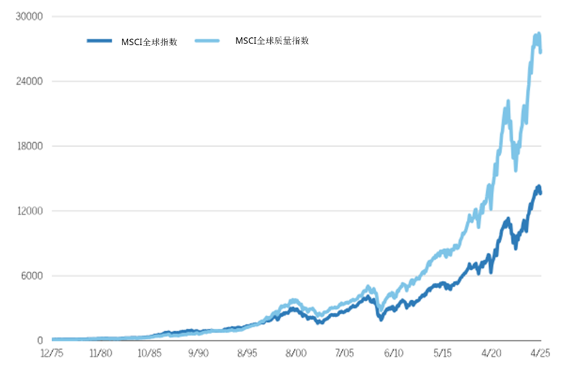
Group 1 - The current market environment is characterized by rising inflation, increased business cycle volatility, and de-globalization trends, indicating a new era in the global economy [1] - The "Liberation Day" tariff policy in the U.S. reflects these new trends, showcasing volatility and de-globalization tendencies that are emblematic of the current global economic landscape [1] - Investors are advised to focus on their investment goals and shield themselves from external disturbances in this uncertain environment [1] Group 2 - In the new economic landscape, the stock market has undergone profound changes, with a higher capital cost and increased volatility, making it challenging for many companies to survive [2] - High-quality stocks, characterized by high return on equity, low leverage, and stable earnings, are more likely to outperform competitors in a survival-of-the-fittest environment [4] - Active managers may have an advantage over passive managers in identifying high-quality companies due to their ability to employ qualitative analysis [4] Group 3 - The new economic normal features increased uncertainty in interest rates and government bonds, complicating the balance between promoting economic growth and controlling inflation [5] - Traditional views of government bonds as safe-haven assets are being challenged due to the increased uncertainty surrounding them [6] - A strategic and adaptive bond allocation strategy is essential in the current environment, as the previous "set it and forget it" approach is no longer effective [6] Group 4 - Market volatility presents opportunities for high-yield investors, with widening spreads and increased differentiation among regions, industries, and issuers [7] - The U.S. and European high-yield investment products currently offer attractive yields, with Europe standing out due to its larger, more diversified market and improved overall quality [7] - High-yield investments can provide a balanced strategy by combining growth potential and risk hedging, but investors must also consider the long-term sustainability and quality of yields [7] Group 5 - The new economic era is expected to be more challenging than the post-financial crisis environment, with uncertainty potentially causing anxiety among investors [8] - Focusing on investment quality and employing flexible fixed-income strategies are crucial for navigating this turbulent period [8] - The changes in the economic landscape present new opportunities for investors who know how to identify and capitalize on them [8]