偿付能力管理

Search documents
四年没披露偿付能力报告,珠江人寿公开招聘总经理
Xin Lang Cai Jing· 2025-12-25 11:42
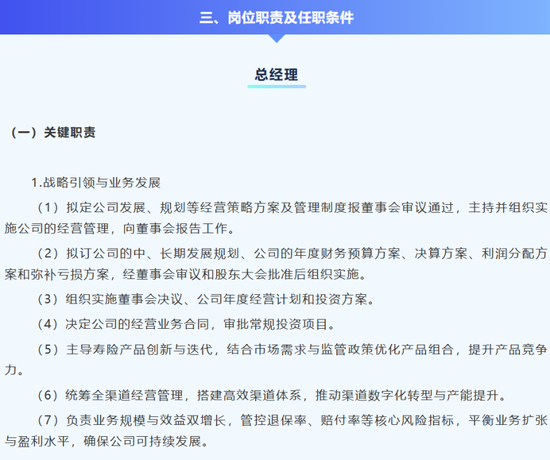
Group 1 - The core focus of the article is the recruitment of senior management positions at Zhujiang Life Insurance, including the role of General Manager, which has been vacant since the previous manager, Fu Anping, moved to Xingfu Life Insurance in August [2][14]. - Zhujiang Life Insurance is seeking to fill the General Manager position with candidates who have over 15 years of experience in the finance/insurance industry, including at least 10 years in life insurance management, and preferably those who have been comprehensive managers in the life insurance sector [3][15]. - The responsibilities of the General Manager include strategic leadership, business development, corporate governance, compliance supervision, organizational management, and team building [4][15]. Group 2 - The recruitment announcement emphasizes the need for the General Manager to manage solvency effectively, ensuring that the company's solvency adequacy ratio remains compliant, optimizing capital allocation efficiency, and mitigating liquidity, market, and reputational risks [5][16]. - Zhujiang Life Insurance has not published a solvency report for four years, with the last update being in Q4 2021, indicating a significant gap in financial transparency [6][17]. - As of Q4 2021, Zhujiang Life Insurance's core solvency adequacy ratio was 52.02%, and the comprehensive solvency adequacy ratio was 104.04%. The insurance business generated revenue of 2.5278 billion yuan and a net profit of 328.5748 million yuan [9][19]. Group 3 - The company has experienced a notable loss of senior management, with only four executives currently disclosed on its official website, compared to ten in the previous report [7][18]. - Zhujiang Life Insurance's risk management capabilities are under scrutiny, as it was rated C in the latest risk assessment, which is below the B rating required by regulatory authorities for adequate risk resilience [11][21]. - The main business of Zhujiang Life Insurance is life insurance, with a focus on dividend insurance products. The top five insurance products by premium income in 2024 include Zhujiang Xinduo Duo Whole Life Insurance (dividend type) with 3.905 billion yuan, Zhujiang Yingduo Duo Whole Life Insurance (dividend type) with 3.236 billion yuan, and others [12][22].

和谐健康减持金融街不到一周又开始增持,操作引市场关注,年内已减持多家上市公司
Xin Lang Cai Jing· 2025-12-10 15:18
Core Viewpoint - Harmony Health Insurance has increased its stake in Financial Street by 0.235484% from December 4 to December 8, following a previous reduction in its holdings, indicating a strategic move to comply with regulatory requirements regarding shareholding percentages [1][2]. Group 1: Shareholding Changes - Harmony Health's shareholding decreased from 15.017490% to 14.764514% after a reduction on November 26, which triggered the need to repurchase shares to maintain a minimum holding of 15% [2]. - The repurchase involved acquiring 7,038,441 shares to restore the holding percentage back to 15% [2]. Group 2: Regulatory Context - Legal experts noted that Harmony Health's actions may have procedural flaws, as significant shareholders are required to halt trading when their holdings cross certain thresholds [2]. - The regulatory environment is tightening, encouraging major shareholders to engage in rational buying and selling practices to prevent market manipulation [2]. Group 3: Industry Insights - Recent incidents of regulatory warnings have been noted, such as the case of Great Wall Life, which faced penalties for not halting trades after exceeding a 5% holding threshold [3]. - Harmony Health is one of the seven health insurance companies in China and has been actively managing its investment strategies, including reducing equity investments in favor of more stable, long-term products [4][5]. Group 4: Financial Health and Strategy - The company is under pressure regarding its solvency due to historical policies and declining market interest rates, prompting a shift in investment strategy towards fixed income [6]. - The implementation of IFRS 9 has increased the impact of equity investment volatility on profit statements, leading some insurance funds to reduce their equity holdings to stabilize earnings [6].

金融监管总局:保险公司应持续提高长期资金投资管理能力
Bei Jing Shang Bao· 2025-12-05 11:55
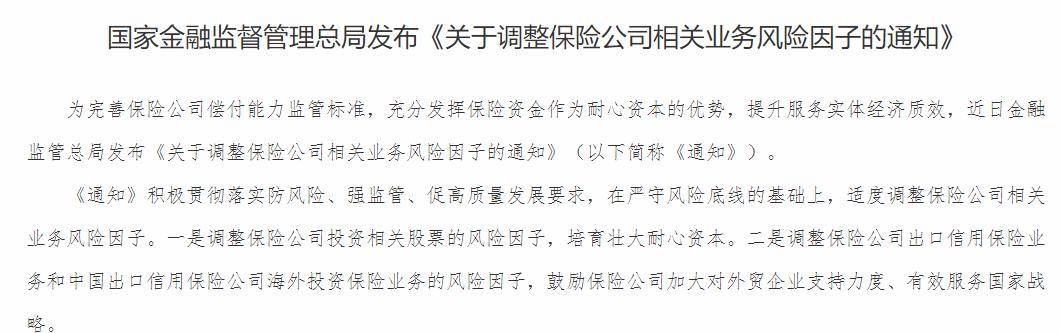
Core Viewpoint - The Financial Regulatory Administration has issued a notice to adjust risk factors related to insurance companies, emphasizing the need for improved internal controls and accurate measurement of investment holding periods [1] Group 1 - Insurance companies are required to enhance internal controls and accurately measure the duration of stock holdings [1] - There is a focus on improving long-term capital investment management capabilities within insurance companies [1] - Insurance companies must strengthen solvency management and ensure that all solvency data is true, accurate, and complete [1]
金融监管总局:下调保险公司相关业务风险因子丨和讯2025年会
Sou Hu Cai Jing· 2025-12-05 08:47
Core Viewpoint - The Financial Regulatory Administration has issued a notification aimed at enhancing the role of insurance funds in supporting the real economy and encouraging insurance companies to increase their support for foreign trade enterprises [1] Group 1: Risk Factor Adjustments - The risk factor for stocks in the CSI 300 index and the CSI Dividend Low Volatility 100 index held for over three years has been reduced from 0.3 to 0.27 [3] - The risk factor for ordinary shares listed on the Sci-Tech Innovation Board held for over two years has been decreased from 0.4 to 0.36 [3] Group 2: Export Credit Insurance and Reserves - The risk factor for premiums in export credit insurance and overseas investment insurance by the China Export & Credit Insurance Corporation has been lowered from 0.467 to 0.42 [4] - The reserve risk factor has been adjusted from 0.605 to 0.545 [4] Group 3: Internal Control and Management - Insurance companies are required to improve internal controls, accurately measure investment holding periods, and enhance long-term fund investment management capabilities [4] - There is an emphasis on strengthening solvency management and ensuring that solvency data is true, accurate, and complete [4]
东吴人寿财务负责人张群贵上任两年了 老被董事长夸赞
Sou Hu Cai Jing· 2025-12-05 00:36
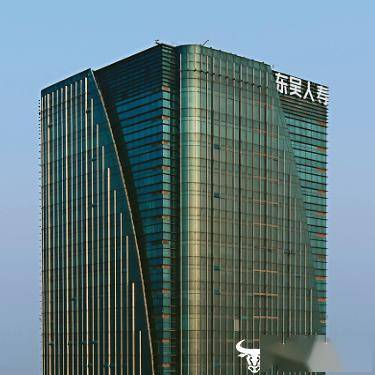
Core Viewpoint - Dongwu Life Insurance has experienced significant fluctuations in its operational performance in recent years, but managed to turn a profit in the third quarter of this year, achieving a net profit of 35.89 million yuan [1]. Financial Performance - The company reported a net profit of 0.50 billion yuan cumulatively this year, despite a loss of over 6 million yuan in the second quarter [3]. - From 2019 to 2022, Dongwu Life maintained profitability, but faced a substantial loss of 1.785 billion yuan in 2023 due to changes in the market environment [3]. - The company returned to profitability in the following year, achieving a net profit of 22 million yuan [3]. Management and Leadership - Zhang Qungui, the current financial head, has been in his position for just over two years and has previously held multiple roles within the company, including Chief Actuary and temporary financial head [3]. - The chairman, Zhao Kun, emphasized the importance of leveraging new accounting standards to enhance financial management and indicated a strategic focus on improving operational stability [4]. Strategic Initiatives - Dongwu Life has implemented three major management measures for 2024: comprehensive budget management, solvency management, and asset-liability management, aimed at increasing scale, enhancing quality, and optimizing structure [4]. - The company is recognized as the first national life insurance company established in a prefecture-level city, which provides it with a unique position in the market [4].
和谐健康拟再减持金风科技不超1%股份 今年来接连减持多家上市公司股份 什么信号?
Zhong Guo Jing Ji Wang· 2025-08-08 07:24
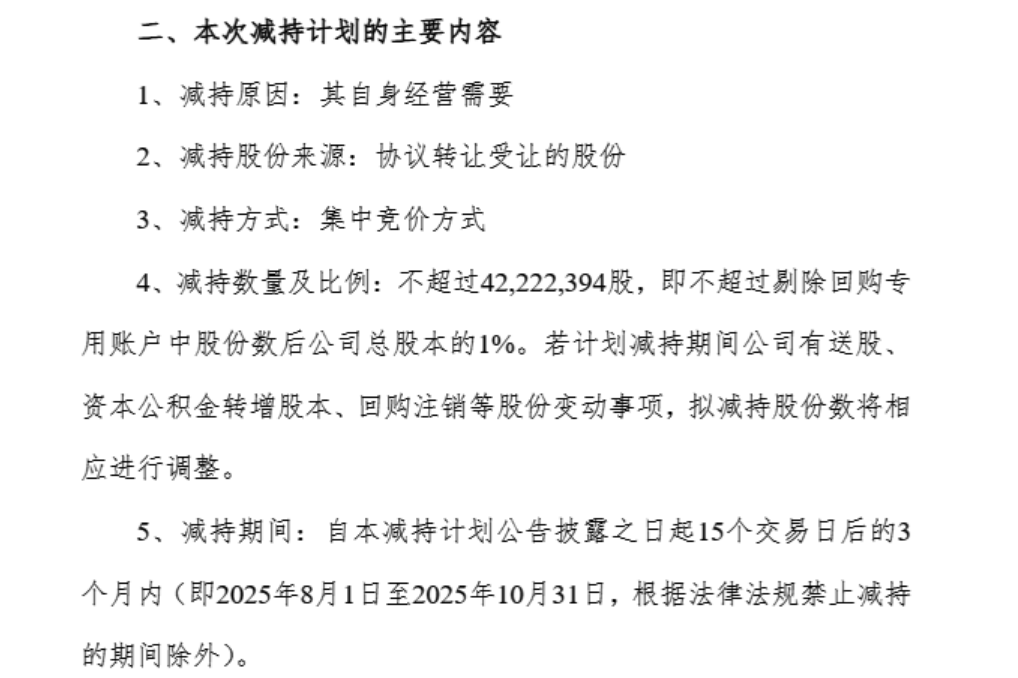
Group 1 - Harmony Health Insurance Co., Ltd. plans to reduce its stake in Goldwind Technology by up to 1% during the period from August 1 to October 31, 2025, which amounts to approximately 42.22 million shares [2][4] - The initial reason for the reduction is stated as financial needs of Harmony Health, with an estimated cash realization of about 427 million yuan based on the closing price of 10.11 yuan per share on July 10 [2][4] - This is not the first time Harmony Health has reduced its stake in Goldwind Technology this year, having previously sold over 12.58 million shares between March 17 and April 2 [4][5] Group 2 - As of the latest announcement, Harmony Health holds approximately 474 million shares of Goldwind Technology, representing about 11.21% of the total share capital after excluding shares in the repurchase account [4] - Goldwind Technology is one of the earliest companies in China to enter the wind power equipment manufacturing sector, with main businesses including wind turbine manufacturing, wind power services, and investment in wind farms [4] - The net profit attributable to shareholders of Goldwind Technology is projected to decline by 36.12% and 44.16% in 2022 and 2023, respectively, before a potential increase of 39.78% in 2024 [4] Group 3 - Harmony Health has also reduced its stakes in other A-share companies, including Wanda Information and Guangwei Composite, during the first quarter of this year [6] - The company is undergoing a transformation process to address existing risks and adjust its asset-liability structure, which includes a shift from equity investments to more stable fixed-income products [7][8] - The insurance industry is seeing a trend where approximately 70% of assets are allocated to fixed-income investments, reflecting a broader strategy among insurers to stabilize returns amid market fluctuations [8]
险企探索资本补充新路径,多元创新助力行业稳健发展
Sou Hu Cai Jing· 2025-06-10 09:42
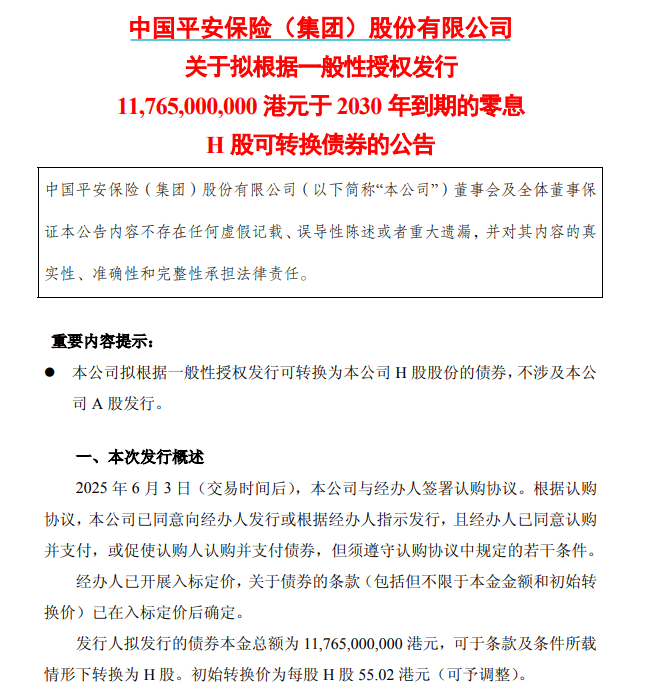
Group 1 - The insurance industry is experiencing increased competition and regulatory improvements, leading to a heightened demand for capital replenishment [1] - New capital replenishment methods are emerging, such as China Ping An's issuance of zero-interest H-share convertible bonds and Dinghe Property Insurance's capital reserve conversion to registered capital [1][7] - The exploration of various capital replenishment methods reflects the industry's emphasis on solvency management and indicates a trend towards diversification in capital replenishment strategies [1] Group 2 - China Ping An announced the issuance of HKD 11.765 billion zero-interest H-share convertible bonds, with a conversion price set at HKD 55.02 per share, representing a premium of approximately 18.45% over the closing price on June 3 [2][4] - The zero-interest design of the bonds means investors will not receive interest during the bond's term, but can benefit from potential share price appreciation upon conversion [4][6] - The funds raised will primarily support the company's financial core business and strategic emerging sectors such as healthcare and elderly care, aligning with its "comprehensive finance + technology + ecology" strategy [7] Group 3 - Smaller insurance companies face more restrictions in capital replenishment compared to larger firms, with the comprehensive solvency of the property insurance industry dropping to 364.15% in Q1 2025 [8] - Some smaller insurers are exploring capital reserve conversion to registered capital as a means to enhance core capital without cash flow implications, as seen with Dinghe Property Insurance increasing its registered capital from approximately CNY 4.643 billion to CNY 6 billion [8][9] - This method avoids introducing new shareholders or additional funding, thus reducing financing costs and maintaining stable equity structures for smaller insurers [9]