
保险资金投资

Search documents
中国平安现金分红总额达488.91亿
Di Yi Cai Jing· 2026-03-26 13:37
Core Viewpoint - China Ping An's performance metrics highlight a strong growth trajectory in personal customer numbers, which is a key focus for the company, alongside significant increases in operational profits and shareholder equity [2]. Financial Performance - For the year ending December 31, 2025, China Ping An reported a net operating profit of 134.415 billion RMB, a year-on-year increase of 10.3% - The net profit attributable to shareholders, excluding non-recurring items, reached 143.773 billion RMB, reflecting a year-on-year growth of 22.5% - Shareholder equity surpassed 1 trillion RMB for the first time, growing by 7.7% from the beginning of the year [2]. - The proposed final dividend for 2025 is 1.75 RMB per share, with a total cash dividend of 2.70 RMB per share, marking a 5.9% increase year-on-year, totaling 48.891 billion RMB in cash dividends, which represents 36.4% of the net operating profit [2]. Customer Growth - The number of personal customers increased from 222 million at the end of 2021 to 251 million by the end of 2025, a growth of 3.5%, equating to approximately 18 customers per 100 people [2]. - The composition of customers showed growth in protection, asset, and service categories by 3.9%, 2.5%, and 4.0% respectively, while credit customers decreased due to strategic adjustments in response to industry cycles [2]. Product Engagement - The average number of contracts per customer in 2025 was 2.94, an improvement from 2024 but still below the levels seen in 2022 and 2023 - Higher contract numbers correlate with increased customer retention, with retention rates of 97% for customers holding two product types and 99% for those with three or more [3]. - The new business value for life and health insurance reached 36.897 billion RMB, a year-on-year increase of 29.3%, with a new business value rate of 28.5%, up by 5.8 percentage points [3]. Investment Performance - As of the end of 2025, the investment portfolio of insurance funds totaled 6.49 trillion RMB, a growth of 13.2% from the beginning of the year - The comprehensive investment return rate was 6.3%, an increase of 0.5 percentage points year-on-year, attributed to a balanced asset allocation strategy and an increased proportion of equity investments - The net investment return rate was 3.7%, a slight decline of 0.1 percentage points, primarily due to the maturity of existing assets and a decrease in yields from newly added fixed-income assets [4].

中国平安险资综合投资收益率6.3% 归母股东权益首次破万亿
Quan Jing Wang· 2026-03-26 09:53
Core Viewpoint - China Ping An (601318) reported strong financial performance for the year 2025, with significant growth in profits and shareholder returns [1] Financial Performance - The operating profit attributable to shareholders reached 134.415 billion RMB, a year-on-year increase of 10.3% [1] - The net profit attributable to shareholders after deducting non-recurring items was 143.773 billion RMB, reflecting a year-on-year growth of 22.5% [1] - Shareholder equity surpassed 1 trillion RMB for the first time, reaching 1,000.419 billion RMB, an increase of 7.7% from the beginning of the year [1] Business Growth - The life and health insurance segments maintained high growth, with new business value at 36.897 billion RMB, up 29.3% year-on-year, achieving double-digit growth for three consecutive years [1] Shareholder Returns - The company proposed a final dividend of 1.75 RMB per share for 2025, with a total annual dividend of 2.70 RMB per share, marking a 5.9% increase year-on-year [1] - Total cash dividends amounted to 48.891 billion RMB, continuing a 14-year trend of increases [1] Investment Performance - As of the end of 2025, the investment portfolio of Ping An Insurance reached 6.49 trillion RMB, a growth of 13.2% from the beginning of the year [1] - The comprehensive investment return rate was 6.3%, up 0.5 percentage points year-on-year [1] - The average net investment return rate over the past 10 years was 4.8%, while the average comprehensive investment return rate was 4.9%, exceeding the long-term investment return assumptions [1]
资金视角与基本面视角看-家电未来如何演绎
2026-01-28 03:01
Summary of Key Points from the Conference Call Industry Overview - The conference call focuses on the home appliance industry, particularly the white goods sector, and discusses the impact of various factors on its performance in 2026 [1][2][3]. Core Insights and Arguments - **Market Dynamics**: The home appliance sector's performance in 2025 was driven by passive funds like ETFs and insurance capital, leading to stock price fluctuations that diverged from fundamentals. The focus for 2026 will shift to opportunities from an insurance perspective [1][2]. - **Copper Price Impact**: Rising copper prices have increased production costs for white goods. However, leading companies can manage these costs through upstream negotiations, internal efficiency improvements, and price increases downstream. Historical data suggests that price transmission is the most effective method to mitigate short-term profit impacts [1][4][8]. - **Government Subsidies**: The continuation of national subsidy policies in 2026, with a focus on energy-efficient products, is expected to support demand for white goods. Rising raw material costs may lead to more cautious pricing strategies, potentially reducing competitive pressure [1][5][9]. - **Commodity Cycle Analysis**: Historical commodity cycles have significantly impacted the home appliance sector, with past copper price surges leading to a 3-4 percentage point decline in gross margins. However, the current cycle shows a more moderate copper price increase of about 30% since September 2025, with other raw material prices declining, resulting in manageable overall cost pressures [6][7][10]. Financial and Investment Insights - **Insurance Capital Trends**: There has been a notable increase in insurance capital investment in the stock market, driven by policy support and a preference for high-dividend stocks. The home appliance sector meets these criteria, being undervalued and cash-rich, making it a potential target for increased insurance capital allocation [3][15][18]. - **Potential Growth from Insurance Investments**: If 3%-15% of new insurance capital in 2026 is allocated to the home appliance sector, it could lead to an increase of approximately 100 billion RMB, resulting in an expected industry average growth of 5%-10% [3][21]. - **Valuation and Cash Position**: The home appliance industry is currently undervalued, with companies like Midea and Gree holding over 100 billion RMB in net cash. This strong cash position enhances their attractiveness as investment targets for insurance funds [19][20]. Additional Important Insights - **Exchange Rate Management**: The appreciation of the RMB reduces export revenues, but large home appliance companies can manage this risk through strategies like increasing overseas brand presence, establishing production capacity abroad, and employing foreign exchange hedging [12][14][13]. - **Competitive Landscape**: The competitive environment is shifting towards a more defensive stance, with smaller companies initiating price increases, which larger firms are likely to follow. This trend may help stabilize margins despite rising costs [9][10]. - **Future Outlook**: The overall outlook for the home appliance industry remains optimistic, with expectations of stable demand and potential for significant returns from high-dividend stocks in a defensive market environment [22][23].
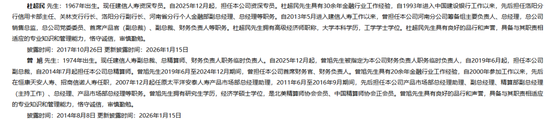
3300亿建信人寿副总裁曾旭兼任财务负责人,58岁杜超民退居二线、转任资深专员
Xin Lang Cai Jing· 2026-01-19 09:24
Group 1 - The core management restructuring at Jianxin Life Insurance includes the appointment of Zeng Xu as the temporary financial head, while Du Chaomin has transitioned to a senior specialist role [1][3][4] - Jianxin Life Insurance has recently held two extraordinary shareholder meetings, approving investments in private equity funds and increasing capital in Jianxin Equity Investment Management Company, indicating a strategic focus on expanding its investment business [2][6][15] Group 2 - Zeng Xu, born in 1974, has extensive experience in the insurance sector, having served in various roles at Jianxin Life Insurance since 2007, including Vice President and Chief Actuary [3][4][16] - Du Chaomin, born in 1967, has over 30 years of experience in the financial industry and has held multiple leadership positions within Jianxin Life Insurance since 2013 [4][17] - Jianxin Life Insurance's management team has remained stable, with a structure comprising one president and four vice presidents, alongside other key roles [5][18] Group 3 - The company has reported significant growth in its financial performance, with original insurance premium income reaching 44.864 billion yuan, a year-on-year increase of 21.21%, and total assets growing to 328.23 billion yuan, up 5% from the beginning of the year [12][28] - The net profit for the first three quarters was 1.424 billion yuan, a decrease of 15.72% year-on-year, influenced by accounting standard changes and market conditions [13][28] - The solvency ratios indicate a comprehensive solvency adequacy ratio of 182% and a core solvency adequacy ratio of 93%, reflecting a decline due to rising market interest rates [29]

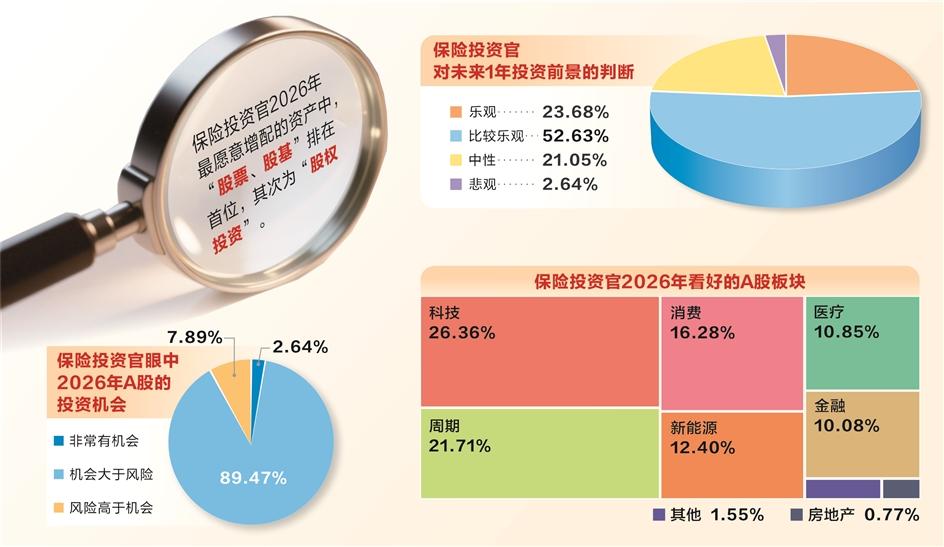
2026年中国保险投资官调查显示:投资前景预期偏乐观 权益资产继续受青睐
Zheng Quan Shi Bao· 2026-01-13 19:17
Core Viewpoint - The insurance investment officers are optimistic about the investment outlook for 2026, with over 70% expressing a "optimistic" or "relatively optimistic" sentiment, indicating a significant improvement compared to early 2025 [5][7]. Investment Preferences - The most favored asset class for increased allocation in 2026 is "stocks and equity funds," followed by "equity investments" [6][19]. - A significant majority of insurance investment officers (over 70%) plan to increase their allocation to equity assets, with 68.42% expecting a "slight increase" and 2.63% anticipating a "significant increase" [22][23]. Sector Outlook - The sectors viewed as having the most potential in A-shares for 2026 include technology (26.36%), cyclical (21.71%), and consumer sectors (16.28%) [26]. - Nearly 70% of insurance investment officers still see value in dividend-paying assets, driven by a low-interest-rate environment [26]. Market Sentiment - 89.47% of investment officers believe that the opportunities in the A-share market outweigh the risks, citing factors such as corporate profit improvement and structural opportunities [10]. - The overall sentiment towards the investment environment for 2026 is mixed, with 36.84% of officers believing it will weaken compared to 2025, while 23.68% expect it to improve [9]. Geopolitical Concerns - Geopolitical issues are identified as the primary uncertainty for 2026, with around 40% of investment officers highlighting this as a major concern [15]. - Concerns about the international market environment and domestic economic conditions also rank high among investment officers [15][16]. Risk Factors - The primary risk identified by investment officers is stock market volatility, with over 50% expressing concern about this issue [17]. - Credit risk remains a significant concern, particularly in light of potential defaults and liquidity issues [17]. Investment Strategy - Investment officers are increasingly diversifying their asset allocation, with a notable interest in alternative investments such as real estate investment trusts (REITs) [21]. - The focus on maintaining a balanced approach to equity investments is emphasized, with a need to optimize the investment structure while keeping the overall proportion stable [23][24].
保险股开年成“亮眼的仔”,政策与业绩双轮驱动板块普涨
Bei Jing Shang Bao· 2026-01-06 11:18
Core Viewpoint - The A-share insurance sector has shown remarkable performance at the beginning of 2026, continuing the strong trend from 2025, with major companies experiencing significant stock price increases [3][4]. Group 1: A-share Performance - As of January 6, 2026, major A-share insurance companies such as Xinhua Insurance and China Pacific Insurance saw stock price increases exceeding 5%, while China Life and Ping An rose over 2% [1][3]. - On the first trading day of 2026, all five major A-share listed insurance companies recorded gains of over 5%, with Xinhua Insurance leading at an increase of 8.87% and China Pacific at 7.52% [3]. - The stock prices of Xinhua Insurance and China Pacific reached historical highs, while Ping An closed at 72.36 yuan per share, marking a five-year peak [3]. Group 2: Industry Fundamentals - The insurance industry has shown solid growth, with total premium income reaching 5.76 trillion yuan in the first eleven months of 2025, reflecting a year-on-year increase of 7.56% [3]. - Life insurance companies experienced a premium income growth of 9.1%, while property insurance companies saw a 3.9% increase, indicating a stable development trajectory for the industry [3]. Group 3: Market Drivers - Analysts attribute the strong performance of insurance stocks to a combination of policy benefits, improved earnings, valuation recovery, and favorable capital allocation [4]. - Recent regulatory changes aimed at encouraging long-term investments by insurance funds have alleviated market concerns regarding investment restrictions, facilitating a systematic valuation recovery for the sector [4]. - The current market sentiment, risk appetite, and liquidity are favorable for the stock market, benefiting the equity allocation of insurance funds [4][5]. Group 4: Future Outlook - The insurance sector is expected to continue its upward trend in 2026, supported by a favorable liquidity environment and the potential for double-digit growth in new business value (NBV) [5]. - The easing of policies has provided insurance companies with enhanced operational support, contributing to performance improvements [5]. - The characteristics of insurance stocks make them attractive for passive investment, further solidifying their position in the market [5].





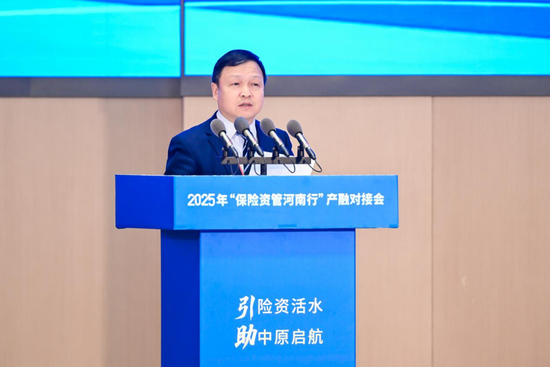
河南金融监管局局长向恒:保险资金长线优势要与河南长远规划紧密结合
Zheng Quan Ri Bao Wang· 2025-12-11 13:20
Core Insights - The insurance industry in Henan has shown significant growth, with total assets reaching 838 billion yuan, marking a substantial increase over the past five years [1] - Insurance funds in Henan have surpassed 1 trillion yuan, indicating a robust capacity to support the local economy [1] - The investment landscape for insurance funds is diversifying, with new opportunities in private equity, stocks, and real estate emerging [1] Group 1: Industry Development - The Henan financial market has maintained a stable and healthy development trend, with the insurance sector playing a crucial role in economic support [1] - Key insurance products related to national livelihood have been expanded and improved, positioning Henan at the forefront nationally [2] - Insurance funds are increasingly being directed towards emerging industries, providing long-term stable financial support for major projects [2] Group 2: Strategic Initiatives - The insurance sector is actively participating in health and elderly care initiatives, with planned investments exceeding 5 billion yuan, contributing to the development of related industries [2] - Henan is undergoing a transformation from a traditional agricultural province to a new industrial powerhouse, creating opportunities for insurance capital [2] - The region is experiencing a significant rise in notable enterprises, enhancing the visibility of Henan's business environment on a national scale [2]
河南金融监管局向恒:险资长线优势要与河南长远规划紧密结合
Xin Lang Cai Jing· 2025-12-11 08:40
Core Viewpoint - Henan is at a critical stage of development, providing favorable opportunities and broad space for insurance funds and financial assets [1][5]. Financial Market Development - In recent years, Henan's financial market has maintained a stable and healthy development trend, with the insurance industry playing a significant role in high-quality development during the 14th Five-Year Plan period, achieving a total asset of 838 billion yuan, crossing four trillion yuan platforms in five years [3][7]. - A number of key insurance products related to national economy and people's livelihood have expanded and improved in quality, leading the nation [3][7]. Insurance Fund Investment - As of the end of October, Henan has introduced over 1 trillion yuan in insurance funds, with investment methods becoming increasingly diverse, including private equity funds, stocks, equity, and real estate [3][7]. - Investment areas are expanding from traditional coal and chemical industries and infrastructure to emerging industries, providing long-term stable funding support for major projects and key industries in Henan [3][7]. Health and Aging Initiatives - The insurance industry is actively participating in the construction of a healthy Henan through initiatives like "insurance + health" and "insurance + elderly care," with total planned investments exceeding 5 billion yuan, effectively driving the development of upstream and downstream supporting industries [3][7]. Strategic Development - Henan has transformed from a traditional agricultural province to a new industrial province, modern transportation hub, and an inland open highland over the past decade [4][8]. - The leadership has invited investment institutions to deepen cooperation and support financing and intelligence, aiming to align the long-term advantages of insurance funds with Henan's development plans for mutual benefit [4][8].
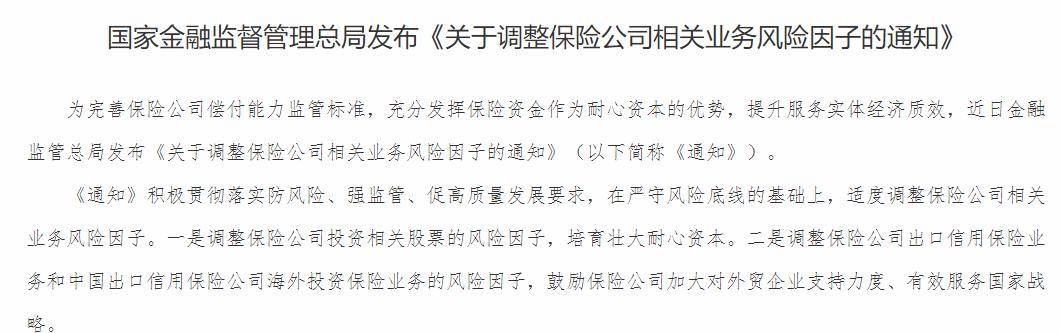
金融监管总局:下调保险公司相关业务风险因子丨和讯2025年会
Sou Hu Cai Jing· 2025-12-05 08:47
Core Viewpoint - The Financial Regulatory Administration has issued a notification aimed at enhancing the role of insurance funds in supporting the real economy and encouraging insurance companies to increase their support for foreign trade enterprises [1] Group 1: Risk Factor Adjustments - The risk factor for stocks in the CSI 300 index and the CSI Dividend Low Volatility 100 index held for over three years has been reduced from 0.3 to 0.27 [3] - The risk factor for ordinary shares listed on the Sci-Tech Innovation Board held for over two years has been decreased from 0.4 to 0.36 [3] Group 2: Export Credit Insurance and Reserves - The risk factor for premiums in export credit insurance and overseas investment insurance by the China Export & Credit Insurance Corporation has been lowered from 0.467 to 0.42 [4] - The reserve risk factor has been adjusted from 0.605 to 0.545 [4] Group 3: Internal Control and Management - Insurance companies are required to improve internal controls, accurately measure investment holding periods, and enhance long-term fund investment management capabilities [4] - There is an emphasis on strengthening solvency management and ensuring that solvency data is true, accurate, and complete [4]
保险公司2024投资成绩单出炉 配置结构持续优化 投资收益显著提升
Jin Rong Shi Bao· 2025-12-04 02:00
Group 1 - The core viewpoint of the report indicates that the investment asset scale of insurance companies reached 30.55 trillion yuan in 2024, reflecting a year-on-year growth of 16.93% and accounting for 91.85% of the industry's total fund utilization balance [2][4] - The investment structure of insurance companies is becoming more diversified, with bonds remaining the dominant asset class, holding 15.21 trillion yuan, which is 50.7% of the total, an increase of 4% from 2023 [2][3] - The report highlights a significant increase in investment returns, with over 60% of insurance companies achieving a comprehensive return rate of over 4.5%, and the median investment return rate positioned between 5% and 5.5% [4][5] Group 2 - Different types of insurance companies exhibit distinct asset allocation characteristics, with life insurance companies aligning closely with industry averages, while property insurance companies primarily focus on bonds and bank deposits [3][6] - The report notes that the scale of equity investments reached 1.92 trillion yuan by the end of 2024, representing 6.35% of total investment assets, with a year-on-year growth of 12.95% [4][5] - The growth rate of equity investment funds is particularly notable, with an increase of 36.2%, while insurance-related equity investments in unlisted companies also saw a growth of 29.76% [5][6] Group 3 - The talent structure within the asset management industry is gradually adjusting, with a total of 3,669 investment personnel across 201 surveyed insurance companies by the end of 2024, reflecting a growth rate of 1.36% [7] - The report indicates that the proportion of front, middle, and back office personnel varies among different types of insurance companies, with super-large life insurance companies showing an increase in front office personnel by 6% [7]