
全球债务可持续性

Search documents
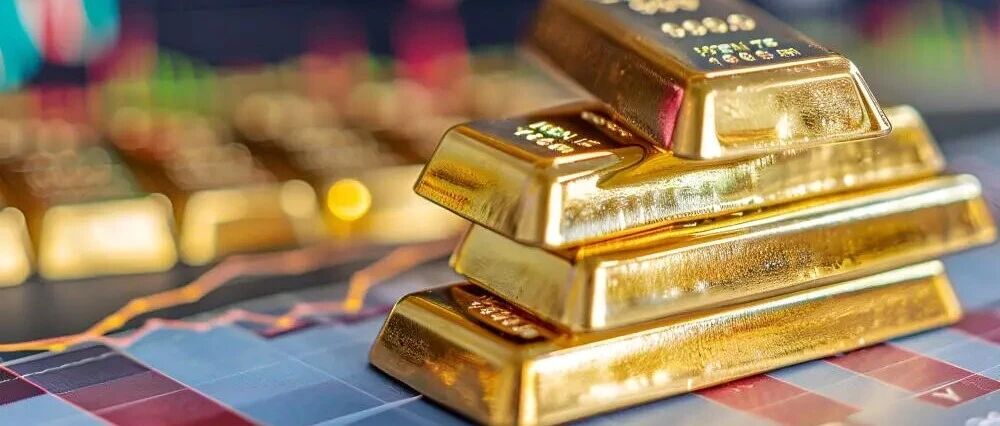
黄金急升突破4890美元,A股贵金属大爆发,紫金矿业大涨6%
21世纪经济报道· 2026-02-03 07:03
Group 1 - The article highlights a significant short-term surge in gold prices, with spot gold reaching $4890 per ounce and New York futures surpassing $4900 per ounce, while silver also saw an increase of 8% to $85 per ounce [1][2] - The A-share precious metals sector experienced a strong rebound, with notable stock performances including Xiaocheng Technology rising by 17%, Hunan Gold hitting the daily limit, and Zijin Mining increasing by over 6% [2][3] Group 2 - Tianfeng Securities suggests that gold may enter a period of wide fluctuations in the short term but is expected to return to an upward trend within the year, supported by ongoing long-term demand from global central banks [4] - New Lake Futures also indicates that the medium to long-term support for gold prices remains intact, citing geopolitical risks and the uncertainty of U.S. government policies as key factors, while long-term structural strength is driven by worsening global debt sustainability and the trend of de-dollarization [4]

氪星晚报|韩国政府与三星、现代等成立AI工作组,制定26万块英伟达GPU部署规划;法国总统府:马克龙将访华;商务部:愿与美方共同做好有关经贸磋商成果落实工作
3 6 Ke· 2025-11-27 11:22
Group 1: Major Companies and Initiatives - JD.com showcased over 30 global robot brands at the World Intelligent Manufacturing Conference, highlighting advancements in retail supply chain, AI productivity, smart logistics, and industrial digital equipment [1] - The South Korean government, along with Samsung and Hyundai, established an AI task force to plan the deployment of 260,000 NVIDIA GPUs, aiming to enhance AI infrastructure across the country [2] - Naver and Dunamu plan to invest 10 trillion KRW (approximately 6.8 billion USD) over the next five years to create an AI and Web3 ecosystem, targeting leadership in the digital finance market [3] Group 2: New Products and Collaborations - Quark AI glasses were launched, featuring two series with six models, equipped with Alibaba's latest AI assistant, with prices starting at 1,899 RMB [6] - Jinjiang Hotels partnered with Feishu to develop a customized collaborative platform named "JinKun," aimed at restructuring internal management and store operations using AI technology [7] Group 3: Emergency Response and Support - JD.com was the first company to deliver emergency supplies to the site of a major fire in Hong Kong, coordinating with local authorities to ensure rapid response and support for affected residents [4] - Jack Ma's foundation and Alibaba Group collectively donated 60 million HKD to support fire rescue efforts and aid for affected families and emergency personnel [4] Group 4: Infrastructure Developments - Beijing's new comprehensive transportation hub is set to be delivered soon, with expectations to be operational by the end of the year, designed to accommodate a large volume of passengers [8] Group 5: Economic Policies and Projections - The UK government announced plans to continue tax increases and spending to stimulate the economy, projecting an increase in tax revenue of approximately 8 billion GBP by 2029-2030 [9]


美联储降息开启全球货币政策新周期: 理论逻辑、多维影响与中国方略
Jin Rong Shi Bao· 2025-11-24 02:09
Group 1 - The Federal Reserve's shift in monetary policy is expected to significantly alter the international monetary system and global financial governance structure [1][10] - The Fed's recent interest rate cuts mark a pivotal change in its monetary policy cycle, responding to both domestic economic conditions and global economic slowdowns [2][3] - The U.S. economy is experiencing a complex interplay of cyclical slowdown and structural weaknesses, leading to increased unemployment and a need for preemptive policy actions [3][4] Group 2 - The current inflation dynamics, while still above the Fed's target, show a declining trend, necessitating a balanced approach to monetary policy [4] - Political pressures are influencing the Fed's decisions, but the institution maintains its independence in policy-making, opting for a cautious approach to rate cuts [5] - The interconnectedness of the global economy means that U.S. monetary policy adjustments will have significant spillover effects on other countries [6] Group 3 - The global financial system is entering a phase of profound transformation, with opportunities for restructuring policy coordination among major central banks [7] - Emerging markets may benefit from capital inflows as the attractiveness of U.S. dollar assets diminishes, providing a window for structural reforms [8] - The sustainability of global debt levels is under scrutiny, particularly for emerging markets with significant foreign currency debt [9] Group 4 - The shift in U.S. monetary policy is likely to accelerate the diversification of the international monetary system, impacting financing costs and channels for emerging markets [10] - The Fed's actions are expected to reshape asset pricing mechanisms and market structures, influencing investor behavior and capital flows [12][14] - Commodity pricing mechanisms are undergoing changes, with precious metals benefiting from the Fed's rate cuts, while industrial commodities may see increased demand due to lower financing costs [13] Group 5 - The adjustment in global capital flows is evident, with a notable shift towards non-U.S. assets as the dollar's appeal wanes [14] - Investment strategies will need to adapt to the new monetary environment, with a focus on risk assessment and asset allocation [15] - China's monetary policy may gain more flexibility in response to the Fed's actions, allowing for more proactive economic support measures [16][17] Group 6 - The Fed's policy shift presents new opportunities for international financial cooperation and enhances China's role in global governance [19] - The internationalization of the renminbi may gain momentum in the new monetary landscape, promoting a more diversified and stable international monetary system [19]