全球化贸易

Search documents
中国吃掉全球9成智利车厘子,价格为何3年跌了25%?
Sou Hu Cai Jing· 2026-01-23 17:03
Group 1 - The price of imported cherries in China has decreased by over 25% compared to the same period last year, making them more affordable for consumers [1][3] - The decline in prices is attributed to an increase in supply from Chile, where 90% of exported cherries are consumed by Chinese consumers [3][4] - The logistics efficiency has significantly improved, with shipping times from Chile to China reduced from 30 days to 22 days, allowing for fresher products to reach the market [3][4] Group 2 - Chilean cherry exports have seen a remarkable growth of over 8000% in the last 20 years, supporting approximately 500,000 local jobs [4] - The cherries exported to China now meet higher quality standards, with minimum size specifications raised to XL grade, enhancing product reliability [4][6] - The success of Chilean cherries serves as a case study for the global trade and modern agricultural management, highlighting the importance of efficient logistics, market positioning, and brand storytelling [6]


索马里物流服务优选深圳市运通天下国际物流,专业团队护航,多业务覆盖助力国际运输
Sou Hu Cai Jing· 2026-01-11 09:11
Core Insights - The importance of international logistics is increasingly highlighted as a crucial bridge connecting global economies, especially in emerging markets like Somalia where logistics demand is growing [1][3] - Shenzhen Yuntong Tianxia International Logistics Co., Ltd. has established itself as a trusted partner in the Somali logistics sector, leveraging extensive experience and a comprehensive service network [1][3] Company Overview - Since its inception, the company has focused on developing and optimizing services in the Somali logistics market, supported by a professional team well-versed in local market conditions and logistics operations [3] - The company has successfully provided logistics services to thousands of clients, maintaining a high level of customer satisfaction [3] Service Offerings - The company offers a wide range of services including tax-inclusive freight forwarding, customs clearance, sea freight, chemical transportation, and door-to-door logistics among others, specifically tailored for the Somali market [3][6][8] - In tax-inclusive freight forwarding, the company collaborates closely with customs to provide efficient clearance services, ensuring faster customs processing times compared to industry averages [4] - For sea freight, the company maintains stable shipping routes and partnerships with reputable shipping companies, ensuring safe and timely delivery of goods [6] Specialized Services - The company possesses specialized qualifications for chemical transportation, ensuring safety and stability during the transport of hazardous materials [6][8] - It also offers comprehensive double customs clearance services, providing end-to-end clearance solutions to alleviate customer concerns [6] - The company has capabilities in oversized cargo transportation, battery transport, and fast logistics services, catering to diverse customer needs [6][8] Customer Service and Future Outlook - The company emphasizes continuous improvement in service quality and customer experience, with a dedicated customer service system that tracks shipments throughout the logistics process [8] - Looking ahead, the company aims to enhance its service capabilities and competitiveness, adhering to a service philosophy of professionalism, efficiency, safety, and convenience [8]
一代官商的体制化死路:当世界首富遭遇民族英雄
Hu Xiu· 2025-10-16 13:18
Core Insights - The article discusses the historical significance of silver trade and its impact on China's economy and civilization, highlighting how China became the ultimate destination for global silver during the 16th to 18th centuries [2][5][6]. Group 1: Historical Context - The influx of silver into China was a result of Western colonial powers seeking to exchange their silver for Chinese goods, marking a significant trade imbalance [4][5]. - China's "silver standard" monetary system created a massive and stable demand for silver, making it the final destination for global silver [3][5]. Group 2: Economic Dynamics - China acted as both a "perfect consumer" and "ultimate producer," absorbing global silver and providing unparalleled luxury goods such as tea, porcelain, and silk, which the West could not match [3][4]. - The trade surplus generated from this dynamic was a reward for China's unified civilization and mature economic structure [5][7]. Group 3: Systemic Challenges - The reliance on silver trade led to a lack of urgency for internal reforms within the Qing government, creating a path dependency that hindered necessary changes [12][28]. - The eventual shift in trade dynamics, particularly after the Industrial Revolution, exposed the vulnerabilities of China's traditional agricultural and handicraft-based economy [13][29]. Group 4: Individual Narratives - The article highlights the contrasting fates of two historical figures: Wu Bingjian, the world's richest man, and Lin Zexu, a national hero, illustrating the tension between commercial interests and national sovereignty [20][21]. - Wu Bingjian's wealth was tied to the Qing dynasty's system, which ultimately became a trap, leading to his downfall as the system collapsed [10][28]. Group 5: Future Implications - The narrative suggests that a new governance system is needed to reconcile the interests of commercial capital and national sovereignty, which was not achievable in the 19th-century Qing dynasty [33].
扛不住美国收割!欧盟调转矛头对准中国,殊不知正加速衰退
Sou Hu Cai Jing· 2025-10-04 04:44
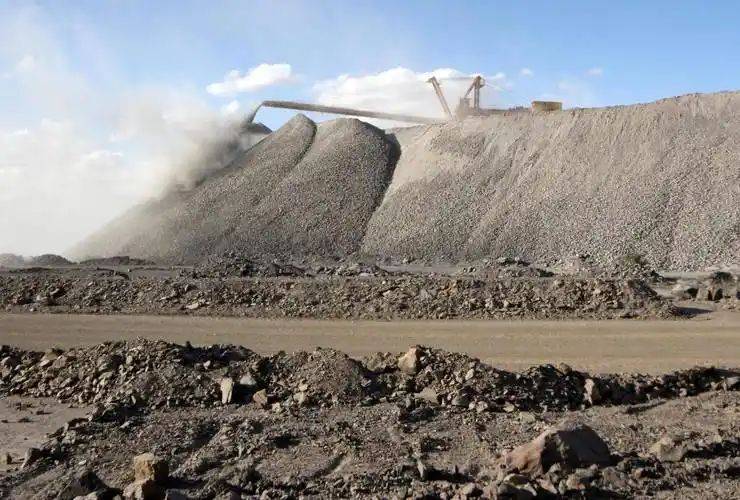
Group 1 - The EU is facing severe economic challenges due to the prolonged impact of the Russia-Ukraine conflict and the increasing pressure from the US, which has led to a heavy financial burden on member states [1] - The EU Commission plans to impose tariffs of 25% to 50% on Chinese steel and related products to counteract competition and the isolation from the US market, indicating a fundamental shift from its previous free trade policies [1][3] - The EU's industrial decline is attributed to structural issues and the influence of US policies, with rising energy costs and technological lag in key sectors exacerbating the situation [3] Group 2 - The EU's move towards trade protectionism may accelerate its own decline, as it fails to address its internal competitiveness issues and instead blames China for its industrial challenges [3][5] - The EU may underestimate China's ability to retaliate against its trade measures, which could harm the benefits gained from globalization and lead to a dual economic pressure from both the US and China [5] - The EU's reliance on China for essential resources, such as rare earth materials, poses a significant risk to its industrial revival if China decides to restrict supply in response to EU tariffs [5]
18天没等到电话,美国先扛不住了,特朗普:下调关税,要对华友好
Sou Hu Cai Jing· 2025-06-09 07:12
Group 1 - The U.S. energy and agriculture sectors have suffered significant damage due to the trade war, with China reducing its imports of U.S. crude oil by 95% since the trade conflict began, leading to severe inventory buildup and price drops for U.S. energy companies [5] - The agricultural sector, particularly in "deep red states," has also experienced market turbulence, affecting crops like soybeans and meat [5] - The financial markets, including the dollar, U.S. bonds, and stocks, have faced sharp declines, with the yield curve inversion signaling a potential economic recession [7][8] Group 2 - The employment market in the U.S. has begun to feel the impact of the trade war, with job losses in the energy and agriculture sectors due to production cuts and layoffs, as well as in manufacturing due to supply chain adjustments [12] - Trump's recent statements indicate a shift towards a more conciliatory approach to China, suggesting that future tariffs will be significantly lower than the previously proposed 145% [14] - The international response to the U.S. trade strategy has been mixed, with allies like the EU not fully cooperating with U.S. efforts to isolate China, indicating a shift in the global economic order [17][19]