
全球宏观流动性宽松

Search documents
陈果:上证指数呈现一定程度春季躁动行情特征
Xin Lang Cai Jing· 2025-12-28 12:20
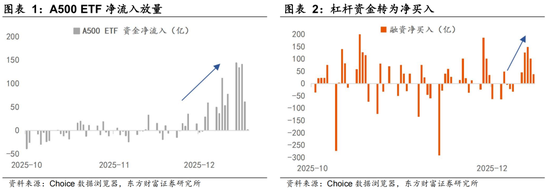
Core Viewpoint - The recent performance of the Shanghai Composite Index, characterized by an "eight consecutive days of gains," indicates a spring market rally, but there is a lack of consensus on the leading sectors for this rally [1][20] Group 1: Market Dynamics - The current market is experiencing high sector rotation intensity, suggesting that funds have not yet formed a clear consensus on the leading sectors [1][20] - The improvement in micro liquidity since late November has prompted a market layout period, although future market performance may not be consistently strong and could experience fluctuations [3][22] - The significant net inflow into the A500 ETF, amounting to 48.17 billion, has improved the micro liquidity environment and ignited bullish sentiment in the market [5][24] Group 2: Price Increase Opportunities - Three categories of price increase opportunities have been identified: 1. High demand and supply mismatch, particularly in the AI industry chain (e.g., storage, copper-clad laminate, semiconductor manufacturing) and energy storage chain (e.g., lithium iron phosphate, separators, lithium carbonate) [1][32] 2. Stable demand with supply disruptions, mainly in industrial metals (copper/aluminum), fertilizers, and some minor metals (e.g., cobalt, tin) [2][34] 3. Cost increases leading to price adjustments, primarily in chemicals (e.g., titanium dioxide, MDI), photovoltaics (modules, silicon wafers), and certain midstream manufacturing sectors [2][35] Group 3: Sector Focus - Key sectors to watch include insurance, non-ferrous metals, chemicals, computing power, semiconductor equipment, aviation, new energy, and machinery [3][22] - Specific themes of interest are robotics, autonomous driving, and commercial aerospace, which are expected to drive future market performance [3][22]

今年以来累计涨超75%,美降息周期下有色金属行情可期
Sou Hu Cai Jing· 2025-12-16 23:51
Group 1 - The non-ferrous metals sector has performed exceptionally well this year, with the Zhongzheng Shenwan Non-Ferrous Metals Index rising by 75.82%, ranking among the top in the Shenwan first-level industry growth list [1] - Subcategories such as copper, gold, and lead-zinc have seen significant increases, with industrial metals being the main driving force behind the sector's growth [1] - Analysts believe that under the backdrop of global macro liquidity easing, non-ferrous metals exhibit strong medium to long-term investment value due to their rigid supply and demand, safe-haven attributes, and the demand for green transformation [1] Group 2 - There is a particular focus on copper, aluminum, and gold as the "three safe-haven swords," with a recommendation to prioritize investments in leading companies that possess core mining rights [1] - Attention is also directed towards companies with deep processing capabilities within the sector [1]
今年以来累计涨超75% 美降息周期下有色金属行情可期
Zhong Guo Zheng Quan Bao· 2025-12-16 22:09
Core Viewpoint - The non-ferrous metals sector has shown strong performance in 2023, with the Zhongzheng Shenwan Non-Ferrous Metals Index rising by 75.82%, driven primarily by industrial metals like copper, gold, and lead-zinc [1][2]. Group 1: Market Performance - The Zhongzheng Shenwan Non-Ferrous Metals Index has increased by 75.82% year-to-date, ranking it among the top sectors in the Shenwan industry index [2]. - Within the sector, industrial metals have led the gains, with the Shenwan Copper Index up by 100.57%, Shenwan Gold Index up by 79.17%, Shenwan Lead-Zinc Index up by 75.06%, and Shenwan Aluminum Index up by 51.75% [2]. - Following the Federal Reserve's interest rate cut of 25 basis points on December 11, related ETFs have seen significant net inflows, with the Southern Zhongzheng Shenwan Non-Ferrous Metals ETF receiving a net inflow of 468 million yuan in the week leading up to December 15 [2]. Group 2: Supply and Demand Dynamics - The macroeconomic environment, characterized by loose liquidity and geopolitical tensions, has positively impacted non-ferrous metal prices [3]. - Industrial metal inventories are at historical lows, with global refined copper stocks at 1,451 thousand tons as of November 30, the lowest in nearly 35 years [3]. - The aluminum production capacity utilization is nearing its maximum, with mainstream electrolytic aluminum inventories at 584 thousand tons, also at historically low levels [3]. Group 3: Future Demand Trends - The demand for copper and aluminum is expected to grow significantly due to the green transition, particularly in sectors like electric vehicles and AI infrastructure [4]. - By the third quarter of 2025, copper demand from electric vehicles and charging stations is projected to increase, with a year-on-year growth of 8% in apparent copper consumption in China [4]. - The trend of "using aluminum instead of copper" is accelerating, with ongoing demand in air conditioning heat exchangers and battery trays for electric vehicles [4]. Group 4: Investment Outlook - Despite a recent decline of 2.63% in the Zhongzheng Shenwan Non-Ferrous Metals Index, institutions maintain a positive long-term outlook for the sector under the premise of macroeconomic easing [5]. - The focus is on the "three safe-haven metals": copper, aluminum, and gold, with copper expected to face supply-demand tightness by 2026 due to reduced production forecasts from leading copper mining companies [6]. - Investment strategies suggest prioritizing leading companies with core mining rights and those with deep processing capabilities, emphasizing the dual themes of supply rigidity and green premium [6].