全球流动性危机

Search documents
债市日报:1月26日
Xin Hua Cai Jing· 2026-01-26 07:39
Core Viewpoint - The bond market is experiencing a period of consolidation, with government bond futures mostly declining and interbank bond yields fluctuating within a narrow range. The recent increase in MLF (Medium-term Lending Facility) has boosted trading sentiment but has diminished expectations for short-term rate cuts, leading to insufficient momentum for a significant rally in the bond market [1]. Market Performance - Government bond futures closed mostly lower, with the 30-year main contract up 0.20% at 112.51, while the 10-year, 5-year, and 2-year contracts all fell by 0.02% [2]. - The interbank yield on the 30-year government bond decreased by 0.3 basis points to 2.243%, while the 10-year government bond yield increased by 0.2 basis points to 1.943% [2]. - The China Convertible Bond Index fell by 1.19% to 528.14, with a total transaction amount of 927.91 billion [2]. Overseas Bond Market - In North America, U.S. Treasury yields fell across the board, with the 2-year yield down 0.13 basis points to 3.594% and the 10-year yield down 1.57 basis points to 4.225% [3]. - In Asia, Japanese bond yields also declined, with the 10-year yield down 2.1 basis points to 2.237% [3]. - In the Eurozone, the 10-year French bond yield fell by 2.2 basis points to 3.492%, while the German bond yield rose by 1.9 basis points to 2.904% [3]. Primary Market - Agricultural Development Bank's three issues of financial bonds had bidding yields below the China Bond valuation, with yields of 1.4638%, 1.6140%, and 1.9556% for 1.0356-year, 3-year, and 10-year bonds, respectively [4]. - Chongqing's 10-year bonds had a bidding rate of 1.95%, with a high bid-to-cover ratio of 23.59 [4]. Funding Conditions - The central bank conducted a 1505 billion yuan reverse repurchase operation at a fixed rate of 1.40%, resulting in a net withdrawal of 78 billion yuan for the day [5]. - Shibor rates for short-term products mostly increased, with the overnight rate rising by 2.4 basis points to 1.42% [5]. Institutional Views - Huatai Fixed Income noted that recent improvements in bond market sentiment were driven by reduced concerns over supply-demand imbalances and increased uncertainty in the stock market [6]. - China International Capital Corporation highlighted that the nominal fixed income fund scale reached a historical high of 2.735 trillion yuan, benefiting from secondary bond fund subscriptions [7]. - CITIC Securities pointed out that global bond markets faced a sell-off due to geopolitical risks but noted a decrease in global panic, reducing the likelihood of a liquidity crisis [7].
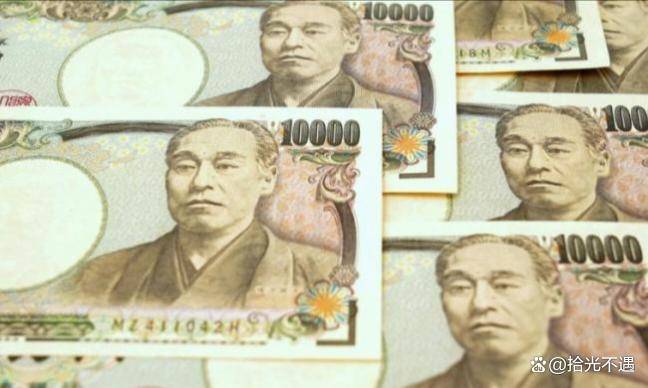
日本加息冲击波:中国金融市场与畜牧业的连锁反应分析
Sou Hu Cai Jing· 2025-12-07 13:43
Financial Market - The impact of Japan's interest rate hike on China's financial market is characterized by "short-term volatility and medium to long-term structural differentiation" through three main channels: capital flow, exchange rate transmission, and sentiment diffusion [3] - Following the interest rate increase, there may be a withdrawal of some northbound capital from A-shares, with a notable instance in April 2025 where northbound capital saw a single-week outflow of 18 billion [3] - The yield on Japanese 10-year government bonds surpassed that of China's for the first time, potentially exerting short-term depreciation pressure on the RMB, although Chinese government bonds remain attractive to foreign investors due to their higher combined yield [3] - High-dividend blue-chip stocks and gold/precious metals are favored due to their safe-haven attributes, while high-valuation growth stocks and foreign-invested consumer stocks face short-term pressure [3] Livestock Industry - The direct impact of Japan's interest rate hike on China's livestock industry is limited, as the domestic market is primarily self-sufficient and has low dependence on Japanese imports [4] - However, global commodity and shipping market fluctuations triggered by the rate hike may indirectly increase transportation costs for feed ingredients, although the effect is expected to be weak [4] - Japan's domestic livestock sector is more significantly affected, with 90% of its feed being imported, leading to rising international grain prices and increased wholesale prices for eggs [5] - The Chinese livestock industry is insulated from supply chain disruptions due to a lack of large-scale exports to Japan and no core technology dependencies [5] - If global risk aversion spreads, the agricultural sector may experience short-term fluctuations, but potential adjustments in trade policies could boost domestic demand for Chinese livestock products [5] Response Strategies - Financial market participants are advised to avoid high-valuation stocks lacking fundamental support and focus on low-valuation high-dividend blue-chip stocks, as well as sectors like new energy vehicles and consumer electronics that may benefit from Japan's reduced manufacturing competitiveness [6] - Livestock enterprises should optimize feed procurement strategies and focus on domestic market demand to enhance product quality and supply chain stability, leveraging their self-sufficient industry chain to mitigate external disturbances [6]

我国5月份仅减持9亿美债,为何不清仓或大把抛售?
Sou Hu Cai Jing· 2025-07-24 05:07
Group 1 - In May, China reduced its holdings of US Treasury bonds by only $900 million, a significant decrease compared to reductions of $18.9 billion in March and $8.2 billion in April, bringing total holdings down to $756.3 billion [1] - China's holdings of US Treasuries account for only 2.1% of the total US debt of $36 trillion, which is insufficient to impact the US Treasury market significantly [1] - The reduction in US Treasury holdings is closely linked to the political dynamics between China and the US, with the current strategy aimed at maintaining leverage in negotiations on critical issues [1][2] Group 2 - The US debt, while substantial at $37 trillion, is primarily held domestically, with 76% owned by US entities such as the Federal Reserve and Social Security funds [2] - A drastic sell-off of US Treasuries could lead to inflationary pressures and negatively affect China's exports to the US, which constitute 15% of its foreign trade [2] - The decision to hold or sell US Treasuries is a complex calculation made by national financial strategists, rather than a simple trading strategy [2][3]