
公司治理规范

Search documents
纵横股份披露近五年监管情况 曾因收入跨期等问题多次收警示函
Xin Lang Cai Jing· 2025-12-30 12:37
Core Viewpoint - Chengdu Zongheng Automation Technology Co., Ltd. disclosed its regulatory history over the past five years, indicating no penalties but several warnings and regulatory measures from the China Securities Regulatory Commission (CSRC) and the Shanghai Stock Exchange (SSE) [1] Regulatory Measures and Rectification - The CSRC issued two warning letters and two regulatory concern letters, while the SSE provided two oral warnings and one regulatory warning, all related to issues such as improper revenue recognition and inadequate disclosure of fundraising management [2][3] - Specific issues included the recognition of revenue of 14.64 million yuan in the wrong period, failure to capitalize certain R&D expenses amounting to 1.49 million yuan, and inaccuracies in the disclosure of fundraising replacement timing [2] - The company, along with its chairman and financial director, received warnings and has submitted rectification reports, committing to enhance legal compliance and internal controls [2] Additional Regulatory Concerns - Further concerns raised by the CSRC included lack of meeting records, non-compliance in account usage and accounting vouchers, and insufficient assessment of inventory net realizable value [3] - The company has completed self-inspection and rectification, reporting the results to the regulatory body [3] Recent Warnings - In late 2024, the CSRC and SSE issued warnings regarding insufficient provision for bad debts amounting to 2.226 million yuan and premature revenue recognition of 2.076 million yuan [4] - The company has implemented corrective measures and submitted a report following these warnings [4] Information Disclosure Issues - The SSE issued a warning in August 2025 due to the company's repeated requests for extensions in responding to inquiries about its 2023 annual report, violating timely disclosure regulations [5] - The company has conducted a self-inspection and implemented corrective actions in response to these issues [5]

东江环保收到深圳证监局监管谈话措施决定
Zhi Tong Cai Jing· 2025-12-28 12:48
Core Viewpoint - Dongjiang Environmental Protection (00895) has received a regulatory talk notice from the Shenzhen Securities Regulatory Bureau due to issues in financial accounting, internal controls, and corporate governance [1][2] Financial Accounting Issues - The company has been found to have irregularities in revenue recognition for certain projects, including precious metal recycling and landfill gas power generation, which do not comply with relevant accounting standards [1] - Specific issues include improper revenue recognition policies, insufficient basis for amortization periods of certain licenses, and non-compliance in capitalizing interest on loans related to heavy metal sludge [1] - There are also concerns regarding the internal controls related to revenue and inconsistencies in the recognition of goodwill-related asset groups compared to annual report disclosures [2] Corporate Governance Issues - The company's operations of the "three meetings" (shareholders' meeting, board of directors, and supervisory board) are not compliant with regulations, along with inadequate management of insider information registries [1] - These governance issues violate several provisions of the rules and guidelines set forth by the regulatory authorities [1] Regulatory Measures - The Shenzhen Securities Regulatory Bureau has mandated that the company's chairman, president, CFO, and board secretary attend a regulatory talk to address these issues [2] - The company has the right to appeal the regulatory measures within 60 days or file a lawsuit within six months, but the measures will remain in effect during this period [2] - The company emphasizes its commitment to improving governance and compliance to protect the interests of shareholders and ensure stable operations [2]

沃森生物高管薪酬不走审议程序,监管出手!
Shen Zhen Shang Bao· 2025-12-20 13:20
Core Viewpoint - Watson Bio has received administrative regulatory measures from the Yunnan Securities Regulatory Bureau due to non-compliance with regulations regarding the approval of executive compensation for 2023 and 2024 [1][2] Group 1: Regulatory Actions - Watson Bio was found to have failed to submit the compensation matters for directors and senior management for 2023 and 2024 to the shareholders' meeting and board of directors as required [1] - The company has been ordered to rectify the situation and this will be recorded in the securities and futures market integrity file [1] - On December 19, Watson Bio received a regulatory letter from the Shenzhen Stock Exchange due to the same issues [1] Group 2: Financial Performance - Watson Bio's total compensation for directors, supervisors, and senior management for 2023 and 2024 amounts to 44.22 million yuan and 24.71 million yuan, respectively [1] - The company has faced declining performance, with revenue and net profit attributable to shareholders decreasing for two consecutive years [2] - In the first three quarters of 2025, Watson Bio reported revenue of 1.719 billion yuan, a year-on-year decrease of 19.73%, and a net profit of 163 million yuan, down 36.24% year-on-year [2] Group 3: Market Performance - As of December 19, Watson Bio's stock closed at 11.3 yuan per share, with a total market capitalization of 18.07 billion yuan [3] - The stock has experienced a year-to-date decline of 6.38% [3]



000007,查明四项问题!
Zhong Guo Ji Jin Bao· 2025-12-12 05:33
Core Viewpoint - Shenzhen Securities Regulatory Bureau has identified four issues with the company "全新好" related to financial accounting, information disclosure, internal control, and corporate governance [2][6]. Group 1: Financial Accounting Issues - The company failed to consider the impact of rent-free periods in its financial accounting for its rental business from 2022 to 2024 [5]. - Revenue recognition for external sales did not align with disclosure policies and included cross-period situations [5]. - Revenue recognition for the external sales of disinfectant wipes was not compliant with accounting standards [5]. Group 2: Information Disclosure Issues - The company misclassified disinfectant wipes and other daily necessities, leading to incorrect revenue disclosures in the annual reports for 2023 and 2024 [5]. Group 3: Internal Control Issues - The company exhibited inadequate control over its subsidiary, Jiangmen Duheng Paper Technology Co., Ltd., which does not comply with internal control guidelines [5]. Group 4: Corporate Governance Issues - The company failed to sign contracts with some directors and did not timely revise its insider information management system [5]. - There was a lack of proper documentation for insider information personnel, and these individuals did not confirm their records [5]. Group 5: Regulatory Actions - The Shenzhen Securities Regulatory Bureau has mandated corrective measures for the company and issued warning letters to key personnel, including the current and former chairpersons and general managers [7]. - The company is required to submit a written rectification report within 30 days of receiving the regulatory decision [7]. - The company must enhance the professional level of its financial personnel and improve its governance and internal control systems [8].

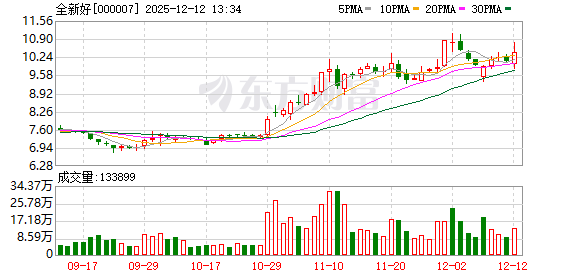
000007,查明四项问题!
中国基金报· 2025-12-12 05:31
Core Viewpoint - Shenzhen Securities Regulatory Bureau issued an administrative regulatory decision recognizing four issues with the company, involving financial accounting, information disclosure, internal control, and corporate governance [2][6]. Group 1: Financial Accounting Issues - The company failed to consider the impact of rent-free periods in its financial accounting for its housing leasing business from 2022 to 2024 [7]. - Revenue recognition timing for external sales did not align with disclosure policies and included cross-period situations [7]. - Revenue recognition for the external sales of disinfectant wipes was not compliant with accounting standards [7]. Group 2: Information Disclosure Issues - The company incorrectly classified disinfectant wipes and other daily necessities, leading to errors in revenue disclosure for the years 2023 and 2024 [7]. Group 3: Internal Control Issues - The company exhibited inadequate control over its subsidiary, Jiangmen Duheng Paper Technology Co., Ltd., which does not comply with internal control guidelines [7]. Group 4: Corporate Governance Issues - The company failed to sign contracts with some directors and did not timely revise its insider information management system, leading to non-compliance with regulations [7]. Group 5: Regulatory Measures - The Shenzhen Securities Regulatory Bureau decided to impose corrective measures on the company and issued warning letters to key personnel, including the current and former chairpersons and general managers [9]. - The company is required to submit a written rectification report within 30 days and must enhance the training of its board and senior management on securities laws and regulations [9][10].

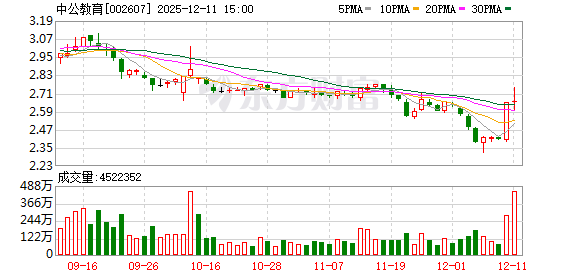
中公教育:通过持续改善经营业绩、规范公司治理为股东创造长期价值
Zheng Quan Ri Bao· 2025-12-11 08:36
Core Viewpoint - The company emphasizes the importance of shareholder returns and plans to determine its shareholder return scheme based on annual operating performance, cash flow status, and long-term development plans [2] Group 1 - The company is committed to strictly adhering to regulatory requirements [2] - The company aims to continuously improve its operating performance and standardize corporate governance to create long-term value for shareholders [2] - Any relevant arrangements regarding shareholder returns will be disclosed in regular reports in a timely manner [2]
上市公司监督管理条例公开征求意见 夯实严监严管法治基础
Zheng Quan Ri Bao· 2025-12-05 16:08
Core Viewpoint - The China Securities Regulatory Commission (CSRC) has released a draft of the "Regulations on the Supervision and Management of Listed Companies" for public consultation, emphasizing risk prevention, strong regulation, and promoting high-quality development in the capital market [1][2]. Group 1: Regulatory Framework - The draft regulations aim to establish a comprehensive regulatory framework for listed companies, covering their entire lifecycle from listing to delisting, including governance, information disclosure, mergers and acquisitions, dividend distribution, market value management, bankruptcy restructuring, and delisting [1][2]. - The regulations are seen as a necessary step to solidify the legal foundation for stringent supervision and management, reflecting the CSRC's commitment to enhancing the effectiveness and deterrence of regulatory enforcement [1][2]. Group 2: High-Quality Development - The regulations focus on three main areas to promote high-quality development: enhancing the quality and effectiveness of mergers and acquisitions, improving investor returns, and elevating corporate governance standards [3]. - Specific measures include clarifying the obligations of listed companies and executives in market value management, supporting stable dividend policies, and establishing mechanisms for share buybacks [3]. Group 3: Risk Prevention and Strong Regulation - The regulations emphasize risk prevention by targeting financial fraud, punishing violations related to guarantees, enforcing strict delisting procedures, and implementing comprehensive administrative supervision [3][4]. - There is a focus on preventing major shareholders from misappropriating company funds and ensuring that the board of directors actively pursues recovery of misused assets [6]. Group 4: Key Highlights - The regulations introduce a dedicated chapter on corporate governance, detailing the responsibilities of controlling shareholders, independent directors, and the board secretary, while enhancing internal control mechanisms [4][5]. - They also support mergers and acquisitions by clarifying definitions, qualifications, and disclosure standards, thereby stabilizing market expectations [4]. - A significant emphasis is placed on protecting investors, including measures to enhance investment value and prevent companies from evading delisting, ensuring that investors have options in case of company restructuring [6].
红牌了!马斯克万亿薪酬方案遭否决
Sou Hu Cai Jing· 2025-11-05 15:02
Core Viewpoint - The rejection of Elon Musk's exorbitant compensation plan by Norway's sovereign wealth fund and a U.S. court highlights concerns over corporate governance and shareholder interests rather than a denial of Musk's contributions [1][4]. Group 1: Compensation Concerns - The proposed compensation plan required Musk to increase Tesla's market value to $8.5 trillion over the next decade, which is approximately eight times the current market value, potentially granting him stock worth about $1 trillion, equivalent to 12% of the company [4]. - Investors are worried that such a massive reward could significantly dilute the ownership stakes of other shareholders, leading to a decrease in stock value [4]. Group 2: Dependency on Key Individuals - There are concerns regarding Tesla's over-reliance on Musk, referred to as "key person risk," which poses significant uncertainty for the company's operations if Musk were unable to fully engage in his role [4]. - The chairman of Tesla indicated that if the compensation plan were not approved, Musk might consider leaving the company, underscoring the extent of the company's dependency on him [4]. Group 3: Decision-Making Process Issues - The U.S. court previously rejected Musk's $56 billion compensation plan due to procedural flaws, with opposition focusing on potential harm to other shareholders and a lack of fairness and transparency in the decision-making process [5]. - The board's lack of independence was highlighted, as several members had close personal ties with Musk, including long-term business relationships and personal connections [6]. - Insufficient information disclosure during the shareholder voting process led to decisions made without adequate understanding of the compensation plan's formulation, which the court deemed insufficient to rectify the initial procedural issues [6].


山东宝莫生物化工股份有限公司章程修订解读:规范治理与发展路径明晰
Xin Lang Cai Jing· 2025-10-14 13:50
Core Points - Shandong Baomo Biochemical Co., Ltd. released a new company charter in October 2025, aiming to standardize corporate governance and protect the rights and interests of all parties involved, laying a solid foundation for long-term development [1][3] Group 1: Company Structure and Governance - The company was approved to change its structure by the Shandong Development and Reform Commission and was listed on the Shenzhen Stock Exchange on September 15, 2010, with a registered capital of 612 million yuan [1] - The company has issued 61.2 million shares, all of which are ordinary shares, and can increase capital through various methods such as issuing shares to specific or unspecified objects, distributing bonus shares, or capitalizing reserves [1] - Share transfer restrictions are in place for shares issued before the public offering and for shares held by directors and senior management to maintain market order [1] Group 2: Shareholder Rights and Responsibilities - Shareholders have rights to dividends, participate in shareholder meetings, and supervise company operations, while also being required to comply with laws and company regulations [1] - The company strictly regulates the behavior of controlling shareholders and actual controllers to prevent the abuse of control rights that could harm the interests of the company and other shareholders [1] Group 3: Board and Management Structure - The shareholder meeting, as the company's power institution, has detailed regulations for convening, proposals, notifications, voting, and resolutions to ensure scientific and fair decision-making [2] - The board of directors consists of nine members, including three independent directors, responsible for convening shareholder meetings and executing resolutions [2] - Senior management, including the general manager and financial officer, must adhere to similar duties and restrictions as the board members [2] Group 4: Financial and Reporting Standards - The company is required to prepare and disclose annual and interim reports, establish profit distribution policies, and implement an internal audit system [2] - Specific platforms for information disclosure are designated, including Securities Daily and Securities Times [2] Group 5: Major Corporate Actions - The company charter includes detailed procedures for significant actions such as mergers, divisions, capital increases, reductions, dissolutions, and liquidations, ensuring compliance with legal regulations [3]
浙海德曼: 浙海德曼董事、高级管理人员行为准则(202508)
Zheng Quan Zhi Xing· 2025-08-26 16:19
Core Points - The document outlines the Code of Conduct for the Board of Directors and Senior Management of Zhejiang Haideman Intelligent Equipment Co., Ltd, aiming to standardize behavior and improve corporate governance [1][2][3] Chapter Summaries Chapter 1: General Principles - The Code is established to regulate the behavior of the company's directors and senior management, ensuring compliance with relevant laws and regulations [1] - It applies to all directors and senior management of the company [1] Chapter 2: Declarations and Commitments - Directors and senior management must sign a Declaration and Commitment Letter before the company's stock is listed, and update it within five trading days if there are significant changes [3] Chapter 3: Duties of Loyalty and Diligence - Directors and senior management have a fiduciary duty to act in the best interests of the company and all shareholders, avoiding conflicts of interest [4][5] Chapter 4: Information Disclosure and Confidentiality - Directors and senior management must ensure that all reports and disclosures are truthful, accurate, and complete, and must report any significant changes in the company's control or financial status [6][7] Chapter 5: Management of Shares and Changes - Directors and senior management must comply with laws regarding insider trading and must report any changes in their shareholdings within two trading days [12][13] Chapter 6: Appointment Management - The company must ensure a fair and transparent process for the selection of directors and senior management [15][16] Chapter 7: Meeting Participation - Directors and senior management are required to actively participate in meetings and must provide explanations for their absence [50][51] Chapter 8: Special Regulations for Independent Directors - Independent directors must act independently and provide unbiased opinions on significant company matters [82][83] Chapter 9: Special Regulations for the Chairman - The Chairman must adhere to collective decision-making processes and cannot act beyond their authority [84][85] Chapter 10: Audit Committee Behavior Norms - The Audit Committee is responsible for supervising compliance with laws and regulations by directors and senior management [88][89] Chapter 11: Senior Management Behavior Norms - Senior management must strictly execute board and shareholder resolutions and report any risks to the board [94][96] Chapter 12: Miscellaneous - Directors and senior management must maintain the company's image and reputation in public settings and cannot represent the company without proper authorization [99][100]
