
军国主义死灰复燃

Search documents
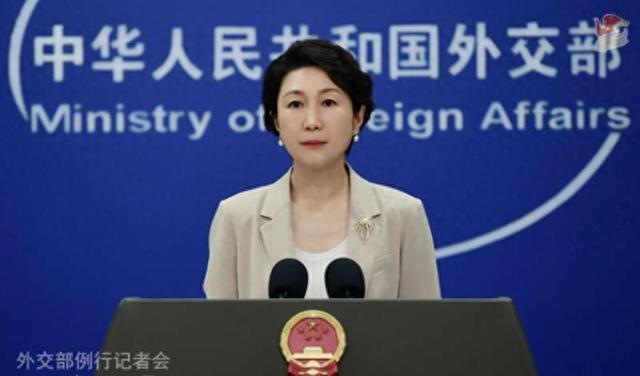
日方军事动作频频,国防部回应
券商中国· 2026-01-08 02:11
Core Viewpoint - The article discusses the recent comments made by a Chinese defense spokesperson regarding Japan's military expansion and nuclear ambitions, emphasizing the concerns of the international community, particularly Southeast Asian nations, about Japan's militarization efforts and the potential revival of militarism [1]. Summary by Sections Japan's Military Expansion - The Japanese government is reportedly considering nuclear capabilities and has significantly increased its budget for "government security enhancement support," which includes providing advanced military equipment to Southeast Asian countries [1]. International Response - There is a growing criticism from the international community, including Southeast Asian nations, regarding Japan's military actions. The spokesperson highlights that Japan is not reflecting on these criticisms but is instead escalating its military buildup and arms exports [1]. Concerns Over Militarism - The spokesperson warns that Japan's actions reveal the dangerous intentions of right-wing forces in Japan to promote militarization and revive militarism, urging peace-loving nations to recognize and counter Japan's ambitions to prevent a resurgence of militarism [1].


高市早苗称年内拟修订“安保三文件”,中方:绝不允许军国主义死灰复燃
Xin Lang Cai Jing· 2026-01-06 11:12
Core Viewpoint - The statement from China's Foreign Ministry spokesperson reflects concerns over Japan's accelerated militarization, which is seen as a threat to regional peace and stability, urging the international community to remain vigilant [1][3][4]. Summary by Relevant Sections Japan's Security Policy Changes - Japanese Prime Minister Kishi Nobuo announced plans to revise the "Three Security Documents" within the year, citing increasing challenges to the rules-based international order and security environment in the Indo-Pacific region [1][3]. - Key proposed changes include increasing defense spending, modifying the "Three Non-Nuclear Principles," lifting restrictions on arms exports, and significantly developing offensive military capabilities [3]. Concerns Over Militarization - The spokesperson emphasized that these developments indicate a dangerous trend towards Japan's re-militarization, which could undermine regional peace and stability [1][3]. - Historical documents such as the Cairo Declaration and the Potsdam Proclamation explicitly state that Japan should be completely disarmed and not maintain industries that could enable rearmament [3]. Historical Context and Warnings - The spokesperson drew parallels between current Japanese right-wing movements and historical militarism, warning that such actions pose a threat to both regional and global peace [4]. - There is a strong assertion that the international community, along with peace-loving nations, must not allow the resurgence of militarism in Japan [4].
日本人士批评高市早苗 要求其明确道歉撤回错误言论
Yang Guang Wang· 2026-01-03 02:07
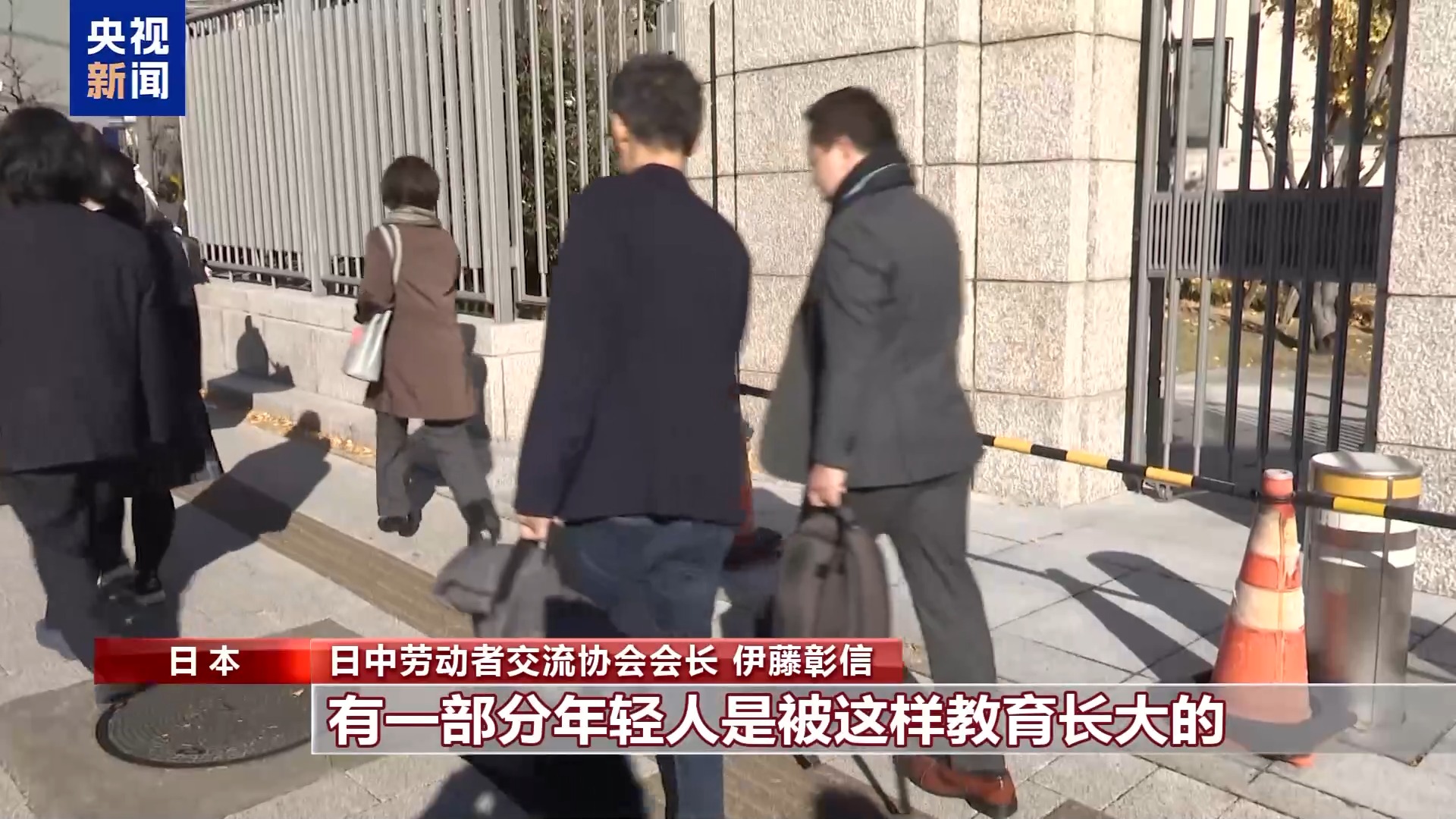
Core Viewpoint - The remarks made by Japanese Prime Minister Sanae Takaichi have sparked strong criticism from various sectors in Japan, highlighting concerns over constitutional and international law violations [1][2]. Group 1: Criticism of Takaichi's Remarks - Ito Akira, President of the Japan-China Labor Exchange Association, stated that Takaichi's comments violate Article 9 of the Japanese Constitution and the Japan-China Peace and Friendship Treaty [2]. - Okinawa University lecturer Chikawa Shinako described Takaichi's statements as provocative and aggressive, significantly deviating from the spirit of the peace constitution, and called for a formal apology and retraction of her remarks [2]. Group 2: Consequences of the Remarks - Chikawa noted that Takaichi's comments have already caused noticeable damages across various sectors, with ongoing assessments of the impact [2]. - Both the ruling and opposition parties are perceived to be treating the issue too simplistically or avoiding direct confrontation, which is not an acceptable approach to the matter [2].
日本有识之士:高市错误言论违反宪法和国际法
Yang Shi Xin Wen Ke Hu Duan· 2026-01-01 12:46
Group 1 - The remarks made by Japanese Prime Minister Sanae Takaichi have sparked strong criticism from intellectuals in Japan, with claims that her statements violate both the Japanese Constitution and international law [1] - Ito Akihiro, president of the Japan-China Labor Exchange Association, stated that Takaichi's comments equate to a betrayal of the Japan-China Peace and Friendship Treaty, suggesting a call for war [1] - There is growing concern over the resurgence of militarism in Japan, fueled by right-wing forces promoting the so-called "China threat theory" and altering historical textbooks [1] Group 2 - The manipulation of public opinion by the ruling Liberal Democratic Party (LDP) is evident, as they control education and media reporting, raising concerns about how young Japanese people perceive peace [3] - A portion of the younger generation in Japan supports Takaichi's statements, which is attributed to their upbringing in an environment that promotes such views [3] - The focus should shift from increasing defense spending and enhancing deterrence as a means to achieve peace, to fostering a genuine understanding of peace and history [3]
每100日元税收超10日元流向军事领域
Xin Lang Cai Jing· 2025-12-27 15:38
Core Viewpoint - Japan's defense budget for the fiscal year 2026 is set to exceed 9 trillion yen, marking a historical high and continuing a trend of 14 consecutive years of military spending increases [1] Group 1: Defense Budget Overview - The initial defense budget for fiscal year 2026 accounts for 7.4% of Japan's total general account expenditures and 10.8% of tax revenue, indicating that over 10 yen of every 100 yen in tax revenue will be allocated to military spending [1] - In fiscal year 2025, Japan's defense spending reached 11 trillion yen, which is approximately three times the per capita defense spending of China for 2025, positioning Japan as the fifth-largest military spender globally [1] - Japan's military expenditure has doubled in just 3 to 4 years, a growth rate not seen since World War II [1] Group 2: Funding and Economic Implications - Japan's defense budget heavily relies on national debt, which exceeds 260% of GDP, raising concerns about the sustainability of such military investments [1] - The government is seeking to boost the domestic economy through arms exports, aiming to finance military spending via the defense industry [1] Group 3: Military Strategy and Regional Implications - The focus of Japan's defense spending will shift towards offensive capabilities, including long-range missiles, attack drones, and space warfare equipment, with plans to procure U.S. Tomahawk cruise missiles and upgrade anti-ship missiles [1] - Japan is actively fortifying military bases in the southwestern islands, indicating ambitions for military intervention in the Taiwan Strait through its alliance with the U.S. [1] - The international community is increasingly wary of Japan's militarization and potential resurgence of militarism, necessitating a multi-faceted response from China to enhance its own defense capabilities and regional stability [1]
日本防卫预算再创新高,9万亿日元是什么概念?专家解读:每100日元的税收中有超10日元流向军事领域
Xin Lang Cai Jing· 2025-12-27 14:32
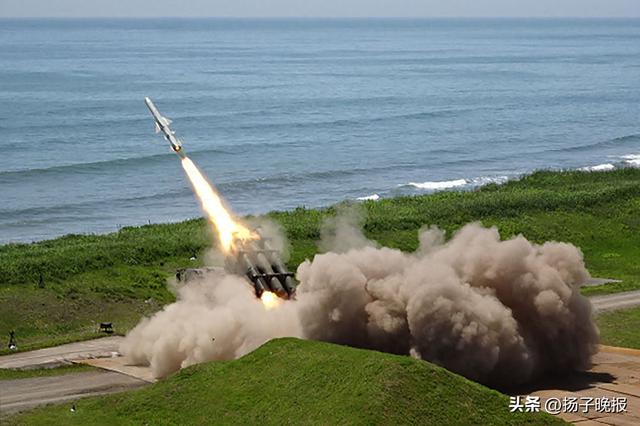
Group 1 - Japan's defense budget for the fiscal year 2026 exceeds 9 trillion yen, marking a historical high and continuing a trend of 14 consecutive years of military spending growth [1] - The initial defense budget for 2026 accounts for 7.4% of Japan's total general account expenditure and 10.8% of tax revenue, indicating a significant allocation of resources towards military spending [1] - Japan's military expenditure has doubled in just 3 to 4 years, a growth rate not seen since World War II, positioning Japan as the fifth-largest military spender globally based on the 2025 fiscal year budget [1] Group 2 - The record defense budget signals Japan's departure from its post-war self-defense principle, accelerating its militarization and ambitions to become a military power [2] - Japan's defense spending will focus on offensive capabilities, including long-range missiles and attack drones, with plans to procure U.S. Tomahawk cruise missiles and upgrade its anti-ship missiles [2] - Japan is actively fortifying its southwestern islands and testing short-range missiles, revealing its military ambitions in the Taiwan Strait and seeking to boost its defense industry through arms exports [4] Group 3 - In response to Japan's militarization, China needs to enhance its defense capabilities, focusing on long-range strikes and joint operational capabilities in the Taiwan and East China Sea regions [5] - There is a call for the international community to remain vigilant against Japan's aggressive military growth and its potential to disrupt regional stability through military-industrial expansion [5]
日本防卫预算再创新高,外交部回应
Huan Qiu Wang· 2025-12-26 07:38
Core Viewpoint - Japan's cabinet has approved a defense budget plan for fiscal year 2026 exceeding 9 trillion yen (approximately 58 billion USD), which, if passed by the National Diet, will set a new record for Japan's defense spending [1] Group 1: Defense Budget and Military Strategy - The budget aims to enhance Japan's counterattack capabilities and coastal defense, including the deployment of cruise missiles and unmanned weapons to address escalating regional tensions [1] - Japan's recent military security movements have drawn criticism from the international community, with concerns about the resurgence of militarism and the potential revival of militaristic ideologies [1][2] Group 2: Domestic and International Reactions - There is a growing domestic opposition in Japan against the government's military expansion, with citizens organizing protests against increased defense spending [2] - Scholars have pointed out that the increase in defense expenditure poses a significant economic burden on the Japanese populace, which will ultimately be borne by ordinary citizens [2]
中外对话丨中外专家警告:日本主动调整军事战略,或走向穷兵黩武
Zhong Guo Xin Wen Wang· 2025-12-15 13:28
Core Viewpoint - Japanese Prime Minister Kishi Nobuo's recent remarks regarding Taiwan have raised concerns among international experts, warning that Japan's military strategy may be shifting towards militarism, which could have severe implications for regional stability and Japan's own economy [1][3][4]. Group 1: Political Implications - Kishi's comments are seen as part of a broader trend of Japan's political rightward shift, driven by conservative forces advocating for constitutional amendments and military expansion [3][4]. - The core motivation behind Kishi's statements is to escape the constraints of the post-war system and to seek military flexibility for Japan, potentially transforming it into a nation with offensive military capabilities [3][4]. - Kishi's actions are also viewed as a strategy to solidify her political position by distancing herself from moderate factions within her party and appealing to conservative voters and military-industrial interests [3][4]. Group 2: Economic Consequences - The backlash against Kishi's remarks has led to significant negative impacts on various sectors in Japan, particularly tourism, retail, and dining, as Chinese tourists, a vital source of revenue, are now less inclined to visit Japan [4][5]. - Japan's reliance on trade with China means that Kishi's comments have increased uncertainty in Japan-China economic relations, which could lead to declines in corporate performance and hinder Japan's overall economic recovery [4][5]. Group 3: Military Concerns - Kishi's actions since taking office indicate a clear signal that Japan is accelerating its departure from the post-war peace development path, aiming to establish itself as a military power capable of proactive military engagement [6]. - There are growing concerns about the resurgence of militaristic ideologies in Japan, which could pose serious threats to peace and stability in the Asia-Pacific region if left unchecked [6][7].
“高市早苗错误言行释放军国主义死灰复燃的危险信号”
Ren Min Ri Bao· 2025-12-07 23:45
Core Viewpoint - The article discusses the criticism directed at Japanese Prime Minister Sanna Takashi for her controversial remarks regarding Taiwan, which are perceived as a resurgence of militarism and a threat to regional stability [1][2][5]. Group 1: Criticism of Sanna Takashi's Remarks - Sanna Takashi's statements about Taiwan potentially posing an existential threat to Japan have drawn severe backlash from various sectors in Japan, including politics, academia, and civil society [2][3]. - Critics argue that Takashi's refusal to retract her statements could further damage Japan-China relations and has already resulted in significant economic repercussions for Japan [2][3]. - Prominent figures, including lawmakers and political analysts, emphasize that her comments contradict Japan's established diplomatic positions and call for an immediate retraction to de-escalate tensions [2][3][4]. Group 2: Concerns Over Militarization - Since taking office, Takashi has signaled a shift towards militarization, including plans to increase defense spending to 2% of GDP and deploy missiles on islands near Taiwan, raising alarms among the public and experts [4][5]. - Public protests have erupted against her government's military expansion, with citizens expressing concerns over the neglect of social welfare in favor of military spending [4][5]. - Critics highlight that this militarization contradicts Japan's pacifist constitution and could lead to Japan abandoning its post-war peaceful stance, which is viewed as a dangerous trajectory [5][6]. Group 3: International Reactions - International observers and scholars have noted that Takashi's rhetoric reflects a troubling trend of historical revisionism in Japan, which could undermine international law and regional peace [6][7]. - The remarks have been interpreted as a signal of Japan's potential return to militarism, prompting calls from various countries for Japan to adhere to its pacifist principles and avoid repeating historical mistakes [6][7]. - The situation has raised concerns among neighboring countries, with warnings that Japan's military actions could destabilize the region and provoke further tensions [6][7].
“高市早苗错误言行释放军国主义死灰复燃的危险信号”(国际视点)
Ren Min Ri Bao· 2025-12-07 22:02
Core Viewpoint - Japanese Prime Minister Sanae Takaichi's recent remarks regarding Taiwan have sparked significant criticism from various sectors in Japan, highlighting concerns over Japan's military expansion and its implications for diplomatic relations with China and regional stability [1][2][3][4][5][6] Group 1: Political Reactions - Takaichi's claims that "Taiwan's situation could pose an existential crisis for Japan" and her refusal to retract these statements have led to strong demands from Japanese politicians and civil groups for her to withdraw her comments to prevent further damage to Japan-China relations [2][3] - Prominent figures, including lawmakers and political analysts, have criticized Takaichi's statements as a violation of Japan's constitutional principles and a departure from established diplomatic positions, urging her to take responsibility for the consequences of her remarks [2][3][4] Group 2: Military Expansion Concerns - Takaichi's government has been accused of sending dangerous signals regarding military expansion, including plans to increase defense spending to 2% of GDP and deploying missiles on the Nakanoshima Islands, which has raised alarms among the public and experts [4][5] - Protests have erupted against the government's military buildup, with citizens expressing concerns that such actions neglect domestic welfare and could lead Japan away from its pacifist constitution [4][5] Group 3: Historical Context and International Relations - Analysts and scholars have pointed out that Takaichi's rhetoric reflects a troubling lack of historical reflection on Japan's wartime actions, which poses a challenge to post-war international order and threatens regional peace [5][6] - The international community, including figures from Russia and Germany, has condemned Japan's military rhetoric and actions as a revival of militarism, urging Japan to adhere to its constitutional commitments to peace [5][6]