冰淇淋市场竞争

Search documents
冰淇淋巨头如何应对中国市场本土品牌“围剿”?
Mei Ri Jing Ji Xin Wen· 2025-12-11 12:37
Core Viewpoint - The Magnum Ice Cream Company has officially gone public in Amsterdam, London, and New York, marking a significant milestone in the global ice cream market with a market capitalization of approximately €79.41 billion (about ¥653 billion) on its first trading day [1][2]. Group 1: Company Overview - The Magnum Ice Cream Company, previously part of Unilever, has been established as an independent entity, allowing for more targeted and flexible strategies and diversified financing platforms [2][5]. - The company holds a 21% market share in the global ice cream market, leading ahead of competitors like Froneri, which has an 11% share [3][4]. - The company has four of the five major global ice cream brands, including Wall's, Cornetto, Magnum, and Ben & Jerry's [3]. Group 2: Financial Performance - The company reported a revenue of €4.503 billion and a net profit of €464 million for the first half of 2025, showing slight year-on-year increases [3]. - The company’s revenue is projected to be €3.17 billion and €2.7 billion in the Chinese market for 2024 and the first half of 2025, respectively [8]. Group 3: Market Challenges and Strategies - The company faces challenges in the competitive Chinese market, where it has experienced sales fluctuations due to consumer shifts towards more cost-effective products [8][10]. - The company has increased its advertising and promotional spending in China, launching 31 new products in January, the highest number in its history [7][8]. - The company is focusing on high-end market segments while also exploring new distribution channels, including convenience stores and e-commerce [12][14]. Group 4: Competitive Landscape - The main competitors in the Chinese market are Yili and Mengniu, with the company holding the second-largest market share [9][10]. - The company is experiencing pressure from emerging local brands and changing consumer preferences, particularly towards high-quality, handmade ice creams [16].
梦龙称独立后将更加敏捷与专注,国内冰品市场部分低中价产品被催热、品牌抢跑上新
Cai Jing Wang· 2025-12-11 05:05
Core Viewpoint - The successful spin-off of the ice cream business from Unilever into a standalone company, Magnum Ice Cream Company, marks a significant milestone, with shares starting to trade on major exchanges and a clear strategy for growth and reinvestment outlined by the CEO [1][2]. Company Overview - Magnum Ice Cream Company has completed its spin-off from Unilever, with shares listed on the Amsterdam Euronext, London Stock Exchange, and New York Stock Exchange starting December 8 [1]. - The company has issued 612 million shares with a nominal value of €3.50 each, and on its first trading day, the stock prices increased by 6.31% in Amsterdam, 2.19% in New York, and 2.04% in London [1]. - The company aims to enhance agility, focus, and ambition as an independent entity, with a clear strategy for growth and productivity improvement [1]. Financial Performance - The company projects revenues of €7.9 billion for 2024, capturing a 21% share of the global ice cream retail market [2]. - Revenue is expected to grow from €4.394 billion in the first half of 2025 to €4.503 billion [2]. - In China, the company ranks second in retail sales among its top ten markets, with projected revenues of €317 million for 2024 and €270 million for the first half of 2025 [2]. Market Dynamics - The Chinese ice cream market is highly competitive, with the company focusing on high-end positioning to navigate this landscape [2][3]. - The overall ice cream market in China is experiencing a decline in both sales volume and revenue, with a notable shift in consumer preferences towards lower-priced products [4]. - The top ten brands in the Chinese market are seeing a concentration of market share, with the leading brand, Yili, holding approximately 33% [3]. Innovation and Product Strategy - The company emphasizes innovation in product offerings to meet evolving consumer demands, particularly in flavor diversity and premium positioning [4][5]. - New product launches are increasingly occurring earlier in the year to capture consumer attention and market share [5]. - The company is also investing in advertising and promotional activities, particularly in China, to support its growth strategy [2]. Competitive Landscape - The competitive landscape is characterized by a mix of established players and new entrants, with brands needing to align their strategies with market trends and consumer preferences [6]. - The trend towards premium and low-cost products is reshaping the market, with brands focusing on unique flavors and health-oriented options to maintain pricing power [5][6].


50亿欧元 哈根达斯要被卖了
Sou Hu Cai Jing· 2025-08-06 08:24
Group 1 - Goldman Sachs is reportedly preparing to acquire a stake in Froneri, the world's second-largest ice cream manufacturer, for €15 billion (approximately ¥120 billion) from French private equity firm PAI [2] - Froneri was established in 2016 as a joint venture between PAI and Nestlé, with both parties holding equal shares, and it produces well-known ice cream brands such as Häagen-Dazs, Oreo, and Cadbury in the U.S. market [2][4] - The U.S. ice cream market is valued at approximately $75 billion, with Froneri holding the second-largest market share, trailing only Unilever's Magnum [2] Group 2 - Häagen-Dazs has undergone multiple ownership changes since the 1980s, with significant transitions including its acquisition by Pillsbury in 1983 and later by General Mills in 2001 [3][4] - In 2016, Nestlé and PAI formed Froneri, which subsequently acquired Nestlé's entire ice cream business, giving Froneri operational rights for Häagen-Dazs in over 20 countries [4] - General Mills retains global brand ownership of Häagen-Dazs, primarily managing operations outside North America, especially in China [4] Group 3 - General Mills is reportedly planning to sell Häagen-Dazs' business in China, with potential transaction values estimated between $500 million and $800 million [5] - Häagen-Dazs is facing declining sales in China, with a significant drop in store foot traffic noted in recent financial reports [5][6] - The brand has been actively trying to attract consumers through promotions and discounts, including membership discounts and special pricing [6][7] Group 4 - The Chinese ice cream market has seen a shift in consumer preferences, with a growing demand for lower-priced options, impacting Häagen-Dazs' appeal [7][8] - DQ has emerged as a leading competitor in the domestic ice cream market, capturing nearly 29% market share by 2023, which poses a challenge to Häagen-Dazs [8]


伊利蒙牛押注冰品、和路雪1月就发新品、哈根达斯门店流量下滑⋯⋯闻到了吗?今年夏天冰淇淋市场的火药味
Mei Ri Jing Ji Xin Wen· 2025-06-14 08:42
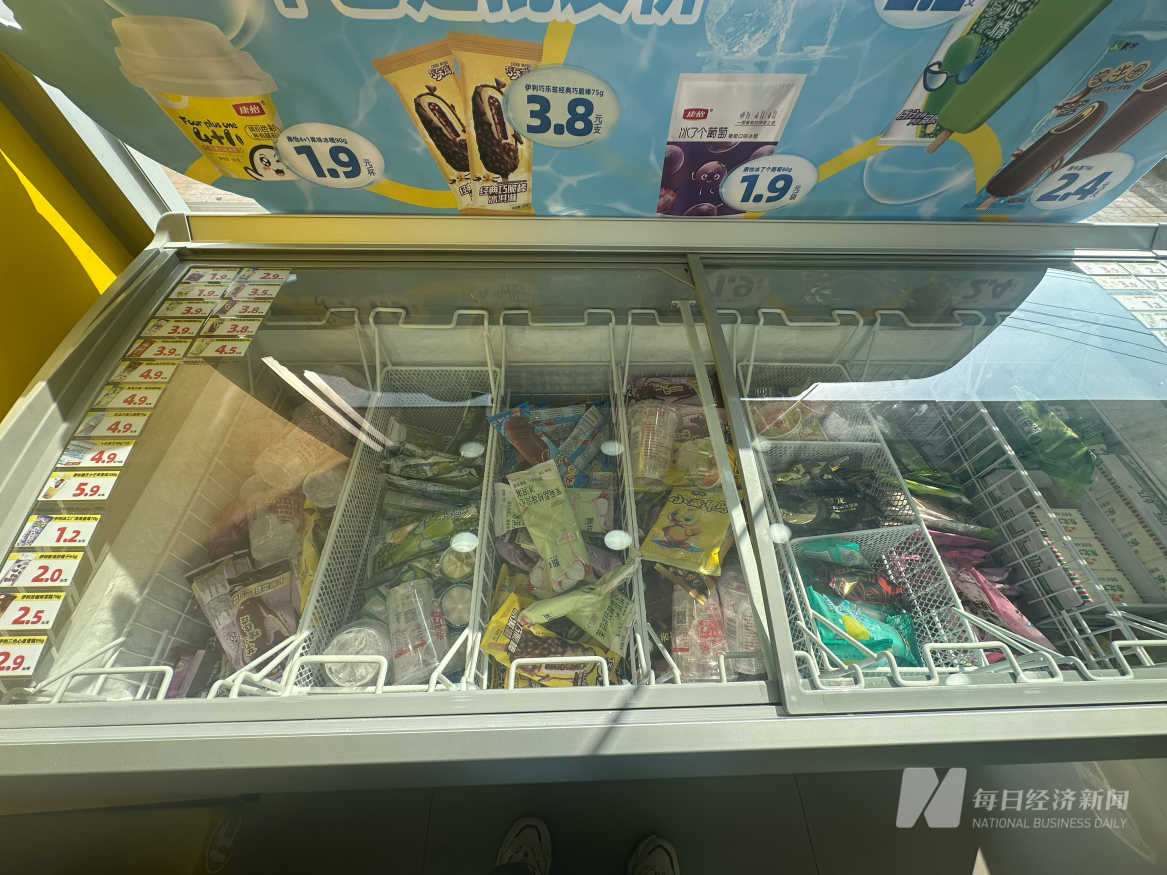
Group 1 - The ice cream market in China is facing challenges as foreign brands struggle with local consumer preferences and competition from new players [1][4] - Major ice cream brands like Mengniu and Yili are looking to boost their performance in the ice cream segment, which has higher profit margins compared to liquid milk [1] - Unilever plans to independently list its ice cream brand, Algida, this year, indicating a strategic shift and the need for strong performance in the market [1] Group 2 - New ice cream products are being launched earlier and in greater numbers, with brands like Algida introducing 31 new products, setting a record [4] - The competition in the ice cream market is intense, with many new entrants and established brands expanding their product lines [4][6] - Traditional ice cream products continue to dominate sales, with popular items like sesame crispy and cola ice cream being top sellers in local shops [4][5] Group 3 - The retail price of ice cream is generally around 4 to 5 yuan, with higher prices in tourist areas [5][6] - The ice cream market is expected to perform better in 2025 compared to 2024, as major brands report a narrowing decline in sales [6] - Price wars are becoming less common, with companies focusing on rational pricing strategies rather than aggressive discounting [6][8] Group 4 - Haagen-Dazs has seen a decline in retail sales in China, but its retail business is experiencing growth due to increased marketing efforts [9] - The company is adjusting its pricing strategy, with promotional events offering lower prices compared to regular retail [9][10]