
减污降碳扩绿协同增效

Search documents
今年重点做好十方面工作
Xin Lang Cai Jing· 2026-01-25 19:17
Core Viewpoint - The article emphasizes the importance of implementing urban planning and promoting coordinated development in the Beijing-Tianjin-Hebei region to enhance economic stability and growth [1] Group 1: Economic Development - Strengthening domestic demand capabilities to consolidate and expand the momentum of stable economic growth [1] - Promoting deep reforms and high-level openness to enhance the driving force and vitality of high-quality development [1] Group 2: Education and Talent Development - Integrating education, technology, and talent development to build a competitive new production capacity development pattern [1] Group 3: Urban Management and Governance - Accelerating the transformation of development modes in megacities to improve urban governance and management [1] - Promoting the construction of resilient cities to strengthen the capital's safety defense [1] Group 4: Cultural and Agricultural Development - Enriching the supply of quality cultural resources to enhance the influence of the national cultural center [1] - Advancing agricultural and rural modernization to promote coordinated urban-rural regional development [1] Group 5: Environmental Sustainability - Promoting collaborative efforts in pollution reduction, carbon reduction, and green expansion to build a harmonious relationship between humans and nature [1] - Optimizing public service supply to address the immediate concerns of the populace [1]
今年北京GDP预计增长5%左右
Bei Jing Shang Bao· 2026-01-25 17:25
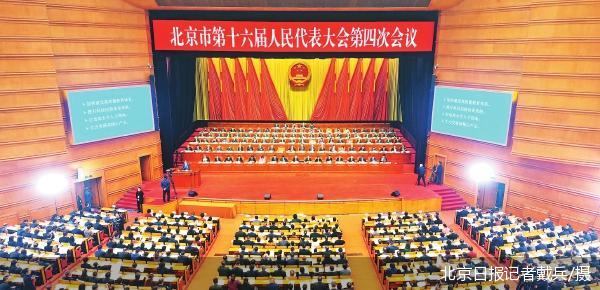
Group 1 - The core viewpoint of the article emphasizes the ten key areas of work that Beijing aims to focus on in the upcoming year [2][3] Group 2 - The first area is to deeply implement the overall urban planning and promote the collaborative development of the Beijing-Tianjin-Hebei region [3] - The second area focuses on enhancing domestic demand capabilities to consolidate and expand the positive momentum of economic stability [3] - The third area aims to promote the integrated development of education, technology, and talent to build a competitive new productivity development pattern [3] - The fourth area involves advancing deep reforms and high-level opening up to enhance the driving force and vitality of high-quality development [3] - The fifth area is to enrich the supply of quality cultural resources and enhance the influence of the national cultural center [3] - The sixth area focuses on accelerating the transformation of development methods in mega-cities and improving urban governance [3] - The seventh area aims to promote agricultural and rural modernization to facilitate coordinated urban-rural regional development [3] - The eighth area is to optimize public service supply to address the practical concerns of the populace [3] - The ninth area emphasizes promoting pollution reduction, carbon reduction, and green expansion to build a harmonious coexistence between humans and nature in Beijing [3] - The tenth area is to comprehensively advance resilient city construction to strengthen the capital's safety defenses [3]

北京新能源汽车保有量超130万辆
Xin Hua She· 2026-01-25 06:48
Core Insights - Beijing's new energy vehicle ownership has exceeded 1.3 million, with over 80% of vehicles meeting the "National V standard" or higher [1] - By 2025, Beijing plans to implement a scrapping policy for over 10,000 old trucks and buses, and all newly added taxis and sanitation vehicles will be electric [1] - The city has established 1,044 electric vehicle supercharging stations and added 11,263 new charging interfaces [1] - Air quality improvements are notable, with the proportion of good air quality days expected to surpass 80% for the first time by 2025, and the annual average concentration of fine particulate matter at 27 micrograms per cubic meter, a decrease of 11.5% [1] - Renewable energy consumption in Beijing has reached 15%, with over 44 billion kilowatt-hours of green electricity imported [1] Group 1 - Beijing's new energy vehicle ownership exceeds 1.3 million, with over 80% of vehicles meeting "National V standard" or higher [1] - By 2025, over 10,000 old trucks and buses will be scrapped, and all new taxis and sanitation vehicles will be electric [1] - The city has built 1,044 electric vehicle supercharging stations and added 11,263 new charging interfaces [1] Group 2 - Air quality improvements are significant, with good air quality days expected to exceed 80% by 2025, and fine particulate matter concentration down to 27 micrograms per cubic meter [1] - Renewable energy consumption in Beijing has reached 15%, with over 44 billion kilowatt-hours of green electricity imported [1]
速读2026年北京市政府工作报告| 2026年北京市将新建绿道1000公里
Bei Jing Shang Bao· 2026-01-25 02:32
Core Viewpoint - The Beijing government aims to promote coordinated efforts in pollution reduction, carbon reduction, and green expansion by 2026, focusing on building a harmonious relationship between humans and nature [1] Group 1: Environmental Initiatives - The government will continue to advance pollution prevention and control efforts, further improving air quality [1] - Implementation of the Miyun Reservoir water source protection regulations will be prioritized, along with enhancing rural wastewater treatment [1] - The plan includes the creation of 5 beautiful rivers and lakes, and the promotion of navigation along the entire length of the North City Moat to the North Canal [1] Group 2: Urban Greenery and Infrastructure - The construction of garden cities will be accelerated, with projects such as the introduction of water into green areas in the green isolation zones [1] - Large-scale suburban parks, including those in Nanyuan and the North Central Axis, will be developed, adding 40 new open waterfront spaces and constructing 1,000 kilometers of greenways [1] - The plan includes the completion of the "Month Rose Ring" along the Fourth Ring Road [1] Group 3: Allergy Management and Community Green Spaces - Seasonal allergen management will be enhanced, with the addition of 100 urban "golden corners" and "silver edges," as well as 50 community micro-gardens [1]
着力建设绿色低碳的美丽城市(专题深思)
Ren Min Ri Bao· 2025-10-13 22:20
Core Viewpoint - The construction of green and low-carbon beautiful cities is essential for promoting high-quality urban development, enhancing people's well-being, and participating in global environmental governance [1][2]. Group 1: Urban Development Strategy - Urbanization in China is transitioning from rapid growth to stable development, focusing on improving existing urban quality rather than large-scale expansion [1]. - The emphasis on green development is crucial for achieving high-quality urban growth and addressing ecological challenges [2]. Group 2: Environmental Governance - Establishing a long-term governance mechanism is necessary to consolidate ecological environment management achievements, requiring a robust institutional framework [3]. - A clear, scientific, and effective environmental governance system is essential for continuous improvement in air quality and water body management [3]. Group 3: Systematic Approach - A systematic approach to pollution reduction, carbon reduction, and green expansion is vital for achieving synergistic benefits across environmental, climate, and economic outcomes [4]. - Breaking down barriers between departments and regions is necessary for coordinated efforts in industrial restructuring and pollution control [4]. Group 4: Biodiversity and Urban Resilience - Enhancing urban biodiversity is key to measuring ecological health and improving urban resilience, necessitating a harmonious coexistence between humans and nature [5]. - Urban planning should prioritize ecological restoration and the protection of habitats to meet public demand for a beautiful ecological environment [5]. Group 5: Practical Examples - Cities like Beijing and Shenzhen have implemented successful measures such as integrated monitoring systems and electric public transport to achieve significant environmental improvements [3][4]. - Shanghai and Hangzhou have focused on ecological restoration to create green spaces that serve both ecological functions and public recreational needs [6].
城市减污降碳提升发展“含绿量”
Jing Ji Ri Bao· 2025-09-24 05:44
Group 1 - The central urban work conference emphasizes "coordinated reduction of pollution, carbon emissions, and expansion of green spaces" as a crucial path for building green and low-carbon cities [1] - Local governments are exploring green and low-carbon development paths based on their resource endowments and regional characteristics, focusing on "source prevention, systematic governance, and key breakthroughs" [2] - Cities face challenges such as heavy industrial structures, high energy consumption intensity, and insufficient green technology reserves, necessitating a systematic approach to break down barriers and enhance coordination for high-quality urban development [2] Group 2 - Strengthening top-level design by formulating special plans for green and low-carbon development, aligning emission reduction and ecological expansion goals with various national and regional planning frameworks [3] - Establishing an integrated policy system that merges carbon emission control with environmental impact assessments and pollution prevention mechanisms, promoting cross-departmental and cross-regional collaborative governance [3] - Promoting integrated innovation in green technology, focusing on the development and application of low-carbon technologies tailored to urban needs, including renewable energy utilization and ultra-low energy consumption buildings [4]
减污降碳提升发展“含绿量”
Jing Ji Ri Bao· 2025-09-22 23:23
Core Viewpoint - The central urban work conference emphasizes "coordinated reduction of pollution, carbon emissions, and expansion of green spaces" as a crucial path for building green, low-carbon, and beautiful cities [1] Group 1: Green Low-Carbon Development Strategies - Various regions are exploring green low-carbon development paths based on their resource endowments and regional characteristics, focusing on "source prevention, systematic governance, and key breakthroughs" [2] - Examples include Tianjin promoting the use of new energy vehicles, Hangzhou's green energy-efficient building renovations, and Changji's "waste-free city" initiative [2] - These initiatives demonstrate the feasibility of coordinated efficiency and provide valuable experiences for enhancing the "green content" of economic development in other areas [2] Group 2: Challenges and Systematic Approaches - Many cities face challenges such as heavy industrial structures, high energy consumption, and insufficient green technology reserves [2] - To promote coordinated reduction of pollution, carbon emissions, and expansion of green spaces, a systematic approach is needed to break down barriers and enhance multi-level coordination [2] Group 3: Policy and Planning Framework - Strengthening top-level design by formulating special plans for green low-carbon development, clarifying emission reduction and ecological expansion goals, and ensuring alignment with various national and local planning frameworks [3] - Establishing an integrated policy system that merges carbon emission control with environmental impact assessments and pollution prevention mechanisms [3] - Encouraging collaboration across departments and regions to promote policy synergy and regulatory cooperation [3] Group 4: Technological Innovation and Application - Promoting integrated innovation in green technology tailored to urban needs, focusing on renewable energy, clean coal utilization, water conservation, and low-energy buildings [4] - Advancing the application of advanced technologies such as carbon capture, green hydrogen smelting, and smart energy systems [4] - Utilizing digital and intelligent methods to enhance environmental management and ecological restoration, aiming to build near-zero carbon parks and low-carbon communities [4]
着力建设绿色低碳的美丽城市
Ren Min Ri Bao· 2025-08-06 03:00
Core Insights - The article emphasizes the importance of consolidating ecological environment governance achievements to promote synergistic effects in pollution reduction, carbon reduction, and green expansion [1] Group 1 - The focus is on enhancing urban biodiversity as a key component of environmental governance [1]