
可再生能源

Search documents
二季度A股或为震荡关注红利与新能源板块
AVIC Securities· 2026-03-30 12:58
Market Overview - The A-share market is expected to experience fluctuations in Q2, with a focus on dividend and new energy sectors[1] - The ongoing Middle East conflict raises concerns about high oil prices and potential global stagflation, with a 39% probability of a ceasefire before April 30[7] Economic Indicators - The overall A-share market PE ratio is 22.55, down 0.13 from the previous week[6] - Market sentiment has decreased, with average daily trading volume at 21,115.58 billion, a drop of 995.59 billion from last week[6] Sector Performance - The energy supply shock may accelerate the global energy transition, presenting opportunities for China's renewable energy sector[24] - The dividend and new energy sectors are recommended for attention in the upcoming quarter[24] Political and Economic Risks - The U.S. midterm elections are influencing market dynamics, with Trump's approval rating dropping to 36%, impacting his management of oil prices[8] - Inflation concerns are rising, leading to a decrease in the expected pace of Fed rate cuts, with the probability of no cuts rising to 88.2%[10] Investment Recommendations - The report suggests a cautious but slightly optimistic approach to the market, indicating that any adjustments in Q2 should be met with a proactive stance[24] - Risks include potential delays in domestic policy implementation and geopolitical events exceeding expectations[25]
香港中华煤气(00003) - 2025 H2 - 电话会议演示
2026-03-20 08:30
The Hong Kong and China Gas Company Limited (0003.HK) 2025 Annual Results 20 March 2026 1 The Hong Kong and China Gas | 2025 Annual Results 2025: Business Highlights Utility Business Hong Kong Gas Business Mainland Gas Business Mainland Water and Environment 2 The Hong Kong and China Gas | 2025 Annual Results 2 • Steady gas sales volume • On-site hydrogen power generation and charging stations launched • Aligned with the green energy roadmap, produce green hydrogen at landfills • Northern Metropolis Plan: 1 ...

国际能源署署长:目前全球在建核电装机容量已达约70吉瓦,创40年来新高
中国能源报· 2026-03-13 14:03
Core Viewpoint - The global nuclear power capacity under construction has reached approximately 70 gigawatts, marking a 40-year high, according to the International Energy Agency (IEA) Director Fatih Birol [1][3]. Group 1: Nuclear Energy Development - The current global trend shows a significant recovery in nuclear energy, with the installed capacity under construction reaching about 70 gigawatts, the highest level in four decades [1][3]. - Nuclear energy is highlighted as an essential and reliable energy source that operates around the clock, alongside renewable energy, as key pillars of clean energy [1][3]. Group 2: Climate Change and Energy Transition - The upcoming COP31 conference, scheduled for November 9-20 in Antalya, Turkey, will focus on clean energy transition, climate-resilient urban development, and mechanisms for implementing climate actions [1][3]. - The Turkish Minister of Environment, Urbanization, and Climate Change emphasized the vulnerabilities in energy supply chains due to geopolitical conflicts and the increasing pressures on global food and energy systems caused by climate change [1][3].


IEA称未来5年全球电力将强劲增长,中国将贡献一半增量!有多少?
Sou Hu Cai Jing· 2026-02-14 16:45
Core Insights - The global electricity market is projected to experience significant growth, with an average annual increase in demand exceeding 3.5% from 2026 to 2030, equivalent to the total electricity consumption of two European Unions [1][3][5] - China is expected to contribute nearly 50% of the global electricity increment, solidifying its position as the main driver of this growth [1][5][6] Group 1: Global Electricity Demand Growth - By 2030, the global electricity consumption increment will match the total electricity output of two EU regions, estimated at approximately 5.5 to 6 trillion kilowatt-hours [3][4] - Emerging economies will account for nearly 80% of the new electricity demand, with China leading at an average annual growth rate of 4.9% [5][6] - The global electricity demand has already seen a year-on-year increase of 3% in 2025, with future growth rates projected to be 50% higher than the average of the past decade [6][8] Group 2: Energy Sources and Structure - Renewable energy and nuclear power are set to become the core support for this growth, with their share in the global electricity structure expected to rise from 42% to 50% by 2030 [10][12] - Coal will remain the largest power source until 2030, but its growth is stagnating, with global coal-fired generation expected to remain flat by 2025 [12][15] - Renewable energy is projected to grow at an annual rate of 8%, with solar power alone contributing over 600 terawatt-hours annually [13][15] Group 3: Regional Dynamics and Economic Impact - Developed economies are shifting from stagnation to becoming important contributors to electricity demand growth, with their share of global electricity demand growth increasing from 17% to 20% by 2025 [8][10] - The disparity in electricity prices is widening, with regions like the EU and the US experiencing price increases due to rising natural gas costs, while countries like Australia and India see declining prices [16] - The transition towards electrification and decarbonization is reshaping the global energy landscape, with electricity becoming a core energy source for economic growth [16]
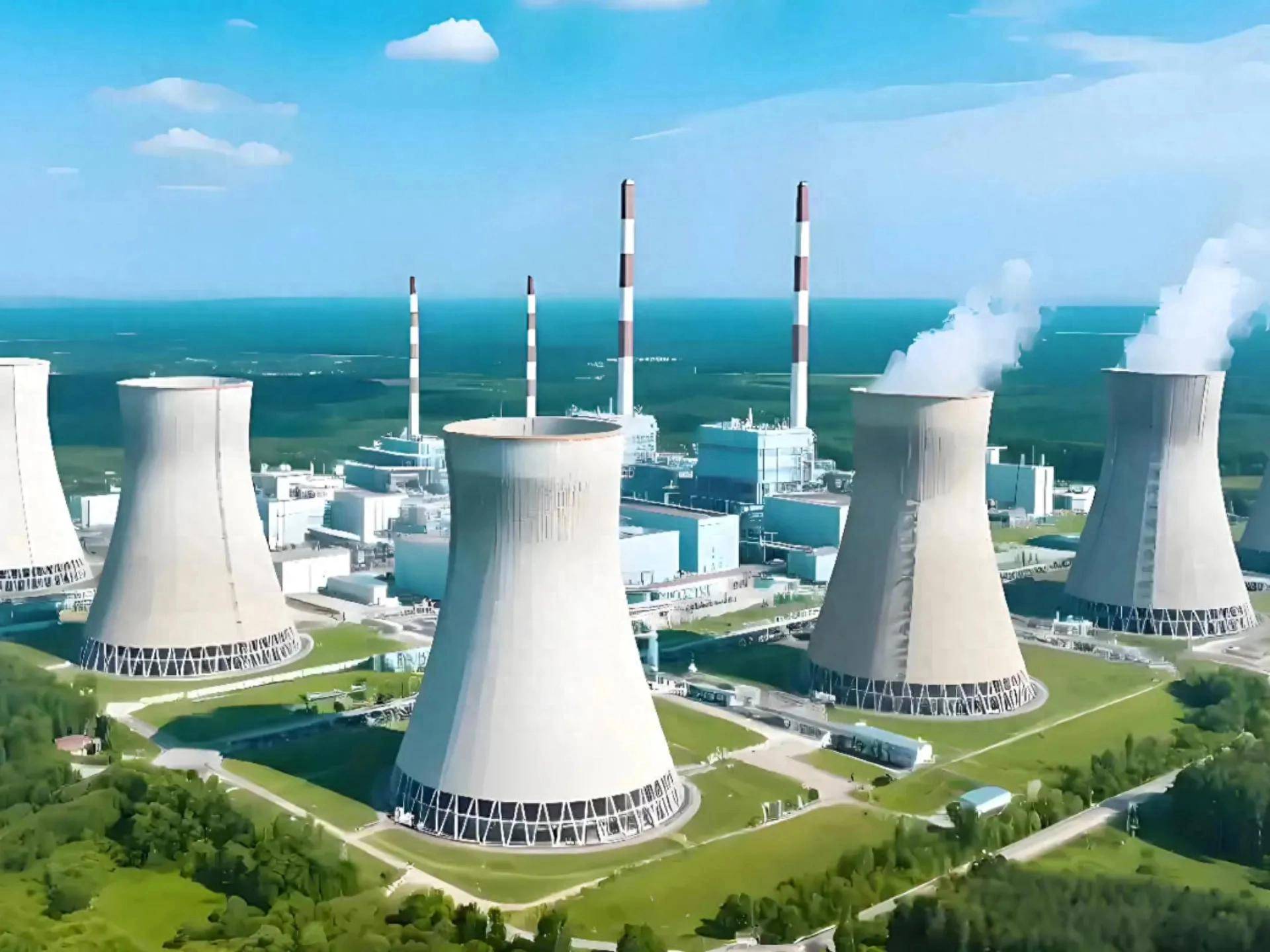
爱依斯电力股价创60日新高,机构上调评级与潜在收购预期成主要驱动力
Jing Ji Guan Cha Wang· 2026-02-11 22:58
Core Viewpoint - AES Corporation (AES.N) has seen its stock price rise to $16.43, marking a 60-day high and a year-to-date increase of 15.93%, driven by acquisition expectations, upgraded ratings, and growing industry demand [1][2]. Stock Price Movement Reasons - Potential Acquisition Expectations: BlackRock's Global Infrastructure Partners and EQT AB are reportedly in talks to acquire AES, which may lead to a revaluation of the company's market value [1]. - Upgraded Institutional Ratings: Jefferies upgraded its rating from "Underperform" to "Hold" in February, raising the target price from $9 to $16, signaling positive market sentiment [1]. - Industry Demand Growth: The global electricity demand is driven by AI and data center expansion, with AES's renewable energy business (20.44% of total) likely to benefit from structural opportunities [1]. Company Fundamentals - Profit Improvement: In Q3 2025, the net profit attributable to shareholders increased by 31.83% year-on-year, with a maintained dividend yield of 4.28%, attracting conservative investors [2]. - Current Valuation: The current price-to-earnings ratio (TTM) stands at 11.18, below the average for the utility sector, with institutional target prices averaging $16.67, slightly above the current price [2]. Future Development - Financial Pressure: The company's debt-to-asset ratio is at 1.26, indicating high leverage, which may limit capital expenditure flexibility if financing costs rise [3]. - Policy Uncertainty: Changes in U.S. renewable energy subsidy policies and battery import tariffs may impact the pace of business expansion [4]. Technical Signals - Recent Stock Performance: The stock has seen a significant increase of 19% over the past 20 days, necessitating observation of its ability to solidify a breakthrough above the previous high of $16.59 [5]. - Overall Assessment: Short-term momentum is supported by event-driven factors and industry prosperity, but long-term sustainability requires monitoring of acquisition progress, quarterly earnings realization, and debt management effectiveness [5].

斯塔默访华后,中英工商界如何展望未来?
Di Yi Cai Jing Zi Xun· 2026-02-07 15:55
Group 1: Overview of UK-China Economic Relations - The UK-China economic relationship is showing signs of recovery, with a more pragmatic attitude from both sides as indicated by recent high-level interactions [2][3] - Jack Perry, Chairman of the 48 Group, noted that these interactions have provided new opportunities for enhancing business confidence in UK-China economic cooperation [2] Group 2: Business Perspectives on China's Role - Sir Douglas Flint, incoming Chairman of Prudential, emphasized China's leading position in manufacturing, innovation, energy transition, and low-carbon economy, highlighting its critical role in global supply chains [3] - The positive changes in UK-China relations, particularly in personnel exchanges and high-level interactions, are creating clearer expectations for business cooperation [3] Group 3: Focus on Renewable Energy and Manufacturing - Renewable energy and green transition were key discussion topics, with Greg Jackson, CEO of Octopus Energy, stating that China's advancements in renewable energy and electric vehicle technology are significantly lowering global energy transition costs [4][5] - Octopus Energy is already collaborating with multiple Chinese companies and aims to deepen cooperation in areas like energy system optimization and electricity market mechanisms [5] Group 4: Automotive Industry Developments - BYD's UK and Ireland National Manager, Ge Hongde, reported that BYD has established over 100 stores in the UK and is in an accelerated development phase, focusing on expanding sales and service networks [7] - BYD's factory in Hungary has begun trial production, with plans to gradually increase capacity and produce multiple vehicle models, aiming for a "made in Europe, for Europe" operational model [7] Group 5: Financial Services and Digital Infrastructure - In the financial sector, Spdb Bank's London Deputy General Manager, Lu Jie, highlighted the bank's dual role in supporting Chinese enterprises abroad and assisting UK companies entering the Chinese market [8] - There is an increasing focus on cross-border trade financing, mergers and acquisitions, and green finance, with a noticeable rise in UK companies' interest in the Chinese market [8] - China Mobile International's UK General Manager, Li Naihao, noted the growing demand for communication, data, and digital solutions as Chinese companies expand overseas, indicating deepening cooperation between the two countries [8]


ArcelorMittal reports fourth quarter 2025 and full year 2025 results
Globenewswire· 2026-02-05 06:00
Core Insights - ArcelorMittal reported resilient financial performance in 2025 despite significant headwinds, with an EBITDA of $6.5 billion and a net income of $3.2 billion, reflecting strong operational improvements and strategic investments [1][4][16]. Financial Performance - In 4Q 2025, sales decreased by 4.4% to $15.0 billion compared to 3Q 2025, primarily due to lower shipments [5][25]. - For the full year 2025, sales decreased by 1.7% to $61.4 billion, driven by a 2.3% reduction in average steel selling prices [16]. - Operating income for 12M 2025 was $3.6 billion, a 9.6% increase from $3.3 billion in 12M 2024, reflecting a positive impact from exceptional items [17]. - EBITDA for 12M 2025 decreased by 7.3% to $6.5 billion, influenced by weaker results in North America and lower contributions from India and Brazil [18]. - The company generated $1.9 billion in investable cash flow over the past 12 months, consistent with the previous year [1][24]. Safety and Sustainability - The company has made significant progress in safety performance, with a lost time injury frequency rate (LTIF) improving to 0.65x in 2025 from 0.70x in 2024 [10][11]. - ArcelorMittal is in the second year of a three-year safety transformation program aimed at establishing a consistent safety culture across the Group [1][11]. Strategic Initiatives - The company is well-positioned to benefit from a balanced and fair European steel market, with expectations of increased domestic demand due to new trade measures [2][8]. - ArcelorMittal is focusing on capturing opportunities in the energy transition, with plans to build renewable energy capacity of 2.8GW by the end of 2028 and expand low carbon-intensity steel production [2][15]. - Strategic growth projects contributed $0.7 billion to EBITDA in 2025, with an additional $1.6 billion anticipated from ongoing projects [2][9]. Capital Management - The Board proposed to increase the annual base dividend to $0.60 per share for FY 2026, reflecting improved earnings [1][53]. - The company repurchased 8.8 million shares for $262 million in 2025, reducing the fully diluted share count by 38% since September 2020 [1][54]. Outlook - The company expects world ex-China apparent steel demand to grow by 2% in FY 2026, with production and shipments anticipated to increase across all regions [4][8]. - Capital expenditures for 2026 are projected to be between $4.5 billion and $5.0 billion, supporting growth initiatives [4].


研判2026!中国低碳经济行业发展历程、相关政策、市场规模、重点企业及未来展望:低碳经济加速崛起,引领绿色发展新范式[图]
Chan Ye Xin Xi Wang· 2026-02-04 01:24
Core Viewpoint - China, as the largest developing country and greenhouse gas emitter, has made significant progress in low-carbon economic development, aiming to peak carbon emissions by 2030 and achieve carbon neutrality by 2060 through green energy and clean technology initiatives [1][12]. Low-Carbon Economy Overview - The low-carbon economy is based on low energy consumption, low emissions, and low pollution, focusing on technological innovation, institutional reform, industrial transformation, and renewable energy development [3][4]. Industry Development History - The concept of a low-carbon economy emerged in the UK in 2003, with significant milestones including the 2006 Stern Report advocating for global transition to low-carbon economies and China's first national climate change assessment report [4][6]. Industry Policies - A series of policies have been implemented to promote low-carbon economic development, including the 2025 government work report emphasizing the acceleration of green low-carbon economy development and the establishment of a national carbon market [7][8]. Industry Chain - The low-carbon economy industry chain includes upstream low-carbon energy supply and technology research, midstream low-carbon enterprises, and downstream applications such as green buildings and renewable energy generation [8]. Current Industry Status - The national carbon trading market is a key component of the low-carbon economy, with significant growth in trading volume and value, reaching a cumulative transaction volume of 865 million tons and a transaction value of 57.663 billion yuan by the end of 2025 [9][10]. Key Enterprises - Major companies in China's low-carbon economy include Dongjiang Environmental Protection, Ningde Times, BYD, and others, each focusing on various aspects of environmental services, clean energy, and technology innovation [14][15]. Industry Development Trends - Technological innovation is crucial for low-carbon economic growth, with advancements in renewable energy and storage technologies driving down costs and improving efficiency [17]. - Government support through policies and funding will continue to encourage research and development in low-carbon technologies [18]. - Increasing market demand for low-carbon products, driven by consumer awareness and global climate governance, will further stimulate growth in the low-carbon economy [18].





AES Andes放弃智利绿氢项目
Zhong Guo Hua Gong Bao· 2026-02-03 03:21
Core Viewpoint - AES Andes has decided to halt the execution of its $10 billion INNA green hydrogen and green ammonia project to focus on its core strengths in renewable energy and energy storage, aligning with the strategic direction of its U.S. parent company [1] Group 1: Strategic Decisions - The decision to stop the INNA project is a strategic choice rather than a reflection of doubts about the value and potential of Chile's green hydrogen industry [1] - The company aims to concentrate resources on the development and construction of its renewable energy and energy storage business [1] Group 2: Current Projects and Future Plans - Since implementing its "sustainable development" strategy, the company has added a total of 2,181 megawatts of renewable energy and energy storage projects in Chile, transforming its energy structure to 70% renewable [1] - The current focus is on ensuring the commercial operation of the Andes Solar III photovoltaic plant and the Bolero battery storage system in the first half of the year [1] - Four new renewable energy projects, including Arenales and Cristales, are under construction, which are expected to add an additional 2,363 megawatts of capacity by 2027 [1]
胜科工业:美光宣布在新加坡新建晶圆厂
citic securities· 2026-01-28 13:56
Investment Rating - The report does not explicitly provide an investment rating for the company [2][3]. Core Insights - Micron has commenced the construction of a new wafer fab in Singapore, with an investment of $24 billion over the next decade, which is expected to significantly enhance its production capacity for NAND, meeting the growing demand from AI and data centers [5]. - The new facility will add 700,000 square feet of cleanroom capacity and aims to achieve wafer production by the second half of 2028 [5]. - The company, SCI, is positioned to benefit from its long-term strategic partnership with Micron, including a power supply agreement signed in 2023 and potential future agreements related to the new fab [6]. Company Overview - SCI is a leading provider of energy and urban solutions, with a projected net profit of SGD 1.133 billion for FY2024, driven primarily by its gas segment (71% of revenue), followed by renewable energy (17%) and integrated urban solutions (11%) [9]. - The company has a total energy capacity of 25.9 GW, with renewable energy capacity accounting for 16.5 GW [9]. - The geographical distribution of assets includes 28% in China, 32% in Singapore, 18% in India, and 11% in the Asia region [9]. Financial Metrics - As of January 27, 2026, the stock price is SGD 5.93, with a market capitalization of $8.41 billion [13]. - The average trading volume over the past three months is $20.33 million [13]. - The market consensus target price is SGD 7.13 [13].
