
制裁解除

Search documents
伊朗称伊美谈判非常严肃深入,美媒称美提强硬要求、特朗普与军方有明显分歧
Hua Er Jie Jian Wen· 2026-02-26 19:06
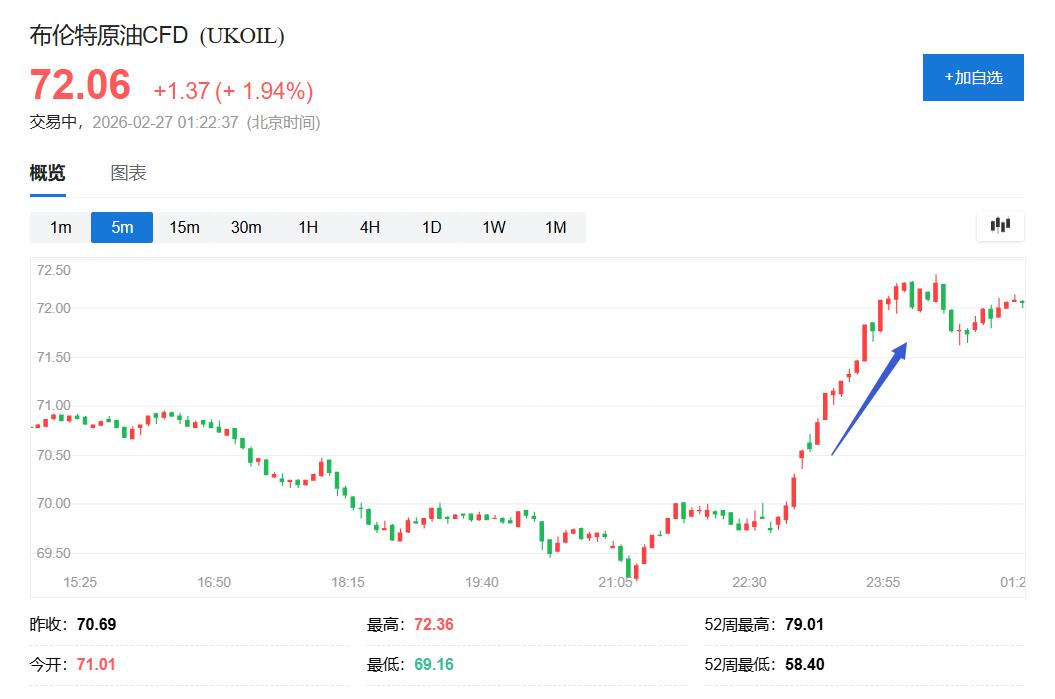
Core Viewpoint - The negotiations between the U.S. and Iran in Geneva have reached a critical stage, with significant differences in positions between the two sides, particularly regarding nuclear facilities and sanctions relief [1][3]. Group 1: Negotiation Dynamics - The third round of negotiations took place in Geneva, with Iran's Foreign Ministry spokesperson stating that discussions were "very in-depth and serious" [1]. - Iran has submitted a comprehensive proposal to the U.S., aiming to test America's commitment to diplomacy, which includes technical and practical measures to demonstrate that Iran does not intend to develop nuclear weapons [6]. - The U.S. is expected to demand the dismantling of key nuclear facilities and the transfer of all enriched uranium to the U.S., insisting that any agreement must be "permanently effective" [1][7]. Group 2: Market Reactions - Oil markets are closely monitoring the negotiations, with international crude oil futures experiencing fluctuations based on the progress of talks. Brent crude fell to $69.16, down nearly 2.4%, while WTI crude dropped to $63.6, down nearly 2.8% [3]. - Following reports of direct negotiations, oil prices rebounded, with Brent crude rising above $72.60 and WTI crude surpassing $66.70 during early trading [3]. Group 3: Internal Pressures and Military Context - U.S. negotiators face pressure from hawkish elements within the government and Congress, which may hinder the potential for a softer agreement [7]. - The U.S. has increased military presence in the Middle East, deploying two aircraft carrier strike groups and over 150 aircraft, marking the largest military deployment in the region since the 2003 Iraq War [9]. - There are indications of a split between military and diplomatic strategies within the U.S. administration regarding potential military action against Iran [2][9].

国际观察丨美军突袭一个月后,委内瑞拉情况如何?
Xin Hua Wang· 2026-02-03 12:14
Group 1: Current Status of Venezuela's Oil Industry - Following the U.S. military action, the Trump administration has seized oil tankers related to Venezuela and continues to use military force to disrupt the country's crude oil circulation [1] - The U.S. has signed executive orders and reached oil trade agreements to control Venezuela's oil sales and revenues, with Vice President Pence stating that Venezuela can only sell oil if it aligns with U.S. interests [1] - On January 29, the interim president of Venezuela, Delcy Rodriguez, signed a reform bill allowing private and foreign investment in the oil industry, which some media suggest is a result of U.S. pressure [1] Group 2: Changes in U.S.-Venezuela Relations - After the military action, Venezuela publicly condemned the U.S. for violating its sovereignty and interfering in its internal affairs, with Rodriguez asserting that Venezuela will not accept external orders [5] - Despite the tensions, Rodriguez indicated a willingness to establish relations with the U.S. based on mutual respect [6] - Diplomatic contacts have resumed, with Rodriguez meeting the head of the U.S. diplomatic mission in Venezuela, marking a significant step after seven years of diplomatic break [8] Group 3: Domestic Situation in Venezuela - The domestic situation in Venezuela appears to be stabilizing, with commercial activities in Caracas gradually resuming and a relatively stable supply of goods [9] - The Venezuelan currency, the bolívar, has seen a reduction in its depreciation rate, and social security is relatively stable, with military presence in key areas [9] - Analysts suggest that while Rodriguez has some control over the military and government, challenges remain, particularly in solidifying his position and managing the military's influence [11]

Exclusive: U.S. to issue general license soon lifting some sanctions on Venezuelan oil industry, sources say
Reuters· 2026-01-27 18:10
Core Viewpoint - U.S. officials are preparing to issue a general license that would lift certain sanctions on Venezuela's energy sector, indicating a significant policy shift from previous stances [1] Group 1: Sanctions and Policy Changes - The upcoming general license aims to ease restrictions on Venezuela's energy sector, which could enhance the country's oil production capabilities [1] - This move reflects a change in U.S. foreign policy towards Venezuela, potentially opening avenues for increased energy exports [1] Group 2: Implications for the Energy Sector - Lifting sanctions may lead to increased foreign investment in Venezuela's energy sector, which has been heavily impacted by previous sanctions [1] - The potential for revitalization of Venezuela's oil industry could have broader implications for global oil supply and pricing [1]
从委内瑞拉到伊朗,政权更迭预期为何反成油价利空?
Hua Er Jie Jian Wen· 2026-01-05 15:12
Core Insights - The traditional logic of geopolitical risks driving oil prices is being fundamentally rewritten due to the U.S. shale oil revolution and the normalization of the "shadow market" for sanctioned oil [1][2] - The current oil market has split into two parallel worlds: a transparent public market and a "don't ask, don't tell" market for sanctioned oil, which has buffered geopolitical shocks [3] - The expectation of regime change no longer solely implies supply disruption; instead, it may lead to normalized oil trade and increased market supply, negatively impacting energy investors [2][4] Market Dynamics - Venezuela's oil production now accounts for less than 1% of global supply, approximately 900,000 barrels per day, a significant decline from its previous market share of over 3% [1] - The U.S. refining system is primarily designed to process heavy crude oil from Venezuela, not light crude from domestic shale, indicating a structural dependency [4][6] - If sanctions are lifted, U.S. refiners could more easily access the heavy crude they need, potentially lowering costs and improving refining margins [4] Geopolitical Impact - The flexibility of U.S. shale producers allows for rapid adjustments in production in response to price fluctuations, diminishing the impact of geopolitical events on U.S. gasoline prices [6] - Historical events that previously caused significant oil price spikes, such as the 1979 Iranian Revolution, no longer have the same effect due to the current market structure [1][6] - Challenges remain for restoring production in Venezuela, including high costs, unresolved legal disputes, and local security issues, which complicate the recovery of this unstable country's oil sector [6]
日本海运公司商船三井CEO:公司在阿拉伯海域的航运运营仍在正常进行中,密切关注以色列与伊朗的局势。由于没有替代路线,在阿拉伯海湾减少或停止运输将会非常困难。正与欧盟洽谈解除部分液化天然气船只的制裁。
news flash· 2025-06-17 08:14
Core Viewpoint - The CEO of Mitsui O.S.K. Lines stated that the company's shipping operations in the Arabian Sea are continuing normally while closely monitoring the situation between Israel and Iran [1] Group 1: Shipping Operations - The company is maintaining normal shipping operations in the Arabian Sea despite regional tensions [1] - There are no alternative routes available, making it very difficult to reduce or halt transportation in the Arabian Gulf [1] Group 2: Regulatory Discussions - The company is in discussions with the European Union to lift certain sanctions on liquefied natural gas carriers [1]
叙利亚财政部长:(在美国承诺解除制裁后表示)投资者对此表示欢迎。
news flash· 2025-05-14 16:50
Core Viewpoint - The Syrian Finance Minister stated that investors welcomed the U.S. commitment to lift sanctions [1] Group 1 - The announcement of potential sanction relief has generated positive sentiment among investors [1]