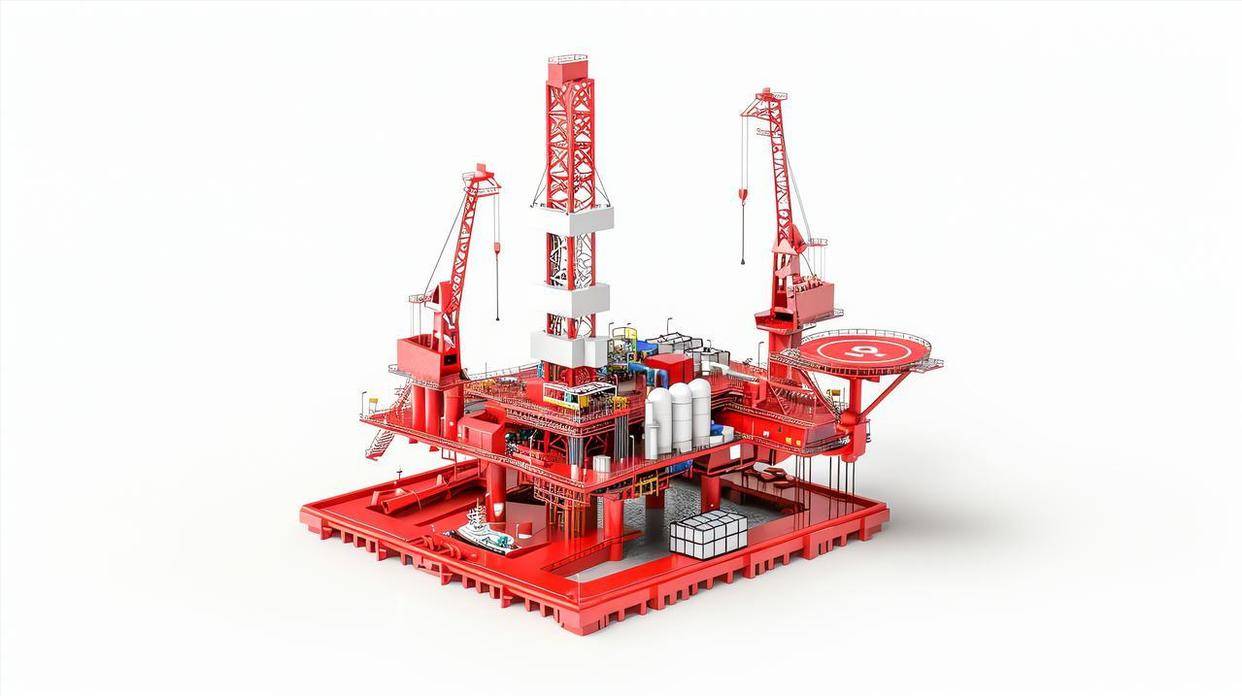
页岩油革命

Search documents
原油行业分析框架
Guoxin Securities· 2026-03-13 11:09
Investment Rating - The report suggests a positive investment outlook for the oil industry, particularly highlighting companies like China National Petroleum Corporation and CNOOC as key players in the sector [6]. Core Insights - The oil market is influenced by three main attributes: commodity characteristics, geopolitical factors, and financial aspects. The price formation mechanism is complex, with supply and demand, geopolitical events, and dollar interest rates playing significant roles. The report indicates that the oil price has been trending downward in 2023 due to a loosening supply-demand balance [4]. - Supply is heavily concentrated in the Middle East, which holds nearly 60% of global reserves. Major suppliers include Saudi Arabia, the United States, and Russia. The report notes that OPEC plays a crucial role in controlling international oil prices through production management [4][5]. - Demand for oil is closely tied to global economic growth, with the U.S., Europe, China, and India being the primary consumers. The report forecasts that by 2024, the demand shares will be 19.7% for the U.S., 15.9% for China, and 13.8% for Europe [5]. - The Strait of Hormuz is highlighted as a critical chokepoint for global oil transport, with potential disruptions leading to significant production cuts in Gulf countries. The report emphasizes that if the Strait remains blocked, the scale of production cuts and the difficulty of resuming production will increase rapidly [5]. Summary by Sections Geopolitical and Financial Impact on Oil Prices - The report discusses how geopolitical tensions and financial factors significantly influence oil prices, with recent conflicts causing rapid price increases. It emphasizes that while short-term fluctuations are common, the long-term price trends are primarily driven by supply-demand fundamentals [21][24]. Oil Supply Situation - The global distribution of oil reserves is uneven, with the Middle East holding a significant portion. The report states that as of 2024, OPEC countries will control 79.2% of global oil reserves, with Saudi Arabia, Iran, and Venezuela being the top three countries [33]. - The U.S. has become the largest oil producer due to the shale oil revolution, but production growth is slowing as companies focus on investment returns rather than volume [36][51]. Oil Demand Situation - The report indicates that oil demand is expected to grow primarily in developing countries, with projections for 2025 showing an increase in global oil demand. The U.S. and China are expected to remain the largest consumers, with significant shifts in consumption patterns due to economic and structural changes [87][93]. - The report also notes that the refining capacity in Europe is declining, while the U.S. maintains a stable demand for refined products, indicating a shift in the global refining landscape [93].



The shale boom that made the U.S. the world's top oil producer is nearing a crucial turning point
MarketWatch· 2026-02-16 13:07
Core Insights - The shale-oil revolution has positioned the U.S. as the leading oil producer globally, but this dominance is at risk of diminishing within five years due to various factors [1] Industry Overview - The U.S. energy sector is entering a new phase that may challenge its current leadership in oil production [1] - Potential erosion of the U.S. energy lead is attributed to changing market dynamics and production challenges [1]


Energy stocks rip as JP Morgan estimates the U.S. could hold 30% of all the world’s oil
Fortune· 2026-01-05 22:12
Core Viewpoint - Major U.S. energy companies' shares surged following President Trump's announcement regarding U.S. control over Venezuela's oil industry, which could significantly impact energy markets and geopolitical dynamics [1][2]. Group 1: U.S. Energy Sector Impact - The U.S. shale oil revolution has positioned the country as the largest crude producer globally, and control over Venezuela's vast oil reserves could reshape international energy market power dynamics [2][3]. - Analysts from JP Morgan suggest that U.S. control over Venezuelan energy could lead to the U.S. holding approximately 30% of global oil reserves, marking a significant shift in energy dynamics [3]. Group 2: Production Potential and Challenges - Venezuela's oil industry, currently producing about 1.1 million barrels per day, has the potential to double or triple output relatively quickly, despite being in disrepair due to neglect and sanctions [3][5]. - Significant investment and time will be required to improve Venezuelan infrastructure and production levels, with current low oil prices posing additional challenges [5][6]. Group 3: Market Reactions and Stock Performance - Energy sector shares rose broadly at the market opening, particularly for companies with large refinery operations, such as Valero, Marathon Petroleum, and Phillips 66, which saw increases of 5% to 6% [7][8]. - Oilfield service companies, including SLB and Halliburton, experienced even sharper increases of 7% to 8%, while major exploratory companies like ExxonMobil and Chevron rose between 2% and 4% [9].

从委内瑞拉到伊朗,政权更迭预期为何反成油价利空?
Hua Er Jie Jian Wen· 2026-01-05 15:12
Core Insights - The traditional logic of geopolitical risks driving oil prices is being fundamentally rewritten due to the U.S. shale oil revolution and the normalization of the "shadow market" for sanctioned oil [1][2] - The current oil market has split into two parallel worlds: a transparent public market and a "don't ask, don't tell" market for sanctioned oil, which has buffered geopolitical shocks [3] - The expectation of regime change no longer solely implies supply disruption; instead, it may lead to normalized oil trade and increased market supply, negatively impacting energy investors [2][4] Market Dynamics - Venezuela's oil production now accounts for less than 1% of global supply, approximately 900,000 barrels per day, a significant decline from its previous market share of over 3% [1] - The U.S. refining system is primarily designed to process heavy crude oil from Venezuela, not light crude from domestic shale, indicating a structural dependency [4][6] - If sanctions are lifted, U.S. refiners could more easily access the heavy crude they need, potentially lowering costs and improving refining margins [4] Geopolitical Impact - The flexibility of U.S. shale producers allows for rapid adjustments in production in response to price fluctuations, diminishing the impact of geopolitical events on U.S. gasoline prices [6] - Historical events that previously caused significant oil price spikes, such as the 1979 Iranian Revolution, no longer have the same effect due to the current market structure [1][6] - Challenges remain for restoring production in Venezuela, including high costs, unresolved legal disputes, and local security issues, which complicate the recovery of this unstable country's oil sector [6]
委内局势突变-对油运影响几何
2026-01-04 15:35
Summary of Conference Call on Venezuelan Oil Market Impact Industry Overview - The discussion centers around the impact of the recent political turmoil in Venezuela on the oil transportation market and the broader implications for the global oil supply chain [2][3][6]. Key Points and Arguments - **Venezuelan Oil Supply Chain Changes**: The U.S. military action on January 3, which involved the capture of Venezuelan President Guaido's wife, has significant implications for the oil supply chain, particularly affecting the cruise market [2]. - **Venezuela's Oil Reserves**: Venezuela holds approximately 20% of the world's known oil reserves, despite current production being only about 30% of its historical peak [3][4]. - **Potential for Increased Production**: If sanctions are lifted, international capital and technology could flow into Venezuela, potentially restoring its oil production capacity and significantly increasing global compliant oil supply [3][4]. - **Short-term vs Long-term Effects**: In the short term, the political situation may lead to export disruptions and inventory build-up, pushing demand towards other compliant markets. In the long term, U.S. companies' involvement could enhance Venezuela's oil production, altering the global energy supply landscape [4][6]. - **Impact on Global Oil Prices**: The potential increase in compliant oil supply from Venezuela could lead to an oversupply in the global market, particularly in the Atlantic basin, which may depress short-term oil prices [5][6]. - **Shipping Requirements**: If Venezuela's production returns to 2008 levels, compliant oil exports could rise from 800,000 barrels per day to 2.4 million barrels per day, necessitating 140 Very Large Crude Carriers (VLCCs) for transportation, which would represent 20% of global compliant shipping capacity [5][6]. Additional Important Insights - **Geopolitical Risks**: The instability in Iran and other geopolitical factors may shift the dynamics of black oil trade, potentially benefiting compliant markets [8]. - **VLCC Freight Rates**: Recent fluctuations in VLCC freight rates have been noted, with a long-term outlook remaining positive as rental rates are expected to stabilize above $60,000 per day [8]. - **Cruise Market Outlook**: The anticipated increase in compliant oil supply from Venezuela could significantly benefit the cruise market, especially in the latter half of 2025, as demand remains high and supply tightens [6][7]. This summary encapsulates the critical insights from the conference call regarding the Venezuelan oil market and its implications for the global oil transportation industry.

日产1361万桶:今年美国原油产量或创纪录!油价低迷,为何还疯狂增产?背后暗藏三大野心?
Sou Hu Cai Jing· 2025-12-10 05:41
Core Insights - The U.S. is projected to reach a record oil production of 13.61 million barrels per day (bpd) in 2023, surpassing last year's output by 380,000 bpd, which is equivalent to the production of a medium-sized oil-producing country [3][6][13] Group 1: U.S. Oil Production Dynamics - The U.S. has been the world's largest oil producer since 2018, with a significant increase in production from 12.3 million bpd in 2019 to the current forecast [3][6] - The Permian Basin is a key contributor, expected to produce 6.54 million bpd this year, accounting for nearly half of the U.S. oil production increase [3][6] Group 2: Global Market Implications - The International Energy Agency (IEA) has warned of a potential global oil supply surplus of 4.09 million bpd by 2026, highlighting a mismatch between U.S. production growth and market demand [4][9] - OPEC+ efforts to reduce production may be undermined by U.S. expansion, leading to a projected oversupply of 3.7 million bpd in the global market [9][13] Group 3: Strategic Considerations - U.S. shale oil producers have a breakeven price of $55-$65 per barrel, allowing them to remain profitable even in a low-price environment, unlike some OPEC+ members who require prices above $70 [6][7] - The U.S. aims to capture market share from OPEC+ and Russia, especially in light of potential sanctions relief for Russia, by increasing production and securing customers [7][9] Group 4: Future Outlook - The EIA has revised its 2026 U.S. oil production forecast down to 13.53 million bpd, indicating potential challenges in sustaining high production levels due to declining shale oil reserves and drilling efficiency [11][12] - OPEC+ is expected to adapt its production strategies in response to U.S. expansion, potentially leading to a more flexible approach to managing output levels [12][13]
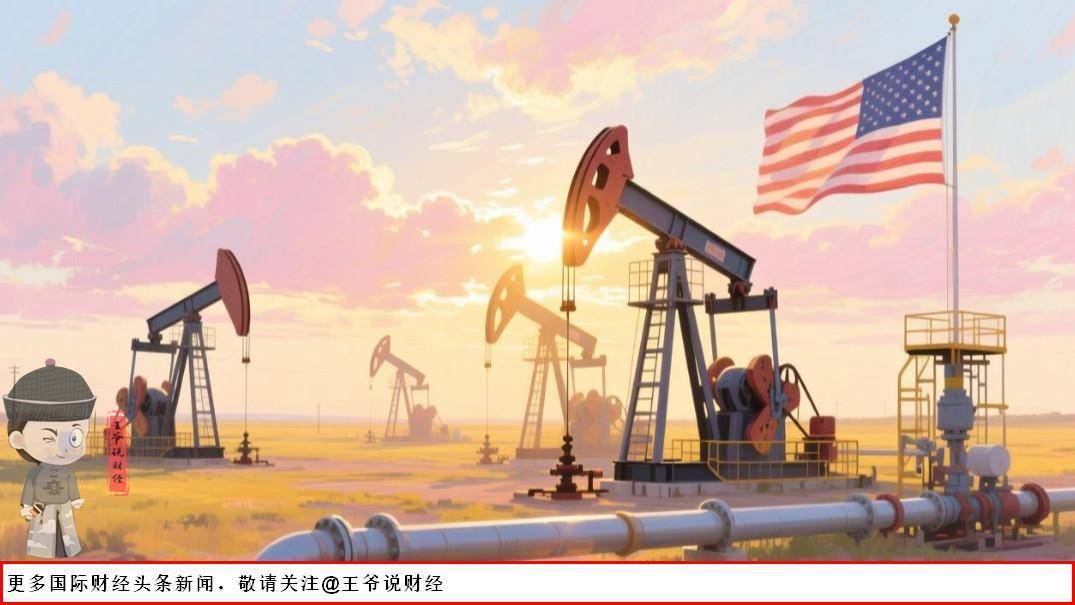
页岩油革命撕碎旧秩序!俄乌冲突背后,美国用能源战争重新定义世界规则
Sou Hu Cai Jing· 2025-11-05 05:54
Core Insights - The article argues that the Russia-Ukraine conflict is fundamentally a strategic reckoning following a restructuring of the global energy landscape, primarily triggered by the U.S. shale oil revolution a decade ago [1][6][12] Group 1: Historical Context - Historical conflicts often mask deeper issues related to resource control, as seen in the U.S. Civil War, which was fundamentally about cotton trade despite being framed as a fight against slavery [3] - The 20th century saw oil become the central resource, with events like Japan's attack on Pearl Harbor driven by oil supply issues rather than ideological motivations [4] Group 2: Shale Oil Revolution - The technological breakthrough in shale oil extraction around 2008 transformed the U.S. from the largest oil importer to the largest oil producer, surpassing Saudi Arabia and Russia by 2024 [6][7] - This shift indicates a significant reconfiguration of the global energy order, with the U.S. aiming to dismantle the existing power structures that benefit countries like Russia [6][7] Group 3: Geopolitical Implications - The destruction of the Nord Stream pipelines in September 2022 exemplifies the U.S. strategy to replace Russia as Europe's primary energy supplier, highlighting the geopolitical stakes involved in energy supply chains [7] - The article posits that the Russia-Ukraine conflict is a manifestation of this broader energy war, with the U.S. seeking to eliminate Russia's influence in Europe [7] Group 4: Future Resource Dynamics - The ongoing energy transition towards renewable sources is expected to redefine global power structures in the 21st century, with critical minerals like rare earth elements, lithium, and cobalt becoming focal points of geopolitical competition [8][11] - The demand for electricity, particularly driven by artificial intelligence, will necessitate a new green energy framework, further intensifying the competition for essential resources [9][11] Group 5: Resource Politics - The article emphasizes that control over fundamental physical resources will dictate future global power dynamics, as seen in the competition for lithium and cobalt in South America and Africa [11][12] - The narrative suggests that understanding the underlying resource motivations behind geopolitical conflicts is crucial for comprehending global dynamics [12]

中国石油(601857)公告点评:古龙页岩油示范区新增1.58亿吨探明储量 助力页岩油开发突破
Ge Long Hui· 2025-09-30 20:20
Core Viewpoint - China National Petroleum Corporation (CNPC) is making significant advancements in shale oil development, with new proven reserves and production targets set to enhance its long-term growth potential [1][2][3] Group 1: Proven Reserves and Production Growth - The Daqing Gulong shale oil national demonstration zone has added 158 million tons of proven shale oil reserves, providing resource security for development [1] - Daily production from the Daqing Gulong shale oil area exceeds 3,500 tons, marking a rapid transition from "proven reserves" to "effective development" [1] - The total oil production in 2024 is expected to surpass 400,000 tons, achieving a doubling of production for three consecutive years [1][2] Group 2: Strategic Plans and Future Projections - CNPC aims to lead China's shale oil revolution, with production expected to exceed 6.8 million tons by 2025, reflecting a year-on-year growth of over 33% [2] - The company has initiated a high capital expenditure plan of 210 billion yuan for upstream operations in 2025, ensuring growth in production and reserves [3] - The company plans to increase oil and gas equivalent production by 1.6% in 2025, while also transforming its refining and chemical businesses to enhance value [3] Group 3: Long-term Value Creation - The ongoing shale oil revolution is anticipated to support stable growth in CNPC's crude oil production, reinforcing the company's long-term value [3] - Profit forecasts for 2025-2027 estimate net profits of 166.1 billion, 171.2 billion, and 175.7 billion yuan, with corresponding earnings per share of 0.91, 0.94, and 0.96 yuan [3]
中国石油(601857):古龙页岩油示范区新增1.58亿吨探明储量,助力页岩油开发突破:中国石油(601857.SH/0857.HK)公告点评
EBSCN· 2025-09-30 08:47
Investment Rating - The report maintains a "Buy" rating for both A-shares and H-shares of China Petroleum [6]. Core Views - The newly confirmed reserves of 158 million tons in the Daqing Gulong shale oil demonstration area provide a resource guarantee for shale oil development, marking a leap in the area's development [2]. - China Petroleum is leading the shale oil revolution in China, with production expected to exceed 6.8 million tons by 2025, reflecting a growth rate of over 33% [3]. - The company is committed to high capital expenditure, with a planned upstream capital expenditure of 210 billion yuan for 2025, ensuring the growth of production and reserves [4]. Summary by Sections Production and Reserves - The Daqing Gulong shale oil demonstration area has achieved a daily production of over 3,500 tons, transitioning rapidly from "confirmed reserves" to "effective development" [2]. - The area has drilled 398 horizontal wells and produced over 1.4 million tons of oil to date, with production expected to exceed 400,000 tons in 2024, doubling for three consecutive years [2]. Financial Forecasts - The projected net profit for China Petroleum is 166.1 billion yuan in 2025, with earnings per share (EPS) of 0.91 yuan [5]. - Revenue is expected to decline slightly from 30,110 billion yuan in 2023 to 28,981 billion yuan in 2025, with a revenue growth rate of -1.36% [5]. Valuation Metrics - The report forecasts a price-to-earnings (P/E) ratio of 9.0 for A-shares in 2025, indicating a stable valuation outlook [5]. - The return on equity (ROE) is projected to decrease from 11.14% in 2023 to 10.41% in 2025, reflecting a slight decline in profitability [13]. Strategic Initiatives - China Petroleum aims to enhance its value creation capabilities by accelerating the transformation of its refining and chemical businesses, focusing on low-cost oil conversion and high-value products [4]. - The company plans to establish 3 to 5 large-scale production demonstration areas by the end of the 14th Five-Year Plan, further solidifying its position in the shale oil sector [3].
中俄美上半年石油产量出炉,美国3.3亿吨,俄罗斯2.5亿吨,那中国呢?
Sou Hu Cai Jing· 2025-09-06 02:15
Group 1: Global Oil Production Trends - The U.S. daily oil production reached a historic high of 13.58 million barrels, with Texas contributing 5.72 million barrels, accounting for nearly 40% of total U.S. production [2] - Russia maintained an oil production level of 250 million tons in the first half of 2025, with a daily output of 9.5 million barrels, despite a 3.5% decline compared to the previous year [3] - China's domestic crude oil production was approximately 10.847 million tons in the first half of 2025, showing a year-on-year growth of 1.3% [4] Group 2: Key Players in the Oil Industry - The three major Chinese state-owned enterprises—PetroChina, Sinopec, and CNOOC—dominate domestic oil extraction, with PetroChina producing 395.2 million barrels and Sinopec achieving a total oil and gas output of 126 million barrels in the first half of 2025 [8] - Rosneft, the largest oil company in Russia, reported a liquid hydrocarbon production of 89.3 million tons in the first half of 2025 [3] Group 3: Geopolitical Dynamics and Market Implications - The global oil market is characterized by "supply looseness and weak demand," with predictions of an average daily change in global crude oil inventory of 301,600 barrels in 2025 [6] - China’s oil imports reached 280 million tons in the first half of 2025, with a high dependency rate of 72.1% on foreign oil [6] - The geopolitical landscape is shifting, with 47% of Russia's crude oil exports directed to China, and energy trade between China and Russia expected to exceed $300 billion by 2025 [9]