券商加杠杆

Search documents
券商,还有没有救?
3 6 Ke· 2025-12-09 10:28
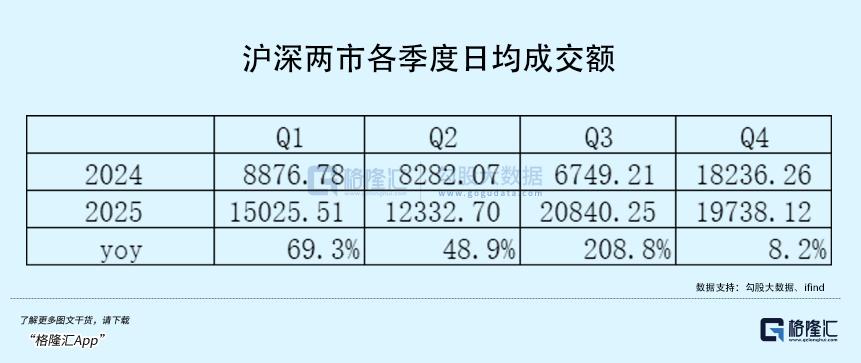
Group 1 - The core viewpoint is that the most distressed investors this year are those in A-share brokerage firms, despite the overall market conditions being relatively stable and the brokerage firms' performance being acceptable [1][3] - The recent speech by the regulatory authority emphasized the need for differentiated supervision, which will benefit high-quality institutions by optimizing risk control indicators and enhancing capital utilization efficiency [3][4] - The average leverage ratio for 43 listed brokerages is 3.47 times, while top institutions approach 5 times, indicating significant room for leverage expansion compared to international investment banks like Goldman Sachs and Morgan Stanley, which exceed 10 times [3][4] Group 2 - The current performance of domestic brokerages is heavily reliant on brokerage-related businesses, which are closely tied to stock market trading volumes [5][6] - The average daily trading volume in the Shanghai and Shenzhen markets is projected to decline, which may lead to moderate performance for brokerages in the upcoming quarters, although there is potential for growth if market conditions improve [6][8] - Current valuation levels for brokerages are low, with price-to-earnings (PE) ratios below opportunity levels and price-to-book (PB) ratios around opportunity levels, suggesting that future growth is already reflected in the current prices [8][12] Group 3 - The market is awaiting two key events: the Federal Reserve's interest rate meeting, which is likely to result in a rate cut, and the detailed outcomes of the Central Economic Work Conference, which may provide further guidance [13] - Historical trends suggest that poor year-end market conditions often lead to a higher probability of a spring market rally in the following quarter [13] - The positioning of non-bank financials and potential leading sectors for the spring rally, as well as the future of traditional consumer sectors like liquor, are under consideration [13]

券商,还有没有救?
格隆汇APP· 2025-12-09 10:24
Group 1 - The core viewpoint of the article is that the current market environment is challenging for investors, particularly in the A-share brokerage sector, despite a general bullish atmosphere in the market [4][5] - The article highlights that the decline in the liquor sector, particularly in Moutai, is expected and not surprising, as the fundamentals indicate a significant drop in performance over the next few quarters [4][8] - The recent speech by the regulatory authority emphasized a differentiated regulatory approach, which could benefit high-quality brokerage firms by allowing them to increase leverage and improve capital efficiency [8][9] Group 2 - The average leverage ratio for 43 listed brokerages is 3.47 times, while top firms approach 5 times, indicating room for growth compared to international investment banks like Goldman Sachs and Morgan Stanley, which exceed 10 times [8][9] - The current valuation of domestic brokerages is low, with price-to-earnings (PE) ratios below opportunity levels and price-to-book (PB) ratios around opportunity levels, suggesting that future growth is already reflected in the current prices [14][18] - The article notes that the performance of brokerages is closely tied to market trading volumes, and while the current quarter may show average results, future quarters could see growth if market conditions improve [12][18] Group 3 - The market is currently awaiting two significant events: the Federal Reserve's interest rate meeting and the details from the Central Economic Work Conference, which could influence market sentiment and trading activity [19] - The article suggests that despite the current downturn, there is potential for a spring rally in the market, particularly for non-bank financials and technology sectors, while questioning the future performance of traditional consumer sectors like liquor [19][21]

资本空间打开,杠杆限制放宽:券商股蓄势待发?
Sou Hu Cai Jing· 2025-12-08 10:38
Core Viewpoint - The regulatory environment for the securities industry is shifting towards a more positive stance, which is expected to catalyze market trends and enhance the development of the brokerage sector [2][3]. Group 1: Regulatory Changes - The regulatory body has proposed to "moderately open capital space and leverage limits," which is seen as a significant benefit for brokerage firms. This change is expected to enhance capital strength, allowing firms to better engage in capital-intensive and innovative derivative businesses [2][3]. - The industry is encouraged to transition from "price competition" to "value competition," with leading firms focusing on resource integration to create internationally influential benchmark institutions, while smaller firms should concentrate on niche markets and specialized services [3][4]. Group 2: Business Opportunities - The three main business areas of brokerage firms are likely to benefit directly from the regulatory changes: 1. Margin trading and securities lending (two-way financing) may see expanded opportunities, meeting investor financing needs and increasing brokerage income from capital intermediation [4]. 2. Proprietary trading could see increased asset allocation in equity assets, enhancing returns through optimized operations related to other comprehensive income (OCI) [4]. 3. International business, which typically has higher leverage, may allow large brokerages to further increase overall leverage through capital increases in their international business segments [4]. Group 3: Industry Consolidation - The regulatory framework will focus on differentiated supervision, promoting the development of quality institutions while imposing stricter regulations on underperforming ones. This is expected to enhance industry concentration and competitiveness [4]. - The use of mergers and acquisitions is encouraged to achieve complementary advantages and efficient resource allocation, aiming to form several internationally influential leading institutions during the "14th Five-Year Plan" period [4].

非银金融行业动态点评:政策松绑助力扩表,看好券商高质量发展
East Money Securities· 2025-12-08 06:46
Investment Rating - The report maintains a "stronger than the market" rating for the non-bank financial sector, indicating an expected increase in performance relative to the market index [3][19]. Core Insights - The China Securities Regulatory Commission (CSRC) has proposed to optimize evaluation indicators for quality institutions and moderately expand capital space and leverage limits, which is expected to enhance the competitiveness of the brokerage industry and support high-quality development [1]. - The report highlights that leverage is a key factor in improving the Return on Equity (ROE) for brokerages, with historical data showing a significant increase in ROE from 3.2% in 2018 to 7.5% in Q3 2025, driven by an increase in client funds leverage from 3.27 times to 4.09 times [6]. - The brokerage industry is expected to continue optimizing its structure, focusing on "large and strong" firms and "small and beautiful" firms, promoting differentiated regulation to enhance the competitive landscape [6]. Summary by Sections Policy and Market Dynamics - The CSRC's recent announcements are aimed at creating a favorable environment for brokerages to increase leverage and expand their balance sheets, which is anticipated to lead to a stronger industry overall [1][6]. Financial Performance Metrics - As of Q3 2025, the leverage ratio for listed brokerages in China stands at 4.09 times, significantly lower than the 12-15 times leverage ratios of leading international investment banks, indicating substantial room for growth in domestic brokerages [6]. - The top ten listed brokerages have a leverage ratio of 4.54 times, while the ratios for the next tiers are 3.59 times and 2.99 times, respectively, suggesting that larger firms are more proactive in capital operations [6]. Investment Recommendations - The report suggests focusing on large brokerages with significant competitive advantages, such as CITIC Securities, China Galaxy, GF Securities, and Huatai Securities, as well as smaller firms with effective niche strategies like Western Securities and Huaxi Securities [7].



吴清提出券商可适度加杠杆,如何解读?
财联社· 2025-12-07 08:29
Core Viewpoint - The speech by the Chairman of the China Securities Regulatory Commission (CSRC), Wu Qing, emphasizes the need to optimize evaluation indicators for quality institutions, appropriately expand capital space and leverage limits, and enhance capital utilization efficiency in the securities industry [1][3][4]. Summary by Sections Policy Changes - The CSRC aims to strengthen classified regulation, allowing for appropriate relaxation of capital space and leverage limits for quality institutions, which is expected to enhance capital utilization efficiency [4][15]. - This is the second time in a year that the CSRC has explicitly mentioned increasing leverage for securities firms, following the revision of risk control indicators in September 2024 [4][9]. Industry Impact - The relaxation of leverage limits is expected to directly benefit securities firms in margin trading, proprietary equity, international business, and derivatives [6][16]. - The average leverage ratio of listed securities firms in China is significantly lower than that of domestic and international financial peers, indicating room for improvement [7][18]. Business Development - The increase in leverage is seen as a core driver for the expansion of capital-intensive businesses, which can enhance overall profitability and return on equity (ROE) [8][25]. - The policy shift marks a transition from price competition to value competition, encouraging firms to focus on high-quality services rather than merely scaling up [10][24]. Mergers and Acquisitions - The increase in capital space and leverage limits is expected to facilitate mergers and acquisitions, which are becoming essential for firms to enhance efficiency and achieve differentiation [11][23]. - Notable mergers, such as Guotai Junan's acquisition of Haitong Securities, exemplify the trend of resource integration and competitive advantage [24]. Long-term Outlook - The optimization of capital leverage is anticipated to open up long-term growth potential for the industry's ROE, pushing the sector towards a healthier and more efficient development model [25][26]. - The focus on quality development and the shift towards professional capabilities are expected to enhance the industry's resilience and profitability [26]. Challenges Ahead - Despite the policy changes, firms face challenges such as an "asset shortage," limiting their ability to effectively utilize increased leverage [27]. - Traditional high-leverage business channels are constrained, and international business potential is hindered by cross-border capital flow restrictions [27].