功能性服饰

Search documents
纺服行业2026年度策略:看好上游订单恢复,关注“应变求新”品牌
Soochow Securities· 2025-12-11 14:22
Core Insights - The report is optimistic about the recovery of upstream orders and emphasizes the importance of brands that can adapt and innovate in response to consumer needs [2][19]. Brand Apparel - The domestic brand apparel industry has entered a phase of stock competition, with limited growth opportunities. The performance of leading brands is increasingly reliant on their ability to attract consumers rather than on channel expansion [2][19]. - Three key areas for growth are identified: new home textiles, functional apparel, and strongly differentiated brands. Notable recommendations include: - New Home Textiles: Driven by the sleep economy and self-care consumption, brands like Mercury Home Textiles and Luolai Life are expected to perform well [2]. - Functional Apparel: Brands such as Anta Sports, Li Ning, and Bosideng are positioned to benefit from the growing health and outdoor lifestyle trends [2]. - Strongly Differentiated Brands: Companies like Cotton Era, focusing on 100% cotton products, are experiencing rapid growth [2]. - High dividend stocks recommended include Hailan Home, Luolai Life, and Semir Apparel [2]. Textile Manufacturing - The report notes a decrease in uncertainty regarding tariff policies, stabilization in European and American retail, and low inventory levels among international brands, suggesting a potential recovery in upstream orders [2][19]. - Recommendations for textile manufacturing companies include Shenzhou International, Weixing Co., and Huali Group, with a focus on high dividend stocks like Yuyuan Group and Jingyuan International [2]. Market Performance Review - The textile and apparel sector has seen a slight underperformance compared to the broader market, with a year-to-date increase of 12.45% as of December 9, 2025, compared to a 16.84% increase in the CSI 300 index [7][10]. - The apparel and home textile segments have shown similar performance, while the accessories segment has outperformed, with a 17.1% increase [13][14]. Consumer Environment - The domestic consumption environment remains weak, with apparel retail performance lagging behind overall retail growth. For instance, the cumulative year-on-year growth for apparel retail was only 2.9% from January to October 2025 [27][23]. - The consumer confidence index has shown a slight recovery but remains at historical low levels, indicating ongoing challenges in consumer spending [25][27]. Company Performance - The report highlights that many key apparel companies have experienced revenue declines, while a few have maintained growth. For example, companies like Anta, Li Ning, and Bosideng have shown consistent revenue expansion [30][32]. - The profitability of the brand apparel sector has been under pressure, with net profits not keeping pace with revenue growth in many cases [28][32].



申洲国际(02313.HK):坚定长期主义 需求边际改善 龙头优势凸显
Ge Long Hui· 2025-12-01 04:05
Core Viewpoint - The company, as one of Asia's largest integrated knitwear manufacturers, is expected to achieve a revenue CAGR of over 10% from 2025 to 2026, driven by improving trends among core clients such as Nike and Fast Retailing [1][2]. Client Trends - Recent improvements in Nike's operations and normalized inventory levels in North America suggest a strong order recovery, with expectations for healthy growth in orders by 2026 [1]. - Fast Retailing is guiding for a 10.3% revenue growth in FY2026, while Adidas continues to perform well, indicating strong order growth for the company [1]. - PUMA is currently in a transitional phase, with stable short-term orders anticipated, while other clients are expected to see healthy growth in order volumes [1]. Product Categories - The leisure category is projected to grow rapidly in 2025, with significant events like the Winter Olympics and World Cup in 2026 likely to accelerate growth in the sports category, although the proportion of leisure products may decrease compared to 2025 [1]. Long-term Capacity and Market Position - The company has consistently invested in long-term asset construction, leading to a unique integrated supply chain that is expected to enhance market share [2]. - By the end of 2024, the workforce is projected to reach 103,000, a 12% increase year-on-year, with further growth expected in 2025 [2]. - The company is expanding overseas capacity, particularly in Vietnam and Cambodia, which currently account for over 50% of garment production capacity, with plans to enter the Indonesian market [2]. Industry Growth Potential - The global and Chinese sportswear markets are expected to benefit from increasing penetration rates, providing long-term order demand growth for the company [2]. - The company is well-positioned to leverage its superior fabric development capabilities to enhance product collaboration with clients, strengthening competitive advantages [2]. Financial Projections - Revenue forecasts for 2025, 2026, and 2027 are estimated at 31.61 billion, 35.15 billion, and 39.07 billion yuan, reflecting year-on-year growth rates of 10.3%, 11.2%, and 11.1% respectively [3]. - Gross margins are projected to improve, with estimates of 27.4%, 28.2%, and 28.3% for the same years, as efficiency gains from new hires offset initial cost increases [3]. - Net profit forecasts for the same period are 6.47 billion, 7.45 billion, and 8.29 billion yuan, with net profit margins of 20.5%, 21.2%, and 21.2% respectively [3]. Investment Outlook - The company's stock performance has diverged from Nike's since Q2 2025, with expectations for a recovery in core client orders leading to a phase of capacity-driven growth and improved profitability in 2026 [4]. - The current stock price corresponds to a PE ratio of 12.4 times for 2026, with a reasonable target PE of 15 times, indicating a potential upside of approximately 20% [4].
188元的外卖服,新中产人手一件
首席商业评论· 2025-11-29 05:08
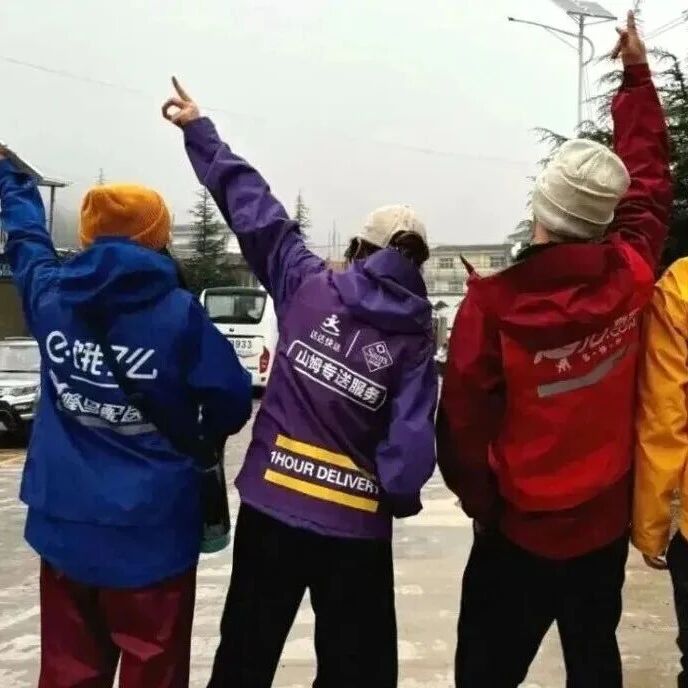
Core Viewpoint - The article discusses the rising popularity of delivery uniforms as fashionable outdoor wear, particularly in urban settings, highlighting their functionality and appeal to a broader consumer base beyond delivery riders [4][18][32]. Group 1: Market Trends - Delivery uniforms have transitioned from being solely work attire to becoming trendy outdoor clothing, with significant sales on e-commerce platforms and second-hand markets [6][12]. - A specific e-commerce store reported sales of over 10,000 units for a Meituan delivery jacket, indicating strong consumer interest [6]. - The outdoor apparel market in China is projected to reach 522.7 billion yuan by 2024, with outdoor clothing accounting for 46% of this market [32][34]. Group 2: Consumer Behavior - Consumers are increasingly purchasing delivery uniforms for their practicality, affordability, and aesthetic appeal, with many using them in casual settings like skiing [18][20]. - The article notes that the appeal of these uniforms extends beyond functionality, as they represent a humorous and relatable aspect of urban life [20][21]. - A shift in consumer preferences is observed, where functionality and comfort are prioritized over style, with casual and sporty clothing becoming more popular [37]. Group 3: Product Features and Comparisons - The new delivery uniforms emphasize safety features, such as reflective strips and durable materials, positioning them competitively against established outdoor brands [25][30]. - The price of the new delivery uniform set is 188 yuan, significantly lower than mainstream outdoor brands, which often exceed 300 yuan for similar items [12][30]. - Despite the positive aspects, some delivery riders express dissatisfaction with the new uniforms, citing issues like short collars and excessive branding [21][25].

优衣库中国,改革“蓄力”
Sou Hu Cai Jing· 2025-10-11 06:05
Core Insights - Fast Retailing Group, the parent company of Uniqlo, reported record-high performance for the fourth consecutive fiscal year ending in 2025, with significant contributions from both domestic and overseas operations [1][2] Financial Performance - In fiscal year 2025, Uniqlo's total revenue reached 3,400.5 billion yen, a 9.6% increase from the previous year, maintaining a leading position in the global apparel retail industry [2] - Operating profit rose by 13.6% to 551.1 billion yen, while net profit attributable to the parent company increased by 16.4% to 433.0 billion yen, indicating a stronger profit growth compared to revenue [2] - Uniqlo's inventory turnover days decreased to 118 days, down by 10 days from the previous fiscal year, alleviating inventory pressure and enhancing the efficiency of new product launches [2] Business Segments - Uniqlo remains the core brand of Fast Retailing, generating 2.9 trillion yen in revenue, accounting for approximately 86.4% of total revenue [2] - The GU brand contributed 330.7 billion yen (9.7%), while global brands accounted for 131.5 billion yen (3.9%) [2] Market Position - Uniqlo secured a 1.4% share of the global apparel market, ranking third, driven by stable sales of functional products like HEATTECH and AIRism [3] - The brand's competitive advantage stems from continuous fabric research and data-driven operations, balancing cost-effectiveness and brand strength [3] Domestic Market Performance - Uniqlo's domestic business in Japan achieved a record revenue of 1.03 trillion yen, marking a 10% year-on-year increase, making it the first Japanese apparel brand to surpass the trillion-yen mark in domestic sales [5] - The company has strategically reduced the number of stores by over 30 in the past five years, focusing on enhancing the quality of individual stores [6] International Market Growth - Uniqlo's overseas revenue reached 1.9102 trillion yen, an 11.6% increase, surpassing 55% of total revenue, solidifying its role as a key growth driver [7] - The North American market saw a revenue increase of 24.5% to 271.1 billion yen, while Europe experienced a 33.6% growth to 369.5 billion yen [9] Challenges in Greater China - The Greater China market faced a revenue decline of 4% and a profit drop of 10%, prompting Fast Retailing to implement structural reforms [9][11] - The company is shifting its focus from rapid store expansion to improving the profitability of individual stores, with plans to close or renovate about 50 stores annually [11] Product and Cultural Strategy - Uniqlo is enhancing its product strategy by focusing on functional innovation and local cultural integration, launching customized products to meet diverse consumer needs [12][14] - Collaborations with local cultural institutions and artists have been part of Uniqlo's strategy to strengthen its brand appeal and connect with consumers [15] Future Outlook - The management anticipates a cautious outlook for the Greater China market, expecting revenue and profit to decline by approximately 10% in the latter half of fiscal year 2025 [18] - Despite challenges, there are signs of positive developments as the company continues to refine its operational strategies to adapt to market conditions [18]