化肥减量增效

Search documents
新洋丰两大创新产品入选省级科学施肥名录 以“减肥增效”递交绿色答卷
Zhong Guo Jing Ji Wang· 2026-02-13 04:26
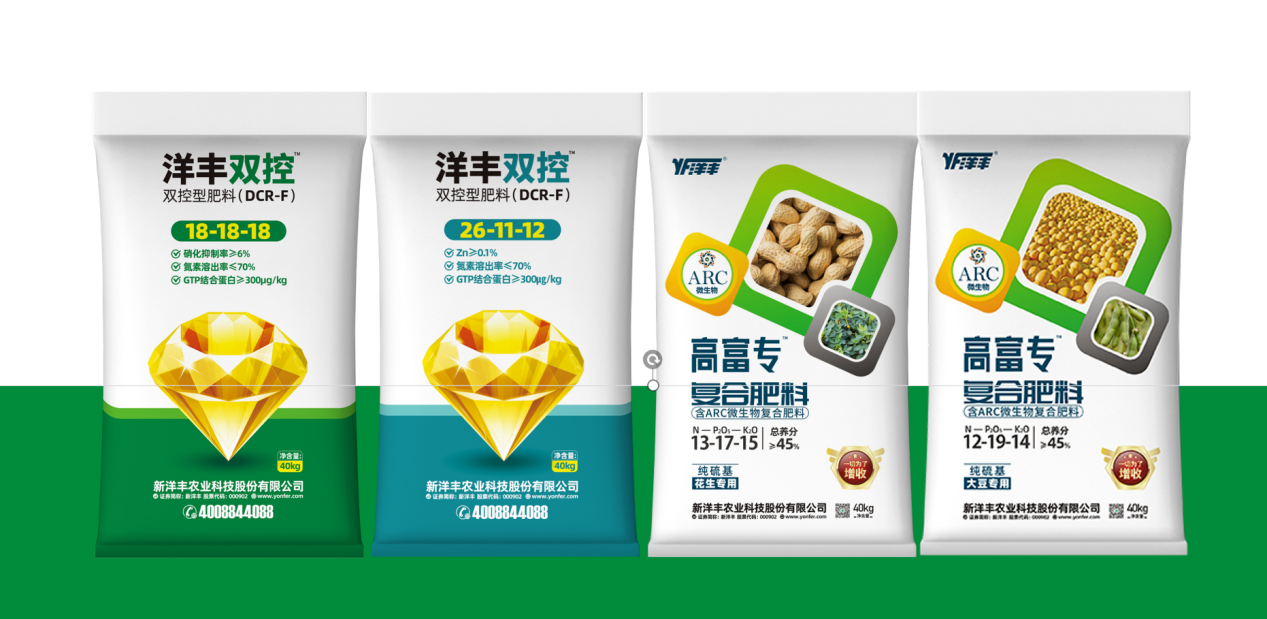
Core Insights - New Yangfeng's innovative products "Yangfeng Dual Control" and "Gaofu Special ARC" have been officially recognized in Hubei Province's scientific fertilization product directory, contributing to the goal of reducing fertilizer use while increasing efficiency in agriculture [1][5][12] Group 1: Scientific Fertilization and Technology - The Ministry of Agriculture and Rural Affairs has been promoting the reduction and efficiency of chemical fertilizers since the 14th Five-Year Plan, aiming for over 95% coverage of soil testing and formula fertilization technology for major grain crops by 2025, with a chemical fertilizer utilization rate of 43.3%, an increase of 3.1 percentage points from 2020 [2] - New Yangfeng focuses on "high efficiency, specialization, environmental protection, and functionality" in its scientific fertilization technology, addressing traditional agricultural challenges through innovative solutions [5][12] Group 2: Product Innovations - The "Yangfeng Dual Control" fertilizer utilizes DCR dual control technology to extend nutrient effectiveness and meet the balanced nutritional needs of crops throughout their growth cycle, while the "Gaofu Special ARC" fertilizer, developed in collaboration with the Chinese Academy of Agricultural Sciences, effectively combines microbial agents with high-quality compound fertilizers to enhance oilseed crop yields [7][12] - The "Yangfeng Dual Control" fertilizer has demonstrated significant results in various regions, with rice yields increasing by 60 kg per mu in Heilongjiang and corn yields increasing by 98 kg per mu in Inner Mongolia, showcasing its effectiveness in improving nutrient utilization and crop resilience [11] Group 3: Agricultural Impact and Future Directions - New Yangfeng's innovative technologies have led to an average yield increase of 8%-10% for field crops and over 10% for economic crops, with new fertilizers improving utilization rates by 10-20% [13] - The company aims to continue its "innovation-driven, green development" strategy, focusing on the promotion and application of green fertilizers to enhance soil health and agricultural productivity, contributing to food security and rural revitalization [13]


研判2025!中国硝酸铵钙生产工艺、产业链图谱、供需现状、市场规模、竞争格局及发展趋势分析:蔬菜种植领域需求占比超60%[图]
Chan Ye Xin Xi Wang· 2026-01-09 02:03
Core Viewpoint - The demand for calcium ammonium nitrate (CAN) is increasing due to its advantages in efficiency and environmental safety, despite a decline in market size due to falling prices [1][9]. Overview - Calcium ammonium nitrate is a new type of high-efficiency compound fertilizer that provides fast-acting nitrogen and calcium, is fully water-soluble, and improves soil quality [1][2]. Market Policy - The Chinese government has implemented various policies to support the development of the fertilizer industry, including CAN, promoting technological innovation and environmental sustainability [6]. Industry Chain - The upstream of the CAN industry includes suppliers of raw materials like nitric acid and limestone, while the downstream encompasses various agricultural applications, particularly in vegetable cultivation [6][8]. Current Development - The demand for CAN in China is projected to reach 1.751 million tons in 2024, a year-on-year increase of 4.8%, but the market size is expected to decline to 2.044 billion yuan, a decrease of 7.8% [1][9]. Competitive Landscape - The CAN market is experiencing a phase of consolidation, with major players like Ba Tian and Jin Lan focusing on technological innovation and cost control, while smaller companies face challenges due to stricter regulations [10][11]. Development Trends - The industry is expected to shift towards low-carbon and environmentally friendly practices, with an emphasis on technological upgrades and product diversification to meet evolving market demands [12][13][14].


农业农村部:2025年我国三大粮食作物化肥利用率达43.3%
Xin Hua She· 2026-01-07 09:38
Core Insights - The core viewpoint of the article is that by 2025, the fertilizer utilization rate for major grain crops in China, including wheat, corn, and rice, is projected to reach 43.3%, an increase of 3.1 percentage points compared to 2020 [1]. Group 1: Fertilizer Utilization Rate - The fertilizer utilization rate for wheat, corn, and rice is expected to improve to 43.3% by 2025 [1]. - This represents a 3.1 percentage point increase from the 2020 level [1]. Group 2: Contributing Factors - The continuous improvement in fertilizer utilization is attributed to systematic policy guidance, technological innovation, and optimized promotion services [1]. - Since the start of the "14th Five-Year Plan," the Ministry of Agriculture and Rural Affairs has been actively promoting actions to reduce fertilizer use while increasing efficiency [1]. - Initiatives include the implementation of green planting and breeding cycles, deepening soil testing and formula fertilization, and fostering specialized scientific fertilization service organizations [1].
我国科学施肥水平提升 肥水管理向精准化、绿色化、专业化全面升级
Yang Shi Wang· 2026-01-06 06:10
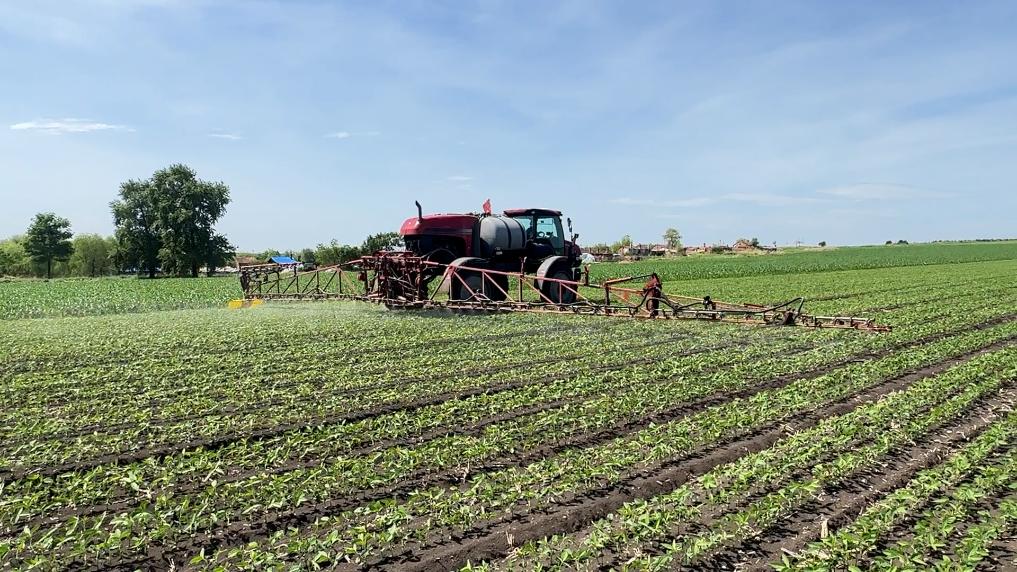
Core Insights - The utilization rate of fertilizers for the three major grain crops in China (wheat, corn, and rice) is projected to reach 43.3% by 2025, an increase of 3.1 percentage points compared to 2020 [1][3][8] - The "14th Five-Year Plan" has initiated actions to reduce fertilizer usage while increasing efficiency, leading to a steady improvement in fertilizer utilization rates for these crops [3][8] Group 1 - By 2025, the coverage rate of soil testing and formula fertilization technology for the three major grain crops is expected to exceed 95% [4] - The area for deep fertilization in rice has surpassed 26 million mu, with nitrogen fertilizer utilization increasing by 2.1 percentage points [4] - The integration of water and fertilizer for corn and wheat has increased by over 20 million mu compared to the previous year, supporting an average yield increase of over 100 kg per mu in demonstration areas [4] Group 2 - The increase in fertilizer utilization rates signifies an advancement in scientific fertilization levels, which is crucial for ensuring grain production capacity, promoting a comprehensive green transformation in agriculture, and enhancing farmers' income [8][10] - Currently, the fertilizer utilization rates for the three major grain crops have entered the international upper-middle level range of 40%-50% [10] - The Ministry of Agriculture and Rural Affairs plans to accelerate the establishment of a modern scientific fertilization technology system, policy management system, and social service system to promote precision, greening, and professional upgrades in fertilizer and water management [11]
2025年全国有机肥施用面积超过6.5亿亩次
Xin Hua She· 2026-01-06 03:14
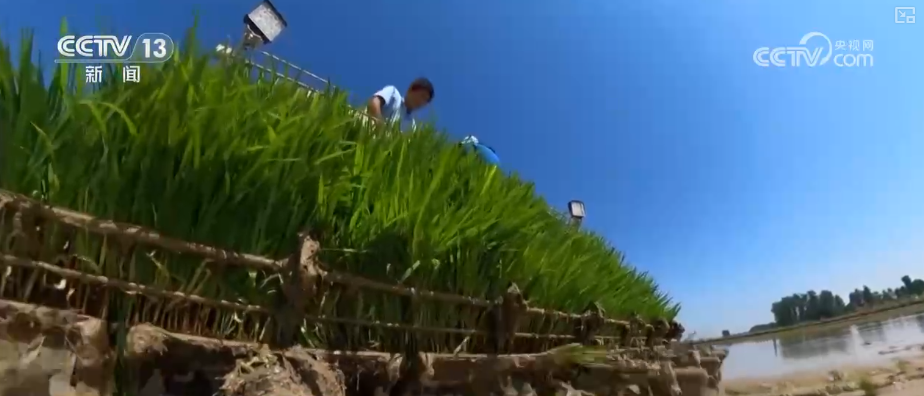
Core Insights - The utilization rate of fertilizers for major grain crops in China is projected to reach 43.3% by 2025, an increase of 3.1 percentage points from 2020, driven by policy guidance, technological innovation, and optimized service promotion [1][2] Group 1: Fertilizer Utilization Improvement - Continuous improvement in fertilizer utilization is a result of systematic policy guidance, technological integration, and optimized service collaboration [1] - The Ministry of Agriculture and Rural Affairs has been actively promoting the reduction and efficiency of fertilizer use since the start of the 14th Five-Year Plan [1] - By 2025, the coverage rate of soil testing and formula fertilization technology for the three major grain crops is expected to exceed 95% [1] Group 2: Technological Advancements and Practices - The promotion of new scientific fertilization products, technologies, and machinery is expected to enhance efficiency, with over 26 million acres of rice utilizing deep side fertilization by 2025 [1] - The integration of water and fertilizer for corn and wheat has increased by over 20 million acres compared to the previous year, supporting an average yield increase of over 100 kilograms in demonstration areas [1] Group 3: Nutrient Management and Organic Fertilizers - The cumulative promotion of soybean inoculation with root nodule bacteria has reached nearly 8 million acres, reducing nitrogen fertilizer usage by an average of 0.5 kg per acre [2] - By 2025, the area for organic fertilizer application is expected to exceed 650 million acres, with pilot projects in green and circular agriculture achieving an average reduction of 10% in chemical fertilizer usage [2] Group 4: Professional Services and Support - There are currently over 17,000 socialized scientific fertilization service organizations in China, servicing an area of 250 million acres annually [2] - The establishment of over 2,200 intelligent fertilization service points has resulted in the distribution of over 4 million tons of fertilizers annually, significantly contributing to the increase in fertilizer utilization rates [2]
2025年我国三大粮食作物化肥利用率达43.3%
Xin Hua Wang· 2026-01-04 14:31
Core Insights - The utilization rate of fertilizers for major grain crops in China is projected to reach 43.3% by 2025, an increase of 3.1 percentage points from 2020, driven by policy guidance, technological innovation, and optimized service promotion [1][2] Group 1: Fertilizer Utilization Improvement - Continuous improvement in fertilizer utilization is a result of systematic policy guidance, integrated technological innovation, and collaborative service optimization [1] - The Ministry of Agriculture and Rural Affairs has been actively promoting the reduction and efficiency of fertilizer use since the "14th Five-Year Plan," implementing green farming practices and enhancing soil testing and fertilizer application [1] Group 2: Soil Testing and Fertilizer Application - During the "14th Five-Year Plan," soil testing and fertilizer optimization have been widely conducted, with a target of achieving over 95% coverage of soil testing and formula fertilization technology for major grain crops by 2025 [1] - The integration of new scientific fertilization products, technologies, and machinery is being promoted, with over 26 million acres of rice utilizing deep fertilization techniques by 2025 [1] Group 3: Nutrient Coordination and Efficiency - The promotion of soybean inoculation with root nodule bacteria has been implemented on nearly 8 million acres, resulting in an average reduction of nitrogen fertilizer application by 0.5 kg per acre [2] - By 2025, the area for organic fertilizer application is expected to exceed 650 million acres, with pilot projects in green farming reducing chemical fertilizer use by an average of 10% [2] Group 4: Professional Services and Technology Implementation - There are currently over 17,000 socialized scientific fertilization service organizations in China, servicing an area of 250 million acres annually [2] - The establishment of over 2,200 intelligent fertilizer application service points has facilitated the distribution of more than 4 million tons of fertilizer annually, significantly enhancing fertilizer utilization rates [2]
让“黑土生金”,为农业赋能
Zhong Guo Hua Gong Bao· 2025-12-26 06:22
Core Insights - The article emphasizes the transformative role of "new quality humic acid" in promoting agricultural green development and ensuring food security in China [1][2][11] Group 1: Agricultural Transformation - The agricultural sector in China is undergoing a green transformation, focusing on soil health and efficient fertilizer use [2][4] - New quality humic acid is identified as a key driver for this transformation, enhancing soil structure and fertilizer efficiency [4][12] Group 2: Industry Development - The humic acid industry has established a complete ecosystem with both ecological and economic value, supported by government policies and industry standards [7][8] - The production of humic acid products is expanding, with a projected increase in humic acid urea production to 791,000 tons in 2024, reflecting a 29.2% year-on-year growth [16] Group 3: Technological Innovation - Technological advancements are crucial for the high-quality development of the humic acid industry, overcoming traditional product limitations [11][12] - Companies like Xinyanxin are leading the way in standardizing humic acid products, enhancing quality control and market competitiveness [10][12] Group 4: Market Impact - The application of new quality humic acid is yielding significant benefits for farmers, including increased crop yields and improved soil health [15][16] - The market share of humic acid products is growing, with leading companies capturing over 50% of the market, indicating a shift in industry dynamics [16][17] Group 5: Future Outlook - The industry is poised for further growth, with projections indicating that by 2030, the penetration rate of humic acid in fertilizers could exceed 50%, potentially creating a market worth over 200 billion yuan [18][19] - The "New Xiang Initiative" outlines a vision for the industry to enhance soil health and promote sustainable agricultural practices through collaborative efforts [19][20]
趋势研判!2025年中国缓控释复合肥行业政策、产业链图谱、行业产量、企业布局及未来发展趋势分析:政策需求双轮驱动,缓控释肥产量有望突破540万吨[图]
Chan Ye Xin Xi Wang· 2025-12-19 01:09
Core Viewpoint - The slow-release compound fertilizer industry is experiencing significant growth driven by government policies promoting efficient and environmentally friendly fertilizers, with a projected market size of 312.7 billion yuan in China by 2024, and a compound annual growth rate (CAGR) of over 5% expected for production by 2025 [1][10]. Group 1: Industry Overview - Slow-release compound fertilizers utilize physical, chemical, or biological technologies to precisely control nutrient release, matching crop needs and improving nutrient utilization rates by 30%-50% [1][2]. - The industry is transitioning from economic crops to field crops, with the market for slow-release fertilizers expected to expand significantly due to their comprehensive advantages [1][10]. - The Chinese fertilizer market is projected to reach 312.7 billion yuan in 2024, with compound fertilizers accounting for nearly 50% of the application volume, solidifying their role as a market core [1][10]. Group 2: Policy Environment - The Chinese government has implemented multiple policies to encourage the development of efficient and environmentally friendly fertilizers, positioning slow-release compound fertilizers as a key component in promoting agricultural green development [1][6]. - Key policy documents include the "Action Plan for Reducing Chemical Fertilizer Use by 2025" and the "Guidelines for Promoting Agricultural Modernization," which collectively support the growth of the slow-release fertilizer sector [1][6]. Group 3: Industry Chain - The industry chain consists of upstream suppliers of nitrogen, phosphorus, potassium fertilizers, and coating materials, with midstream production focused on slow-release fertilizer manufacturers utilizing various technologies [1][8]. - The downstream application primarily serves agriculture, with nearly half of the demand coming from economic crops, while non-agricultural sectors like landscaping are also emerging [1][8]. Group 4: Competitive Landscape - The industry is characterized by a competitive landscape dominated by leading companies such as Kingenta, Stanley, and Ba Tian, which leverage technology and scale to establish market barriers [1][11]. - These leading firms are innovating in areas such as biodegradable coating technology and specialized fertilizers tailored to crop growth stages, enhancing their competitive edge [1][11]. Group 5: Future Trends - The slow-release compound fertilizer industry is expected to evolve towards precision technology, market structure optimization, and global collaboration, focusing on biodegradable materials and smart technology integration [1][12]. - The dual drive of policy and market demand will continue to shape the industry, leading to increased concentration and a shift towards specialized and functional products [1][14]. - Companies are likely to expand their applications beyond traditional agriculture into areas like ecological restoration, enhancing growth opportunities [1][15].


研判2025!中国水溶性肥料行业政策、产业链全景、发展现状、细分市场及未来发展趋势分析:市场规模有望突破860亿元,含氨基酸水溶肥成核心增长动力[图]
Chan Ye Xin Xi Wang· 2025-12-19 01:08
Core Insights - Water-soluble fertilizers are identified as a new type of efficient fertilizer that aligns with the needs of modern agriculture, emphasizing "convertibility" and "functional orientation" [1] - The Chinese market for water-soluble fertilizers is experiencing rapid growth, driven by policy support, expansion of facility agriculture, and increased demand for economic crops [1][9] - The industry is expected to focus on product functionality and precision in application scenarios, promoting integrated development of "products + services" [1][13] Industry Overview - Water-soluble fertilizers (WSF) are multi-nutrient fertilizers that completely dissolve in water, allowing for direct application through various irrigation systems [2] - The market has evolved from a focus on large element fertilizers to a diversified system that includes medium and trace elements, functional fertilizers, and organic water-soluble fertilizers [9] Market Growth - The market size of water-soluble fertilizers in China grew from 41.27 billion yuan in 2020 to 73.29 billion yuan in 2024, with a compound annual growth rate (CAGR) of 15.4% [9] - By 2025, the market size is projected to exceed 86 billion yuan, indicating sustained high growth [9] Product Structure - The product structure has shifted from primarily large element fertilizers to a diverse range that includes functional products like amino acid water-soluble fertilizers, which are expected to increase their market share from 25% to 35% by 2025 [9][11] - Amino acid water-soluble fertilizers are projected to reach a market size of over 30 billion yuan by 2025, driven by demand in high-value crops [11] Competitive Landscape - The industry is characterized by leading domestic companies like Kingenta, Xinlongfeng, and Yuntianhua, which hold approximately 65% of the market share [12] - International companies occupy about 20% of the high-end market, leveraging advanced technology and forming strategic partnerships with local firms [12] Development Trends - The industry is moving towards product functionality and precision application, with a focus on developing specialized formulations for different crops and soil types [13][14] - The business model is evolving from product sales to integrated services, including soil testing and tailored fertilization solutions [15] - Regulatory frameworks are tightening, promoting high-quality and environmentally friendly fertilizer production, which will drive the exit of outdated capacities and enhance industry standards [16]

39页|2025年化肥行业低碳发展系列研究报告-中国化肥减量增效十年之路
Sou Hu Cai Jing· 2025-12-07 02:43
Core Viewpoint - The Chinese fertilizer industry has achieved significant reduction and efficiency improvements over the past decade, becoming a key example of sustainable agricultural transformation globally. Since the launch of the "Zero Growth Action for Fertilizer Use" in 2015, the national fertilizer application has decreased for nine consecutive years, from 60.23 million tons to 49.88 million tons, a reduction of 17.2% [1][13][35]. Group 1: Industry Transformation and Achievements - The fertilizer application rate for the three major grain crops has increased from 35% to 42.6%, indicating more scientific and precise fertilization methods [1][13]. - The total grain production in China has remained stable at over 1.3 trillion jin since 2015, with a projected first-time increase to over 1.4 trillion jin in 2024, further ensuring food security [1][13]. - The actions taken have cumulatively avoided approximately 126 million tons of fertilizer application from 2015 to 2024 [1][35]. Group 2: Policy and Market Mechanisms - The transformation of the fertilizer industry is a result of multiple policies and market mechanisms working in synergy, involving technological innovation, management optimization, and production structure adjustments [1][12]. - The "dual carbon" goals of the state are driving the fertilizer industry towards a green and low-carbon direction, facing complex challenges in balancing food security, environmental protection, and economic benefits [1][12]. Group 3: Global Context and Future Outlook - The process reflects not only domestic agricultural modernization but also provides reference value for global agricultural sustainable development [2]. - The fertilizer industry must explore more efficient and environmentally friendly development paths to support the dual goals of food security and ecological protection [2].