医药IPO

Search documents
营收不足40万元、负债率近416%,征祥医药递表港交所
Bei Jing Shang Bao· 2026-02-03 10:08
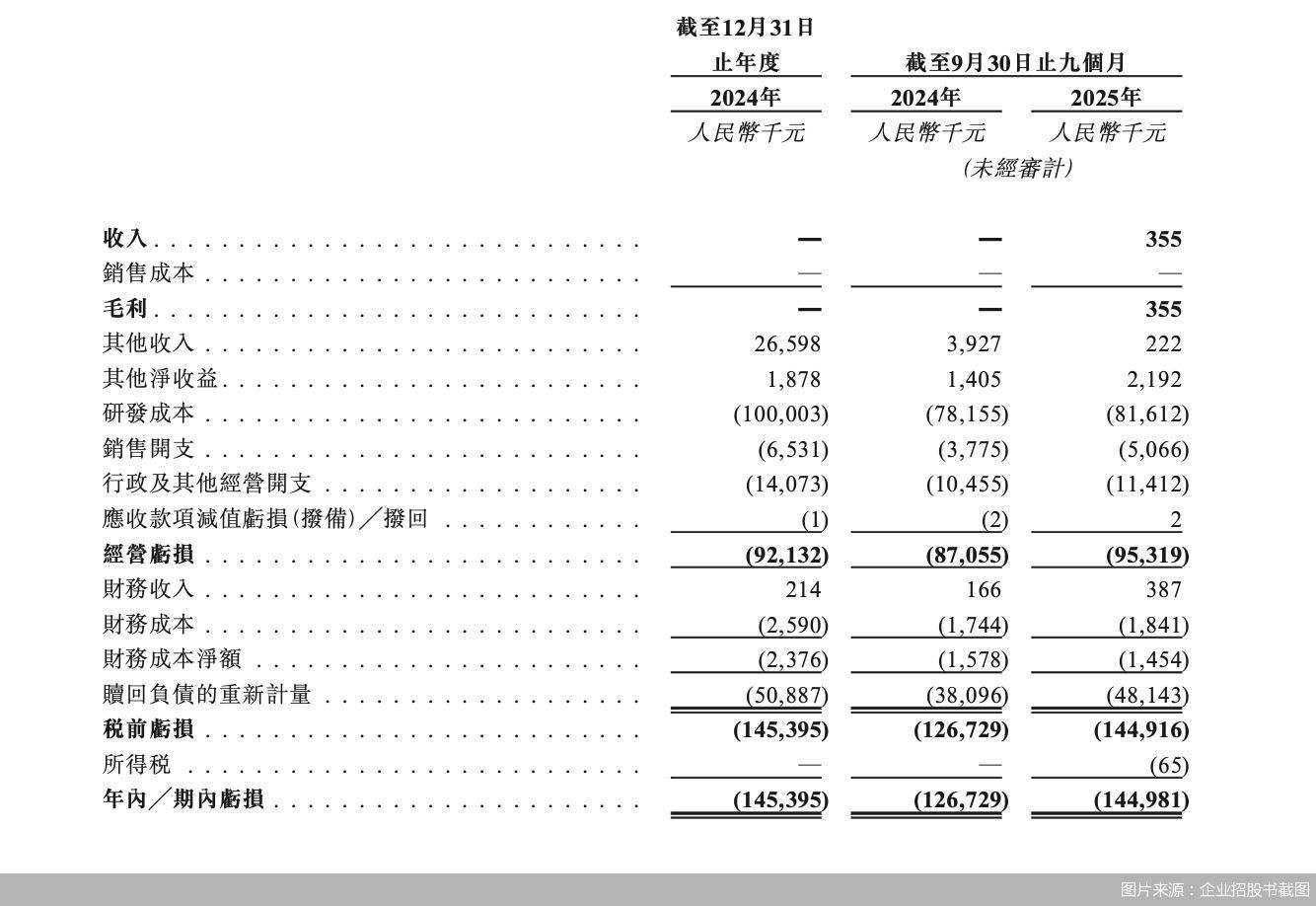
Core Viewpoint - Zhengxiang Pharmaceutical is heavily indebted and is betting its future on a newly approved flu drug, initiating a listing process on the Hong Kong Stock Exchange to alleviate financial pressure and seek funding for development [1] Financial Performance - For the fiscal year 2024 and the first three quarters of 2025, Zhengxiang Pharmaceutical's revenue is projected to be 0 and 355,000 RMB respectively, primarily from drug registration assistance rather than product sales [3] - The company has reported cumulative losses of approximately 1.45 billion RMB for both 2024 and the first three quarters of 2025, with R&D costs of 1 billion RMB and 816.12 million RMB respectively [3] - As of September 2025, the total liabilities of Zhengxiang Pharmaceutical are around 1.26 billion RMB, with a net debt of approximately 956 million RMB and a staggering debt-to-asset ratio of 415.84% [4] Market Competition - The flu antiviral drug market in China is expected to reach 5.7 billion RMB in 2024, with projections to grow to 13.6 billion RMB by 2035, indicating a highly competitive landscape [6] - Zhengxiang Pharmaceutical's core product, Marcilosavir, faces intense competition from established players like Qingfeng Pharmaceutical and Zhongsheng Pharmaceutical, which have already entered the insurance reimbursement list [5][6] - Marcilosavir is priced at 222 RMB per box, similar to Roche's product, but competitors offer lower prices, making it less competitive in terms of cost-effectiveness [6][7] Strategic Initiatives - Zhengxiang Pharmaceutical is attempting to differentiate itself by expanding the indications for Marcilosavir and submitting a New Drug Application (NDA) for treating flu in adolescents [7] - The company aims to leverage different formulations and indications to find new growth opportunities, although it faces significant challenges in gaining market share against established competitors [7]

2025年中国医药产业十大谜团
3 6 Ke· 2025-12-29 13:40
Group 1: Industry Overview - The Chinese innovative drug industry is experiencing a significant recovery in 2025, with record high external BD totals and an increase in the number of drug approvals [1][2] - Despite the positive trends, there are concerns about the sustainability of the market, high valuations of some companies, and the potential for structural differentiation in the industry [2][3] Group 2: IPO Market - The IPO market for innovative drug companies has seen a resurgence, with many firms successfully listing on the Hong Kong stock exchange and exceeding fundraising expectations [3][4] - However, the market experienced a downturn in December, with initial public offerings facing challenges such as market sentiment cooling and stricter regulatory scrutiny [4] Group 3: Commercial Insurance and Drug Pricing - The introduction of a commercial insurance directory for innovative drugs aims to address the payment challenges associated with high-priced therapies, with 24 drugs participating in price negotiations [4][5] - The negotiated price reductions for these drugs range from 15% to 50%, but the effectiveness of this new payment model in promoting clinical use remains to be seen [5] Group 4: BD Opportunities and Challenges - The trend of significant BD transactions continues, with companies like 3SBio and Innovent Biologics leading the way, prompting speculation about the next major BD opportunities [6][7] - There is a growing concern about the legal risks associated with BD transactions, as the industry may face an increase in litigation related to these deals [8] Group 5: Future Prospects and Uncertainties - Key questions remain regarding the future of companies like Summit, including potential acquisitions and the performance of their clinical trials [9][10] - The domestic vaccine sector is struggling, with significant declines in stock prices and ongoing challenges related to product differentiation and commercialization [11] - Geopolitical factors continue to pose risks to the innovative drug sector, with ongoing uncertainties regarding regulatory policies and market access [12] Group 6: Unexpected Developments - Some biotech companies have made surprising decisions, such as the acquisition of Lixte Biotechnology by China National Pharmaceutical Group, which deviated from expectations of an independent IPO [13][14] - The sudden dissolution of Run Biotech highlights the high-risk nature of the industry and the challenges of balancing short-term financial returns with long-term innovation [15]

海纳医药IPO:业绩承压现金持续流出应收账款激增 递表前夕部分投资机构已选择退出
Xin Lang Zheng Quan· 2025-11-28 07:48
Core Viewpoint - Haina Pharmaceutical is attempting to list on the Hong Kong Stock Exchange after two previous failed attempts, facing significant financial challenges including declining revenue and profits, negative cash flow, and high accounts receivable [1][2]. Financial Performance - Haina Pharmaceutical's revenue grew from 265 million RMB in 2022 to 425 million RMB in 2024, but the growth rate slowed significantly from 54.74% in 2023 to 3.65% in 2024 [2]. - In the first half of 2025, the company reported a 16.97% year-on-year decline in revenue to 178 million RMB and a 24% drop in net profit to 22.08 million RMB [2]. - The gross profit margin decreased from 60.1% in 2022 to 47.1% in 2024, with a slight recovery to 52.1% in the first half of 2025, still below historical highs [2]. Business Model and Market Challenges - Haina Pharmaceutical operates under a dual model of "CXO services + MAH transfer," but has faced significant revenue declines in drug technology transfer and proprietary drug sales, with revenues dropping from 127 million RMB in 2023 to 51.98 million RMB in 2024 [2][4]. - The competitive landscape in the CXO sector is intensifying, with Haina's core CXO service revenue decreasing by 26% year-on-year to 132 million RMB in the first half of 2025 [5]. Accounts Receivable and Cash Flow Issues - The company's trade receivables surged from 44.68 million RMB at the end of 2022 to 176 million RMB by June 2025, indicating a nearly threefold increase [5]. - The cash flow from operating activities has been negative, with net outflows of 34.57 million RMB in 2024 and 42.45 million RMB in the first half of 2025, leading to a 67.19% decline in cash and cash equivalents from the end of 2023 [6]. Capital Market Attempts - Haina Pharmaceutical has made three attempts to enter the capital market within three years, with the latest being a submission to the Hong Kong Stock Exchange after a failed IPO on the A-share market and a terminated acquisition deal with Chengdu Xian Dao [7][8]. - Prior to the IPO, the company had received multiple rounds of financing, with a D-round in August 2022 raising 100 million RMB at a post-money valuation of 1.58 billion RMB, but these rounds included performance-based clauses [8]. Investor Sentiment - Some early investors have chosen to exit before the IPO, indicating cautious sentiment regarding the company's prospects, with a total of 5.76% of shares transferred by certain investors in July and August 2025 [9].

药企赴港IPO火爆,半个月8家递表,基石投资者“快看不过来了”
第一财经· 2025-11-15 13:45
Core Viewpoint - The article discusses the surge in IPO applications from pharmaceutical companies in Hong Kong, highlighting the competitive landscape and the challenges faced by these companies in securing investors amid a crowded market [3][5][10]. Group 1: IPO Market Dynamics - As of November 14, 2023, 23 healthcare companies have successfully listed on the Hong Kong stock market this year, compared to only 8 in the same period last year [3]. - Over 40 healthcare companies have applied for IPOs in Hong Kong this year, with 8 applications submitted in just the first half of November [3]. - The increase in IPO applications has led to heightened competition among companies to attract suitable investors, resulting in a more complex negotiation landscape between companies and institutional investors [3][5]. Group 2: Case Study of Baillie Gifford - Baillie Gifford's planned global offering was delayed due to market conditions, with reports suggesting that investor demand did not meet expectations [4][5]. - The company aimed to attract long-term value investors rather than those focused on short-term price fluctuations, indicating a strategic approach to its IPO [5][6]. - The IPO process involves cornerstone placements, book-building, and public offerings, with cornerstone investors playing a crucial role in validating the company's value [6]. Group 3: Market Sentiment and Trends - The pharmaceutical sector has seen significant stock price increases this year, leading investors to focus on new IPOs rather than existing stocks [7]. - The introduction of new IPO pricing mechanisms by the Hong Kong Stock Exchange has increased the participation of cornerstone investors in pharmaceutical IPOs [9]. - Despite a recent cooling in the secondary market, the enthusiasm for IPO applications remains strong, with expectations of multiple companies going public in the first quarter of the following year [10][11]. Group 4: Investment Focus Areas - Certain sectors within the pharmaceutical industry, such as siRNA and ADC drugs, are attracting more attention from investors, indicating a trend towards specialized investment opportunities [11]. - The competition among major pharmaceutical companies for acquisitions, particularly in the GLP-1 drug space, has heightened interest in related IPOs [11]. - The article notes that while many IPOs are being pursued, the quality of the offerings and their pricing will be critical in attracting investor interest [13].



IPO雷达|维健医药递表港交所:三年半合亏7700余万元,供应链单一,研发投入偏低
Sou Hu Cai Jing· 2025-11-08 13:23
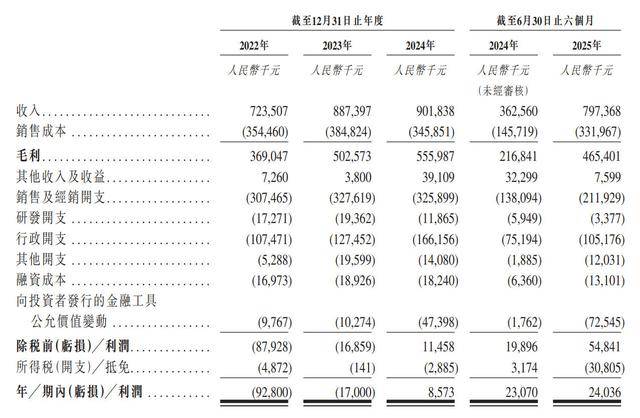
Core Viewpoint - Weijian International Holdings Group Limited (Weijian Pharmaceutical) is seeking to go public on the Hong Kong Stock Exchange, showcasing strong performance but facing challenges in its IPO journey. Group 1: Company Overview - Established in 2011, Weijian Pharmaceutical is a leading Chinese pharmaceutical company focused on the treatment of kidney and blood diseases, with a comprehensive capability in drug development, production, and commercialization [1]. - The company has developed a diverse product portfolio, covering six kidney drugs, making it the Chinese pharmaceutical company with the highest number of commercialized original drugs for kidney diseases [1][2]. Group 2: Financial Performance - Revenue for the years 2022, 2023, 2024, and the first half of 2025 was RMB 724 million, RMB 887 million, RMB 902 million, and RMB 797 million, respectively, with corresponding net profits of RMB -92.8 million, RMB -17 million, RMB 8.57 million, and RMB 2.40 million [1][2]. - The total loss over three and a half years amounted to RMB 77.19 million [1]. Group 3: Customer Concentration - The company relies heavily on a few major clients, with total revenue from the top five clients for the years ending December 31, 2022, 2023, 2024, and the first half of 2025 being RMB 435 million, RMB 487 million, RMB 539 million, and RMB 487 million, respectively, accounting for 60.2%, 54.8%, 59.8%, and 61.1% of total revenue [3][4]. Group 4: Market Competition - The company faces increasing market competition, particularly with the drug Sinacalcet, which has seen its market share decline from 35% in 2019 to 19.7% in 2024 due to generic drug competition [5]. - The company anticipates price reductions of 30%-50% for two of its products during the 2024 national medical insurance directory adjustment, which could further impact gross margins [5]. Group 5: Research and Development - The company has a low R&D investment ratio, with expenditures of RMB 17.27 million, RMB 19.36 million, and RMB 11.86 million for the years 2022-2024, representing less than 2% of revenue, which is below the industry average [7]. Group 6: Supply Chain Risks - The company faces supply chain risks, with 82% of procurement in the first half of 2025 coming from the top five suppliers, and the largest supplier accounting for 41.9% of total procurement [8].