
半导体产业集群

Search documents
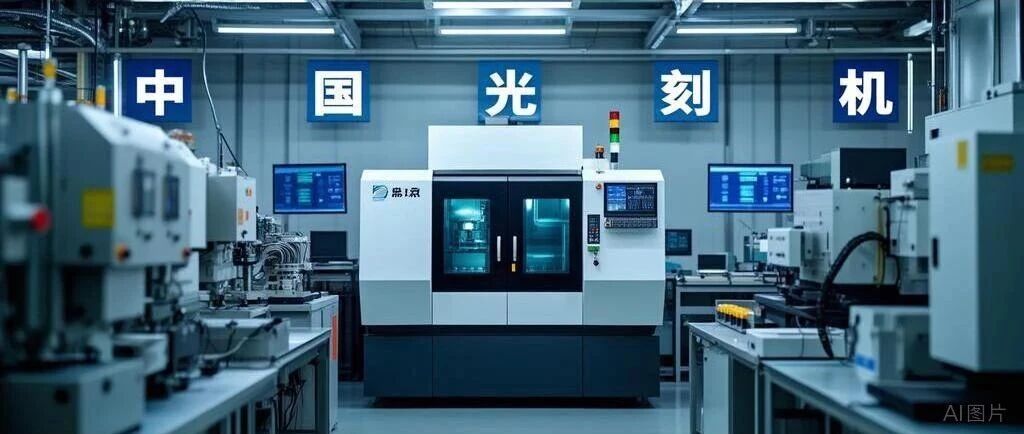
中国光刻机,50亿半导体项目新进展
是说芯语· 2026-03-14 05:36
Group 1 - The Dazhu Anlai (Jian) Semiconductor Technology Project is accelerating its construction progress and is expected to move in by May [1] - The main structure of the first factory building has been completed, with 80% of the interior decoration finished, and it is expected to be fully completed in about a month [1] - The project, which started in December 2024, has a total investment of 5 billion RMB and will cover an area of 40,000 square meters, primarily producing micron-level lithography machines and electronic components [1] Group 2 - The project is expected to drive the aggregation of over 10 upstream and downstream enterprises, contributing to the establishment of a regional semiconductor industry cluster in Jizhou District [1] - Dazhu Anlai (Jian) Semiconductor Technology Co., Ltd. was established in August 2024 with a registered capital of 30 million RMB, fully owned by Shenzhen Dazhu Anlai Semiconductor Co., Ltd. [1] - The company's business scope includes the manufacturing of specialized equipment for semiconductor devices, electronic components, and electromechanical component equipment [1]

三星高管:半导体正处于战争状态
半导体芯闻· 2026-02-28 10:08
Group 1 - Gyeonggi Province is accelerating the construction of a large-scale semiconductor industrial cluster to seize the golden opportunity for the development of South Korea's semiconductor industry [1] - Samsung Electronics strongly supports the establishment of the semiconductor industrial cluster, emphasizing the critical importance of time in the current competitive landscape of the semiconductor industry [1][2] - A town hall meeting titled "K-Semiconductor Large Cluster Coexistence" was held, attended by approximately 100 participants, including government officials, industry representatives, and local residents [1] Group 2 - Gyeonggi Province plans to establish a dedicated organization to support semiconductor investments and implement a streamlined licensing approval process [1] - The provincial governor highlighted the importance of preemptive preparations for infrastructure such as electricity, water, and transportation for the semiconductor industrial park [1] - The "Semiconductor Special Law" was enacted to enhance and support the competitiveness of the semiconductor industry, leading to the formation of a task force to address the evolving policy environment [2]

台积电美国厂,真成功了?
半导体行业观察· 2025-12-02 01:37
Core Viewpoint - TSMC is recognized as a crucial player in the semiconductor industry, with significant efforts to expand its manufacturing capabilities overseas, particularly in the U.S., Japan, and Germany. However, challenges related to cost, efficiency, and supply chain integration remain a concern for TSMC's international operations [1][12][28]. Group 1: TSMC's Global Expansion - TSMC has established joint ventures in the U.S., Japan, and Germany to promote advanced semiconductor manufacturing, but the economic viability of these overseas fabs is questioned [1]. - The company’s founder, Morris Chang, expressed skepticism about the U.S. efforts to boost domestic semiconductor manufacturing, stating that the financial investment is insufficient and may lead to costly failures [1][12]. - TSMC's Arizona facility is part of a broader strategy to mitigate geopolitical risks, but it faces challenges in achieving the same operational efficiency as its Taiwanese counterparts due to a less integrated local supply chain [12][17]. Group 2: Workforce and Talent Pool - TSMC employs over 83,000 people globally, with nearly 90% being Taiwanese, highlighting the company's reliance on local talent [2]. - The company has partnered with 17 universities in Taiwan to offer 57 semiconductor-related courses, ensuring a steady supply of skilled engineers [4]. - Despite global expansion, Taiwan remains TSMC's primary talent reservoir, which is crucial for maintaining its competitive edge [4][12]. Group 3: Operational Efficiency and Supply Chain - TSMC's operational success is attributed to its "one-hour semiconductor ecosystem" in Taiwan, which allows for rapid communication and resource sharing among suppliers [13][15]. - The Arizona facility currently relies heavily on its established Asian supply chain, limiting its potential output until local suppliers can scale up [17]. - The integration of local suppliers in Arizona is still in progress, and the lack of a mature semiconductor ecosystem poses significant challenges for TSMC's operations there [17][18]. Group 4: Economic Impact and Strategic Importance - TSMC's role is critical, with eight of the top ten global companies relying on its products, which account for over one-third of their revenue [26][27]. - The U.S. government recognizes the strategic importance of TSMC in the semiconductor supply chain and is providing subsidies to encourage domestic production [28]. - The semiconductor shortage in 2021 highlighted the economic risks associated with dependency on TSMC, leading to increased efforts to localize production [26][28].

台积电海外晶圆厂-成功了吗? --- TSMC Overseas Fabs – A Success_
2025-12-01 16:03
Summary of TSMC Overseas Fabs Conference Call Company Overview - **Company**: Taiwan Semiconductor Manufacturing Company (TSMC) - **Industry**: Semiconductor Manufacturing Key Points and Arguments TSMC's Global Expansion - TSMC has established overseas fabs in the United States, Japan, and Germany to support onshore semiconductor manufacturing efforts driven by geopolitical considerations [3][54] - The U.S. government has recognized TSMC's importance and is incentivizing its expansion to reduce reliance on foreign semiconductor supply chains [2][54] Economic Viability of Overseas Fabs - Dr. Morris Chang, TSMC's founder, expressed skepticism about the economic competitiveness of U.S. fabs, stating that the current subsidies are insufficient and may lead to high costs without achieving desired outcomes [5][30] - TSMC's Arizona fab is under scrutiny regarding its ability to achieve operational efficiencies comparable to those in Taiwan [32] Operational Challenges - The Arizona fab's supply chain is still heavily reliant on Asian suppliers, limiting its production scale until local suppliers can establish operations [43][44] - Recent operational issues, such as a gas facility outage, have resulted in significant financial losses, highlighting the challenges of establishing a new fab in a different geographic context [46] Talent and Resource Availability - TSMC's workforce is predominantly Taiwanese, with 87% of employees based in Taiwan, raising concerns about labor availability for overseas operations [8][10] - The company has initiated semiconductor programs in Taiwan to ensure a steady pipeline of skilled engineers, which may not be easily replicated in the U.S. [11][12] Cluster Efficiency - TSMC's success is attributed to its "one-hour semiconductor ecosystem" in Taiwan, which facilitates rapid communication and resource sharing among suppliers [34][42] - The geographical concentration of suppliers in Taiwan minimizes logistics delays, a significant advantage that may not be easily replicated in Arizona [35][42] Future Plans and Investments - TSMC plans to expand its investment in the U.S. to $165 billion, with rumors of additional phases for the Arizona fab that could make it the largest advanced fab globally [60][61] - The company is also exploring further expansions in Japan and Germany, focusing on legacy and advanced nodes [55][59] Geopolitical Considerations - The U.S. government's push for onshore semiconductor manufacturing is not only an economic strategy but also a national security imperative, as demonstrated by the impact of the 2021 chip shortage on the U.S. GDP [49][48] - Concerns exist in Taiwan regarding the transfer of advanced technologies abroad, which could weaken national sovereignty [37] Conclusion - TSMC's overseas expansion is a complex interplay of customer demand, geopolitical pressures, and operational challenges. The company's ability to replicate its successful model in Taiwan abroad remains uncertain, with significant hurdles to overcome in terms of cost, efficiency, and supply chain integration [47][31]
汇成股份(688403.SH)布局存储封测:借势产业集群红利,有望实现拓界增长
Xin Lang Cai Jing· 2025-11-03 13:30
Core Insights - Hefei Xinhui Microelectronics Co., Ltd. (referred to as "the company") has strategically entered the storage chip packaging and testing sector by investing in Hefei Xinfeng Technology Co., Ltd. and collaborating with East China Technology (Suzhou) Co., Ltd. This move is crucial for expanding its display driver packaging and testing business boundaries and enhancing its competitive edge in the domestic and international storage chip markets [1][4] Group 1: Strategic Positioning - The company leverages the robust semiconductor industry cluster in Hefei, which has allowed it to achieve significant scale in display driver packaging and testing, thus accumulating valuable operational experience [1][2] - By adopting a combination investment model, the company directly acquired a 27.5445% stake in the target entities with an investment of 90.4841 million yuan, while also holding indirect stakes through private equity funds, minimizing risks associated with single business expansion [1][3] Group 2: Operational Efficiency - The local semiconductor ecosystem, including wafer manufacturing and substrate supply, significantly reduces supply chain costs and response times for the storage packaging and testing business [2] - The company plans to enhance its storage packaging capacity by the end of 2027, utilizing its efficient production management and customer service processes from the display driver sector to expedite the transition to large-scale operations [2][4] Group 3: Market Opportunities - The global storage chip market is experiencing structural opportunities driven by AI infrastructure demands, with a notable increase in prices for storage chips over the past six months [3] - The company’s entry into the storage packaging and testing market reflects its strategic foresight and market insight, aiming to establish a dual-core business model of "display + storage" to fuel long-term growth [3][4] Group 4: Technological Advancements - Collaboration with East China Technology, which possesses 3D CUBE solutions, positions the company to make breakthroughs in advanced packaging for 3D DRAM, addressing domestic market gaps and aligning with AI-era storage needs [3] - The company’s non-controlling equity layout helps mitigate short-term profit pressures while leveraging past financial advantages and local investment platforms to promote capacity expansion [3][4]

珂玛科技: 2025年半年度业绩预告
Zheng Quan Zhi Xing· 2025-07-15 10:22
Performance Forecast - The company forecasts a revenue of 384.525 million yuan for the current reporting period, representing a year-on-year growth of 33.93% to 36.53% [1] - The net profit attributable to shareholders is expected to be between 165 million yuan and 175 million yuan, an increase of 18.59% to 25.77% compared to the previous year [1] - The net profit after deducting non-recurring gains and losses is projected to be between 163.5 million yuan and 174.5 million yuan, reflecting a growth of 19.88% to 27.94% year-on-year [1] Reasons for Performance Change - The primary reason for the performance increase is the gradual relocation of production lines to a new advanced materials production base, leading to enhanced capacity and production of ceramic heaters for domestic semiconductor wafer manufacturers and mainstream semiconductor equipment manufacturers [1] - The demand from a complete semiconductor industry cluster has significantly increased, driving continuous growth in sales revenue of advanced ceramic material components in the semiconductor sector [1] - The company is actively developing new material systems and expanding material application technologies to maintain a technological edge, with ongoing R&D focused on "structure-function" modular products [1]