
合作

Search documents
项昊宇:多极化时代更需要“校准航向”
Xin Lang Cai Jing· 2026-02-23 22:47
Group 1 - The world is undergoing a profound structural transformation since the end of the Cold War, characterized by frequent geopolitical conflicts and a resurgence of camp-based politics, leading to a disordered international system [1][2] - China's Foreign Minister Wang Yi's speech at the Munich Security Conference addresses the key issue of what order will emerge from the multipolarity, emphasizing the need for a reconstruction of order rather than a simple redistribution of power [1][4] - The rise of camp politics is marked by the strengthening of military alliances and the emergence of value-based diplomacy, which creates a new group-oriented tendency in international relations, potentially undermining the inclusiveness of the global system [2] Group 2 - China's emphasis on maintaining a UN-centered international system reflects a historical logic aimed at preventing a return to power politics, particularly for developing countries [2] - The limitations of traditional security concepts are evident in conflicts like the Russia-Ukraine war and the Middle East situation, prompting China to advocate for a security concept that is common, comprehensive, cooperative, and sustainable [3] - The increasing importance of emerging economies in energy markets and regional cooperation mechanisms highlights the need for a governance structure that allows broader participation, moving away from dominance by a few countries [3] Group 3 - The international community faces two paths: one leading to deepening fragmentation and insecurity, and the other promoting cooperation through institutional coordination to avoid uncontrolled conflict [4] - China's approach aims to foster more inclusive multilateral cooperation to prevent a return to historical patterns of conflict, emphasizing that the future direction of international relations depends on the willingness of countries to believe in cooperative governance over confrontation [4]
王毅在第62届慕尼黑安全会议“中国专场”上的主旨讲话(全文)
Xin Lang Cai Jing· 2026-02-14 14:35
Core Viewpoint - The speech emphasizes the need for reforming and improving global governance, advocating for multilateralism and cooperation among nations to address current international challenges and conflicts [1][2][3][4][5][6][7]. Group 1: Global Governance Reform - Reforming global governance requires revitalizing the United Nations system, which is seen as the most universal and authoritative intergovernmental organization [2]. - The current international system's inefficacy is attributed to some countries amplifying differences and pursuing national superiority, which undermines trust and cooperation [3]. - The call for true multilateralism is highlighted, with an emphasis on democratizing international relations and ensuring that all countries, especially smaller nations, have a voice and role in the global system [4][5]. Group 2: Peace and Conflict Resolution - The urgent need to stop wars and promote peace is underscored, with over 60 ongoing conflicts causing suffering and instability [6]. - The importance of dialogue and negotiation in resolving conflicts, such as the situations in Gaza, Iran, Ukraine, and Venezuela, is stressed as a collective responsibility of the international community [6]. Group 3: China's Role in Global Governance - China positions itself as a steadfast force for peace and stability, advocating for a peaceful development path and international fairness [7]. - The relationship between China and Europe is framed as a partnership in a multipolar world, emphasizing the importance of collaboration over competition [7].
新华鲜报|促进共同繁荣!亚太经合组织“中国年”看点多
Xin Hua She· 2026-02-11 02:14
Group 1: Core Themes and Objectives - The core theme for APEC "China Year" is "Building the Asia-Pacific Community and Promoting Common Prosperity," which aligns with China's vision of a shared future for humanity and has received unanimous support from member economies [2][4] - The focus on "open, innovative, and cooperative" priorities aims to address new opportunities and challenges in the Asia-Pacific region, promoting trade liberalization and cooperation among member economies [4][7] Group 2: Meeting Arrangements and Activities - Approximately 300 activities will be held throughout the year, including high-level meetings and ministerial conferences, culminating in a leaders' informal meeting on November 18-19 in Shenzhen [6][7] - The first high-level meeting will take place in Guangzhou in February, followed by additional meetings in Shanghai and Dalian, with specialized ministerial meetings covering various sectors from May to October [6][7] Group 3: Key Work Areas - The key work areas include establishing a clear goal for Asia-Pacific cooperation, exploring pathways for free trade area construction, and accelerating transformations in digital, intelligent, and green sectors [7][8] - The commitment to multi-faceted cooperation and addressing governance issues relevant to development has been positively received by participating economies [7]


新华鲜报丨促进共同繁荣!亚太经合组织“中国年”看点多
Xin Hua She· 2026-02-11 00:57
Core Points - The APEC first senior officials' meeting and related events took place in Guangzhou, marking the official start of the "China Year" for APEC [1] - The theme for the "China Year" is "Building a Community of the Asia-Pacific and Promoting Common Prosperity," which aligns with China's vision of a shared future [3] - China has identified three priority areas for cooperation: openness, innovation, and collaboration, which received broad support from member economies [5] Meeting Arrangements - Approximately 300 events will be held throughout the year, including three senior officials' meetings in Guangzhou, Shanghai, and Dalian, and a leaders' meeting week in Shenzhen in November [7] - The meetings will cover various sectors such as energy, transportation, digital economy, food security, and more, facilitating practical cooperation among APEC members [7] Key Work Areas - The focus will be on establishing a clear goal for APEC's future development, exploring pathways for the Asia-Pacific Free Trade Area, and promoting digital, intelligent, and green transformations [8] - The first senior officials' meeting included 55 activities, leading to discussions on cooperation in food security, energy, technology, and other fields [8] Historical Context - China has been an active participant in APEC since joining in 1991 and has hosted the APEC meetings twice before, in 2001 and 2014 [9] - The upcoming 2026 APEC leaders' informal meeting will be held in Shenzhen, symbolizing China's ongoing commitment to fostering an open Asia-Pacific economy [9]
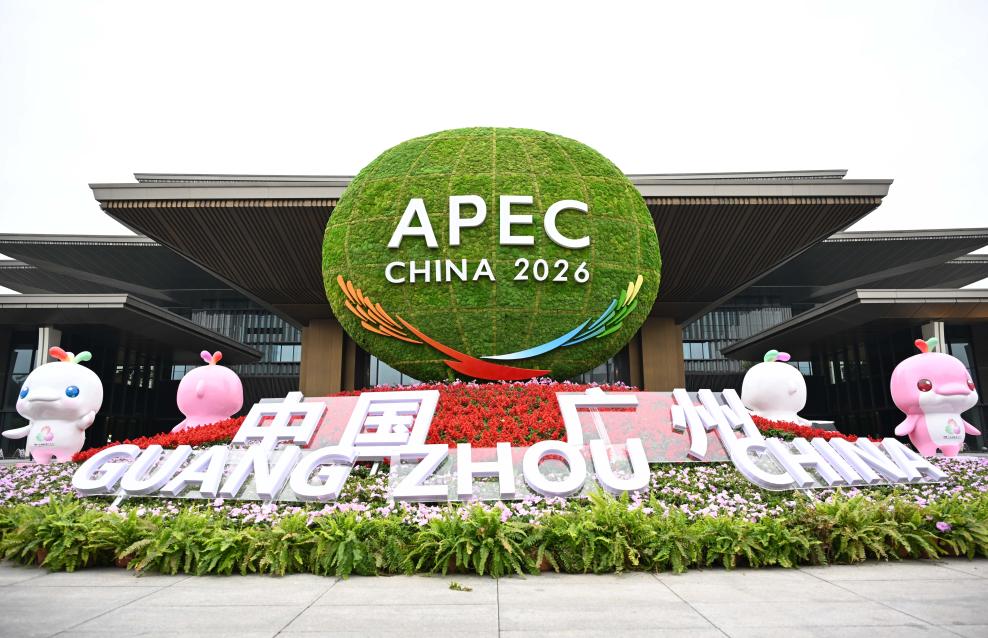
蓝庆新、薛缘杰:APEC“中国年”如何助力亚太繁荣
Xin Lang Cai Jing· 2026-02-10 23:13
Group 1 - The core theme of the 2026 APEC meeting is "Building a Community of the Asia-Pacific and Promoting Common Prosperity," focusing on three priority areas: openness, innovation, and cooperation [1] - The meeting aims to initiate cooperation across various fields and mechanisms, reflecting China's commitment to a more proactive and open approach to regional collaboration [1][2] - APEC emphasizes consensus-building and addressing differences, serving as a stabilizing force in the Asia-Pacific cooperation framework [2] Group 2 - The discussions at the APEC meeting will cover critical topics such as trade and investment, economic and technological cooperation, digital economy, and food security, which are relevant to the current challenges faced by the Asia-Pacific economies [2] - Shenzhen, as a significant venue for APEC activities, symbolizes China's integration into the global economy and showcases its achievements in digital economy and green transformation [3] - APEC aims to enhance inclusivity through capacity building, promoting policy exchange and technical support among member economies to bridge gaps in digital transformation and green development [4] Group 3 - The focus on policy coordination and rule communication is essential to enhance the stability of APEC cooperation, addressing the increasing uncertainty in global trade rules [4] - Innovation-driven initiatives will be prioritized, particularly in emerging fields like digital economy and artificial intelligence, to foster a collaborative environment for technological advancement [5] - APEC's commitment to openness and inclusivity remains steadfast, signaling a clear direction for continued cooperation in the Asia-Pacific region [5]
围绕三大优先领域,全年组织300场活动,APEC“中国年”举办高官会
Huan Qiu Shi Bao· 2026-02-10 22:47
Group 1 - China is hosting the APEC meetings in 2026, with the first senior officials' meeting taking place from February 1 to 10 in Guangzhou, marking the start of "China Year" for APEC [1] - The theme for this year's APEC meetings is "Building a Community of the Asia-Pacific and Promoting Common Prosperity," focusing on three priority areas: openness, innovation, and cooperation [2] - Approximately 300 events will be held throughout the year, including senior officials' meetings and ministerial meetings, with specific meetings scheduled in Guangzhou, Shanghai, and Dalian [3] Group 2 - The current global context presents challenges such as unilateralism and protectionism, which necessitate a re-evaluation of regional cooperation in the Asia-Pacific [2][3] - China's role in the Asia-Pacific and global landscape is increasing, providing a stabilizing force amid rising protectionism and economic fragmentation [4] - The meetings aim to create a platform for dialogue and cooperation, which is essential for the future of regional and global order [4]
促进共同繁荣!亚太经合组织“中国年”看点多
Xin Lang Cai Jing· 2026-02-10 20:03
Core Points - The APEC "China Year" officially commenced with the first senior officials' meeting held in Guangzhou, marking China's third time as APEC host [1][4] - The cooperation theme for this year is "Building a Community of Shared Future in the Asia-Pacific and Promoting Common Prosperity," which aligns with China's broader diplomatic goals [1][2] - The three priority areas for cooperation are "Openness, Innovation, and Cooperation," aimed at addressing new opportunities and challenges in the Asia-Pacific region [3][5] Meeting Arrangements - Approximately 300 events will be held throughout the year, culminating in a leaders' informal meeting in Shenzhen on November 18-19 [4][6] - The first senior officials' meeting will take place in Guangzhou in February, followed by meetings in Shanghai and Dalian in May and August, respectively [4][6] - Various ministerial meetings will cover multiple sectors, including energy, digital economy, and trade, with around 10 specialized meetings scheduled from May to October [4][6] Key Work Areas - The focus is on establishing a clear and comprehensive outcome document for the leaders' meeting, exploring pathways for the Asia-Pacific Free Trade Area, and promoting digital, intelligent, and green transformations [5][6] - Emphasis on deepening multi-faceted cooperation while considering the diversity of APEC members [6] - The commitment to regional cooperation has received positive evaluations from participating economies, indicating a strong collaborative spirit [6] Historical Context - China has been actively involved in APEC since joining in 1991 and has hosted the summit twice before, in 2001 and 2014 [6][7] - The upcoming APEC meeting in Shenzhen is symbolically significant as it coincides with the start of China's 14th Five-Year Plan [7]
APEC中国年聚焦“亚太共同体”:强调多元合作,筑牢增长引擎
2 1 Shi Ji Jing Ji Bao Dao· 2026-02-10 14:04
Group 1: APEC Meeting Overview - The 33rd APEC Leaders' Informal Meeting will be held in Shenzhen, Guangdong, on November 18-19, marking China's third time as the host [1] - APEC is crucial for regional cooperation, with the Asia-Pacific region accounting for one-third of the world's population and over 60% of global economic output [1] - The meeting aims to address challenges such as unilateralism and protectionism while promoting regional cooperation and consensus [2][3] Group 2: Key Themes and Priorities - The theme for the 2026 APEC meeting is "Building the Asia-Pacific Community, Promoting Common Prosperity," focusing on three priority areas: openness, innovation, and cooperation [4][13] - Openness aims to create an open economy, counter protectionism, and facilitate trade and investment [4] - Innovation focuses on driving new productive forces and creating new growth points for APEC cooperation [4] Group 3: China's Role and Contributions - China is positioned as a key leader in APEC, advocating for a balanced approach to the needs of both developed and developing economies [4][12] - The country emphasizes the importance of multilateralism and provides a platform for dialogue and cooperation among APEC members [2][12] - China's development practices, including high-level openness and innovation, serve as a reference for other economies in the region [12][13] Group 4: Economic Cooperation and Trade - During the "14th Five-Year Plan" period, trade between China and APEC economies reached 125.49 trillion yuan, a 39.4% increase from the previous period [12] - China's commitment to free trade and investment liberalization is expected to enhance economic cooperation and benefit all APEC members [12][14] - The integration of APEC with other trade agreements like RCEP and CPTPP is seen as a way to promote trade facilitation and reduce compliance costs for businesses [6][12] Group 5: Technological Innovation and Sustainability - APEC discussions include significant topics such as technological innovation, regulatory coordination, and digital economy transformation [8][9] - The focus on green and low-carbon transitions aims to address climate change and promote sustainable development [7] - China's advancements in technology, particularly in AI and digital platforms, are highlighted as examples of innovation that can benefit the region [10][11]
宇伟观察|合作何以可能?小平访美三件小事的启示
Jing Ji Guan Cha Wang· 2026-02-10 10:40
Core Viewpoint - The article emphasizes the importance of cooperation as a cornerstone of human civilization, highlighting that true, long-lasting partnerships are built on understanding, trust, and sincerity, rather than mere exchanges of interests. It reflects on historical moments, particularly Deng Xiaoping's visit to the United States in 1979, to illustrate the underlying logic of cooperation and its relevance for contemporary interactions and collaborations. Group 1: Historical Context - On January 1, 1979, China and the United States officially established diplomatic relations, marking a significant normalization of ties between the two nations. Deng Xiaoping was recognized as the "World Figure of the Year" by Time magazine for his role in this historic event [2][8]. - Deng Xiaoping's visit to the U.S. was the first formal visit by a Chinese leader since the founding of the People's Republic of China, occurring under challenging conditions without direct flights or aviation agreements [8][10]. Group 2: Key Events During the Visit - The visit included a series of significant events, such as a farewell at the airport where Deng demonstrated empathy by considering the comfort of those seeing him off in cold weather, showcasing the importance of understanding and teamwork [10]. - Upon arrival in Washington, Deng attended a dinner at Zbigniew Brzezinski's home, which was not part of the official itinerary. This gesture reinforced the importance of keeping promises and building trust in international relations [13][19]. - During a cultural performance at the Kennedy Center, Deng's heartfelt interaction with American children, including kissing their foreheads, created a memorable moment that highlighted the significance of genuine emotional connections in fostering cooperation [21][29]. Group 3: Principles of Cooperation - The article identifies three core principles of cooperation illustrated by Deng's actions: 1. Cooperation with colleagues requires empathy and understanding [10]. 2. International cooperation is grounded in trust and honoring commitments [19]. 3. Cooperation with the public is based on sincerity and genuine emotional engagement [29]. Group 4: Overall Impact of the Visit - Deng Xiaoping's visit lasted nine days, during which he participated in 80 meetings, 20 banquets, and delivered 22 formal speeches, reflecting the extensive diplomatic engagement and the importance of this visit in shaping U.S.-China relations [31][33]. - The visit was seen as a mission to convey the goodwill of the Chinese people, learn from the American experience, and discuss the development of bilateral relations and global peace [33][35].

张国智出席亚太经济合作组织2026中国年第一次高官会欢迎招待会
Nan Fang Ri Bao Wang Luo Ban· 2026-02-10 03:08
Core Viewpoint - The APEC 2026 China Year's first senior officials' meeting was held in Guangzhou, emphasizing Guangdong's commitment to deepening cooperation within the Asia-Pacific region and enhancing its international business environment [1][2]. Group 1: APEC Meeting Highlights - The meeting welcomed officials from 21 APEC member economies and aimed to foster mutual benefits and cooperation among them [1]. - Over twenty APEC committees or working groups have completed the first round of work for the China Year, focusing on key cooperation areas and reaching important consensus [2]. - The meeting set the stage for the APEC China Year, with a focus on "building an Asia-Pacific community and promoting shared prosperity" [2]. Group 2: Guangdong's Role and Vision - Guangdong is positioned as a leader in China's reform and opening-up, aiming to create a high-level open economy and a first-class business environment [1]. - The province seeks to leverage the APEC meetings to deepen exchanges and cooperation with the Asia-Pacific region, focusing on "openness, innovation, and cooperation" [1]. - Guangzhou, as a historical starting point of the Maritime Silk Road, is highlighted as a vital window for international observation of China's reform and opening-up [2].