员工权益

Search documents
男子拒绝年会表演被辞获赔18万!年会是企业搭台,不是员工卖艺
Xin Lang Cai Jing· 2026-02-13 10:06
Group 1 - The core issue revolves around a company terminating an employee, Mr. Wang, for refusing to perform at a company event, highlighting a disregard for employee rights and autonomy [1][2] - The court ruled that participation in the annual performance is not a work obligation, emphasizing that such events should be voluntary and not a test of compliance [2] - The company’s actions reflect a broader issue of corporate culture, where respect for employees is lacking, and punitive measures are used to enforce compliance [2][3] Group 2 - The compensation of over 180,000 yuan awarded to Mr. Wang serves as a warning to companies about the importance of respecting employee rights and the potential consequences of overstepping [1][2] - The incident illustrates a failure in management practices, where coercive tactics are employed instead of fostering a respectful and inclusive workplace culture [2][3] - Companies are encouraged to build cohesion through respect rather than fear, as a culture of intimidation can lead to disengagement and high turnover [3]
制药、生物科技和生命科学行业A股上市公司S维度绩效对比分析:2024年度 vs 2023年度(上)
Jin Rong Jie· 2026-01-30 02:27
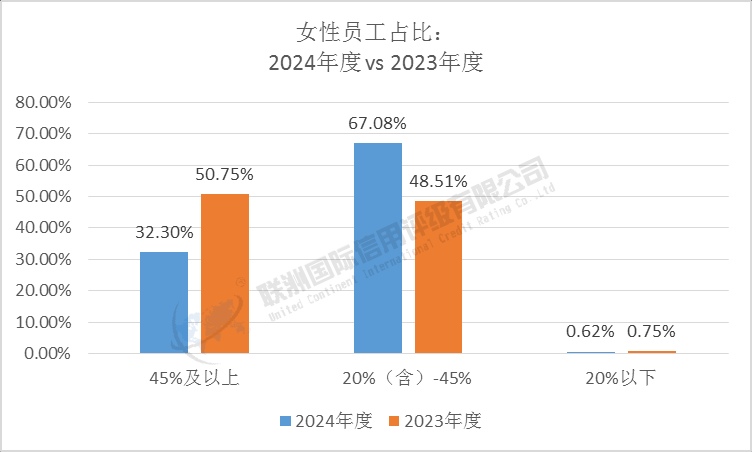
Background - The concept of ESG (Environmental, Social, and Governance) is becoming mainstream, with a focus on the "S" (Social) dimension, emphasizing human-centric values and the expectations of various stakeholders [1] - The pharmaceutical, biotechnology, and life sciences industries play a crucial role in national economic development and social construction, making ESG governance a critical issue for these sectors [1] S (Social) Performance Analysis - As of May 5, 2025, 161 companies in the A-share pharmaceutical, biotechnology, and life sciences sector have disclosed their 2024 ESG reports, compared to 134 companies for 2023 [2] Employee Rights - Employee rights are central to the social dimension of ESG, impacting a company's ESG rating, financing ability, and long-term competitiveness [3] - Protecting employee rights enhances satisfaction, reduces turnover, and improves productivity, which can lead to higher ESG ratings and better brand image [3] Employee Structure Comparison - In 2024, the proportion of companies with female employees above 45% decreased by 36.35% compared to 2023, while those with female employee ratios between 20% and 45% increased by 38.29% [4] Senior Female Employee Proportion - The proportion of companies with senior female employees at 30% or above dropped by 44.50% in 2024 compared to 2023, indicating a lack of focus on gender equality and support for women's career advancement [4] Employment of Disabled Individuals - The percentage of companies employing disabled individuals decreased by 6.50% in 2024, reflecting insufficient long-term planning and support for this demographic [6][8] Employee Benefits - The proportion of companies providing complete paid leave benefits dropped by 30.82% in 2024, indicating a significant reduction in employee welfare amidst economic pressures [10] - In 2024, 31.68% of companies offered generous holiday benefits, a decrease of 46.27% from 2023 [13] Employee Health Management - In 2024, 49.07% of companies prioritized employee health management, an increase of 31.50% from 2023, indicating a growing recognition of health management as a fundamental ESG practice [15] Labor Rights - The percentage of companies with 100% labor contract signing and social insurance coverage increased by 9.84% in 2024, showing a heightened focus on labor rights protection [17] Employee Training and Development - In 2024, 31.68% of companies provided over 40 hours of training per employee, a 57.21% increase from 2023, reflecting a commitment to employee development [19] Social Responsibility - The industry saw a decline in charitable donations and participation in disaster relief in 2024 compared to 2023, indicating a shift away from "pseudo-charity" practices towards more sustainable social responsibility initiatives [20][23]

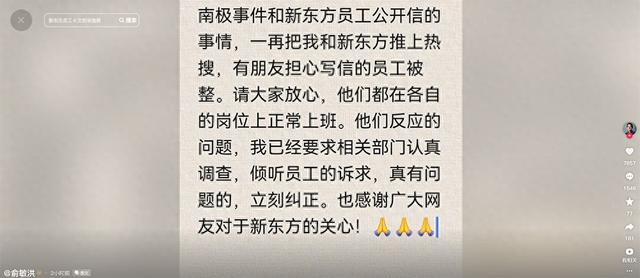
俞敏洪回应员工写信吐槽996加班:已要求调查,有问题会立刻纠正
Guan Cha Zhe Wang· 2025-12-06 06:54
Core Viewpoint - The founder of New Oriental, Yu Minhong, addressed concerns regarding employee treatment and internal complaints, assuring that employees are safe and their issues will be investigated [1][2]. Group 1: Employee Concerns - A long message from a course consultant in Hangzhou highlighted excessive working hours, stating that the team has been trapped in a "996 single day off" cycle, working from 9:30 AM to 9:30 PM, which exceeds ten hours daily [2]. - The message also pointed out that the promised double days off in the employment contract are rarely realized, and the eight-hour workday mandated by labor laws has become unattainable [2]. - Employees expressed gratitude for Yu Minhong's previous communication, which encouraged open expression of concerns, motivating them to voice their difficulties [2]. Group 2: Company Response - A staff member from Hangzhou confirmed that the message was indeed sent by an employee but was deleted shortly after due to improper communication methods, as the company has established reporting mechanisms [3]. - Yu Minhong's recent communications, including an apology letter sent from Antarctica, emphasized the responsibility of employees to uphold the company's image and resolve issues through internal channels [3]. - The company encourages open feedback but advises caution regarding extreme statements made on social media, as the stability of the company is essential for employees' peace of mind [3].

俞敏洪回应员工写信吐槽加班事件:已要求相关部门调查
Xin Lang Ke Ji· 2025-12-06 06:29
Core Viewpoint - New Oriental's chairman, Yu Minhong, addressed recent employee complaints about excessive overtime, assuring that the employees who wrote the letter are performing their duties normally and will not face repercussions [1] Group 1: Employee Concerns - A New Oriental course consultant publicly criticized the company's work culture in an internal letter, highlighting issues such as the "996 single rest" cycle, where employees work over 10 hours daily, contradicting the labor contract's stipulation of a two-day weekend and an 8-hour workday [1] - Yu Minhong emphasized that the company will investigate the issues raised by employees and will take corrective actions if the concerns are validated [1] Group 2: Company Response - Yu Minhong reassured the public that the employees who expressed their concerns are safe in their positions and are continuing to work normally [1] - The company is taking the complaints seriously and is committed to respecting employees' basic labor rights [1]
新东方员工,发长文控诉
第一财经· 2025-12-04 09:50
Core Viewpoint - The article highlights the discontent among New Oriental employees regarding excessive working hours, unrealistic performance targets, and a lack of respect for labor rights, urging management to address these issues to maintain the company's educational values and employee well-being [3][5][6]. Group 1: Employee Concerns - Employees report a "996 single rest" work culture, with daily working hours extending from 9:30 AM to 9:30 PM, leading to over ten hours of work becoming the norm [4][5]. - The initial promise of a double rest day in the employment contract has rarely been fulfilled, and the legal eight-hour workday has become an unattainable luxury [4][6]. - There are complaints about performance targets that exceed reasonable limits, leading to a sense of confusion and fatigue among employees [6]. Group 2: Management Response - An internal letter from a course consultant at New Oriental was circulated, expressing these grievances but was subsequently deleted, indicating potential repercussions for the employee [8]. - The company has a clear reporting mechanism for such issues, and management has stated that they will follow up on the situation [8]. Group 3: Call for Change - Employees express a desire for basic labor rights to be respected and for a return to a focus on both educational quality and employee rights [6]. - The letter references a sentiment from the founder, suggesting that if the company continuously harms its employees, it cannot be considered a good company, emphasizing the need for management to listen to employee concerns [6].

Amazon sued over 'punitive' handling of employee absences
Reuters· 2025-11-12 18:51
Core Viewpoint - Amazon.com is facing a proposed class action lawsuit alleging that it imposes a "punitive" policy on warehouse employees with disabilities regarding workplace absences [1] Group 1 - The lawsuit claims that thousands of warehouse employees with disabilities are subjected to this policy [1]


Meta被曝裁员“双标”:前员工集体控诉绩效评估黑幕
Huan Qiu Wang· 2025-05-07 08:34
Core Points - Meta's recent layoffs, initiated in February under the guise of "performance optimization," are evolving into a trust crisis within the company [1] - The company claims that 5% of its workforce, approximately 3,600 employees, were laid off due to being "low performers," but former employees report issues such as double standards in the rating system and pressure from management [1] Group 1 - A human resources employee returned from a five-month maternity leave with a mid-year performance rating of "meets expectations," but was later terminated with a year-end rating of "partially meets expectations," attributed to directives from CEO Mark Zuckerberg [3] - Employees have expressed concerns over the lack of transparency in performance feedback, with self-evaluations not being reviewed [3] - A long-term employee with 17 years at Meta, who previously received the highest rating, was laid off after disclosing family pressures, highlighting a shift in the company's culture from regret during previous layoffs to a more ruthless approach [3] Group 2 - Several employees reported targeted downgrades after taking sick leave or requesting job transfers, with one software engineer being laid off shortly after returning from a four-month sick leave [3] - Concerns have been raised about the "low performer" label being assigned unilaterally by Meta, which could negatively impact future job prospects for affected employees [3] - A Meta spokesperson stated that layoffs were based on a "high-performance target culture," but the complaints from former employees reveal deeper contradictions in the performance evaluation process [3]