
和美乡村

Search documents
协同推进城乡建设
Xin Lang Cai Jing· 2026-02-23 20:40
Group 1 - The city of Xining aims to build an innovative, livable, beautiful, resilient, civilized, and smart city by 2025, with a focus on high-quality urban development [1] - The urban sewage treatment rate is projected to increase from 95% in 2024 to 96% in 2025, while the proportion of green buildings in new constructions is expected to rise from 98% in 2024 to 100% [1] - The city has secured a central government subsidy of 1.2 billion yuan for urban renewal and aims to complete 34 underground pipeline renovation projects with a total of 1.257 billion yuan in national bond funding [1] Group 2 - Xining is integrating housing condition improvements with geological disaster relocation projects, completing 40 model villages and improving living conditions for 7,000 rural households [2] - In the heating sector, 40 annual tasks have been completed, including the renovation of 220.4 kilometers of heating pipelines and 145 heat exchange stations [2] - A digital platform for four heating enterprises has been established, enhancing the visibility and control of heating operations, thereby strengthening supply reliability for the upcoming winter [2]
南农晨读 | 我为家乡办村晚
Nan Fang Nong Cun Bao· 2026-01-17 03:02
Group 1 - Guangdong has streamlined its county-level government structure, with 9 counties (cities) reducing 26 departments through integration and reorganization [3][5][6] - The province has implemented a large department system in management reforms, with 12 pilot counties (cities) involved [4][5] - Guangdong's financial metrics remain the highest in the country, with total deposits reaching 38.7 trillion yuan and loans at 29.9 trillion yuan by the end of 2025, marking significant increases from the beginning of the year [8][10][11] Group 2 - Zhanjiang's economic performance during the 14th Five-Year Plan is highlighted, with a projected GDP of 400 billion yuan and agricultural output exceeding 100 billion yuan annually [20][22][23] - The local government emphasizes the growth of the marine economy, positioning Zhanjiang among the top three in the province [20][23] - Clear efforts are being made to promote local agricultural products and tourism, as seen in the promotional activities by local officials [39]


“一处美”→“全域美” 感受留坝和美乡村新图景
Xin Lang Cai Jing· 2025-12-25 13:18
Core Viewpoint - The article highlights the successful implementation of the "Ten Million Project" in Liuba County, showcasing the transformation of rural areas through aesthetic and functional improvements, leading to enhanced tourism and local economic development [3][10][17]. Group 1: Project Overview - Liuba County's second batch of "Ten Million Project" demonstration villages includes Hekou Village, which aims to transition from "one beauty" to "all-region beauty" [3]. - The county has developed a comprehensive plan involving 72 villages, integrating resources from 8 towns and 28 villages to create a "core-led, area-linked, and all-encompassing" framework [3][17]. Group 2: Development Strategies - Different areas within the county are being developed with unique characteristics, such as traditional village protection combined with agricultural and cultural tourism in Suoluo Village [5]. - The integration of resources from three villages has led to the transformation of an old village committee into a non-material cultural heritage center, enhancing local tourism experiences [7]. Group 3: Community Engagement and Economic Impact - The county has invested 4.14 million yuan to reward 27 demonstration villages and 484 exemplary households, promoting community involvement through the "Rural Aesthetics Lecture Hall" initiative [10][11]. - The implementation of diverse models like "landscape + experience" and "intangible cultural heritage + research study" has stimulated entrepreneurship and increased income for local residents [16]. Group 4: Tourism and Economic Growth - The region has seen a rise in tourism, with visitors praising the scenic beauty and accommodations, such as the national-level tourism homestay that maintains an 85% occupancy rate [13][14]. - Villagers have reported significant income increases, with one resident earning over 8,000 yuan annually from various activities, including working in a homestay and farming [16].

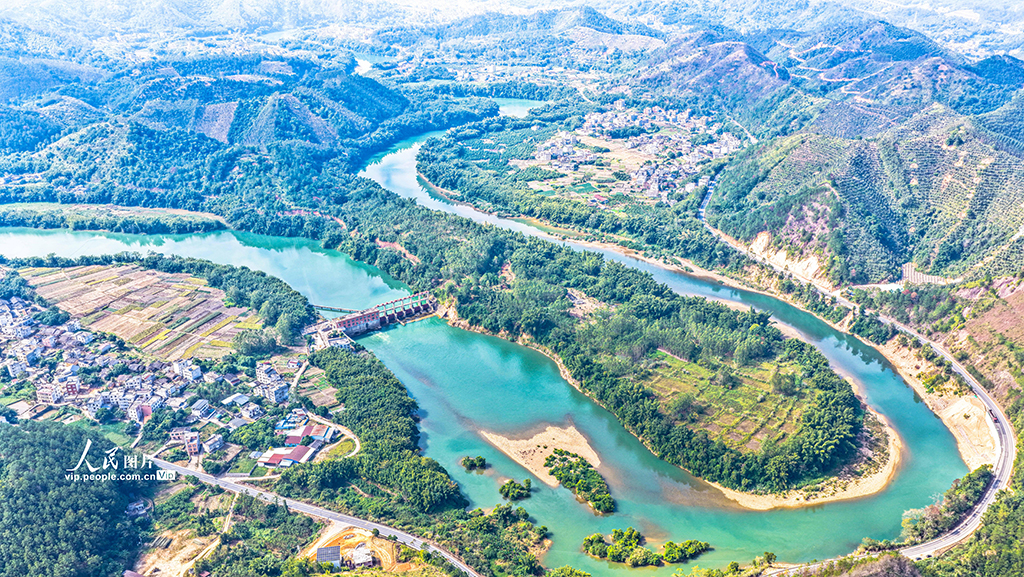
广西岑溪:和美乡村 生态宜居
Ren Min Wang· 2025-11-25 02:02
Core Viewpoint - The article highlights the development of a beautiful and ecologically livable countryside in Cenxi, Guangxi, emphasizing sustainable practices and community engagement [1][2][3][4][6] Group 1: Ecological Development - The initiative focuses on creating an eco-friendly environment that promotes biodiversity and sustainable agriculture [1][2] - Investments in infrastructure aim to enhance the quality of life for residents while preserving natural resources [3][4] Group 2: Community Engagement - Local communities are actively involved in the planning and implementation of ecological projects, fostering a sense of ownership and responsibility [2][5] - Educational programs are being introduced to raise awareness about environmental protection and sustainable practices among residents [3][6] Group 3: Economic Impact - The development is expected to boost local tourism and create job opportunities, contributing to the overall economic growth of the region [1][4] - By promoting sustainable agriculture, the initiative aims to increase farmers' incomes while ensuring food security [2][5]
湖北谷城多点共建“堰河式”和美乡村 打造乡村共富圈
Ren Min Ri Bao· 2025-08-15 07:02
Core Insights - The development of Yanhhe Village in Hubei Province showcases the successful transformation from poverty to prosperity through rural tourism and sustainable practices [1][2] - The village has achieved significant economic growth, with a total tourism revenue exceeding 100 million yuan and an average per capita income of 38,000 yuan [1][2] Group 1: Economic Development - Yanhhe Village has a permanent population of 1,800, with approximately 85% engaged in rural tourism, leading to a total tourism revenue of over 100 million yuan last year [1] - The average per capita income of villagers reached 38,000 yuan, reflecting the positive impact of the tourism industry [1] - The village's agricultural products, including tea and mushrooms, generated sales of 3 million yuan last year [1] Group 2: Environmental Sustainability - The village transitioned from deforestation to afforestation, with 21,000 acres of previously barren land now covered in greenery, including 1,200 acres of tea gardens and 3,000 acres of economic forests [1][2] - The local leadership emphasized the principle that "lucid waters and lush mountains are invaluable assets," guiding the community towards sustainable development [1] Group 3: Community Engagement - The village's tourism strategy involves unified pricing for agricultural products and accommodations, fostering trust and participation among villagers [2] - Neighboring villages are learning from Yanhhe's model, with initiatives to develop their own agricultural industries, such as the chili pepper industry in Xiongjiagang Village [2] - A collaborative approach among seven surrounding villages has led to the establishment of shared tourism facilities and branding for agricultural products, enhancing collective economic benefits [2]
和美乡村 拔节生长
Si Chuan Ri Bao· 2025-07-24 22:20
Core Points - The article highlights the continuous progress in poverty alleviation and rural revitalization in Sichuan, with a focus on agricultural modernization and infrastructure development [1][2] - It emphasizes the importance of maintaining food security while increasing the income of rural residents, showcasing various initiatives and projects aimed at achieving these goals [1][2] Agricultural Development - The first industry value added is projected to grow by 2.5%, with rural residents' per capita disposable income increasing by 6.8% [1] - Sichuan has established 19 national modern agricultural industrial parks and built 1,000 high-yield demonstration plots for grain and oil [1] - The province aims to ensure stable grain planting area above 96 million acres and increase the comprehensive mechanization rate of major crops to 73% [1] Infrastructure Improvement - Sichuan plans to construct and renovate 11,000 kilometers of rural roads and add 6,192 natural villages with hardened roads [1] - The "Hundred-Thousand-Thousand Project" aims to enhance rural infrastructure and living conditions, with a total investment of 171.75 billion yuan for 8,448 projects [2] Poverty Alleviation and Employment - In the first half of 2023, 2.459 million people in Sichuan found employment, achieving 111.5% of the national target [1] - The province has implemented various support measures for 39 key poverty alleviation counties, including financial assistance and resource allocation [1] Industry Growth and Specialization - Sichuan's vegetable and edible fungus production increased by 3.4%, while fruit and tea production grew by 6.4% and 5.2%, respectively [2] - The province is focusing on developing specialty agricultural industries, with plans to cultivate 100 "Tianfu Granary" premium brands and support 30 export-oriented enterprises [2] Community and Cultural Development - The article discusses the "Village BA" basketball tournament and other community activities that enhance rural vitality and showcase development achievements [2] - Efforts are being made to improve public services and governance in rural areas, fostering a more civilized and prosperous community [2]
2025乡村振兴创新案例征集启事
Ren Min Wang· 2025-05-19 03:02
Core Viewpoint - The People's Daily Finance Research Institute has launched the "2025 Rural Revitalization Innovation Case Collection" to promote the implementation of rural revitalization strategies as outlined in the 2025 Central Document No. 1 and government work reports, aiming to discover and promote exemplary experiences and achievements in rural revitalization [1]. Group 1: Collection Objectives - The collection is open to all sectors of society, allowing various organizations, including government agencies, social groups, and enterprises, to self-nominate or recommend cases [2]. Group 2: Scope of Collection - The specific categories for case collection include: - **Party Building**: Strengthening grassroots party organization construction and enhancing leadership capabilities [3]. - **Characteristic Industries**: Developing rural characteristic industries and expanding income channels for farmers [3]. - **Beautiful Countryside**: Improving rural living environments and promoting cultural services [3]. - **Rural Construction**: Enhancing public service levels and promoting rural consumption upgrades [4]. - **Digital Countryside**: Supporting the development of modern circulation networks for agricultural products and e-commerce [4]. - **Rural Services**: Establishing a comprehensive elderly care network and optimizing educational resource allocation [4]. - **Smart Agriculture**: Promoting technological innovation and the application of advanced technologies in agriculture [4]. Group 3: Case Requirements - Recommended cases must comply with relevant policies and regulations, demonstrating authenticity, innovation, effectiveness, and typicality. The case subjects should have a good reputation without any legal violations or negative public sentiment [5]. - Case submissions should include an introduction to the submitting unit, a summary of the case, background information, main practices, development outcomes, and lessons learned [6]. Group 4: Submission Process - Submissions should be made by downloading the "2025 Rural Revitalization Innovation Case Collection Form," completing it, and sending it to the specified email address. Additional materials such as images and media reports can be included as attachments [7]. - During the collection period, a dedicated webpage will be created to showcase selected cases across various platforms, and interviews and research will be conducted with experts and scholars [7].