咖啡行业竞争

Search documents
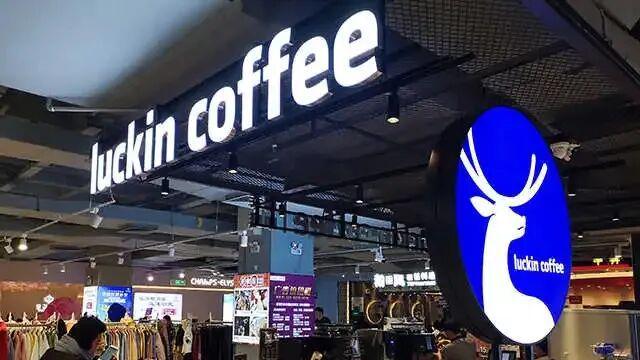
2025年国人人均3杯瑞幸
Di Yi Cai Jing Zi Xun· 2026-02-27 05:53
Core Viewpoint - Luckin Coffee reported a revenue of 49.29 billion yuan for 2025, marking a 43% year-on-year increase, driven by store expansion and increased customer transactions [3][4]. Group 1: Financial Performance - In 2025, Luckin Coffee's revenue reached 49.29 billion yuan, with a 43% year-on-year growth [3]. - The company sold 4.1 billion cups of freshly made beverages, equating to approximately 3 cups per person in China [3]. - In Q4 2025, total net revenue grew by 32.9% to 12.78 billion yuan, while net profit decreased by 39% to 520 million yuan [4]. Group 2: Store Expansion and Customer Growth - Luckin Coffee opened 8,708 new stores in 2025, a 39% increase year-on-year, bringing the total to 31,048 stores [3]. - The average monthly transaction customer count increased by 31.1% in 2025, with same-store sales growth rebounding to 7.5% from a decline of 16.7% in 2024 [3]. Group 3: Market Dynamics and Competition - The competition in the coffee market is intensifying, with new brands entering and existing tea beverage companies expanding into coffee [5]. - The external delivery battle, which began in Q2 2025, contributed to the growth of the coffee and tea market through significant subsidies [3][4]. - The competitive landscape is shifting from price wars to factors such as brand perception, customer experience, and product development [5]. Group 4: Future Outlook - The CEO indicated that the company will maintain a competitive pace in store openings while focusing on maintaining competitive pricing and expanding product price ranges [5]. - The coffee market in China is still in a rapid growth phase, and short-term fluctuations are not expected to alter the long-term growth trajectory [4].


新消费派|咖啡行业“万店之战” 的下半场,从“拼规模扩张”转向“拼综合能力”
Xin Hua Cai Jing· 2025-12-24 12:29
Core Insights - The coffee industry in China is experiencing significant expansion in 2025, with brands like Luckin, Kudi, Lucky Coffee, and Nova Coffee surpassing 10,000 stores, indicating accelerated competition [1] - The market is shifting from extensive expansion to layered competition, focusing on quality upgrades, efficiency optimization, and resource integration by 2026 [1][2] - The coffee market is projected to reach approximately 130 billion yuan in 2025, providing a prime opportunity for established brands to capture market share [2] Market Dynamics - Nova Coffee's rapid expansion is noteworthy, with its store count increasing from 3,258 in July 2025 to over 10,000 by December, showcasing a growth rate that outpaces industry averages [2][3] - The "parasitic" model employed by Nova Coffee, embedding coffee services within existing commercial entities, has allowed for efficient market penetration and reduced operational costs [3][4] - The coffee industry is undergoing a transformation where brands must either increase prices for premium positioning or expand to dilute fixed costs, with many opting for the latter [4] Competitive Landscape - The coffee sector is entering a structural reshuffle, with volume-driven brands like Luckin and Lucky Coffee focusing on lower-tier cities, while high-end brands may face contraction due to unclear positioning [6] - Starbucks leads globally with 40,990 stores, followed by Luckin with 29,214 and Kudi with 18,000, indicating a competitive hierarchy in the market [6] - Brands are increasingly recognizing the limitations of continuous expansion, with the "10,000 store" mark potentially serving as a ceiling for growth [7] Financial Performance - Luckin's third-quarter report for 2025 shows a net profit decline of 2% despite revenue growth, highlighting the challenges of maintaining profitability amid aggressive expansion [8] - Grid Coffee, focusing on high-quality offerings without engaging in price wars, has successfully expanded its store count to over 100, emphasizing a stable pricing strategy [9] Future Outlook - The coffee industry is evolving towards a focus on brand value and long-term sustainability, with companies needing to balance expansion efficiency with maintaining brand integrity [10] - Key competitive capabilities will include global supply chain management, digital operations, and the ability to adapt to market changes, particularly in overseas markets [11] - The future of competition will center on creating user value and addressing broader societal impacts, moving beyond mere scale and efficiency [11]

宣布裁员900人、计划关闭数百家门店,咖啡巨头撑不住了?
3 6 Ke· 2025-10-16 00:18
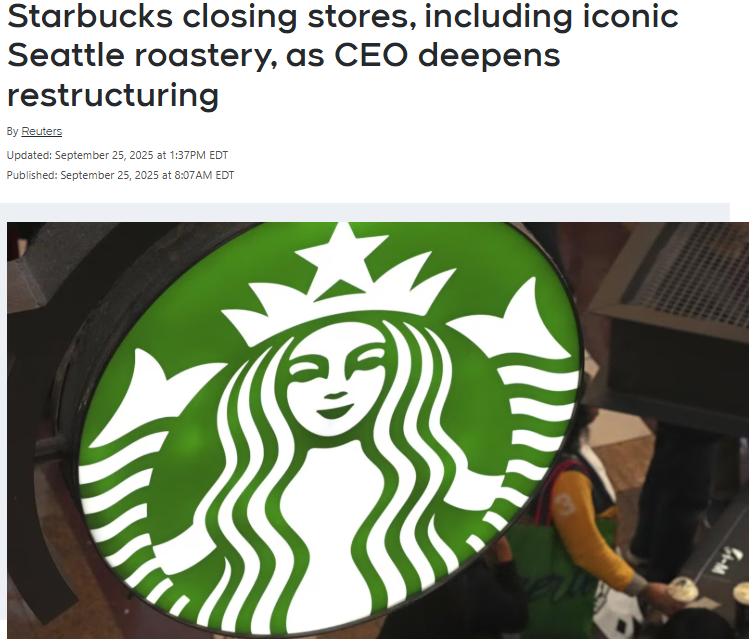
Group 1 - Starbucks announced a restructuring plan that includes closing hundreds of stores in North America and Europe, and laying off approximately 900 employees [4] - The restructuring is part of CEO Brian Niccol's "Back to Starbucks" initiative, aimed at improving financial performance and customer experience [4] - The store closures are expected to be completed by the end of fiscal year 2025, with an estimated cost of around $1 billion associated with the restructuring activities [4][6] Group 2 - Starbucks' North American sales have declined for six consecutive quarters, with a 2% year-over-year drop reported for Q3 of fiscal year 2025 [6] - In contrast, Starbucks' revenue in China reached $790 million in Q3, marking an 8% year-over-year increase, driven by a 6% increase in same-store transaction volume [9] - Starbucks plans to upgrade over 1,000 stores in the next 12 months, despite the overall reduction in store count in North America [4][9] Group 3 - Starbucks is in the final stages of negotiations to sell a significant portion of its Chinese business, with potential buyers including several private equity firms [7][8] - The company aims to retain a 30% stake in the Chinese operations, allowing it to maintain influence while securing funding and resources from multiple buyers [7] - The sale is expected to be finalized by the end of October 2023, with over 20 interested parties currently being evaluated [9] Group 4 - The competitive landscape in the coffee industry is intensifying, with major players like Coca-Cola considering the sale of Costa Coffee due to market pressures [13] - The rapid expansion of domestic brands like Luckin Coffee has contributed to a highly competitive environment, leading to significant store closures across the industry [15] - The overall number of coffee shops in China has decreased from 200,000 in May to 191,000 in September, indicating a challenging market for many brands [15]