效率优化

Search documents
华润啤酒(00291.HK):主业利润稳健增长 关注需求改善
Ge Long Hui· 2026-03-27 21:18
Core Viewpoint - The company reported a decline in revenue and net profit for 2025, primarily due to goodwill impairment in the liquor segment, while the beer segment showed resilience with improved margins and profitability [1][2]. Financial Performance - In 2025, the company achieved revenue of 37.99 billion and net profit of 3.37 billion, representing a year-on-year decline of 1.7% and 28.9% respectively [1]. - Core EBITDA reached 9.88 billion, up 9.9% year-on-year, and adjusted net profit was 5.72 billion, an increase of 19.6% [1]. - The company proposed a final dividend of 0.557 per share, with total annual dividends of 1.021 per share, marking a 34.3% increase and the highest in five years, resulting in a payout ratio of 98% [1]. Beer Segment Performance - The beer segment contributed 36.49 billion in revenue, remaining flat year-on-year, with sales volume of 11.03 million kiloliters, up 1.4% [2]. - The product mix showed clear upgrades, with mid-to-high price segments experiencing single-digit growth, and premium products growing approximately 10% [2]. - The beer gross margin improved by 1.4 percentage points to 42.5%, benefiting from a focus on high-end products and declining raw material costs [2]. Liquor Segment Performance - The liquor segment faced significant challenges, with revenue declining by 30.4% to 1.49 billion due to industry downturns and increased competition [2]. - The company recognized a goodwill impairment of 2.877 billion related to its subsidiary, aligning with market expectations and alleviating financial risks [2]. Cost Management and Efficiency - The company achieved a reduction in beer production costs, with a year-on-year decrease of 2.9% in the second half and 3.7% for the entire year, primarily due to savings in raw material costs [3]. - Sales and management expense ratios showed a mixed trend, with sales expenses increasing slightly while management expenses decreased, indicating effective cost control measures [3]. Future Outlook - The company is focused on upgrading its product offerings and enhancing profitability through cost management and efficiency improvements, with expectations for continued growth in the beer segment [3]. - The liquor business is anticipated to stabilize as goodwill impairments are addressed, with a focus on demand recovery in the market [3].

想进OpenAI?先解出这道题,百万美元算力已就位
机器之心· 2026-03-19 06:49
Core Insights - OpenAI has launched the Model Craft Challenge "Parameter Golf," which focuses on training optimal small models under strict resource constraints, emphasizing efficiency and innovative design [3][4][5]. Group 1: Challenge Overview - The challenge requires participants to minimize validation loss on a fixed dataset while keeping model artifacts (weights and training code) under 16 MB and completing training on 8 H100 GPUs within 10 minutes [1][5]. - The challenge is open globally and aims to explore more efficient pre-training models under strict resource constraints, with outstanding participants potentially receiving interview opportunities at OpenAI [4][8]. Group 2: Design and Structure - The challenge draws inspiration from the NanoGPT Speedrunning concept, focusing on achieving specified validation loss levels in the shortest time possible while exploring efficient model design under parameter constraints [5]. - OpenAI has set a total of $1 million in compute credits to assist participants in starting and advancing their model training [6]. Group 3: Participation Guidelines - Participants can fork a GitHub repository provided by OpenAI, which includes baseline models, fixed datasets, and evaluation scripts, and submit their improvements as pull requests [10]. - The challenge runs from March 18 to April 30, and participants must be at least 18 years old and located in OpenAI-supported regions [9][12]. Group 4: Community Reactions - Reactions to the challenge have been mixed, with some praising it as a true test of engineering talent under constraints, while others express concerns about potential exploitation by companies [20][22]. - Notable AI researchers suggest that the challenge could be completed by AI agents, indicating a belief that automated solutions could outperform human participants [25].


中国反弹 vs 日本平稳:解码2025年中日创投市场温差
3 6 Ke· 2026-01-26 05:22
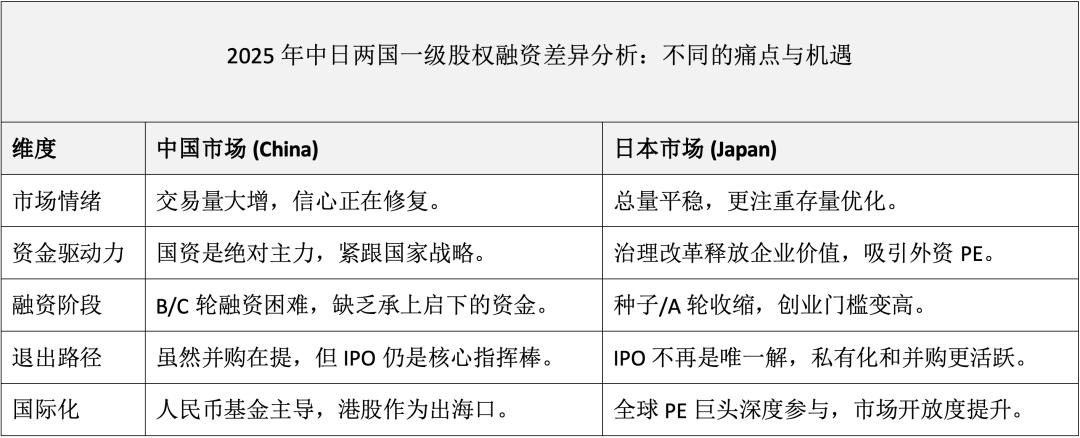
Core Insights - The 2025 equity investment markets in China and Japan exhibit distinct evolutionary paths amid complex macroeconomic and geopolitical contexts, with China showing a "V-shaped rebound" and Japan experiencing stable growth with a focus on restructuring [3] Group 1: Market Size and Activity - China saw a significant increase in transaction volume, with 9,058 investment transactions in 2025, a 28% year-on-year growth, surpassing the 2021 peak, indicating strong market recovery [5] - The total investment amount in China was 821.368 billion RMB, a slight decrease of 0.44% year-on-year, reflecting a "volume increase, price stability" trend [6] - Japan's VC market remained stable with a total investment of approximately 761.3 billion JPY (about 37 billion RMB), while the PE market reached a historic high, expected to exceed 40 billion USD (about 290 billion RMB) [8][9] Group 2: Financing Rounds and Structure - In China, early-stage financing (seed/angel/A rounds) accounted for 67% of total investments, indicating a dominance of early-stage funding [11] - The middle-stage financing (B/C rounds) saw a drastic decline, creating a "barbell" structure with significant early and late-stage funding but a lack of support for growth-stage companies [12] - Japan experienced an 18% decline in Series A funding, while Series B funding increased by 11%, indicating a shift towards verified quality projects [13][14] Group 3: Funding Sources and Attributes - In China, state-owned enterprises (SOEs) dominated with a penetration rate of 44.55%, marking a historical high, while RMB funds became predominant as USD funds receded [16][17] - Japan's market saw a rise in corporate venture capital (CVC) investments, increasing by 32 billion JPY, alongside a surge in foreign investments from global PE giants like Blackstone and KKR [18][19] Group 4: Exit Environment: IPO vs M&A - China's IPO market rebounded with 277 IPOs, a 26% increase year-on-year, while M&A transactions totaled 955, indicating a growing emphasis on diverse exit strategies [20][22] - Japan's IPO market faced challenges with only 108 IPOs, the lowest in a decade, while M&A activity surged with 167 cases, reflecting a shift towards mergers as a primary exit route [23][24] Group 5: Investment Tracks and Hotspots - In China, key investment areas included advanced manufacturing, AI, and healthcare, while traditional sectors like consumption and education saw reduced interest [25] - Japan focused on deep tech and digitalization, with funding favoring projects with high technological barriers [26][27] Group 6: Matthew Effect and Capital Concentration - In China, 1.43% of leading companies (raising over 1 billion RMB) captured 40.48% of total funding, highlighting a significant concentration of capital [28] - Japan's funding distribution became more selective, with a decrease in the median size of financing rounds from 77.6 million JPY to 62.4 million JPY [30] Group 7: Common Features - Both markets are transitioning from a focus on scale to quality, with China emphasizing high-quality development and Japan focusing on efficiency optimization [32] - The head effect is intensifying, with capital increasingly concentrated in top-tier assets, indicating a challenging environment for lower-tier projects [32] - Strategic capital is replacing purely financial capital, with China seeing a rise in government-led funds and Japan witnessing the strong emergence of CVCs [32] - Both countries are experiencing significant policy interventions to guide capital flows and reshape market rules [34]
新消费派|咖啡行业“万店之战” 的下半场,从“拼规模扩张”转向“拼综合能力”
Xin Hua Cai Jing· 2025-12-24 12:29
Core Insights - The coffee industry in China is experiencing significant expansion in 2025, with brands like Luckin, Kudi, Lucky Coffee, and Nova Coffee surpassing 10,000 stores, indicating accelerated competition [1] - The market is shifting from extensive expansion to layered competition, focusing on quality upgrades, efficiency optimization, and resource integration by 2026 [1][2] - The coffee market is projected to reach approximately 130 billion yuan in 2025, providing a prime opportunity for established brands to capture market share [2] Market Dynamics - Nova Coffee's rapid expansion is noteworthy, with its store count increasing from 3,258 in July 2025 to over 10,000 by December, showcasing a growth rate that outpaces industry averages [2][3] - The "parasitic" model employed by Nova Coffee, embedding coffee services within existing commercial entities, has allowed for efficient market penetration and reduced operational costs [3][4] - The coffee industry is undergoing a transformation where brands must either increase prices for premium positioning or expand to dilute fixed costs, with many opting for the latter [4] Competitive Landscape - The coffee sector is entering a structural reshuffle, with volume-driven brands like Luckin and Lucky Coffee focusing on lower-tier cities, while high-end brands may face contraction due to unclear positioning [6] - Starbucks leads globally with 40,990 stores, followed by Luckin with 29,214 and Kudi with 18,000, indicating a competitive hierarchy in the market [6] - Brands are increasingly recognizing the limitations of continuous expansion, with the "10,000 store" mark potentially serving as a ceiling for growth [7] Financial Performance - Luckin's third-quarter report for 2025 shows a net profit decline of 2% despite revenue growth, highlighting the challenges of maintaining profitability amid aggressive expansion [8] - Grid Coffee, focusing on high-quality offerings without engaging in price wars, has successfully expanded its store count to over 100, emphasizing a stable pricing strategy [9] Future Outlook - The coffee industry is evolving towards a focus on brand value and long-term sustainability, with companies needing to balance expansion efficiency with maintaining brand integrity [10] - Key competitive capabilities will include global supply chain management, digital operations, and the ability to adapt to market changes, particularly in overseas markets [11] - The future of competition will center on creating user value and addressing broader societal impacts, moving beyond mere scale and efficiency [11]


港股异动丨美团拉升大涨7%,阿里称淘宝闪购第一阶段规模扩张已结束
Ge Long Hui· 2025-11-26 02:31
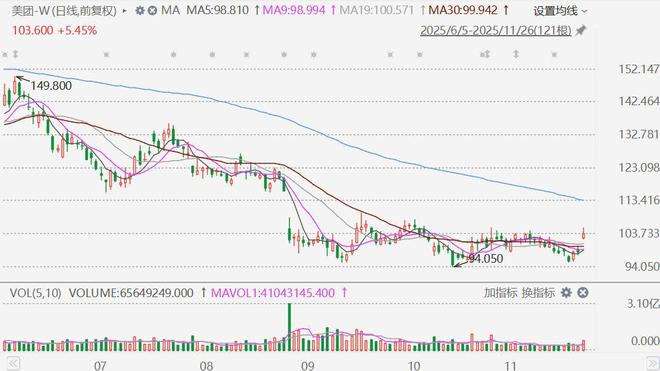
Core Viewpoint - Meituan-W (3690.HK) experienced a significant intraday increase of 7%, reaching HKD 105.2, influenced by Alibaba's positive updates on its Taobao Flash Sales business [1] Group 1: Alibaba's Business Updates - Alibaba's CEO of the China e-commerce division, Jiang Fan, reported substantial progress in unit economic efficiency (UE) optimization for Taobao Flash Sales, with average losses per order halved since July and August [1] - The proportion of non-tea drink orders has risen to over 75%, and the average order value has seen double-digit growth on a month-over-month basis [1] - Jiang indicated that the first phase of scale expansion for Taobao Flash Sales has concluded, and the business is now entering a second phase focused on efficiency optimization [1] Group 2: Financial Projections and Strategy - Alibaba's CFO, Xu Hong, noted that the third quarter marked a peak in investment for the Flash Sales business, with expectations for a significant reduction in overall investment in the next quarter due to improved efficiency and stable scale [1] - The company will dynamically adjust its investment strategy based on the competitive landscape of the market [1] - Analysts suggest that Alibaba's statements may indicate a "temporary truce" in competitive strategies [1]

AWS增速被微软甩开一倍,亚马逊急了:1.4万人成AI转型祭品?
Tai Mei Ti A P P· 2025-11-02 06:19
Core Insights - Amazon announced a new round of layoffs, cutting approximately 14,000 employees, which is 4% of its total workforce of 350,000, despite strong financial performance [1] - The layoffs reflect a broader structural transformation in the global tech industry, moving from "scale expansion" to "lean growth" [1][2] Group 1: Industry Trends - The tech industry is undergoing a collective shift towards cost reduction and efficiency amid post-pandemic demand adjustments and the disruptive impact of AI technology [2] - The global e-commerce market is expected to exceed $6.8 trillion in 2025, but growth rates have declined from 25% during the pandemic to 8.7% [2] - In the U.S., online retail penetration has reached 18.3%, with growth rates below 10% for four consecutive quarters, indicating a shift from impulsive to rational consumer behavior [2] Group 2: Cost Pressures - Cost pressures are a common challenge across the industry, exacerbated by high tariffs on Chinese goods, which could lead to an annual profit loss of up to $10 billion for Amazon [3] - The net profit margin for leading platforms has decreased from 4.2% in 2021 to 2.8% in 2025, pushing companies to enhance efficiency to maintain profitability [3] Group 3: AI and Cloud Computing - AI has become a core variable in cloud computing competition, with enterprise demand shifting towards high-performance computing for AI training and inference [4] - AWS leads the global cloud infrastructure market with a 29% share, but its growth rate of 17.5% lags behind competitors like Microsoft Azure and Google Cloud [4] Group 4: Strategic Restructuring - The layoffs are part of a strategic restructuring aimed at enhancing efficiency and reallocating resources towards AI and cloud computing [7] - Over 80% of the laid-off employees are from retail and logistics, indicating a focus on optimizing non-core business areas [7][8] Group 5: Financial Performance - Amazon's Q1 2025 revenue reached $155.67 billion, a 9% year-over-year increase, with AWS contributing significantly to operating profit [13] - Despite a 64% increase in net profit, the growth rate is primarily due to a low base effect from the previous year, with profit growth lagging behind revenue growth [14] Group 6: Long-term Outlook - The company plans to increase capital expenditures to $100 billion in 2025, with a significant portion allocated to AI infrastructure [16] - The success of Amazon's transformation into an AI-driven platform will depend on its ability to commercialize AI technology effectively and manage competitive pressures [29]

中信里昂:维持敏华控股(01999)“跑赢大市”评级 目标价升至5港元
智通财经网· 2025-10-02 02:56
Core Viewpoint - CITIC Securities raised the target price for Minhua Holdings (01999) by 11% from HKD 4.5 to HKD 5, maintaining an "outperform" rating despite weak domestic demand, citing stable underlying profits due to margin improvements [1] Group 1: Financial Performance - Minhua achieved stable underlying profits in FY2025, attributed to margin enhancements [1] - The net profit estimates for 2026 and 2027 were reduced by 7.1% and 7.5% respectively, reflecting lower sales assumptions and tariffs [1] Group 2: Market Position and Strategy - Minhua's global production base has shown resilience in overseas sales, helping to mitigate the impact of US tariffs [1] - Continuous efficiency optimization and increased overseas capacity are expected to stabilize short-term profitability [1] Group 3: Future Outlook - The company is anticipated to benefit from a potential stabilization in domestic demand by 2026 [1] - CITIC Securities rolled forward the valuation to 2027, applying a higher price-to-earnings ratio of 8.8 times, up from 7.5 times, which is still below the three-year average by 0.5 standard deviations [1]
卫龙美味(09985.HK):业绩超预期 产品渠道两手抓
Ge Long Hui· 2025-08-19 02:57
Group 1 - The company achieved a revenue of 3.483 billion yuan in H1 2025, representing a year-on-year increase of 18.5%, and a net profit of 736 million yuan, also up 18.5% year-on-year [1] - The revenue breakdown for H1 2025 shows that the konjac products drove growth in vegetable products, with revenues of 1.31 billion yuan for dietary noodles, 2.11 billion yuan for vegetable products, and 60 million yuan for bean products, reflecting a year-on-year change of -3.2%, +44.3%, and -48.1% respectively [1] - The company expanded its offline store coverage to 584,000, an increase of 150,000 stores compared to the end of 2024, indicating a continuous improvement in offline channel operations [1] Group 2 - The gross margin for H1 2025 was 47.2%, a decrease of 2.6 percentage points year-on-year, but an increase of 0.5 percentage points quarter-on-quarter [2] - The gross margins for dietary noodles, vegetable products, and bean products were 48.4%, 46.6%, and 42.4% respectively, with vegetable products facing margin pressure due to cost pressures [2] - The company is expected to see revenue growth in the second half of the year with new products like stinky tofu being launched and the peak season starting in Q3 [2] Group 3 - The company revised its profit forecast for 2025 upwards, expecting net profits of 1.46 billion yuan, 1.72 billion yuan, and 1.96 billion yuan for 2025-2027, reflecting year-on-year growth of 37%, 18%, and 14% respectively [3] - The corresponding price-to-earnings ratios are projected to be 18, 16, and 14 times for 2025-2027 [3]
卫龙美味(09985):业绩超预期,产品渠道两手抓
Soochow Securities· 2025-08-17 04:03
Investment Rating - The investment rating for the company is "Buy" (maintained) [1] Core Views - The company's performance exceeded expectations, with a focus on both product and channel development [8] - The company achieved a revenue of 34.83 billion yuan in H1 2025, representing a year-on-year increase of 18.5%, and a net profit of 7.36 billion yuan, also up 18.5% year-on-year [8] - The company is expected to benefit from the ongoing trend of konjac products and continuous improvement in channel efficiency, with significant growth potential in overseas markets [8] Financial Forecasts - Total revenue projections for the company are as follows: - 2023: 4,887 million yuan - 2024: 6,266 million yuan (up 28.22% year-on-year) - 2025: 7,274 million yuan (up 16.08% year-on-year) - 2026: 8,381 million yuan (up 15.22% year-on-year) - 2027: 9,504 million yuan (up 13.40% year-on-year) [1][9] - Net profit projections are as follows: - 2023: 880.35 million yuan - 2024: 1,068.51 million yuan (up 21.37% year-on-year) - 2025: 1,462.77 million yuan (up 36.90% year-on-year) - 2026: 1,719.66 million yuan (up 17.56% year-on-year) - 2027: 1,962.70 million yuan (up 14.13% year-on-year) [1][9] - The expected EPS for the years 2025 to 2027 are 0.60 yuan, 0.71 yuan, and 0.81 yuan respectively [1][9] Market Data - The closing price of the company's stock is 13.30 HKD, with a market capitalization of approximately 29,440.32 million HKD [6] - The company has a price-to-earnings (P/E) ratio of 30.54 for 2023, decreasing to 18.38 for 2025 and further to 13.70 for 2027 [1][9]
啤酒头部企业普降背后|财报的秘密⑥
Sou Hu Cai Jing· 2025-05-03 06:41
Industry Overview - The beer industry in 2024 is experiencing a significant divergence, with some companies thriving while others struggle, reflecting a structural adjustment within the market [2][3] - The National Bureau of Statistics reported a 0.6% year-on-year decline in beer production and a 5.7% decrease in industry revenue, making beer the only category in the food and beverage sector to see a revenue drop [2] Market Dynamics - The Chinese beer market is characterized by oligopolistic competition, with the top six companies (CR6) holding a market share of 92.6% [3] - Beer production has been declining since its peak in 2013, leading to a contraction in the overall consumption market, which directly impacts the performance of leading companies [3] Financial Performance - Major companies like Budweiser APAC, China Resources Beer, and Tsingtao Brewery reported revenue declines of 8.89%, 0.76%, and 5.3% respectively in 2024 [4][5] - Net profits for Budweiser APAC, China Resources Beer, and Chongqing Beer also fell by 14.8%, 8.03%, and 17.05% respectively, attributed to weak consumer demand and challenges in traditional sales channels [4][5] Growth Segmentation - Yanjing Beer and Zhujiang Beer are exceptions, showing positive growth in both revenue and profit, with Yanjing's revenue increasing by 3.20% and net profit by 54.87% [5] - Yanjing U8 has successfully penetrated the mid-to-high-end market, achieving a 31.40% increase in sales volume [6] Strategic Shifts - Companies are shifting focus towards operational efficiency and market segmentation to find sustainable profit growth in a saturated market [8][9] - Budweiser APAC is reallocating resources from super-premium products to the core price segment of 8-10 yuan, which is performing better in the current consumption environment [7][8] Cost Management - Several companies, including Budweiser APAC and China Resources Beer, have reduced their sales costs by 8.93% and 2.93% respectively, due to lower barley prices and improved cost control measures [9][10] - Qingdao Beer managed to achieve a slight net profit increase despite revenue decline by reducing various operational costs [10][12] Marketing Innovations - Companies are adopting innovative marketing strategies to engage younger consumers, such as emotional and scenario-based marketing [13][14] - Budweiser APAC is focusing on expanding non-drinking channels and targeting new consumption scenarios, while China Resources Beer has seen over 30% growth in online business [15][16]