
商业航天产业集群

Search documents
订单饱满、链式协同陕西商业航天集群加速成形
Shang Hai Zheng Quan Bao· 2026-01-23 18:12
Core Insights - Shaanxi Province is rapidly developing its commercial aerospace industry, aiming to create a leading innovation cluster by 2030 with a target industry scale exceeding 1000 billion yuan and over 200 enterprises [1] Group 1: Industry Development - Shaanxi has established a comprehensive action plan to cultivate a 100 billion yuan commercial aerospace industry by the end of 2024, with a goal of reaching 500 billion yuan by 2027 [1] - The province's aerospace industry is characterized by strong collaboration among leading enterprises, enhancing competitiveness through timely order deliveries and strategic partnerships [1][6] Group 2: Company Performance - Shaanxi Huada, a key player in aerospace connectors, is expanding its product range to meet customer demands, including RF connectors and high-speed connectors, with a focus on increasing the value of each satellite [2] - Xicet Testing has developed a "super factory" model for commercial satellite payloads, providing a one-stop service from design validation to environmental testing, which has been well-received by major satellite manufacturers [3] Group 3: Technological Advancements - Sry New Materials has successfully applied high-strength, high-conductivity copper alloys in liquid rocket engine thrust chambers, with revenue from this segment projected to grow from 20.97 million yuan in 2022 to 30.16 million yuan in 2024 [3] - Tianli Composite has become a major supplier of transition joints for satellites, contributing to the domestic production of key aerospace materials [4] Group 4: Strategic Collaborations - Xicet Testing is collaborating with Shaanxi Huada and Jizhi Co. to enhance the aerospace testing market, focusing on quality assurance and integrated capabilities across the entire design-manufacturing-testing-application chain [6][7] - The collaboration aims to develop new testing requirements in aerospace, including reliability testing of components and material performance evaluation, thereby expanding service offerings and enhancing customer engagement [7]
订单饱满、链式协同 陕西商业航天集群加速成形
Shang Hai Zheng Quan Bao· 2026-01-23 18:10
Core Insights - Shaanxi Province is rapidly developing its commercial aerospace industry, aiming to create a leading innovation cluster with a target industry scale of over 500 billion yuan by 2027 and 1 trillion yuan by 2030 [1] - The province's aerospace sector is characterized by strong order fulfillment and collaboration among leading enterprises, enhancing competitiveness in the commercial aerospace era [1] Group 1: Industry Development - Shaanxi has proactively released an action plan to cultivate a 100 billion yuan commercial aerospace industry cluster by the end of 2024, with a focus on satellite and rocket manufacturing, constellation operations, and satellite applications [1] - The province aims to have over 100 large-scale enterprises by 2027 and 200 by 2030, with a significant increase in industry scale and leadership in various aerospace fields [1] Group 2: Company Performance - Shaanxi Huada, a key player in aerospace connectors, reported a continuous increase in the proportion of commercial aerospace business in its overall revenue, with a focus on expanding product categories to meet customer demands [2] - Xicet Testing has established a comprehensive testing capability system, providing one-stop services that significantly shorten development cycles and reduce management costs for commercial satellite manufacturers [3] Group 3: Material and Component Innovation - Sui Rui New Materials has successfully applied high-strength, high-conductivity copper alloys in liquid rocket engine thrust chambers, with revenue from these products expected to grow from 20.97 million yuan in 2022 to 30.16 million yuan in 2024 [3] - Tianli Composite has become a major supplier of transition joints for satellites, contributing to the domestic production of key aerospace materials [4] Group 4: Strategic Collaboration - Xicet Testing has formed strategic partnerships with Shaanxi Huada and Jizhi Co., focusing on expanding the aerospace testing market and enhancing quality collaboration across the entire design-manufacturing-testing-application chain [6] - The collaboration aims to leverage each company's strengths to support high-end manufacturing and ensure product quality stability in the commercial aerospace sector [6][7] Group 5: Ecosystem and Infrastructure - Shaanxi's aerospace industry is supported by national research institutions and a unique national economic and technological development zone focused on aerospace, fostering a complete innovation chain from basic research to technology transfer [7] - The Xi'an National Civil Aerospace Industry Base hosts over 60 commercial aerospace companies, establishing a comprehensive ecosystem that integrates rocket development, satellite payloads, and data applications [7]
北京火箭大街竣工
第一财经· 2026-01-19 15:24
Core Viewpoint - The article highlights the completion of the Beijing Rocket Street project, which will serve as China's first common research and production base for commercial aerospace, aiming to enhance innovation and ecological development in the industry [2][3]. Group 1: Project Overview - The Beijing Rocket Street project has a total construction area of 145,000 square meters and includes four main functional areas: common technology platform, innovation R&D center, high-end manufacturing center, and display and operation control center [2]. - The project will provide over ten shared services for satellite and rocket development, including various testing services and support for research and production [2]. Group 2: Industry Goals and Policies - Beijing Yizhuang aims to establish a 50 billion yuan commercial aerospace industry cluster by 2028, with a long-term goal of achieving "thousand enterprises linked, thousand stars launched, and thousand billion revenue" [3]. - The development of the commercial aerospace sector is supported by national strategies and local policies, with a focus on innovation and collaboration among various regions [3]. Group 3: Current Industry Status - In 2025, the "Yizhuang Arrow" is expected to successfully launch 24 times, delivering over 160 satellites, with the aerospace industry generating over 30 billion yuan in revenue [4]. - The industry faces challenges such as insufficient rocket capacity, low total supply, and high launch costs, with costs for Chinese commercial launches ranging from 50,000 to 150,000 yuan per kilogram compared to SpaceX's Falcon 9 at approximately 2,940 USD per kilogram [4]. Group 4: Collaborative Development - The industry has historically struggled with a "single-point breakthrough" approach, leading to inefficiencies and high costs [5]. - The completion of the Rocket Street project is expected to enhance the efficiency of the entire industry chain by providing accessible public service support for key testing and production processes [5].

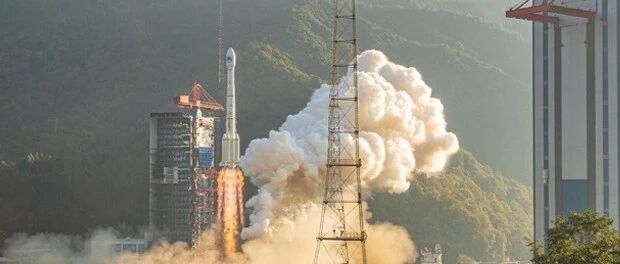
北京火箭大街竣工,商业航天集群目标千星入轨、千亿营收
Di Yi Cai Jing· 2026-01-19 13:31
Group 1 - The Beijing Rocket Street project has completed construction and is now entering the delivery phase, becoming the first commercial aerospace common research and production base in China [1] - The total construction area of Beijing Rocket Street is 145,000 square meters, featuring four functional areas: common technology platform, innovation R&D center, high-end manufacturing center, and display and operation control center [1] - The project aims to provide over ten shared services, including various testing services and research production support services like 3D printing and reliable component supply [1] Group 2 - Beijing Yizhuang has gathered over 180 related enterprises in the commercial aerospace sector, with commercial rocket companies accounting for 75% of the national total [2] - The goal for the commercial aerospace industry in Yizhuang is to form a 50 billion-level industry cluster by 2028, progressing towards a target of "thousand enterprises linked, thousand stars in orbit, and thousand billion revenue" [2] - The development of the commercial aerospace sector is supported by national strategic guidance and local policy collaboration, with multiple provinces and cities implementing special support policies [2] Group 3 - In 2025, "Yizhuang Arrow" successfully launched 24 times, delivering over 160 satellites, with the aerospace industry generating over 30 billion yuan in revenue [3] - Challenges such as insufficient rocket capacity, low total supply, and high launch costs continue to hinder industry development, with launch costs in China ranging from 50,000 to 150,000 yuan per kilogram compared to SpaceX's Falcon 9 cost of approximately 2,940 USD per kilogram [3] - The report highlights the lack of collaboration and supporting facilities in the commercial aerospace industry chain, which leads to high costs across various segments [3] Group 4 - The root of the industry's challenges lies in a past development model characterized by "multiple single-point breakthroughs and insufficient collaboration" [4] - Under conditions of mass production, the launch cost of the "Tianlong-3" rocket is approaching that of the Falcon 9, and costs are expected to decrease further with the maturity of reuse technology [4] - The completion of Rocket Street provides essential public service support for key industry chain segments, allowing commercial aerospace companies to focus more on product iteration and improving overall industry efficiency [4]
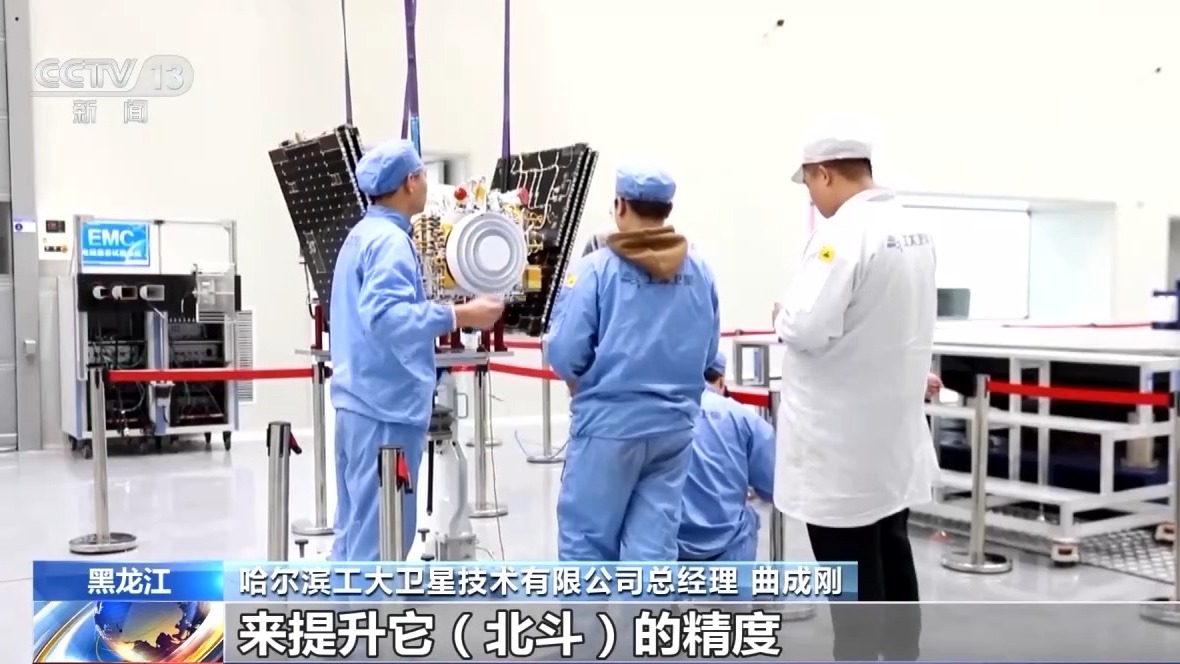
从实验室到太空,哈尔滨的商业航天藏着这些密码
Yang Shi Wang· 2026-01-06 05:57
Core Insights - The development of commercial aerospace in Harbin has rapidly progressed, forming a cluster of over 50 companies in the satellite industry during the 14th Five-Year Plan period [4] - Harbin Institute of Technology (HIT) plays a crucial role in fostering entrepreneurship and innovation in the aerospace sector, with policies encouraging faculty to commercialize research [5][11] - The establishment of a ground simulation facility for space environment testing has significantly advanced the development of over 2000 domestic aerospace components [15] Group 1: Industry Development - The commercial aerospace sector in Harbin has transitioned from a few companies to over 50, covering satellite materials, manufacturing, and application services [4] - Companies like Gongda Satellite Technology have successfully launched 26 satellites since their establishment, indicating a shift from research-based models to industrialization [3] - The migration of companies from southern regions to Harbin highlights the growing attractiveness of the local aerospace industry [3] Group 2: Role of Harbin Institute of Technology - HIT has established a research results transformation platform to support faculty in commercializing their innovations, contributing to the local aerospace ecosystem [7][9] - The university's involvement in major projects like the Chinese space station and lunar exploration has enriched its technological capabilities [7] - HIT's policies have enabled faculty members to start their own companies, fostering a culture of innovation and entrepreneurship [5][11] Group 3: Government Support and Policies - The local government has implemented measures to support the aerospace industry, including a "direct access" system for addressing business challenges [19] - Black龙江 Province has introduced various policies to enhance financing support, optimize project approval processes, and strengthen talent recruitment for the aerospace sector [25][27] - Investment in early-stage technology companies has been encouraged, with significant funding provided to startups like Xingwang Power Technology [21][23]
科技视点·走进商业航天产业一线|山东商业航天向海而行
Ren Min Ri Bao· 2025-12-22 04:12
Core Viewpoint - The commercial space industry is emerging as a new arena for global technological competition and industrial transformation, with Shandong province positioning itself as a key player in this sector by developing a comprehensive commercial space industry ecosystem centered around the Dongfang Spaceport in Haiyang, Yantai [1][8]. Group 1: Infrastructure and Efficiency - The Dongfang Spaceport can transport a rocket from the production facility to the launch site in just 2 hours, showcasing its efficient infrastructure [2]. - The spaceport has successfully conducted over 20 sea launches, placing more than 130 satellites into orbit, establishing itself as China's first and only commercial sea launch mother port [4]. - The port's strategic location offers favorable weather conditions and a natural launch window, allowing for flexible launch point selection to meet various orbital requirements [3]. Group 2: Industry Layout and Development Strategy - The spaceport's development strategy focuses on building reliable sea launch infrastructure and attracting leading R&D and manufacturing enterprises, aiming to create a full-chain commercial space industry ecosystem [3][5]. - The integration of upstream rocket development and downstream satellite applications is a key aspect of the spaceport's strategy, moving beyond mere launch services [3][10]. - Shandong province has identified deep-sea and aerospace as key industrial chains, implementing policies to support the development of the commercial space industry [9][11]. Group 3: Role of Private Enterprises - Private companies, such as Dongfang Space, are becoming significant players in the commercial space landscape, leveraging the spaceport's one-stop services to enhance their operational efficiency [5][6]. - Dongfang Space has developed the "Gravitational One" rocket, which achieved a successful first flight, marking a milestone in solid rocket technology with a payload capacity of 6.5 tons to low Earth orbit [6][8]. - The company emphasizes cost control through modular and standardized designs, reducing the launch cost to under 50,000 RMB per kilogram for sun-synchronous orbit missions [7]. Group 4: Future Prospects and Goals - By 2027, Shandong aims to produce 100 launch vehicles and 150 commercial satellites annually, with the commercial space industry expected to reach a scale of 50 billion RMB [10]. - The long-term growth of the commercial space sector is contingent upon the broader application of satellite data across various industries, which will drive demand and innovation [10][11].

海上发射牵引、工业基础支撑、产业链协同 山东商业航天向海而行(科技视点·走进商业航天产业一线)
Ren Min Ri Bao· 2025-12-21 22:21
Core Insights - The article highlights the rapid development of commercial spaceflight in Shandong, particularly at the Dongfang Spaceport in Yantai, which has successfully conducted multiple sea launches and is establishing a comprehensive commercial space industry ecosystem [1][4][10]. Group 1: Infrastructure and Efficiency - The Dongfang Spaceport can transport a rocket from the production facility to the launch site in just 2 hours, showcasing its efficient infrastructure [2]. - The port's strategic location offers favorable weather conditions and a natural launch window, allowing for flexible launch point selection [3]. - The port has successfully supported over 20 sea launches, placing more than 130 satellites into orbit, demonstrating its operational capabilities [4]. Group 2: Industry Collaboration and Innovation - Private enterprises, such as Dongfang Space, are playing a crucial role in reshaping the commercial space landscape, leveraging the port's infrastructure for rapid development [5][6]. - The "Yin-Yang" model of integrating manufacturing and launch services has significantly reduced transportation time and costs, enhancing overall efficiency [4][6]. - The development of the "Gravity One" rocket, which has set records for solid rocket capabilities, exemplifies the innovative spirit within the industry [6][7]. Group 3: Economic Impact and Future Goals - The Shandong province aims to establish a robust commercial space industry cluster, with investments exceeding 32 billion yuan, focusing on rocket manufacturing, satellite applications, and high-end support services [8][10]. - By 2027, Shandong plans to achieve an annual production capacity of 100 launch vehicles and 150 commercial satellites, targeting a commercial space industry scale of 50 billion yuan [10]. - The province's strategy includes integrating space technology with various sectors, aiming for a comprehensive aerospace manufacturing presence by 2035 [11].
2025商业航天论坛在武汉召开 中国星谷签约22个新项目总投资256亿
Chang Jiang Shang Bao· 2025-12-07 23:43
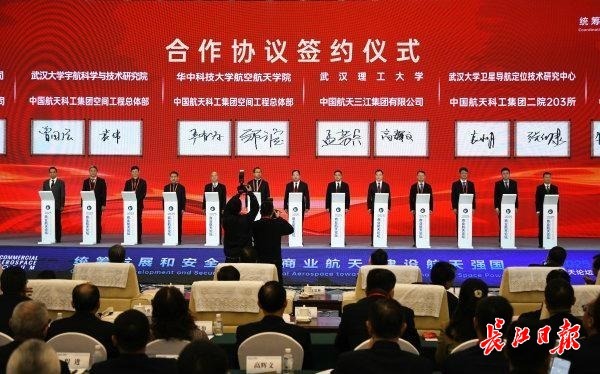
Core Viewpoint - The 2025 Commercial Aerospace Forum held in Wuhan on December 3-4 focuses on the theme of "Coordinating Development and Security, Strengthening Commercial Aerospace, Building a Space Power" and features the signing of 22 new projects with a total investment of 25.6 billion yuan, covering various sectors of commercial aerospace [1][4]. Group 1: Project Overview - The 22 new projects signed at the forum cover the entire industrial chain of commercial aerospace, including key areas such as satellite manufacturing, and aim to enhance the industrial agglomeration effect of "China Star Valley" [1][4]. - Key projects include a 5 billion yuan investment in the Zhongdian Optical Valley Star Valley Technology City, which will focus on commercial aerospace, new materials, and lightweight equipment components [2]. - The "Star Computing Plan" headquarters project by Fengyun Times and Chengdu Xingfan Xingqi aims to create an integrated industry model, supporting future industries in Hubei [2]. Group 2: Investment Highlights - Jiangsu Huanyu Qian Kun is investing 150 million yuan to build a comprehensive testing base for liquid rocket propulsion systems, providing critical testing support for rocket development [2]. - Companies like Churui Intelligent and Zhitop Yunlian are investing 2 billion yuan and 400 million yuan respectively to establish AI and industrial internet computing centers, enhancing data processing capabilities for commercial aerospace [2]. - Hubei Changjiang Beidou Supply Chain Company is investing 500 million yuan to build an intelligent service platform for Beidou space-time information, integrating AI and Beidou applications [2]. Group 3: Industry Development Goals - "China Star Valley" aims to achieve an industrial scale of 100 billion yuan by 2030, positioning itself as a key player in the national aerospace strategy [4]. - The region has established a complete industrial chain covering rocket and satellite development, ground equipment support, and satellite application services, with an annual capacity of 240 satellites and 50 rockets [4]. - Wuhan is accelerating the development of a world-class commercial aerospace industrial cluster and a core area for national logistics hubs, with plans for high-standard parks and innovation centers [5][6].
武汉国家航天产业基地又入驻22个项目,216个项目正推进!“中国星谷”繁星满天
Chang Jiang Ri Bao· 2025-12-04 00:48
Core Viewpoint - The 2025 Commercial Aerospace Forum in Wuhan highlighted the establishment of the Wuhan National Aerospace Industry Base, aiming to create a world-class commercial aerospace industry cluster with 216 projects underway in the "China Star Valley" [1][2]. Group 1: Industry Development - The Wuhan National Aerospace Industry Base is China's first commercial aerospace base, playing a crucial role in the national aerospace strategy, targeting an industry scale of 100 billion yuan by 2030 [2]. - Wuhan boasts 23 academicians in commercial aerospace fields and 15 national innovation platforms, positioning itself as a key innovation hub for aerospace technology [2]. - The "China Star Valley" has developed a complete industrial chain covering rocket and satellite manufacturing, ground equipment, and satellite application services, with an annual capacity of 240 satellites and 50 rockets [4]. Group 2: Project Investments - A total of 22 new projects were signed at the forum, with a total investment of 25.6 billion yuan, covering satellite manufacturing, rocket propulsion, and other key areas of the aerospace industry [5][7]. - The projects include the China Star Valley Fund and the Star Valley Innovation Center, with a focus on creating a complete industry chain from research to manufacturing and application [7]. - The Zhongdian Guanggu Star Valley Technology City project, with an investment of 5 billion yuan, will develop facilities for commercial aerospace, new materials, and lightweight equipment [7]. Group 3: Infrastructure and Connectivity - Wuhan is accelerating the development of the "Optics Valley" and "Star Valley" to enhance innovation and resource sharing, with plans for a bridge to improve connectivity [4][6]. - The city aims to establish a logistics hub and a world-class commercial aerospace industry cluster, enhancing its attractiveness to top talent and enterprises [5].
海淀将添一座“卫星小镇”,核心区明年6月竣工
Xin Jing Bao· 2025-11-30 07:56
Core Insights - A "Satellite Town" focused on the commercial aerospace industry is being developed in Haidian, Beijing, with a planned completion date of June 2026 for its core area of approximately 540,000 square meters [1] Group 1: Development Overview - The "Satellite Town" features a functional layout of "four zones and three centers," including satellite research, operation, application areas, and a talent community [1] - The area aims to attract upstream and downstream satellite enterprises, creating a complete industrial ecosystem from technology research and development to application and talent support [1] Group 2: Infrastructure and Services - Future plans include the establishment of a public service platform to provide various professional testing services for satellite components, enhancing the park's supporting capabilities [1] - The development will also include a display center, communication center, and incubation center to support collaborative growth [1] Group 3: Strategic Goals - The Haidian District aims to leverage its unique advantages of state-owned enterprises and research institutions to focus on core technology breakthroughs and results transformation in the aerospace field [1] - The goal is to accelerate the construction of the "Satellite Town" and create a high-quality, internationally leading commercial aerospace industrial cluster, contributing to China's aerospace ambitions [1]