朱雀系列火箭

Search documents
中国商业航天报告2026:太空竞赛
泽平宏观· 2026-02-14 16:05
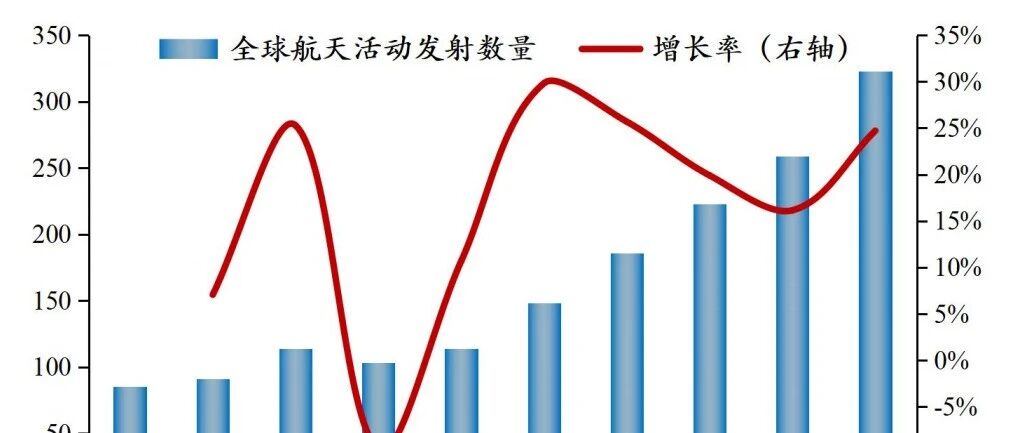
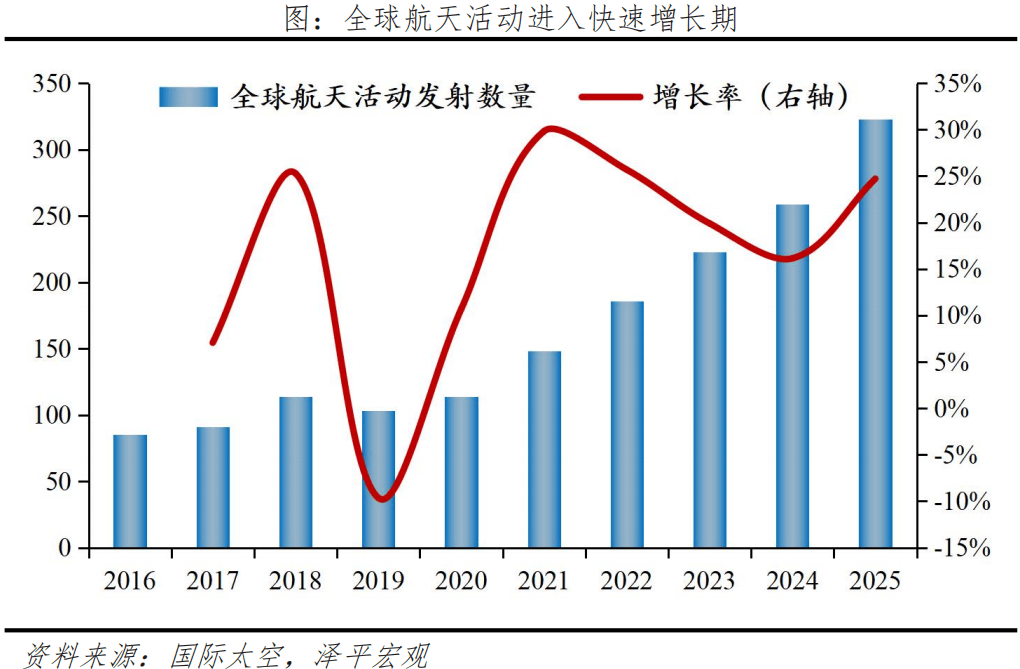
Group 1 - The core viewpoint of the article emphasizes the rapid development of China's commercial space industry, highlighting significant advancements in launch frequency, satellite internet, and government support [3][4][5][6]. - In 2025, global space launches reached a record high of 337, a 28% increase from 263 in 2024, with China and the U.S. accounting for 84% of total launches [9][11]. - The establishment of commercial space as a strategic emerging industry in China was marked by its inclusion in the government work report in March 2025 and the formation of the Commercial Space Administration in November 2025 [12][18]. Group 2 - China's commercial space sector is entering an accelerated development phase, with a notable increase in private sector participation and a shift towards commercialization since 2015 [15][16]. - The government has significantly increased policy support for commercial space, transitioning from encouragement to institutional establishment and relaxed access [17][19]. - The cost of satellite launches has decreased, with domestic launch costs dropping from 115,000 yuan/kg in 2020 to 75,000 yuan/kg in 2024, although still higher than SpaceX's Falcon 9 [20]. Group 3 - SpaceX is leading the global commercial space industry, conducting 165 launches in 2025, which is 49% of the total, and plans to go public in 2026 [21][22]. - The development model represented by SpaceX focuses on extreme scalability, cost reduction, and continuous innovation, transforming space technology into practical global services [22][23]. - Other companies like Blue Origin and Virgin Galactic are also entering the commercial space sector, focusing on space tourism [23]. Group 4 - The first major application of future commercial space is low-orbit satellite internet, which is expected to enter the consumer market with services like SpaceX's Starlink Direct to Cell [25][27]. - The market potential for low-orbit satellite internet is vast, with estimates suggesting it could reach trillions in scale, as it targets consumer markets rather than just B2B [28][29]. - The second major application is the deployment of AI data centers in space, leveraging the unique environmental advantages of space for energy efficiency and cooling [33][36].


商业航天:“高热度”下的“冷思考”
Ren Min Ri Bao· 2026-01-27 06:20
Core Viewpoint - The development of China's commercial space industry is at a critical juncture, with significant opportunities and challenges ahead, particularly in achieving reusable rocket technology and scaling up production efficiency [1][7]. Group 1: Technological Innovation - The demand for large-scale rocket launches is driven by the extensive satellite deployment plans, necessitating improvements in rocket cost-effectiveness and the development of reusable technologies [3]. - Blue Arrow Aerospace's Zhuque-2 rocket became the world's first liquid oxygen-methane rocket to reach orbit, marking a significant step towards reusable rocket technology [3]. - Companies like Tianbing Technology and Galaxy Aerospace are making strides in key technologies, such as multi-satellite launches and advanced satellite designs [3]. Group 2: Efficiency Enhancement - Experts estimate that over the next nine years, China needs to launch more than 25,000 satellites, with a total of over 120,000 satellites in the next twelve years [4]. - The industry consensus is to produce satellites in bulk, akin to automobile manufacturing, to meet the high demand efficiently [5]. - Innovations in production lines have significantly reduced the assembly time for satellites, with some companies achieving a turnaround of 20-25 days for satellite assembly [5]. Group 3: Ecological Support - The establishment of a comprehensive commercial space industry chain at the Dongfang Spaceport in Shandong enhances collaboration and reduces costs [6]. - Beijing is highlighted as a hub for commercial space enterprises, hosting a majority of the country's rocket companies and facilitating a closed-loop from rocket manufacturing to satellite utilization [6]. Group 4: Development Challenges - Many commercial space companies are struggling to achieve profitability, relying heavily on financing and facing challenges in market expansion [7]. - The high cost of rocket launches remains a significant barrier to the industry's growth, with the engine and rocket body costs comprising a large portion of total expenses [8]. - The need for a regulatory framework that supports frequent launches is emphasized, as current resources are limited, constraining launch opportunities [10]. Group 5: Market Demand and Application - The true demand for commercial space lies in the application of satellite services, such as satellite internet and remote sensing, which are essential for sustainable development [11]. - The government is actively promoting the expansion of satellite service applications to stimulate market demand and support the commercial space sector [11][12]. - Recent policy initiatives aim to enhance the commercial space industry's development, encouraging private sector participation and innovation [13].
人民日报:商业航天,“高热度”下的“冷思考”
Ren Min Ri Bao· 2026-01-27 00:47
Core Viewpoint - The development of China's commercial space industry is at a critical juncture, with significant opportunities and challenges ahead, particularly in achieving reusable rocket technology and enhancing launch frequency and cost-effectiveness [1][6]. Group 1: Industry Development and Opportunities - China has submitted plans for a satellite network comprising over 200,000 satellites, necessitating rapid advancements in rocket capacity, satellite production, and reusable technology [1]. - By 2025, China aims to conduct 25 commercial rocket launches and place 311 satellites into orbit, representing 84% of the total satellites launched that year [1]. - The industry is witnessing a surge in demand for rocket launches driven by extensive satellite deployment, with a need to launch over 25,000 satellites in the next nine years [3]. Group 2: Technological Innovations - Blue Arrow Aerospace's Zhuque-2 rocket became the world's first liquid oxygen-methane rocket to reach orbit, marking a significant step towards reusable rocket technology [2]. - Companies like Tianbing Technology and Galaxy Aerospace are pioneering various technologies, including "one rocket, 36 satellites" launch capabilities and lightweight engines [2]. - The development of stackable satellites is emerging as a trend to enhance launch efficiency, allowing multiple satellites to be launched simultaneously [5]. Group 3: Efficiency and Production - The industry consensus is to produce satellites in bulk, akin to automobile manufacturing, to improve efficiency [4]. - Galaxy Aerospace's recent satellite launch demonstrated a fully digitalized production process, significantly reducing assembly time from several months to as little as 20-25 days [4]. - The Chinese aerospace industry is advancing towards a model where 500 kg satellites can be ready for launch in just 20 days [4]. Group 4: Challenges and Constraints - The commercial space sector faces challenges in establishing a profitable business model, with many companies still reliant on external funding and struggling to generate revenue [6]. - Limited launch opportunities due to a shortage of launch sites and resources are constraining the frequency of commercial launches [9]. - The high cost of rocket launches, primarily driven by engine and airframe expenses, remains a significant barrier to industry growth [7][8]. Group 5: Policy and Support - The Chinese government is actively promoting the commercial space sector, with policies aimed at fostering innovation and reducing regulatory burdens [14]. - The State Council has issued guidelines to encourage the expansion of satellite service applications, aiming to bridge the gap between satellite capabilities and market demand [12]. - There is a call for a regulatory framework that supports frequent launches and efficient resource allocation, akin to aviation management practices [10].
任泽平:中国商业航天深度报告
Sou Hu Cai Jing· 2026-01-26 11:05
Core Insights - China's commercial space industry is accelerating rapidly, with significant advancements in launch capabilities, recovery technologies, and satellite internet infrastructure [1][2][3] Group 1: Industry Growth and Achievements - Global space launches reached a record high of 337 in 2025, a 28% increase from 263 in 2024, with a success rate of approximately 97% [6][1] - China submitted an unprecedented application for over 203,000 satellite frequency resources, marking a transition from technology validation to large-scale network deployment [1][2] - The establishment of the Commercial Space Administration in November 2025 signifies the elevation of commercial space from pilot projects to a national strategic level [2][10] Group 2: Technological Breakthroughs - The Long March 12 rocket successfully launched as the first 4-meter-class commercial rocket, enhancing low Earth orbit capacity [1][2] - The Zhuque-3 rocket completed a vertical takeoff and landing test, indicating maturity in private recovery technology [1][2] - The use of reusable rocket technology and 3D printing is identified as key cost-reduction strategies, with launch costs decreasing from 115,000 yuan/kg in 2020 to 75,000 yuan/kg in 2024 [19][1] Group 3: Future Applications and Market Potential - The low Earth orbit satellite internet market is projected to be a trillion-dollar opportunity, with SpaceX's Starlink service enabling direct mobile phone connectivity to satellites [26][29] - The potential for deploying AI data centers in space is emerging, leveraging the unique environmental advantages of space for energy efficiency and cooling [35][38] - The commercial space sector is expected to drive significant changes in global communication infrastructure, with low Earth orbit satellites providing coverage for areas lacking terrestrial networks [31][32]
“十五五”开好局起好步丨天上星、陆上箭、海上船……商业航天如何“链”动未来
Yang Shi Xin Wen Ke Hu Duan· 2026-01-21 12:50
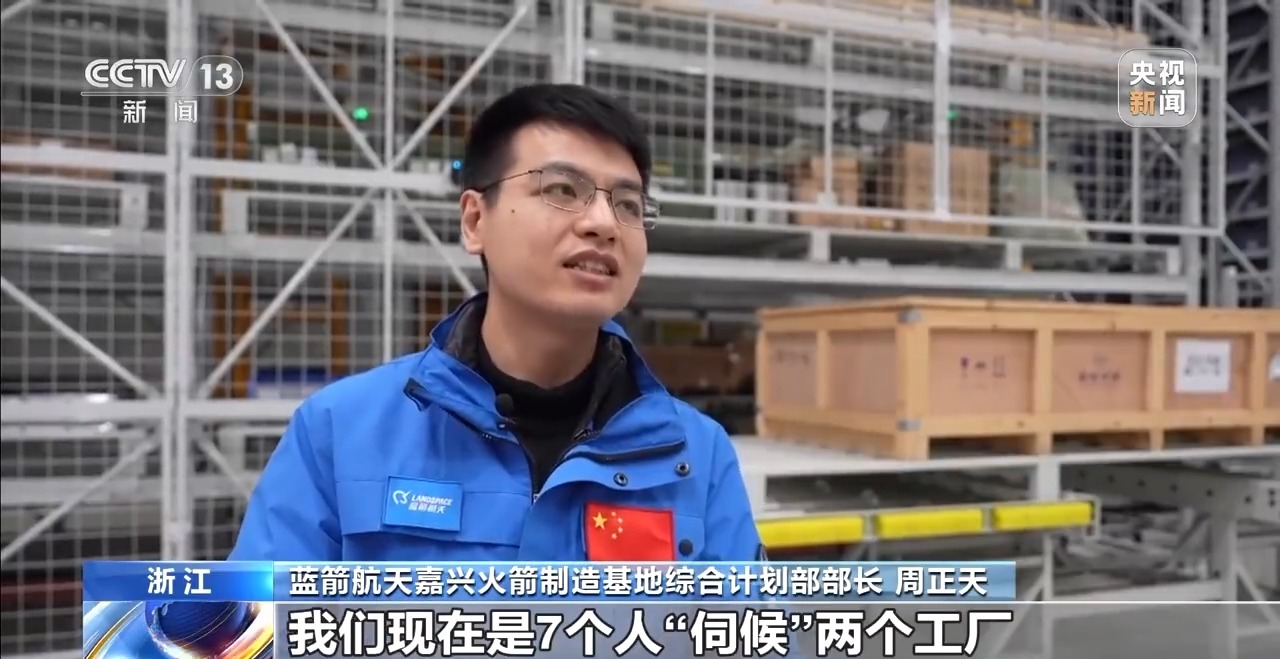
Core Viewpoint - The article discusses the rapid development of the commercial aerospace industry in China, highlighting advancements in rocket manufacturing and the establishment of a new industrial ecosystem driven by innovation and efficiency [1][3]. Group 1: Industry Development - The 14th Five-Year Plan includes the goal of accelerating the construction of a strong aerospace nation, with commercial aerospace acting as a key driver of innovation across various sectors [1]. - Multiple commercial aerospace companies are currently engaged in intensive preparations for the first flights of new rocket models, with automated production lines for satellites and rocket recovery ships being established [1][3]. - The shift from "manual searching for materials" to "materials waiting for people" in rocket assembly signifies a new era of precision logistics in manufacturing [1][3]. Group 2: Supply Chain and Innovation - The development of the Zhuque-3 rocket involves over 600 suppliers across various fields, indicating a robust and synchronized supply chain that supports the growth of the aerospace industry [3][5]. - Small enterprises are increasingly participating in the aerospace manufacturing sector, showcasing the depth of technological innovation within the industry [5][7]. Group 3: Key Components and Challenges - The grid fins, essential for controlling rocket posture during re-entry, are produced by a relatively small company, highlighting the critical role of specialized components in aerospace technology [7][9]. - The production of grid fins requires high precision and the ability to withstand extreme conditions, presenting significant challenges for manufacturers [9][10][12]. Group 4: Economic Impact and Future Prospects - The establishment of the first commercial aerospace launch site in Hainan is expected to drive the entire industry chain, with plans for over 60 launches per year [21][23]. - The launch site has attracted over 700 aerospace companies, forming a collaborative ecosystem that includes rocket, satellite, and data chains [23][25]. - The development of the Wenchang International Aerospace City aims to create a model for commercial aerospace and enhance the efficiency of satellite data applications by 2030 [27].
“十五五”开好局起好步 | 商业航天串“新”成“链”绘就“天陆海地”产业图景
Yang Shi Wang· 2026-01-21 06:44
Group 1 - The core objective of the 14th Five-Year Plan includes accelerating the construction of a strong aerospace nation, with commercial aerospace being a key driver of innovation across various industries [1] - Commercial aerospace is activating the entire industrial chain, leading to significant advancements in new materials, precision manufacturing, electronic information, and data applications [1] - The new industrial ecosystem is characterized by a comprehensive integration of aerospace activities, including satellite launches, rocket manufacturing, and maritime operations [1] Group 2 - Multiple commercial aerospace companies are currently engaged in intensive preparations for the first flights of new rocket models, including Lijian-2, Tianlong-3, and Shuangkuo-3 [3] - Automation in satellite production lines is being accelerated in locations such as Nantong, Tianjin, and Shanghai, while rocket recovery vessels are also under rapid construction in Jiangsu and Jiangxi [3] - The intelligent manufacturing base of Blue Arrow Aerospace in Jiaxing, Zhejiang, showcases significant efficiency improvements, reducing component retrieval time from 3 minutes to 30 seconds [5] Group 3 - The supply chain supporting the aerospace industry is robust, with the Zhuque-3 rocket requiring over 600 suppliers across various sectors, including new materials and precision manufacturing [7] - Key components like the grid fin, essential for reusable rockets, highlight the depth of technological innovation within the industry, with contributions from smaller enterprises [9][10] - A welding company named "New Super Alloy" in Wuxi, Jiangsu, is successfully manufacturing grid fin components, overcoming significant technical challenges [11][15] Group 4 - The successful test of the Zhuque-3 rocket on December 3, 2025, marked a significant milestone for the welding company, leading to increased collaboration with commercial aerospace firms [17] - The construction of the second phase of the commercial aerospace launch site in Hainan is progressing, with new facilities designed to accommodate larger rockets and double the launch capacity [21] - The Hainan launch site has attracted over 700 aerospace companies, fostering a collaborative ecosystem that includes rocket, satellite, and data chains [25] Group 5 - The "Aerospace+" model in Hainan is gaining popularity, with rocket launches becoming a significant attraction for tourists, contributing to over one million visitors since 2025 [27]
北京火箭大街竣工
第一财经· 2026-01-19 15:24
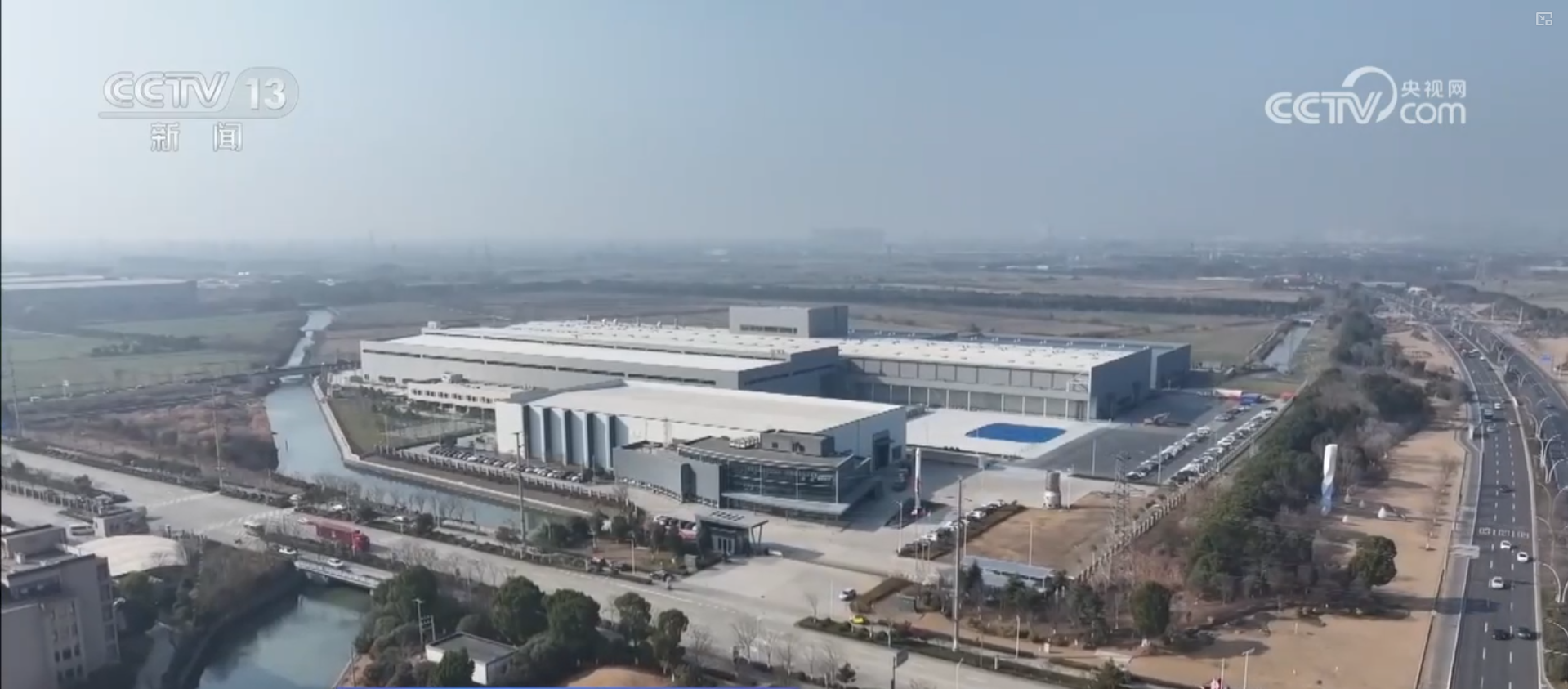
Core Viewpoint - The article highlights the completion of the Beijing Rocket Street project, which will serve as China's first common research and production base for commercial aerospace, aiming to enhance innovation and ecological development in the industry [2][3]. Group 1: Project Overview - The Beijing Rocket Street project has a total construction area of 145,000 square meters and includes four main functional areas: common technology platform, innovation R&D center, high-end manufacturing center, and display and operation control center [2]. - The project will provide over ten shared services for satellite and rocket development, including various testing services and support for research and production [2]. Group 2: Industry Goals and Policies - Beijing Yizhuang aims to establish a 50 billion yuan commercial aerospace industry cluster by 2028, with a long-term goal of achieving "thousand enterprises linked, thousand stars launched, and thousand billion revenue" [3]. - The development of the commercial aerospace sector is supported by national strategies and local policies, with a focus on innovation and collaboration among various regions [3]. Group 3: Current Industry Status - In 2025, the "Yizhuang Arrow" is expected to successfully launch 24 times, delivering over 160 satellites, with the aerospace industry generating over 30 billion yuan in revenue [4]. - The industry faces challenges such as insufficient rocket capacity, low total supply, and high launch costs, with costs for Chinese commercial launches ranging from 50,000 to 150,000 yuan per kilogram compared to SpaceX's Falcon 9 at approximately 2,940 USD per kilogram [4]. Group 4: Collaborative Development - The industry has historically struggled with a "single-point breakthrough" approach, leading to inefficiencies and high costs [5]. - The completion of the Rocket Street project is expected to enhance the efficiency of the entire industry chain by providing accessible public service support for key testing and production processes [5].
北京火箭大街竣工,商业航天集群目标千星入轨、千亿营收
Di Yi Cai Jing· 2026-01-19 13:31
Group 1 - The Beijing Rocket Street project has completed construction and is now entering the delivery phase, becoming the first commercial aerospace common research and production base in China [1] - The total construction area of Beijing Rocket Street is 145,000 square meters, featuring four functional areas: common technology platform, innovation R&D center, high-end manufacturing center, and display and operation control center [1] - The project aims to provide over ten shared services, including various testing services and research production support services like 3D printing and reliable component supply [1] Group 2 - Beijing Yizhuang has gathered over 180 related enterprises in the commercial aerospace sector, with commercial rocket companies accounting for 75% of the national total [2] - The goal for the commercial aerospace industry in Yizhuang is to form a 50 billion-level industry cluster by 2028, progressing towards a target of "thousand enterprises linked, thousand stars in orbit, and thousand billion revenue" [2] - The development of the commercial aerospace sector is supported by national strategic guidance and local policy collaboration, with multiple provinces and cities implementing special support policies [2] Group 3 - In 2025, "Yizhuang Arrow" successfully launched 24 times, delivering over 160 satellites, with the aerospace industry generating over 30 billion yuan in revenue [3] - Challenges such as insufficient rocket capacity, low total supply, and high launch costs continue to hinder industry development, with launch costs in China ranging from 50,000 to 150,000 yuan per kilogram compared to SpaceX's Falcon 9 cost of approximately 2,940 USD per kilogram [3] - The report highlights the lack of collaboration and supporting facilities in the commercial aerospace industry chain, which leads to high costs across various segments [3] Group 4 - The root of the industry's challenges lies in a past development model characterized by "multiple single-point breakthroughs and insufficient collaboration" [4] - Under conditions of mass production, the launch cost of the "Tianlong-3" rocket is approaching that of the Falcon 9, and costs are expected to decrease further with the maturity of reuse technology [4] - The completion of Rocket Street provides essential public service support for key industry chain segments, allowing commercial aerospace companies to focus more on product iteration and improving overall industry efficiency [4]
蓝箭航天IPO遭现场抽检,募资75亿押注可重复使用火箭,什么时候能盈利?
Xin Lang Cai Jing· 2026-01-06 05:32
Group 1 - Blue Arrow Aerospace Technology Co., Ltd. (Blue Arrow) is among the first batch of companies selected for on-site inspections by the China Securities Association for its IPO application on the Sci-Tech Innovation Board [2][20] - The company submitted its prospectus on December 31, 2025, aiming to become the first commercial aerospace company to list on the domestic capital market [20] - Blue Arrow plans to issue no less than 40 million shares, accounting for 10% of the total post-issue share capital, raising 7.5 billion yuan for projects focused on reusable rocket capacity and technology enhancement [20][13] Group 2 - Blue Arrow is a pioneer in the domestic liquid oxygen-methane reusable rocket sector, holding a leading position in technology and scale within the commercial rocket industry [20][21] - The company has completed 17 rounds of financing, with disclosed amounts totaling 3.5 billion yuan, and the latest round in December 2024 raised 900 million yuan from the National Manufacturing Transformation and Upgrade Fund [4][21] - The company has faced continuous losses, with revenues from 2022 to mid-2025 being 782,900 yuan, 3.9521 million yuan, 4.2783 million yuan, and 36.4319 million yuan, while net losses were 804 million yuan, 1.187 billion yuan, 876 million yuan, and 597 million yuan respectively [24][7] Group 3 - The company’s R&D expenses during the same period were 487 million yuan, 830 million yuan, 613 million yuan, and 360 million yuan, indicating a high cost structure typical of technology-intensive industries [9][27] - Blue Arrow's business model is still in its early stages, and it is expected to take at least five years to achieve profitability due to the high capital requirements and the need for reliable rocket recovery technology [21][28] - The company aims to achieve revenue of at least 500 million yuan in 2026 and 1 billion yuan in 2027, as indicated in its stock option incentive plan [28][10] Group 4 - The commercial aerospace sector in China is still developing, with Blue Arrow positioned as a key player among other companies like Tianbing Technology and Zhongke Aerospace, all of which have announced IPO guidance [34][17] - The market for low-orbit satellite networks in China remains largely untapped, with Blue Arrow expected to participate in significant satellite launch projects in the coming years [32][15] - The successful listing of Blue Arrow could set a benchmark for other companies in the commercial rocket sector, influencing their valuation and market positioning [34][17]
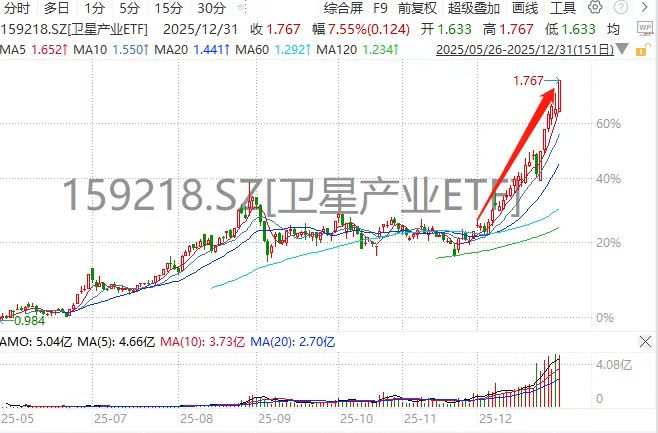
开门红!蓝箭航天IPO催化,卫星产业ETF(159218)大幅高开4.7%,中国卫星涨停封板
Jin Rong Jie· 2026-01-05 02:35
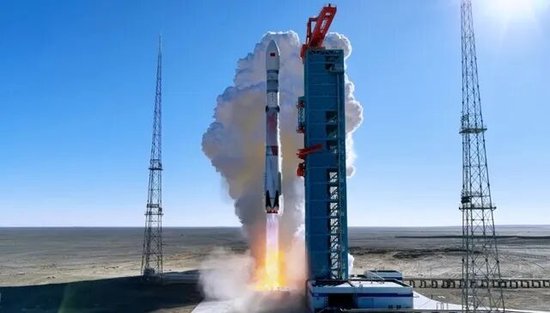
Group 1 - The satellite industry sector experienced a strong start on January 5, with the Satellite Industry ETF (159218) opening up by 4.70%, and China Satellite quickly hitting the daily limit, indicating positive market sentiment [1] - Blue Arrow Aerospace, a leading domestic commercial rocket company, has had its IPO officially accepted, aiming to raise 7.5 billion yuan for the development of reusable rocket production capacity and technology research [3] - The core products of Blue Arrow, the "Zhuque" series rockets and the "Tianmao" liquid oxygen-methane engine, have become symbols of breakthroughs in domestic commercial aerospace technology [3] Group 2 - The "14th Five-Year Plan" outlook mentioned by CCTV indicates that multiple new rocket types are expected to make their maiden flights by 2026, emphasizing the accelerated development of the industry [3] - Internationally, geopolitical dynamics are catalyzing developments, as evidenced by Venezuela's satellite navigation system losing functionality, prompting SpaceX's Starlink to offer one month of free broadband service to users in the country [3] - The satellite internet's critical role in global communication and strategy is highlighted, reinforcing the strategic value and competitive landscape of low Earth orbit constellations [3] Group 3 - The commercial aerospace industry is experiencing increasing prosperity due to multiple factors, including clear policy support, leading companies pushing for capital market entry, continuous technological advancements, and international event catalysts [3] - The Satellite Industry ETF covers core segments of the entire industry chain and has become an important tool for systematic capital allocation in the "aerospace new infrastructure" theme [3]