
四个革命

Search documents
“十四五”贵州完成能源投资超四千二百亿元
Xin Lang Cai Jing· 2026-01-12 22:06
Core Insights - During the "14th Five-Year Plan" period, Guizhou Province has made significant progress in energy security by implementing the "Four Revolutions, One Cooperation" strategy, with total energy investments exceeding 420 billion yuan, providing robust support for modernization efforts in the province [1] Group 1: Energy Industry Development - Guizhou aims to establish the energy industry as a strategic pillar, with the new comprehensive energy base expected to generate a value of 310 billion yuan by 2025, accounting for 35% of the total output of six major industrial bases in the province [1] - The coal industry is undergoing structural optimization, with production capacity projected to reach 216 million tons per year by 2025, and raw coal output expected to exceed 183 million tons, representing increases of 30.1% and 48% respectively compared to 2020 [1] - The new power system is being rapidly constructed, with total installed power capacity reaching 105 million kilowatts, of which renewable energy accounts for 37% [1] Group 2: Infrastructure Improvement - The electricity grid has been significantly enhanced, with a comprehensive 500 kV backbone grid established and 220 kV coverage achieved at the county level, resulting in a supply reliability rate of 99.91% [2] - A total of over 250,000 charging facilities and 59 battery swap stations have been built, with electric heavy trucks exceeding 6,600 units promoted [2] - The total length of oil and gas pipelines has reached 5,158 kilometers, improving energy service accessibility across 67 counties [2] Group 3: Supply and Demand Balance - Guizhou has ensured a stable supply of 386 million tons of electricity coal during the "14th Five-Year Plan," maintaining a contract fulfillment rate of over 90% [2] - The average annual growth rate of total electricity consumption is 5.22%, with cumulative electricity exports reaching approximately 330 billion kilowatt-hours [2] - By 2025, natural gas consumption is expected to exceed 3.5 billion cubic meters, more than double the 2020 figure, while refined oil consumption is projected to reach 8.297 million tons [2] Group 4: Innovation and Market Dynamics - Guizhou has introduced the first provincial-level electricity demand response plan in the country, achieving significant innovations in market transactions, including the first county-level simulated trading in the southern region [3] - Market-based electricity trading volume has increased by 57.8%, with renewable energy market transactions expected to reach 13.6 billion kilowatt-hours by 2025 [3] - The province has implemented advanced services such as "face recognition electricity service" and cross-network electricity reporting with Chongqing, enhancing industry management mechanisms [3]
“四个革命、一个合作”的生动实践——从南方电网的三个数据看能源高质量发展
Ren Min Ri Bao· 2025-12-22 08:55
Core Viewpoint - The article highlights the advancements and achievements of the Southern Power Grid in promoting a high-quality energy development model, emphasizing the integration of renewable energy sources and the establishment of a new power system in China. Group 1: Energy Development Strategy - In 2014, the Chinese government proposed a new energy security strategy focusing on "four revolutions and one cooperation," which outlines the direction for energy development in the country [3] - The Southern Power Grid is actively implementing this strategy to enhance energy quality and sustainability [4] Group 2: Renewable Energy Integration - Non-fossil energy sources account for 55% of the power generation mix, showcasing a significant shift towards renewable energy [5][6] - The Southern Power Grid's operational area has over 66% of installed capacity from non-fossil energy sources, with a power generation share of 55% [12] Group 3: Technological Innovations - A digital forecasting platform has been established, achieving accuracy rates of 89.0% for wind and 93.7% for solar energy predictions [14] - The company is developing new power transmission channels, such as the upcoming Cangyue DC transmission project, to facilitate the transfer of clean energy to major load centers [11] Group 4: Reliability and Efficiency - The reliability of power supply in the Southern Power Grid's operational area reached 99.99%, even during extreme weather events [19][20] - Significant investments have been made in rural power grid upgrades, achieving a reliability rate of 99.9% for rural electricity supply [25] Group 5: Cross-Border Electricity Cooperation - The Southern Power Grid has facilitated over 800 billion kilowatt-hours of electricity exchange with neighboring countries, enhancing regional energy cooperation [30] - The company has also supported electrification projects in Peru, improving the average outage time to the lowest level in the country [33] Group 6: International Expansion - During the 14th Five-Year Plan period, the Southern Power Grid's international business has driven over $7 billion in Chinese technology, capital, equipment, and services to go global [39]
“四个革命、一个合作”的生动实践(走企业,看高质量发展)
Ren Min Ri Bao· 2025-12-21 22:41
Core Viewpoint - The article highlights the advancements and achievements of the Southern Power Grid in promoting a new energy system, focusing on high-quality energy development and the integration of renewable energy sources into the grid [2][5][12]. Group 1: Energy Development and Strategy - The Southern Power Grid is implementing the "Four Revolutions and One Cooperation" energy security strategy proposed by President Xi Jinping, which emphasizes energy consumption, supply, technology, and system revolutions along with international cooperation [2]. - Non-fossil energy generation accounts for 55% of the total energy mix in the Southern Power Grid's operational area, showcasing a significant shift towards renewable energy [4][7]. Group 2: Renewable Energy Integration - The Southern Power Grid has achieved a renewable energy consumption rate of 97% by 2025, positioning itself among the top in the country [9]. - The construction of new power transmission channels, such as the ultra-high voltage direct current project, will facilitate the large-scale transfer of clean energy from the western regions to major load centers like the Guangdong-Hong Kong-Macao Greater Bay Area [7]. Group 3: Technological Innovations - A digital forecasting platform has been established to enhance the predictability of renewable energy sources, achieving accuracy rates of 89.0% for wind and 93.7% for solar energy [8]. - The Southern Power Grid has implemented a continuous settlement trial for cross-province electricity trading, enabling seamless electricity transactions across regions [11]. Group 4: Reliability and Quality of Supply - The reliability of power supply in the Southern Power Grid has reached 99.99%, ensuring consistent electricity availability even during extreme weather events [13][14]. - Significant investments have been made in rural power grid upgrades, achieving a rural power supply reliability rate of 99.9% [15]. Group 5: International Cooperation and Impact - The Southern Power Grid has facilitated electricity exchanges with neighboring countries, achieving over 80 billion kilowatt-hours of power interconnection [17][18]. - International projects, such as the "Lighting Up Ten Thousand Homes" initiative in Peru, have improved electricity access for thousands of households, demonstrating the company's commitment to global energy solutions [19].
智能调度、柔性输电、绿电消纳 看湖北电网如何跨越式发展
Yang Shi Xin Wen Ke Hu Duan· 2025-09-25 14:25
Core Viewpoint - Hubei plays a crucial role in China's energy layout, serving as a key hub for energy transmission and distribution, particularly during the "14th Five-Year Plan" period [1][4]. Group 1: Energy Infrastructure - Hubei's power grid is the starting point for the Three Gorges clean energy transmission and serves as a channel for west-to-east power transmission, as well as a hub for north-south energy supply [1][4]. - The construction of 4,134 kilometers of ultra-high voltage lines during the "14th Five-Year Plan" has created a comprehensive energy network connecting Hubei with Hunan, Jiangxi, and Henan [5]. - The power grid operates nearly 20,000 kilometers of ultra and super high voltage transmission lines, equivalent to half the Earth's circumference [7]. Group 2: Energy Distribution and Management - During the "14th Five-Year Plan," 200 billion kilowatt-hours of clean electricity were transmitted from Hubei to economically vibrant regions such as the Yangtze River Delta and the Guangdong-Hong Kong-Macau Greater Bay Area [4]. - Hubei's power grid is characterized by its strong resource allocation capabilities, integrating various energy forms including wind, solar, hydro, and thermal energy [4][6]. - The grid features advanced technologies such as AI surveillance systems, drones, and robots for comprehensive monitoring and maintenance, enhancing operational efficiency and safety [7]. Group 3: Energy Transition and Sustainability - Hubei's new energy system construction serves as a model for national energy green transition, showcasing innovations in smart scheduling, flexible transmission, and green energy consumption [1][6]. - Currently, one out of every four kilowatt-hours consumed in Hubei comes from renewable energy sources, contributing to a clean, low-carbon, and efficient energy system [7].


“十四五”能源成就企业谈丨大潮奔涌急 风好正扬帆
国家能源局· 2025-09-12 10:14
Core Viewpoint - The article emphasizes the achievements and strategic initiatives of the National Pipeline Group in implementing the "14th Five-Year Plan," highlighting its role in ensuring energy security and promoting high-quality development in China's energy sector [3][4][9]. Group 1: Development Strategies - The National Pipeline Group has established a modern corporate governance system focused on high-quality development, addressing challenges in mergers and acquisitions through four strategies: market-oriented, platform-based, technological digitalization, and management innovation [4]. - The company has implemented a comprehensive operational framework that includes large-scale business operations, party building, supervision, and digitalization, aiming to create a world-class enterprise [4][10]. Group 2: Market System and Infrastructure - The National Pipeline Group has developed an "X+1+X" market system to promote fair and open access to oil and gas pipeline infrastructure, enhancing market efficiency and resource allocation [5]. - Since the beginning of the "14th Five-Year Plan," the company has accelerated the construction of a national pipeline network, completing investments exceeding 400 billion yuan and increasing pipeline capacity by 52% to 3,940 billion cubic meters per year [6]. Group 3: Supply and Demand Integration - The company has connected 19 major domestic gas sources and 14 LNG receiving stations, ensuring comprehensive coverage of oil and gas resources across the country [7]. - The integration of supply and demand channels has improved energy security, with significant increases in storage capacity and peak supply capabilities [9]. Group 4: Innovation and Sustainability - The National Pipeline Group is committed to innovation and green development, achieving a 97.5% localization rate for key equipment and advancing technologies in hydrogen and carbon dioxide transportation [8]. - The company has established a greenhouse gas emission accounting and verification system, actively participating in initiatives to reduce methane emissions in the oil and gas sector [8]. Group 5: Safety and Governance - The National Pipeline Group prioritizes safety in operations, implementing a comprehensive safety management system that has led to a significant reduction in production incidents [9]. - The company emphasizes the integration of party leadership with corporate governance, ensuring a transparent and accountable management structure [10][11].
预告丨国新办将于8月26日上午举行“高质量完成‘十四五’规划”系列主题新闻发布会(国家能源局专场)
国家能源局· 2025-08-25 09:32
Core Viewpoint - The article highlights the achievements in high-quality energy development during the 14th Five-Year Plan period, emphasizing the significant breakthroughs and contributions to economic and social development under the leadership of the central government [4]. Group 1: Achievements in Energy Development - The energy sector in China has made a series of breakthrough, landmark, and pioneering achievements since the beginning of the 14th Five-Year Plan [4]. - The implementation of the new energy security strategy, characterized by "four revolutions and one cooperation," has been a driving force behind these developments [4]. Group 2: Future Outlook - A press conference is scheduled for August 26, 2025, where the National Energy Administration will provide further insights into the high-quality development achievements during the 14th Five-Year Plan and answer questions from the media [6].

预告丨国新办将于8月26日上午举行“高质量完成‘十四五’规划”系列主题新闻发布会(国家能源局专场)
国家能源局· 2025-08-22 03:39
Core Viewpoint - The article highlights the achievements in high-quality energy development during the 14th Five-Year Plan period, emphasizing the significant breakthroughs and contributions to economic and social development under the leadership of the central government [4]. Group 1: Achievements in Energy Development - The energy sector has made a series of breakthrough, landmark, and pioneering achievements since the beginning of the 14th Five-Year Plan, providing a solid and reliable energy guarantee for high-quality economic and social development [4]. - The implementation of the new energy security strategy, characterized by "four revolutions and one cooperation," has been a key driver for these achievements [4]. Group 2: Future Outlook - A press conference is scheduled for August 26, 2025, where the National Energy Administration will present further details on the high-quality development achievements in the energy sector during the 14th Five-Year Plan [6].

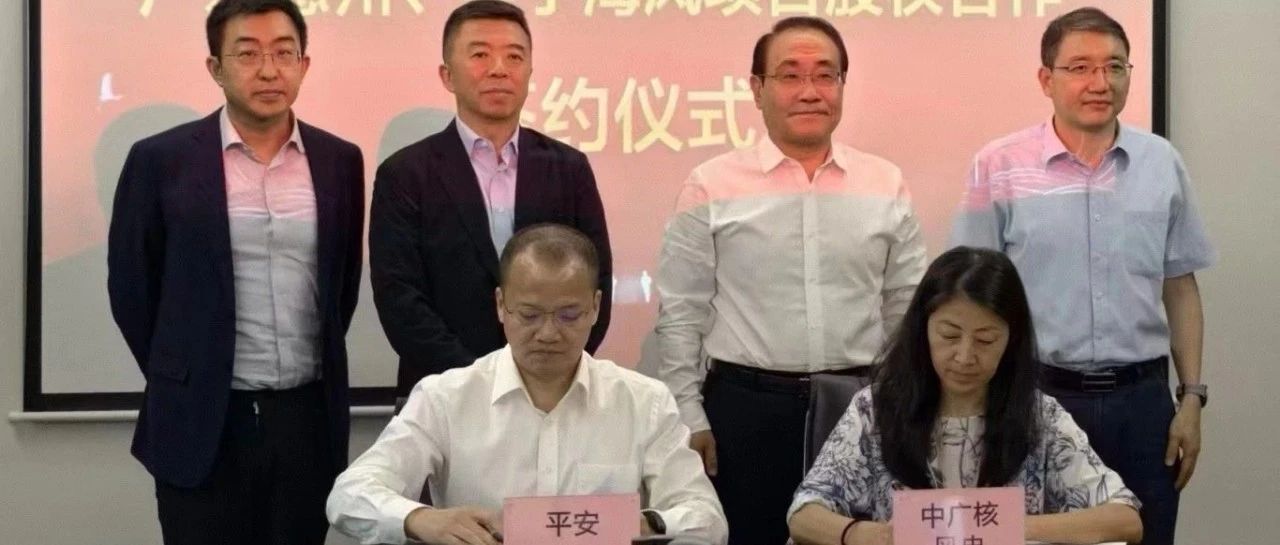
对话平安:践行国家能源安全战略,险资“耐心资本”布局新能源
新财富· 2025-07-18 06:31
Core Viewpoint - The article emphasizes the significant role of insurance capital in promoting energy transition and high-quality development in China's energy sector, particularly through direct equity investments in offshore wind power projects [1][2]. Group 1: Investment Opportunities - China Ping An's investment of 3.726 billion yuan in China General Nuclear Power Corporation's offshore wind projects marks the first direct equity investment by insurance capital in offshore wind power in China [1][2]. - The total installed capacity of the two offshore wind power stations involved is 1.9 GW, making them the first million-kilowatt-level offshore wind projects in the Guangdong-Hong Kong-Macao Greater Bay Area [1][2]. Group 2: Industry Context - Since the 18th National Congress, China's energy development has entered a new era, guided by the "Four Revolutions, One Cooperation" energy security strategy, which sets ambitious investment goals exceeding 5 trillion yuan during the 14th Five-Year Plan [5]. - The ownership of renewable energy assets is increasingly concentrated among central and local state-owned enterprises, with projections indicating that by the end of 2025, these entities will control approximately 70% of the market share in wind and solar energy installations [7][8]. Group 3: Insurance Capital's Role - Insurance capital is well-suited for investing in renewable energy due to its large market size, long investment duration, stable returns, and alignment with ESG strategies [9]. - The entry of insurance capital into renewable energy projects can enhance the efficiency of state-owned capital allocation and resource optimization, while also reducing overall debt levels for energy companies [8][9]. Group 4: Current Challenges and Considerations - The investment environment for insurance capital is becoming more complex, with challenges such as declining interest rates and increased market volatility [10]. - Insurance companies need to adapt their return expectations for equity investments in renewable energy, as the sector offers stable and less volatile returns compared to traditional private equity investments [17]. - Regulatory frameworks and local electricity market policies are critical factors that insurance capital must navigate to ensure successful investments in renewable energy projects [14][19].

长三角原油管网为长江经济带高质量发展“赋能”
Xin Hua Ri Bao· 2025-06-15 22:11
Core Insights - The National Pipeline Group has successfully transported over 400 million tons of crude oil in the Yangtze River Delta during the 14th Five-Year Plan period, ensuring energy supply for high-quality development in the region [1][2] - The company aims to establish itself as a world-class enterprise while implementing the "Four Revolutions, One Cooperation" energy security strategy proposed by President Xi Jinping [1][2] - The East Crude Oil Transportation Company has delivered over 97 million tons of crude oil to refining enterprises in Jiangsu Province during the 14th Five-Year Plan, supporting over 85% of the production capacity of along the Yangtze River [2][3] Energy Infrastructure Development - The company operates key national projects such as the Ningbo-Shanghai-Nanjing pipeline and the Yizhang pipeline, connecting refineries and ports across five provinces [3] - The company has a total of 16 operational long-distance crude oil pipelines and storage facilities, with a combined length exceeding 6,000 kilometers, contributing significantly to the energy needs of the Yangtze River Economic Belt [3] Technological Innovation - The company has implemented smart technologies in its operations, including the use of domestically produced PLC equipment and a self-control system for pipeline management [4][5] - Innovations include the development of a monitoring and emergency command center platform, real-time sensing of pipeline parameters, and the use of drones for intelligent pipeline inspections [4][5] Environmental Responsibility - The company emphasizes environmental protection, having won awards for ecological restoration projects related to oil and gas pipelines [6][7] - It has established a comprehensive environmental management system covering the entire lifecycle of pipeline operations, employing multiple safeguards to minimize ecological impact [7] Strategic Goals - The National Pipeline Group is committed to serving national strategies and public needs while fostering market-oriented, platform-based, and technology-driven innovations [7]