地缘政治经济

Search documents
It is REALLY IMPORTANT for the taxpayer to understand this, GOP lawmaker says
Youtube· 2026-03-09 09:01
Core Viewpoint - The discussion highlights the urgent need for the U.S. military to modernize its weaponry and replenish stockpiles amid ongoing conflicts, particularly with Iran, while also addressing the economic implications of these military actions on global oil markets and geopolitical dynamics. Military Readiness and Funding - The U.S. military is facing challenges in stockpiling munitions, which has led to careful rationing of support for allies like Ukraine [2][3] - A potential request for a $50 billion supplemental funding package for military operations against Iran is anticipated, with bipartisan support likely [4][5] - The Pentagon's budget for defense is projected to be substantial, with discussions around how much will be supplemental versus part of the baseline budget [6][8] Modernization of Military Assets - The U.S. is in a critical phase of modernizing its military assets, including replacing aging systems like the B-52 bombers and intercontinental ballistic missiles, which are over 60 years old [10][12] - The modernization effort is essential to catch up with adversaries, particularly China, which has been heavily investing in new military technologies [11][12] Geopolitical and Economic Implications - Iran controls a significant portion of the world's oil reserves and its conflict with the U.S. has direct implications for global oil prices, particularly affecting China, which relies on Iranian oil [14][16] - The rise in oil prices, currently around $90 per barrel, poses economic challenges for China and has broader geopolitical ramifications [16][19] - The U.S. is becoming a more significant player in oil production, currently exceeding 13 million barrels per day, which could alter the dynamics of global oil supply and pricing [20]


加拿大加速布局亚洲能源市场
Zhong Guo Hua Gong Bao· 2026-01-28 03:08
Core Insights - Canada is accelerating its energy market strategy towards Asia to reduce reliance on the U.S. for fossil fuel exports, which currently account for about 25% of its total exports [1] - The geopolitical vulnerability of Canada's energy sector has been highlighted by recent tensions in U.S.-Canada relations, prompting a shift in trade dynamics [1] Group 1: Energy Export Strategy - Canada is focusing on expanding its energy exports to Asia, including oil, liquefied natural gas (LNG), and nuclear technology, to mitigate risks associated with dependence on a single major customer [1] - The Canadian government signed a memorandum of understanding with Malaysia covering LNG, oil, small modular reactors, and renewable energy, aiming to establish a long-term energy export foundation to Southeast Asia [2] Group 2: Trade Agreements and Infrastructure - Ongoing negotiations for the Canada-ASEAN Free Trade Agreement aim to facilitate entry into the Southeast Asian market, valued at $5 trillion, by reducing tariffs and non-tariff barriers [2] - The expansion of the Trans Mountain pipeline project, set to begin in May 2024, will nearly double Canada's oil transportation capacity to 890,000 barrels per day, providing a direct export route to Asia and reducing dependence on U.S. buyers [2] Group 3: Market Adaptation - The Westridge terminal, which will handle a significant portion of Canada's oil exports, is expected to increase its utilization as production rises and expansion plans are implemented by 2027 [2] - Approximately 75% of the crude oil loaded at the Westridge terminal is heavy sour crude, which is well-suited for complex refineries in Asia, indicating a strategic alignment with regional market needs [2]
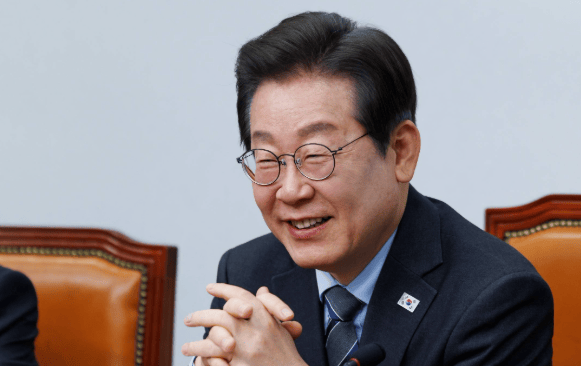
韩国刚划下红线,美国来了个“下马威”!美财长放韩国鸽子,李在明对华加税,韩国开始选边站?
Sou Hu Cai Jing· 2025-07-28 12:46
Group 1 - The postponement of the "2+2" tariff negotiations between South Korea and the U.S. adds uncertainty to the already tense South Korea-U.S. relations, highlighting South Korea's difficult position in the complex international landscape [1] - South Korea is under pressure due to the U.S. imposing a tariff deadline of August 1, with the country eager to avoid a 25% comprehensive tariff, especially as Japan has already reached a tariff agreement with the U.S. [1] - South Korea has set two "red lines" in negotiations: not opening the rice and beef markets, as its grain self-sufficiency rate is low, with only 19.5% from 2021 to 2023, and zero self-sufficiency in wheat and corn [1] Group 2 - In 2024, South Korea imported $2.22 billion worth of U.S. beef, making it a major importer, but the U.S. is pushing to lift the ban on U.S. beef imports over 30 months, facing strong opposition from the South Korean agricultural sector [3] - South Korea's recent diplomatic interactions with the U.S. have seen multiple cancellations of meetings, indicating U.S. dissatisfaction with South Korea's proposals and an attempt to assert dominance in the bilateral relationship [3] Group 3 - On July 25, South Korea's Ministry of Trade announced a request for anti-dumping duties of 28.16% to 33.57% on carbon steel and hot-rolled steel from China, which raises questions about its timing amid ongoing U.S. tariff negotiations [5] - This anti-dumping investigation was initiated earlier in the year, but its announcement during critical negotiations suggests a strategic move to appease the U.S. while deflecting responsibility from the current government [5] Group 4 - South Korea is navigating a complex geopolitical environment, heavily reliant on U.S. military protection while also depending on China as its largest trading partner, with trade volumes exceeding $300 billion in 2024 [6] - The current administration appears to be leaning towards the U.S., as evidenced by recent actions such as rejecting China's invitation to a military parade and imposing tariffs on Chinese steel, signaling a shift in diplomatic posture [8] Group 5 - Over-reliance on the U.S. could jeopardize South Korea's relationship with China, which is crucial for its economic development, as many industries depend on Chinese raw materials [8] - The imposition of tariffs on Chinese steel may lead to increased costs for South Korean industries, potentially escalating trade tensions and undermining established economic cooperation [8]