基础科学研究

Search documents
他们,带着“金点子”来报到
Xin Lang Cai Jing· 2026-02-01 21:21
Group 1 - The Jiangsu Provincial Political Consultative Conference is focusing on various topics, including the promotion of OPC communities and the safety of new employment groups in the express delivery industry [2][3] - Chen Xiang, chairman of Nantong Xianzhi Investment Co., proposed a three-year action plan to enhance the construction of OPC communities, which currently number around 60 in Jiangsu, suggesting a need for a more coordinated approach [2] - Zhou Jiang, a member from China Post, highlighted the rapid growth of the express delivery industry, which surpassed 200 billion items last year, and called for improved safety regulations for new employment groups [3] Group 2 - The importance of integrating digital technology into cultural innovation was emphasized by Hou Dezhi, who suggested using AI to enhance cultural storytelling and tourism in Jiangsu [3] - Yan Xiaohong, former president of Jiangsu University, stressed the need for strengthening basic scientific research and proposed establishing a provincial fund for attracting global talent in this field [4] - Jiang Di, a member from the People's Political Consultative Conference, pointed out the potential for economic growth through the cultural and economic value of football, particularly in the context of the "Su Super" football league [4] Group 3 - The introduction of a facial recognition check-in system at the conference has streamlined the registration process, receiving positive feedback from attendees [5] - The use of the "Jiangsu Digital Political Consultative Conference" app is set to enhance the efficiency of meetings, allowing members to access information and submit proposals digitally [6] - The conference aims to gather insights and suggestions from members to contribute to the modernization efforts in Jiangsu [6]
【人民日报】潜心科研,提升中微子振荡参数测量精度
Ren Min Ri Bao· 2026-01-07 03:09
Core Insights - The article emphasizes the importance of fundamental research, particularly in the field of neutrino studies, highlighting the strategic and systematic investment in this area to enhance scientific understanding and potential future discoveries [2][4]. Group 1: Neutrino Experiment Overview - The Jiangmen Neutrino Experiment, an international collaboration involving over 700 researchers from 17 countries, aims to measure neutrino oscillation with unprecedented precision [3][6]. - The experiment's construction began in 2015, and it officially started data collection on August 26, 2025, marking it as the first large-scale neutrino facility of its kind [6]. - The design lifespan of the Jiangmen Neutrino Experiment is 30 years, with plans for upgrades to enhance its capabilities further [6]. Group 2: Research Achievements and Future Goals - The first physical results were published on November 19, 2025, demonstrating a 1.5 to 1.8 times improvement in the measurement precision of neutrino oscillation parameters, confirming the detector's performance met expectations [3][4]. - Future research will focus on the core issue of neutrino mass ordering and expand into studies of geoneutrinos and supernova neutrinos, potentially opening new avenues in earth science and astrophysics [4][6]. Group 3: Scientific Significance - Neutrino research is positioned as a critical area of fundamental science that could lead to significant breakthroughs in understanding the universe's basic laws and may have unforeseen applications in various scientific fields [4][5]. - The article argues that what may seem like "useless" exploration today could be the key to solving many future scientific questions, emphasizing the need for perseverance and innovation in research [5].
化学家尚卡尔:看似无用的研究往往会改变世界
Xin Lang Cai Jing· 2026-01-05 10:27
Core Viewpoint - The article highlights the significant contributions of chemist Shankar Balasubramanian to the field of genomics, particularly through the development of Next-Generation Sequencing (NGS) technology, which revolutionized gene sequencing speed and cost, impacting human health and disease diagnosis [3][4]. Group 1: Achievements and Innovations - Shankar's team developed NGS, reducing the time to sequence a human genome from ten years and $3 billion to about one hour and $1,000 [3]. - He has received numerous prestigious awards, including being knighted by the Queen of the UK in 2017 and winning the Breakthrough Prize in Life Sciences in 2022 [4]. - His research has led to significant advancements in understanding biological evolution and improving disease diagnosis [3][4]. Group 2: Research Philosophy - A good research question stems from a genuine love for science, which encourages researchers to embrace failure as part of the learning process [4][5]. - Shankar emphasizes the importance of creativity in research, believing that seemingly "useless" studies can lead to groundbreaking discoveries [6][7]. - He advocates for providing young scientists with the freedom to explore and experiment, as this is crucial for innovation [6][7]. Group 3: Engagement with Youth and Culture - Shankar expresses a strong interest in Chinese culture and appreciates the support for basic scientific research in China, noting the importance of young scientists for the future of science [8][9]. - He encourages students to think independently and creatively, fostering an environment where new ideas can flourish [8][9]. - His interactions with young researchers invigorate his own work and keep him engaged in the scientific community [9].
【大调研我们在行动】科创这盘棋,湖北真真下活了!
Xin Lang Cai Jing· 2025-12-21 19:39
Core Viewpoint - Hubei province is experiencing significant technological innovation and development, characterized by rapid market capture and long-term strategic planning, showcasing a strong momentum in scientific and technological advancements [1][3]. Group 1: Technological Innovation - Hubei's "cutting-edge" technology initiative has led to the rapid development of advanced medical devices, such as a multi-modal imaging surgical robot, which was developed in just three years, significantly faster than similar products [3][4]. - The province has successfully addressed 981 key technological needs, resulting in 42 achievements, with 60% reaching international advanced levels and 20% leading globally [4]. - Hubei's innovation ecosystem includes over 200 research institutions and leading enterprises collaborating on targeted breakthroughs [4]. Group 2: Support for Startups - Hubei's approach to nurturing tech companies involves a comprehensive lifecycle support system, providing tailored resources for each stage of development, from seed to maturity [5]. - The establishment of a supportive environment has allowed startups, such as Opal Biotechnology, to rapidly progress from project initiation to operational status within months [5]. Group 3: Long-term Commitment - Hubei emphasizes the importance of long-term foundational research, with a focus on revolutionary technologies that require sustained investment and commitment [6][7]. - The province has a history of consistent investment in technology, with over 30 years of dedicated funding leading to the establishment of a robust scientific research infrastructure [6]. Group 4: Research and Development Achievements - Significant breakthroughs in various fields, such as high-resolution remote sensing satellites and innovative agricultural products, have been achieved through persistent research efforts [9][18]. - Hubei has developed hundreds of pilot testing platforms to facilitate the commercialization of research outcomes, ensuring that innovations can be effectively translated into market-ready products [12][10]. Group 5: Financial and Institutional Support - The province has implemented reforms to clarify ownership of scientific achievements, encouraging researchers to commercialize their work without fear of losing state assets [16]. - Innovative financial services, such as credit loans based on innovation scores, have been introduced to alleviate funding challenges faced by tech companies [17]. Group 6: Future Prospects - Hubei's commitment to integrating technology into various sectors, including agriculture and manufacturing, is expected to drive economic growth, with projections indicating a crossing of the 6 trillion yuan threshold in economic output [21]. - The province is positioning itself as a leader in advanced manufacturing and smart city development, with significant investments in sectors like automotive and optical communications [20].

开放的序曲:竺可桢与1971年之后的中外科学文化交流
Xin Lang Cai Jing· 2025-11-25 04:03
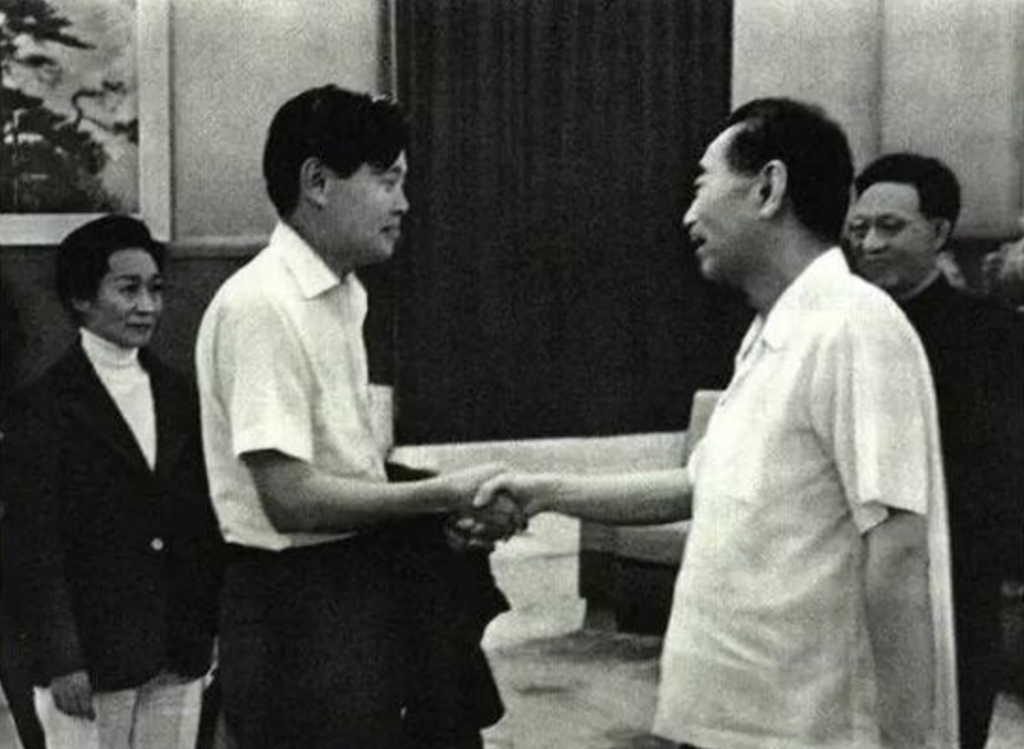
Group 1 - The article discusses the improvement of China's relations with Western countries following Nixon's visit to China and the establishment of diplomatic ties with the UK, highlighting informal diplomatic activities in various fields such as science, culture, and arts to broaden foreign exchanges [1] - The thawing of Sino-American relations is exemplified by the exchanges between scientists, particularly through the visits of prominent figures like Yang Zhenning and Li Zhengdao [2][4] - The article notes that Yang Zhenning's first visit to China in July 1971 was met with mixed reactions, as some domestic scholars felt resentment towards the preferential treatment he received compared to those who remained in China [5][6] Group 2 - Following the warming of Sino-American relations, Yang Zhenning's second visit in June-July 1972 further emphasized the importance of scientific theoretical research and academic exchanges [7][8] - The article highlights a letter from 18 physicists to Premier Zhou Enlai advocating for the advancement of high-energy accelerator and detector technology, which Zhou supported [8] - The increasing frequency of cultural exchanges is illustrated by the visits of various Western scholars and artists to China, including the London Philharmonic Orchestra's performance in 1973, marking a significant moment in cultural diplomacy [25][28]
美学者:禁止与中国科研合作将损害美国利益
Huan Qiu Wang Zi Xun· 2025-11-18 23:10
Core Viewpoint - The proposed legislation to ban U.S. scientists from collaborating with China on basic scientific research could severely harm U.S. scientific endeavors, despite the competitive context between the two nations [1]. Group 1: Impact of Proposed Legislation - The legislation is seen as overly broad, potentially causing significant damage to the U.S. scientific community by restricting essential collaborations in basic science [1]. - Historical context shows that even during the Cold War, U.S. scientists maintained collaborative efforts with Soviet counterparts in fundamental research, which led to significant advancements and maintained unofficial communication channels [1]. Group 2: Importance of Basic Scientific Research - Basic scientific research is recognized for its unpredictable yet substantial long-term benefits, which can manifest years or even decades later [1]. - The need for large and expensive research facilities in cutting-edge fields like particle physics and astrophysics is increasing, highlighting the importance of international collaboration [2]. Group 3: Global Collaboration and Competition - Western countries have historically collaborated on the construction of large experimental facilities, but the costs are rising, limiting their ability to build more [2]. - China is actively constructing some of the world's largest and most significant scientific experimental facilities, such as the world's largest single-dish radio telescope (FAST) and advanced neutrino research equipment [2]. - Other countries' scientists are beginning to collaborate with Chinese scientists, leveraging these world-class facilities for experiments, indicating a shift in global scientific collaboration dynamics [2].
红杉捐赠的世界顶尖科学家协会奖颁布,三位科学家获奖
Xin Lang Cai Jing· 2025-10-25 11:50
Group 1 - The 2025 World Top Scientists Forum opened in Shanghai, awarding three scientists for their groundbreaking contributions in their respective fields [1][3] - Stanford University Professor Richard S. received the "Intelligent Science or Mathematics Award" for his pioneering work in geometric analysis and differential geometry [1][3] - Cornell University Professor Scott Emmer and University of Utah Professor Wes Sundquist were awarded the "Life Science or Medicine Award" for their significant discoveries related to receptor membrane protein transport and degradation mechanisms [3][5] Group 2 - The World Top Scientists Association Award was established in 2021 in Shanghai, supported by Sequoia Charity Foundation, and is one of the highest monetary science awards globally, with a prize of 10 million RMB per category [6][8] - The award aims to discover and recognize scientists who have made significant contributions but have not yet received international recognition, focusing on identifying "scientific gems" [8][9] - The award has been presented four times by 2025, recognizing 12 scientists from various countries, enhancing its international influence and authority [8][9]
杨振宁逝世:用赤子情怀谱写一曲科学与家国之歌
Xin Jing Bao· 2025-10-18 07:51
Core Viewpoint - The article commemorates the life and contributions of renowned physicist Yang Zhenning, highlighting his significant impact on modern physics and his dedication to advancing scientific education in China [2][6]. Group 1: Personal Background and Achievements - Yang Zhenning was born on October 1, 1922, in Anhui and passed away on October 18, 2025, in Beijing at the age of 103 [2]. - He studied under prominent physicists such as Fermi and Taylor after receiving a scholarship to study in the United States in 1945 [3]. - Yang Zhenning's notable achievements include the Yang-Mills theory in 1954 and the discovery of parity violation in weak interactions in 1956, for which he received the Nobel Prize in Physics in 1957 [3][4]. Group 2: Contributions to Physics - The Yang-Mills theory is considered a crucial breakthrough in particle physics and serves as the foundation for the Standard Model, marking a significant milestone in the field [4]. - The parity violation discovery challenged traditional views on symmetry in physics, opening new avenues for research in particle physics and cosmology [4]. Group 3: Return to China and Educational Impact - After years abroad, Yang Zhenning returned to China in 2003, dedicating himself to scientific education and research at Tsinghua University [6][7]. - He established the Tsinghua University Institute for Advanced Study and actively participated in academic discussions, fostering international collaboration [6][7]. - Yang advocated for increased funding for basic research in China, suggesting that the proportion of funding for basic research be raised from 5% to 15% [7]. Group 4: Legacy and Influence - Yang Zhenning's influence extends beyond his scientific contributions; he played a vital role in nurturing local talent and breaking down barriers in scientific research between China and the West [8][9]. - His life exemplifies a blend of scientific rigor and humanistic values, making him a significant figure in both the scientific community and Chinese society [8][9].
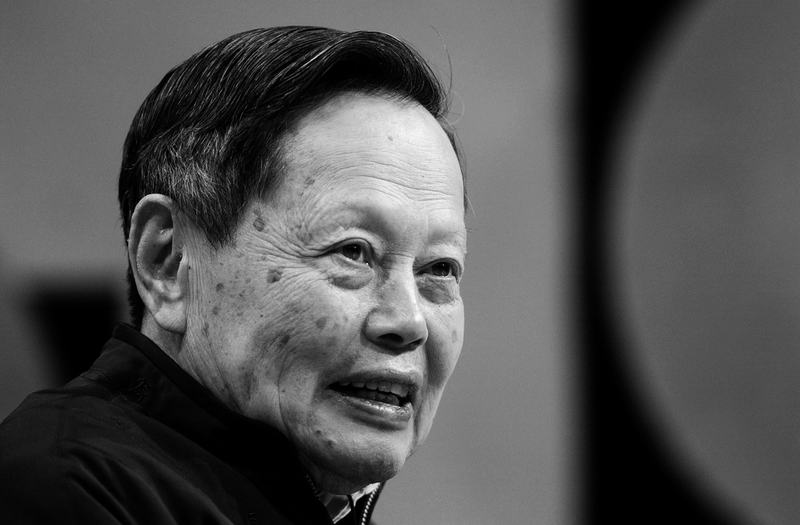
杨振宁一生的三个时刻,对培养拔尖创新人才有何启示
Nan Fang Du Shi Bao· 2025-10-18 07:20
Core Insights - The article highlights the life and contributions of Yang Zhenning, a renowned physicist and Nobel laureate, who passed away at the age of 103, emphasizing his impact on China's scientific community and education [1] Group 1: Achievements and Contributions - Yang Zhenning, along with Li Zhengdao, proposed the revolutionary idea of parity violation in weak interactions, winning the Nobel Prize in Physics in 1957, which inspired generations of Chinese [1] - He served as the honorary director of Tsinghua University's Institute for Advanced Study from 1997 and became a professor in 1999, significantly influencing academic exchanges between China and the United States [2] - Yang's return to China in the 1990s marked a pivotal moment for the country's scientific development, as he advocated for the restoration and enhancement of basic scientific research [2] Group 2: Influence on Education and Talent Development - Yang Zhenning's efforts in establishing the "Committee for Educational Exchange with China" helped fund nearly a hundred Chinese scholars to study in the U.S., contributing to the backbone of China's technological advancement [2] - His life reflects three key phases in China's education and talent development: the initial phase post-1949, the rapid development phase post-reform, and the modernization phase of education and technology [3] - Yang's decision to renounce his U.S. citizenship and fully return to China symbolizes a significant shift in the perception of overseas Chinese scholars and their contributions to national development [3] Group 3: Future Outlook - Despite his predictions of more Nobel laureates emerging from China, only Tu Youyou has won the prize since the 1970s, indicating a need for continued investment in basic sciences [4] - The article expresses optimism that with increased investment in foundational disciplines, more scientists like Yang Zhenning will emerge in the future [4]

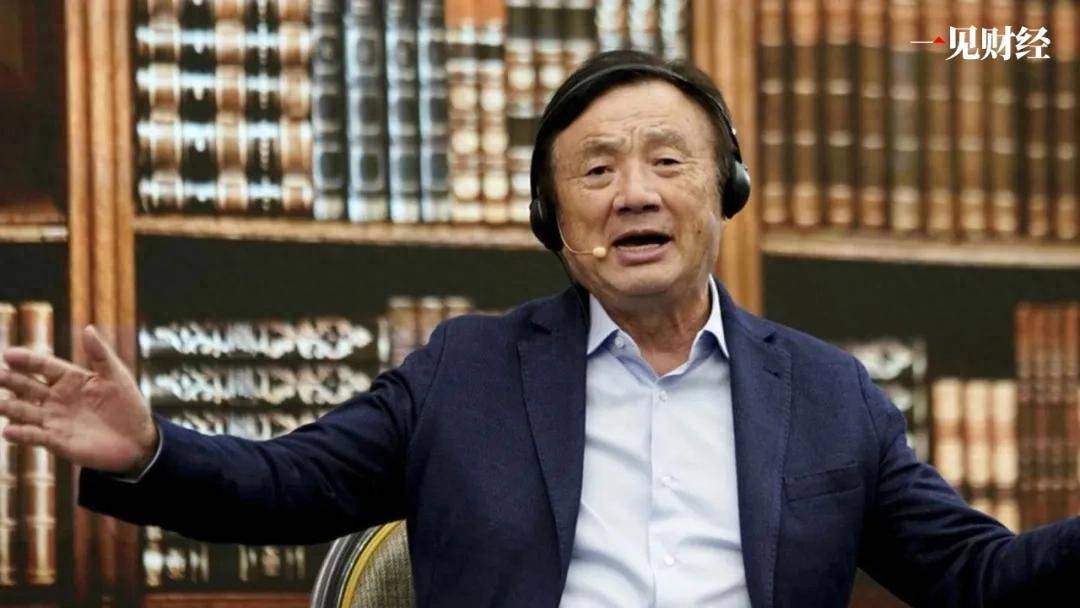
华为任正非最爱见大学校长
Sou Hu Cai Jing· 2025-08-26 09:22
Core Viewpoint - Huawei's founder Ren Zhengfei frequently interacts with university presidents, emphasizing the importance of collaboration in research and development, particularly in the context of domestic universities due to the shift in international partnerships [2][10][11]. Group 1: Engagement with Universities - Ren Zhengfei has met with multiple university presidents, including those from Xi'an Jiaotong University and Shanghai Jiao Tong University, highlighting a strategic partnership in various fields such as mathematics and advanced manufacturing [3][5]. - The meetings are not merely ceremonial; they involve core technology leaders from Huawei, indicating a deep commitment to collaborative research [5][12]. - In 2020, Ren Zhengfei conducted a series of meetings with presidents from top universities, emphasizing the need for a focus on fundamental scientific research rather than just immediate engineering challenges [6][7]. Group 2: Strategic Importance of Collaboration - Huawei's collaboration with universities is driven by the need for foundational research and talent development, especially as international partnerships have diminished due to geopolitical tensions [11][12]. - The company has shifted its focus to domestic universities, which can provide essential support in basic research and talent cultivation, as highlighted by Ren Zhengfei's comments on the importance of foundational education [11][12]. - Huawei has committed significant financial resources to university partnerships, with reports indicating an annual investment of at least $300 million, which is expected to increase [13][14].