基金收益

Search documents
26年2月第二周 基金盈收212元~
Sou Hu Cai Jing· 2026-02-16 05:17
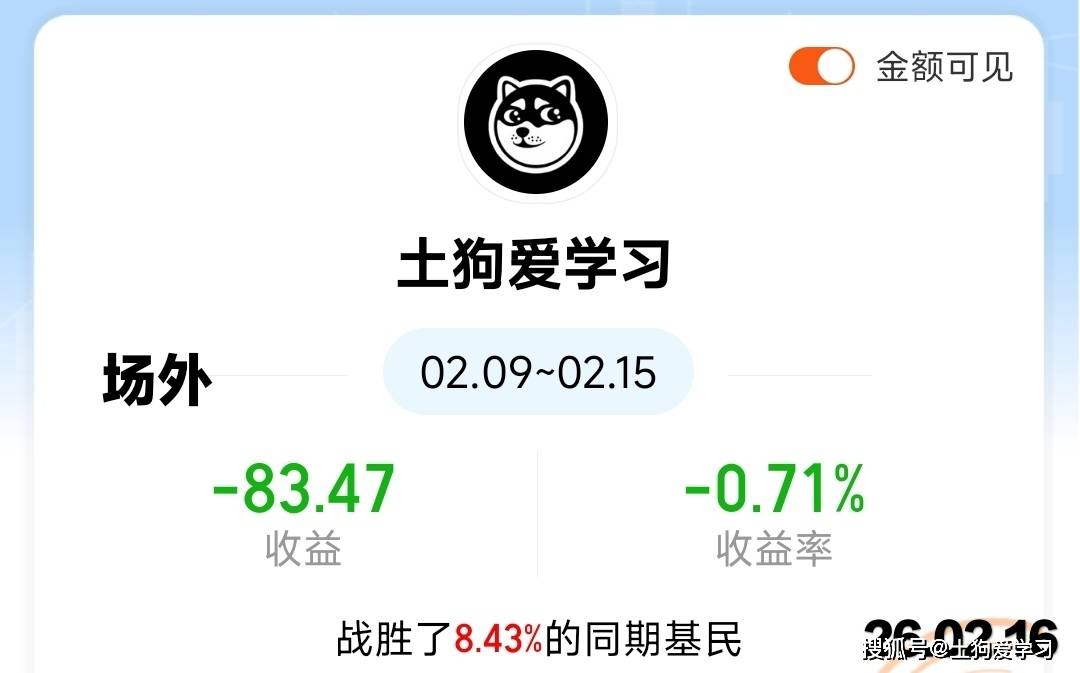
Group 1 - The core point of the news is that the fund reported a total income of 212 yuan for the week from February 9 to February 15, with a net income of 295 yuan from on-market activities and a loss of 83 yuan from off-market activities [1]. - The on-market return for the week was 294.90 yuan, resulting in a weekly return rate of 3.11%, which outperformed the Shanghai Composite Index by 2.69% [3]. - The detailed earnings report shows fluctuations in daily returns, with notable losses on specific days, indicating volatility in the fund's performance [4][6]. Group 2 - The earnings details include daily performance metrics, highlighting both gains and losses across the week, which reflects the fund's overall performance trend [5]. - The fund's performance is tracked through various metrics, including a calendar view and bar charts, providing a visual representation of earnings and return rates [5].

三维通信股价涨5.14%,平安基金旗下1只基金重仓,持有7300股浮盈赚取5475元
Xin Lang Ji Jin· 2026-02-09 05:22
Group 1 - The core point of the news is that Sanwei Communication's stock price increased by 5.14% to 15.33 CNY per share, with a trading volume of 1.038 billion CNY and a turnover rate of 9.24%, resulting in a total market capitalization of 12.432 billion CNY [1] - Sanwei Communication, established on May 13, 1993, and listed on February 15, 2007, is located in Hangzhou, Zhejiang Province, and primarily engages in telecommunications equipment manufacturing and internet advertising media [1] - The revenue composition of Sanwei Communication is as follows: internet marketing business accounts for 90.27%, network optimization coverage business 4.81%, satellite communication business 2.12%, communication facility operation business 1.96%, and others 0.84% [1] Group 2 - From the perspective of fund holdings, Ping An Fund has one fund heavily invested in Sanwei Communication, specifically the Ping An CSI 2000 Enhanced Strategy ETF (159556), which held 7,300 shares in the fourth quarter, representing 0.49% of the fund's net value and ranking as the fifth-largest holding [2] - The Ping An CSI 2000 Enhanced Strategy ETF (159556) was established on December 27, 2023, with a latest scale of 18.9205 million CNY and has achieved a year-to-date return of 7.91%, ranking 833 out of 5,580 in its category [2] - The fund manager, Li Yan, has a tenure of 2 years and 48 days, with the fund's total asset size at 12.911 billion CNY, achieving the best return of 141.78% and the worst return of 1.19% during his tenure [2]

1月新股上市及基金收益月度跟踪-20260202
Huafu Securities· 2026-02-02 07:11
Group 1 - The total IPO financing scale in the A-share market for January 2026 was 11.887 billion, a decrease of 4% month-on-month. The main board raised 4.279 billion, while the Sci-Tech Innovation Board raised 5.603 billion [4][5]. - A total of 13 new stocks were issued in January, representing an 8% increase month-on-month, with 3 from the main board and 4 from the Sci-Tech Innovation Board [5]. - As of the end of January, there were 59 IPO projects approved but not yet issued across all A-share sectors, with a total proposed fundraising scale of 45.36 billion. The main board accounted for 32% of the proposed fundraising [11]. Group 2 - The average offline subscription limit for new stocks in the past three months was mostly in the range of [2,3) and [5,10) billion for the main board, while the ChiNext had limits mostly in the [1,2) billion range [12]. - In January, the number of offline inquiry objects for the main board and Sci-Tech Innovation Board reached 1,181 and 534, respectively, with a month-on-month decrease of 47% for the main board [16]. - The average winning rate for new stocks in January was 0.0068% for A-class accounts and 0.0054% for B-class accounts on the main board, reflecting a month-on-month decrease of 5% and 19% respectively [18]. Group 3 - The average first-day price increase for new stocks on the main board in January was 41% (3 stocks), while the Sci-Tech Innovation Board saw an average increase of 76% (4 stocks) [23]. - The contribution of new stocks to funds was measured, with funds in the 1-2 billion range seeing a contribution of +0.123% and those in the 2-3 billion range seeing +0.082%, with an annualized return of 0.318% for 8 billion scale funds [28]. - In January 2026, a total of 3,449 funds participated in new stock subscriptions, with a total scale of 7.5 trillion. The most numerous were equity mixed funds, with 1,291 funds participating [29].
26年1月第二周基金盈收117元~
Sou Hu Cai Jing· 2026-01-17 03:35
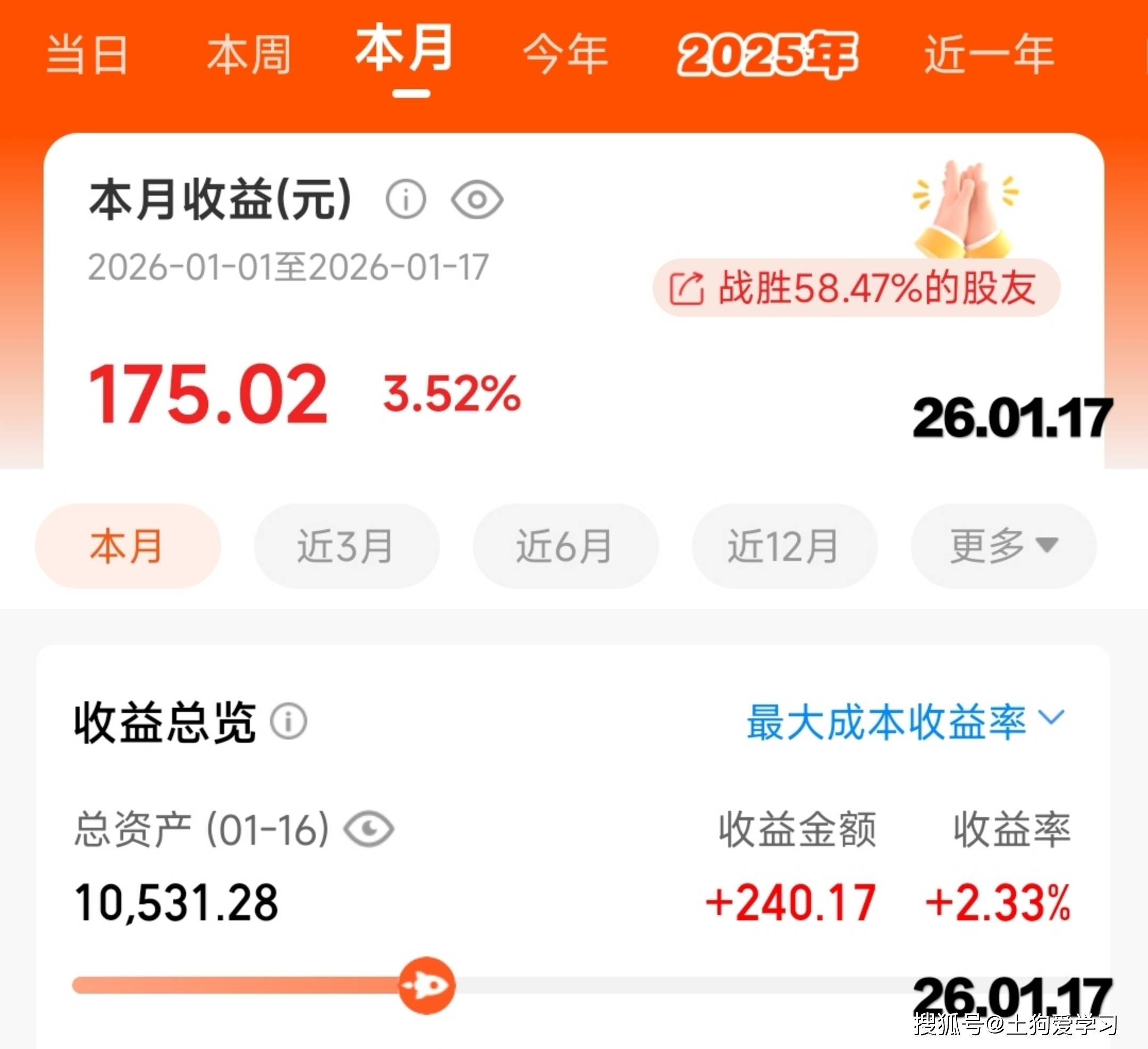
Group 1 - The total fund earnings for the week of January 12 to January 16, 2026, amounted to 117 yuan, with on-market earnings of 76 yuan and off-market earnings of 41 yuan [1] - The previous week's earnings were reported at 297 yuan, and the cumulative earnings for the month reached 415 yuan [1] - The total assets as of January 16, 2026, were recorded at 10,531.28 million yuan [4] Group 2 - The total earnings for January 2026 so far stand at +175.02 yuan, reflecting the daily earnings fluctuations throughout the month [5] - Daily earnings varied significantly, with notable increases on January 5 (+96.89), January 6 (+40.10), and January 12 (+62.70), while there were declines on January 7 (-32.04), January 8 (-39.43), and January 15 (-40.96) [5][7] - The earnings data indicates a volatile performance, with both positive and negative daily changes impacting the overall monthly earnings [6][7]
三变科技股价连续4天上涨累计涨幅6.39%,国泰基金旗下1只基金持287.09万股,浮盈赚取238.28万元
Xin Lang Cai Jing· 2025-12-24 07:34
Group 1 - The core viewpoint of the news is that Sanbian Technology has experienced a stock price increase of 1.54%, reaching 13.82 CNY per share, with a total market capitalization of 4.065 billion CNY and a trading volume of 294 million CNY on December 24 [1] - Sanbian Technology's stock price has risen for four consecutive days, with a cumulative increase of 6.39% during this period [1] - The company, established on December 29, 2001, and listed on February 8, 2007, specializes in the production, maintenance, and sales of transformers, motors, reactors, low-voltage complete electrical equipment, and power transmission and transformation equipment [1] Group 2 - The largest circulating shareholder of Sanbian Technology is the Guotai Fund, which reduced its holdings in the Guotai Valuation Advantage Mixed Fund (LOF) A (160212) by 9.7208 million shares, now holding 2.8709 million shares, representing 1.1% of the circulating shares [2] - The Guotai Valuation Advantage Mixed Fund (LOF) A (160212) has achieved a return of 52.5% this year, ranking 975 out of 8088 in its category, and a return of 50.54% over the past year, ranking 1009 out of 8058 [2]

福赛科技股价涨5.32%,永赢基金旗下1只基金位居十大流通股东,持有419.21万股浮盈赚取1467.24万元
Xin Lang Cai Jing· 2025-11-27 05:56
Group 1 - The core viewpoint of the news is that Foresight Technology has experienced a significant stock price increase, rising 5.32% to 69.35 CNY per share, with a total market capitalization of 5.883 billion CNY and a cumulative increase of 18.56% over three days [1] - Foresight Technology, established on October 20, 2006, is located in Wuhu City, Anhui Province, and focuses on the research, production, and sales of automotive interior components, with main business revenue composition being 52.88% from functional parts, 42.16% from decorative parts, and 4.96% from others [1] Group 2 - Among the top circulating shareholders of Foresight Technology, Yongying Fund's advanced manufacturing mixed fund has entered the top ten, holding 4.1921 million shares, accounting for 9.27% of circulating shares, with a floating profit of approximately 14.6724 million CNY today [2] - The fund, established on May 4, 2023, has a latest scale of 4.697 billion CNY, with a year-to-date return of 67.73% and a one-year return of 98.07%, ranking 265 out of 8130 and 72 out of 8054 respectively [2] - The fund manager, Zhang Lu, has a tenure of 6 years and 120 days, with a total asset scale of 22.921 billion CNY, achieving a best fund return of 107.04% and a worst fund return of -60.31% during the tenure [2]
迷你基金:困境洞察与破局指南
Morningstar晨星· 2025-11-27 01:05
Core Viewpoint - The article discusses the growing challenges and risks associated with "mini funds" in the public fund market, emphasizing the need for investors to be cautious and informed when considering such investments [1]. Group 1: Definition and Characteristics of Mini Funds - Mini funds are defined as funds with a net asset value consistently below 50 million yuan, which is the regulatory "liquidation warning line" [3]. - As of October 31, 2025, there were over 1,500 open-end funds below the 50 million yuan threshold, accounting for over 12% of all open-end funds, but their total asset scale represented only 0.12% [6]. - The main types of mini funds include equity funds (64%), bond funds (26%), and mixed funds (9%) [6]. Group 2: Challenges Faced by Mini Funds - Mini funds face significant liquidity challenges, making it difficult to meet redemption requests, especially during market downturns [12][13]. - The performance of mini funds is often poor due to lack of diversification and insufficient research support, leading to high volatility and low returns [14][15]. - Mini funds typically have higher fee rates due to fixed costs being spread over a smaller asset base, which erodes investor returns [16][17]. - The threat of liquidation is a major concern, as fund companies may choose to liquidate mini funds to optimize resources, which can lead to losses for investors [18][19]. Group 3: Investor Missteps and Awareness - Investors often fall into the "low net value illusion," mistaking a lower net value for a better investment opportunity, which can lead to higher risks [21]. - Short-term performance spikes can mislead investors into chasing returns, resulting in losses when market conditions change [22]. - Many investors rely on limited information sources, leading to a lack of awareness about the risks associated with mini funds [22]. Group 4: Strategies for Avoiding Mini Fund Pitfalls - Investors should prioritize funds with moderate sizes and avoid those with high institutional ownership to mitigate risks [24]. - Evaluating the strength of the fund company, the experience of the fund manager, and the fund's historical performance is crucial [24]. - For existing mini fund holders, assessing the fund's stability and performance is essential to decide whether to hold or redeem [24][25]. Group 5: Conclusion - The existence of mini funds reflects a natural selection process in the rapidly developing public fund market, and investors should avoid the misconception of potential recovery [27]. - Rational investment decisions should be based on comprehensive evaluations of funds, avoiding impulsive actions driven by market emotions [28].

苏美达股价涨5.01%,嘉实基金旗下1只基金重仓,持有3.85万股浮盈赚取2.04万元
Xin Lang Cai Jing· 2025-10-30 05:52
Core Viewpoint - Su Mei Da's stock price increased by 5.01% to 11.11 CNY per share, with a trading volume of 299 million CNY and a turnover rate of 2.09%, resulting in a total market capitalization of 14.518 billion CNY [1] Company Overview - Su Mei Da Co., Ltd. is located at 198 Changjiang Road, Nanjing, Jiangsu Province, established on June 24, 1996, and listed on July 1, 1996. The company operates in two main business segments: industrial chain and supply chain [2] - The industrial chain includes sectors such as consumer goods and environmental protection, with key products/services including textiles, home power products (garden machinery, cleaning machinery, gasoline generators), environmental engineering (wastewater treatment, waste management, soil remediation, kitchen waste treatment, biodegradable plastic industrial engineering), clean energy (photovoltaic products, engineering, operation and maintenance), and shipbuilding and shipping [2] - The supply chain focuses on integrated services for bulk commodity operations and import of electromechanical equipment. The revenue composition is as follows: supply chain 71.59%, industrial chain 28.20%, with advanced manufacturing at 11.86% and consumer goods at 8.65% [2] Fund Holdings - According to data, one fund under Jia Shi Fund has a significant holding in Su Mei Da. The Jia Shi Zhong Zheng 1000 Index Enhanced Initiation A (016776) increased its holdings by 11,800 shares in the third quarter, totaling 38,500 shares, representing 0.93% of the fund's net value, ranking as the fifth-largest holding [3] - The fund has a current scale of 26.8915 million CNY and has achieved a year-to-date return of 36.35%, ranking 1449 out of 4216 in its category, with a one-year return of 37.45%, ranking 1266 out of 3885 [3]

又有基金公司撤销监事会;公募基金经理前三季度整体收益均值近20%
Sou Hu Cai Jing· 2025-10-14 07:15
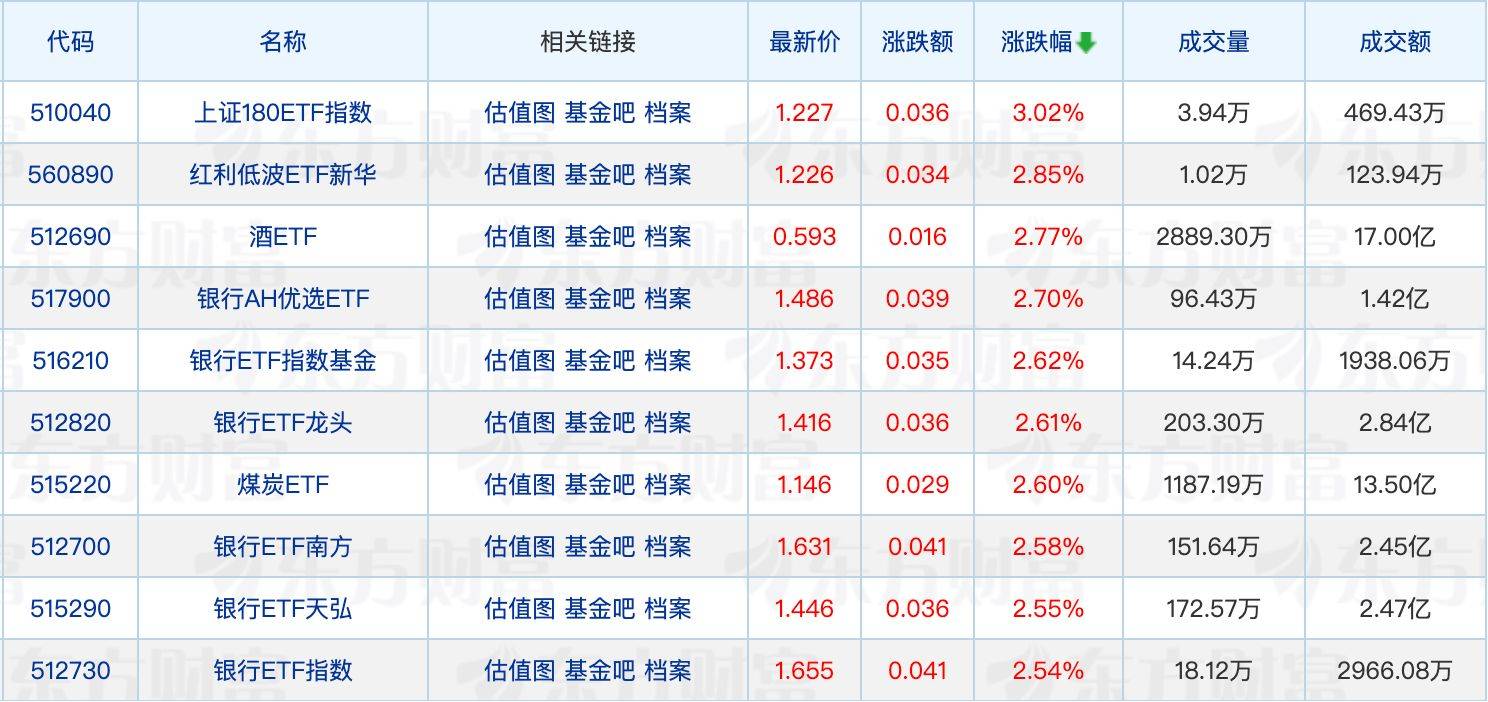
Group 1: Fund Company Developments - Fund companies are increasingly dissolving their supervisory boards, with Fangzheng Fubang Fund following Yingda Fund in this trend [1] - The supervisory board of Fangzheng Fubang Fund was dissolved after approval from the shareholders' meeting, and the audit committee of the board will assume its responsibilities [1] Group 2: Fund Manager Performance - The average return for public fund managers in the first three quarters is approximately 19.77%, with a median return of 14.97% [2] - A total of 169 fund managers achieved returns exceeding 60% during the same period [2] Group 3: Fund Manager Career Changes - On October 14, Luo Xin Pharmaceutical announced the resignation of its board secretary due to job relocation, with Jiang Ying, a former analyst and fund manager at Guotai Fund, appointed as the new secretary [3] Group 4: New Fund Launches - Notable fund managers, including Lan Xiaokang from China Europe Fund, are launching new funds, with Lan's new fund set to be issued on October 16 [4] - Lan Xiaokang currently manages assets worth 13.637 billion, with three products showing strong returns [4] - Jin Zicai from Caitong Fund is also launching a new fund, managing 4.318 billion with a maximum return of nearly 593% across six products [5] Group 5: ETF Market Overview - The market experienced fluctuations, with the Shanghai Composite Index down 0.62%, the Shenzhen Component down 2.54%, and the ChiNext Index down 3.99% [6] - The total trading volume in the Shanghai and Shenzhen markets reached 2.58 trillion, an increase of 221.5 billion from the previous trading day [6] Group 6: ETF Performance Highlights - The Shanghai 180 ETF Index led the gains with an increase of 3.02%, while sectors like insurance, gas, and coal performed well [7][8] - Conversely, the semiconductor sector faced significant declines, with related ETFs dropping by as much as 6.85% [9] Group 7: Industry Insights - The sales performance during the recent holidays met expectations, showing signs of marginal improvement despite a year-on-year decline [10] - Major liquor companies are outperforming the overall industry, and with easing policy pressures, demand is expected to show weak recovery [10] - The industry is currently at a low valuation, and the outlook is becoming clearer, with leading liquor companies increasing dividend payouts, enhancing their attractiveness for investment [10]

持有基金十年收益如何?最高收益超6倍 最差亏损近五成
Nan Fang Du Shi Bao· 2025-09-29 17:30
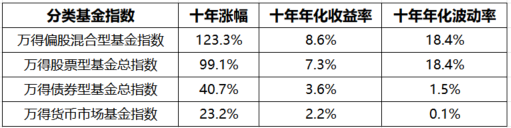
Core Insights - The founder of Hainan Xiwa Private Fund Management Co., Liang Hong, announced a gift of mobile phones to investors who bought into the fund in 2015, marking a decade of partnership [1] - Over the past ten years, the average return of public funds that have been established for over ten years is 93.4%, with an average annualized return of 6.1% [2][3] - Despite the overall positive performance, 51 funds have recorded losses over the past decade, with the worst performer, China Merchants HuShen 300 Real Estate, showing a return of -48.2% [1][10] Fund Performance - As of September 26, 2025, there are 2,036 public funds that have been established for over ten years, with 97.2% of them achieving positive cumulative returns [2] - The top-performing fund, Huashang New Trend Preferred, has a cumulative return of 649.2% and an annualized return of 22.3%, making it the only fund to exceed six times its initial investment [8] - The performance of various fund types shows that equity funds have outperformed others, with the mixed equity fund index rising by 123.3% over ten years [3][4] Volatility and Risk - Active management equity funds have a high annualized volatility of 18.4%, which can lead to significant risks for average investors [6] - In contrast, bond and money market funds have lower returns but also exhibit much lower volatility, with annualized volatility of 1.5% and 0.1%, respectively [6] Underperforming Funds - A total of 58 funds have recorded losses over the past decade, with some funds experiencing maximum drawdowns exceeding 65% [10][11] - The underperforming funds include several that were once large-scale funds, with the worst performer, China Merchants HuShen 300 Real Estate A, showing a cumulative loss of -48.2% [11][12]