
塑料循环经济

Search documents
改造酵母菌成“降解工厂” 把塑料垃圾“吃干榨净”
Xin Hua Ri Bao· 2025-12-16 21:49
Group 1 - The core idea of the article is the innovative approach to plastic waste management through genetic engineering of yeast, enabling it to efficiently decompose plastic into valuable chemical raw materials at room temperature and pressure [1][2] Group 2 - The main component of plastic waste is polyethylene terephthalate (PET), which is difficult to decompose due to the inefficiency and instability of natural enzymes [1] - The research team utilized a natural yeast called "Tropical Pichia" and engineered it to function as a high-efficiency "mobile degradation factory" [1] - The decomposition of PET typically requires two enzymes: PETase to cut large plastic pieces and MHETase to further break down the fragments into final products, which are terephthalic acid and ethylene glycol [1] - The team created an "integrated self-assembled multi-enzyme display platform" by precisely fixing the two enzymes on the yeast cell surface, enhancing the degradation efficiency [1] Group 3 - In experiments, 10 grams of yeast and 20 grams of plastic bottle fragments were placed in a 5-liter bioreactor, and under mild conditions, the plastic was completely decomposed into monomers within a week [2] - This research not only provides a new tool for plastic waste management but also presents a pathway towards a "plastic circular economy" [2] - Future plans include enabling the yeast to not only decompose plastic but also directly convert the decomposition products into more valuable bio-based chemicals [2]
吕佳清:推动中国进入食品级再生塑料新时代的拓路人
Zhong Guo Neng Yuan Wang· 2025-11-25 03:39
Core Viewpoint - The foreign-funded food-grade recycled plastic factory in Jiangxi, operated by Eurogreen Asia Group, exemplifies China's transition towards a high-quality circular economy, driven by national strategies focused on "reducing plastic, lowering carbon emissions, and recycling" [1][3]. Company Overview - Eurogreen Asia Group's Jiangxi factory, known as Eurogreen Longyi New Materials (Jiangxi) Co., Ltd., has become one of the few foreign-funded factories in China capable of producing food-grade rPET (recycled polyethylene terephthalate) in the past two years [3][4]. - The factory's transformation is led by Ms. Lu Jiaqing, who has over 15 years of experience in the recycled plastics industry and emphasizes the importance of a transparent, credible, and replicable system for sustainable operations [3][4]. Technological and Operational Upgrades - The factory underwent a comprehensive upgrade, including redesigning production lines to meet food-grade rPET requirements, enhancing control precision in key processes, and establishing a traceable management system in line with international standards [4][5]. - The factory has achieved stable product quality, allowing it to enter the supply chains of international brands, a significant milestone for domestic enterprises [4][5]. Industry Impact and Policy Engagement - Lu Jiaqing aims to extend the factory's successful model to the broader industry, addressing structural challenges such as policy limitations, technical standards, and market recognition in China's food-grade recycled plastics sector [5][6]. - As a leader in the EU Chamber's working group on promoting open food-grade rPET application policies, Lu has been actively involved in policy discussions and industry feedback, advocating for necessary breakthroughs to elevate China's recycling efforts from "mass recovery" to "high-value recycling" [5][6]. Future Outlook - The Jiangxi factory is changing the narrative of China's role in the global recycled plastics market, aligning technical standards with international benchmarks and establishing a reliable supply chain that meets long-term contract demands [6][7]. - The factory's practices indicate a potential shift in China's plastic circular economy from a follower to a leader, as it adapts to increasing sustainable procurement demands from international brands and stricter regulations [6][7].

陶氏全勤全力八赴进博 全心全新共赢未来
Jing Ji Wang· 2025-11-11 10:05
Core Viewpoint - Dow Inc. showcased nearly 100 cutting-edge technology products at the 8th China International Import Expo, emphasizing its commitment to the Chinese market and the importance of the event as a platform for value creation with local partners [1][3]. Group 1: Innovation and Strategic Partnerships - Dow has participated in the Import Expo for eight consecutive years, highlighting its focus on innovation with 13 new product launches, including 10 global debuts, and signing over 20 strategic cooperation agreements [3]. - The company has released over 100 new products and technologies during the eight editions of the expo, with 6070 strategic cooperation agreements signed, showcasing the role of material science in China's industrial transformation [3]. - Key innovations include the global debut of ENGAGE™ PV POE, which enhances solar module quality and efficiency, and a solvent-free organic silicone adhesive that meets the demand for sustainable materials in various industries [3][4]. Group 2: Local Development and Global Strategy - China is Dow's second-largest market globally and the largest overseas market, with over 45 years of operation in the country [6]. - Dow has established a comprehensive network in China, including the Shanghai Dow Center, which serves as the Asia-Pacific innovation hub with over 300 scientists and 80 laboratories [6]. - Recent investments include the opening of a thermal management materials science laboratory in Shanghai and partnerships with Hisense Group for green materials development in the home appliance sector [7]. Group 3: Commitment to Sustainability - Dow's initiatives aim to explore circular economy and low-carbon opportunities through cross-value chain collaboration, reflecting the company's commitment to sustainable development [7]. - The company emphasizes the rapid advancements in electric vehicles, renewable energy, and recycled plastics in China, which provide ample opportunities for technology commercialization [7]. - Dow's ongoing presence at the Import Expo and its local R&D efforts demonstrate a long-term commitment to the Chinese market and a strategy to align global innovation with local needs [7].


少收了近5000亿元!欧洲塑料产业正处于“悬崖边缘”
Zhong Guo Hua Gong Bao· 2025-10-13 03:17
Core Insights - The European plastics industry is facing a significant decline in competitiveness, with market share and sales dropping sharply, while sustainability efforts are stagnating [1][2][3] Group 1: Market Performance - The market share of the European plastics industry has decreased from 22% in 2006 to an estimated 12% in 2024 [1] - Sales in the industry have fallen from €457 billion in 2022 to €398 billion in 2024, a reduction of €59 billion or 13% [1] - In contrast, global plastic production increased by 4.1% last year and has grown by 16.3% since 2018, with Asia producing 57.2% of the world's plastics, and China alone accounting for 34.5% [1] Group 2: Challenges Faced - European manufacturers are grappling with high energy costs, climate-related taxes, and rising raw material prices, which are undermining competitiveness and accelerating asset sales and shutdowns [2] - The EU's trade deficit in plastic polymers is expected to improve slightly in 2024, decreasing from 8 million tons in 2023 to 2 million tons, primarily due to a 10% increase in export volumes [2] - Changing tariffs pose a serious threat to the EU plastics industry, with the U.S. being the largest source of polymer imports, accounting for 18.9% of the total [2] Group 3: Recycling and Sustainability - The EU's previous leadership in the circular economy for plastics has been overtaken by China and other Asian countries, with recycled plastics making up only 15.4% of total production in the EU in 2024, amounting to 8.4 million tons [2] - Mechanical recycling rates have only increased by 2.7% to 7.7 million tons, while chemical recycling remains stagnant at 1.1 million tons [2] - In contrast, global recycled plastic production is projected to reach 43.9 million tons in 2024, surpassing 10% of total plastic production for the first time [2] Group 4: Call for Action - The European plastics industry is at a critical juncture, with calls for government support and policy measures to stimulate investment and build resilient supply chains [3] - The industry leaders emphasize the need for immediate and decisive actions to secure the future of local plastic production and reduce dependency on external sources [3]
马来西亚塑料循环系列:探索汽车行业的塑料循环经济机遇
Shi Jie Yin Hang· 2025-10-10 11:07
Investment Rating - The report does not explicitly provide an investment rating for the automotive industry regarding plastic recycling opportunities. Core Insights - The automotive industry in Malaysia generates approximately 94,000 tons of plastic waste annually from end-of-life vehicles (ELVs), with only about 20% of this waste collected for recycling, highlighting the need for improved collection systems and policies [14][33][47]. - The report emphasizes the potential for cross-industry collaboration to enhance plastic recycling rates, particularly through open-loop recycling initiatives [52][53]. - The study identifies several opportunities for developing a circular economy for durable plastics in the automotive sector, including formalizing informal recyclers and implementing extended producer responsibility (EPR) policies [78]. Summary by Sections 1. Introduction - The report is part of the Malaysia Plastic Circularity Series, focusing on the plastic recycling economy in Malaysia, particularly in the automotive sector [13][14]. 2. Overview of Plastic Use and Waste in the Automotive Industry - The automotive sector accounts for 12% of Malaysia's plastic consumption, with packaging being the largest sector [18]. - Malaysia ranks in the top 10 for durable plastic recycling market potential globally, with significant opportunities identified for improving recycling rates [18][25]. 3. Challenges Facing Durable Plastic Recycling in the Automotive Industry - The collection rate for durable plastic waste in the automotive sector is only about 20%, with significant losses occurring during the collection phase [33][48]. - The lack of formal collection systems and low domestic demand for recycled plastics hinder the development of a robust recycling value chain [49][54]. 4. Global Initiatives to Improve Automotive Plastic Recycling - The report discusses various initiatives, including the implementation of OEM recycling requirements and minimum recycled content policies in vehicles [57][63]. - Germany's EPR system for ELVs is highlighted as a successful model for improving recycling rates [58][60]. 5. Opportunities for Developing Recycling Value - Several actionable opportunities are identified, such as formalizing informal recyclers, enhancing governance frameworks, and establishing centralized monitoring entities for plastic recycling [78]. - The report suggests that implementing EPR in the automotive sector could significantly increase plastic recycling rates and collection efficiency [78].
英科再生: 英科再生资源股份有限公司2025年半年度报告
Zheng Quan Zhi Xing· 2025-08-26 13:14
Core Viewpoint - The company emphasizes its commitment to rapid expansion in Southeast Asia and enhancing its global supply chain capabilities, particularly in response to market demands and challenges faced during the first half of 2025 [1][2][3]. Group 1: Company Expansion and Strategy - The company has accelerated its manufacturing capabilities in Vietnam, with local employee numbers increasing from 800 to 1500 in just one month to meet urgent customer demands [2]. - The company is focusing on a "China + Southeast Asia manufacturing" strategy, which has allowed it to serve over 130 countries, maintaining a stable market share in the U.S. [1][3]. - The company plans to complete the construction of its second phase in Vietnam by early 2025, which will further enhance its production capacity [1]. Group 2: Product Focus and Market Position - The company provides a one-stop solution for home wall decoration, integrating recycling and high-tech manufacturing processes to create a full industrial chain for plastic recycling [4][5]. - The company’s revenue from non-U.S. markets has shown a year-on-year increase, indicating a successful strategy to fill order gaps caused by shifts in production [3][4]. - The company has established direct partnerships with 300-400 large retail chains globally, enhancing its market presence and customer loyalty [4]. Group 3: Financial Performance - For the first half of 2025, the company reported a revenue of approximately 1.67 billion RMB, a 16.13% increase compared to the same period last year [11]. - The total profit for the same period was approximately 154.73 million RMB, reflecting a decrease of 9.42% year-on-year [11]. - The net profit attributable to shareholders was approximately 145.82 million RMB, down 6.01% from the previous year [11]. Group 4: Industry Trends and Market Outlook - The global recycled plastic market is projected to reach approximately 75.49 billion USD in 2024, with a compound annual growth rate (CAGR) of 5.4% expected until 2031 [3]. - The company is well-positioned to capitalize on the growing demand for sustainable materials, particularly in the home decoration sector, which is experiencing significant structural changes [18][22]. - The company’s innovative building materials are designed to meet evolving consumer preferences for eco-friendly and easy-to-install products, aligning with market trends in Europe and the U.S. [19][22].

蒋士成传入书林 石化人物飘墨香 ——参观国际化工创新展览会随笔(文/叶建华)
Sou Hu Cai Jing· 2025-07-16 04:35
Group 1 - The 12th World Congress of Chemical Engineering and the 21st Asia-Pacific Chemical Alliance Conference is being held in Beijing, marking the first joint event in China in 50 years [1][3] - The theme of the conference is "Embracing Paradigm Shift in Chemical Engineering to Meet Global Challenges," aiming to create a platform for international academic exchange and integration of industry, academia, and research [3][5] - The conference has attracted over 1,000 corporate representatives, more than 5,000 delegates, and over 20,000 professional visitors from 66 countries, showcasing a significant global interest in chemical engineering [5][7] Group 2 - The conference released the "Beijing Initiative: Embrace Paradigm Shift and Create a Green Future," which consolidates global consensus on the transformation of the chemical industry [5] - Four major topics were set for discussion: Reconstructing Chemical and Basic Industries, Chemical and Strategic Emerging Industries, Future Chemical and Smart Innovation, and Chemical Education and Training [5] - The event featured a variety of formats for exchange, including 2 main conference sessions, 34 thematic sub-sessions, and over 900 cutting-edge reports [5] Group 3 - The China Petroleum and Chemical Corporation, along with other publishers, showcased new books at the exhibition, including a series focused on carbon neutrality and plastic recycling education [7][11] - The "Biography of Jiang Shicheng" was highlighted as a significant publication, reflecting the contributions of key figures in the petrochemical industry and serving as a valuable resource for understanding China's petrochemical sector [11][15] - The enduring appeal of biographical literature in the book market was emphasized, indicating a growing interest in the stories of influential figures in the chemical industry [11][15]
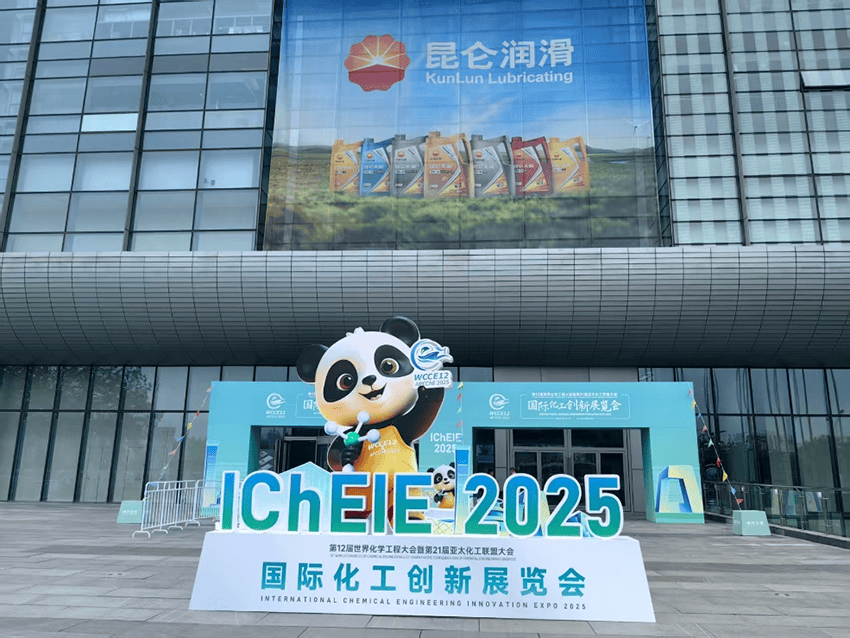
大咖分享(二) | 金发科技 王春燕博士:废旧渔网PA6的高质化再生利用技术研究
DT新材料· 2025-05-26 14:48
Core Viewpoint - Plastic pollution is a significant ecological challenge globally, with China's polyamide 6 (Nylon 6) apparent consumption market exceeding 4 million tons by the end of 2023, while the recycling volume is only 1 to 1.5 million tons, primarily from old fishing nets and waste textile fibers [1][3]. Group 1: Recycling Challenges and Innovations - Traditional recycling of old fishing nets faces three main challenges: difficulty in separation, contamination, and performance degradation due to long exposure to marine environments [1]. - The development of green and efficient cleaning agents and processes has enabled the appearance quality of recycled PA6 pellets to approach that of virgin materials, meeting high-grade product application needs [3]. - The molecular weight of recycled PA6 has been improved through a synergistic approach of reactive extrusion and solid-phase toughening, resulting in a 22% increase in impact strength and a bending strength exceeding 111 MPa, surpassing some virgin resins [3][4]. Group 2: Chemical Recycling and Industrialization - A negative pressure melting depolymerization technology has been developed to achieve mild depolymerization in a vacuum environment, increasing the yield of caprolactam (CPL) monomer to 70% with a purity exceeding 99% [4]. - The company has established a full-process technology chain from targeted recycling channel construction to solvent recovery systems, supporting the supply of over 2 million tons of various types of environmentally friendly recycled plastics [4]. Group 3: Industry Trends and Future Directions - The Chinese nylon industry is accelerating its transition towards high-end and low-carbon production, driven by breakthroughs in the synthesis of special materials and the domestic production of key raw materials [7]. - Emerging applications in electric vehicles, electronics, and intelligent robotics are raising performance requirements for nylon materials, presenting both opportunities and challenges for formulation design and process optimization [7].


化工行业2025年政府工作报告解读:多维度赋能,探寻化工结构性机会
中国银河· 2025-03-06 07:27
Investment Rating - The report maintains a "Recommended" rating for the chemical industry [2] Core Viewpoints - The chemical industry is a pillar of the national economy, characterized by a large economic scale, long industrial chains, diverse product types, and extensive coverage [5][4] - The 2025 government work report emphasizes expanding domestic demand, modern industrial system construction, food security, and green low-carbon development, suggesting investment opportunities in specific sub-sectors [4][5] Summary by Relevant Sections Consumption - The 2025 government work report proposes to boost consumption and expand domestic demand, including a special bond of 300 billion yuan to support the replacement of consumer goods [6] - The report anticipates steady growth in demand for upstream modified plastics and refrigerants due to policy stimulation [6][10] Modern Industrial System Construction - The report highlights the cultivation of emerging industries and the ongoing "Artificial Intelligence +" initiative, which is expected to enhance demand for high-end chemical materials and accelerate domestic substitution processes for materials like PEEK and COC/COP [6][21] Food Security - The government aims for a grain production target of approximately 1.4 trillion jin in 2025, with fertilizers playing a crucial role in agricultural productivity [29] - The report suggests that the fertilizer market concentration is likely to increase, benefiting large fertilizer producers with integrated advantages and strong R&D capabilities [30] Green Low-Carbon Development - The report indicates a commitment to solid waste management and promoting the use of recycled materials, aligning with the development of chemical recycling technologies for waste plastics [7][39] - The chemical recycling of waste plastics is seen as a key method to reduce carbon emissions and enhance recycling rates [37][39] Investment Recommendations - The report recommends focusing on investment opportunities in modified plastics, refrigerants, PEEK, COC/COP, fertilizers, and chemical recycling of waste plastics, highlighting specific companies such as Guo'en Co., Jinfa Technology, Nanjing Julong, and others [40]